Condition Based vs. Reliability Centered Maintenance

Article Written by:

Meyyappan M

Created On:

November 27, 2025

Condition Based vs. Reliability Centered Maintenance

Table of Contents:

Every facility manager knows the universal headache of operations: the delicate balancing act between preventing failure and controlling costs. It is the industry’s oldest "Goldilocks" problem. If you maintain equipment too often, you burn through labor hours and spare parts on machines that were running perfectly fine. If you maintain it too little, you risk catastrophic breakdowns that halt production and destroy your margins.

For decades, many operations relied on "Run-to-failure," treating industrial assets like lightbulbs—you simply changed them when they burned out. But in Industry 4.0, where uptime is the currency of success, waiting for a critical motor to fail isn't just an inconvenience; it’s a financial disaster. As we moved from reactive repairs to calendar-based schedules, we realized that even the calendar is flawed. This realization led to the rise of smarter, data-driven strategies. Today, two heavyweights dominate the conversation: Condition Based Maintenance (CBM) and Reliability Centered Maintenance (RCM).

What is Condition Based Maintenance (CBM)?

If traditional maintenance is like changing your car’s oil every 3,000 miles regardless of how you drove, Condition Based Maintenance (CBM) is the light on your dashboard telling you your tire pressure is low.

The Core Concept: The Tactical Approach

Think of CBM as a comprehensive medical checkup for your machines. It moves you away from the rigid calendar and focuses entirely on the actual state of the equipment.

The philosophy is simple: "If the data looks good, keep running. If the data shows a spike, intervene."

This approach relies on the fact that most failures don’t happen instantly. Machines usually give "warning signs"—vibration, heat, or noise—long before they actually stop working. CBM is about listening to those signs.

The P-F Interval: Catching the Problem in Time:

To understand CBM, you must understand the P-F Interval.

  • Point P (Potential Failure): The point where a sensor detects a change (e.g., a bearing starts vibrating slightly more than normal).
  • Point F (Functional Failure): The point where the motor seizes up and production stops.

The goal of CBM is to spot the issue at Point P. This gives you a window of time to plan the repair, order parts, and schedule the downtime, rather than scrambling during an emergency breakdown at Point F.

Key Benefits of CBM:

  • Efficiency & cost savings: Stop fixing things that aren't broken. Maximize labor hours and consumables savings by eliminating unnecessary PM rounds.
  • Maximized Uptime: CBM converts "unplanned downtimes" into "planned outages." This maintenance will rely on the owner's schedule rather than on the machine's schedule.
  • Extended Asset Life: Before secondary damages occur to other components, they can be mentioned by applying proactive measures toward stressors, e.g., misalignment or lack of lubrication.

The Technology Behind the Strategy:

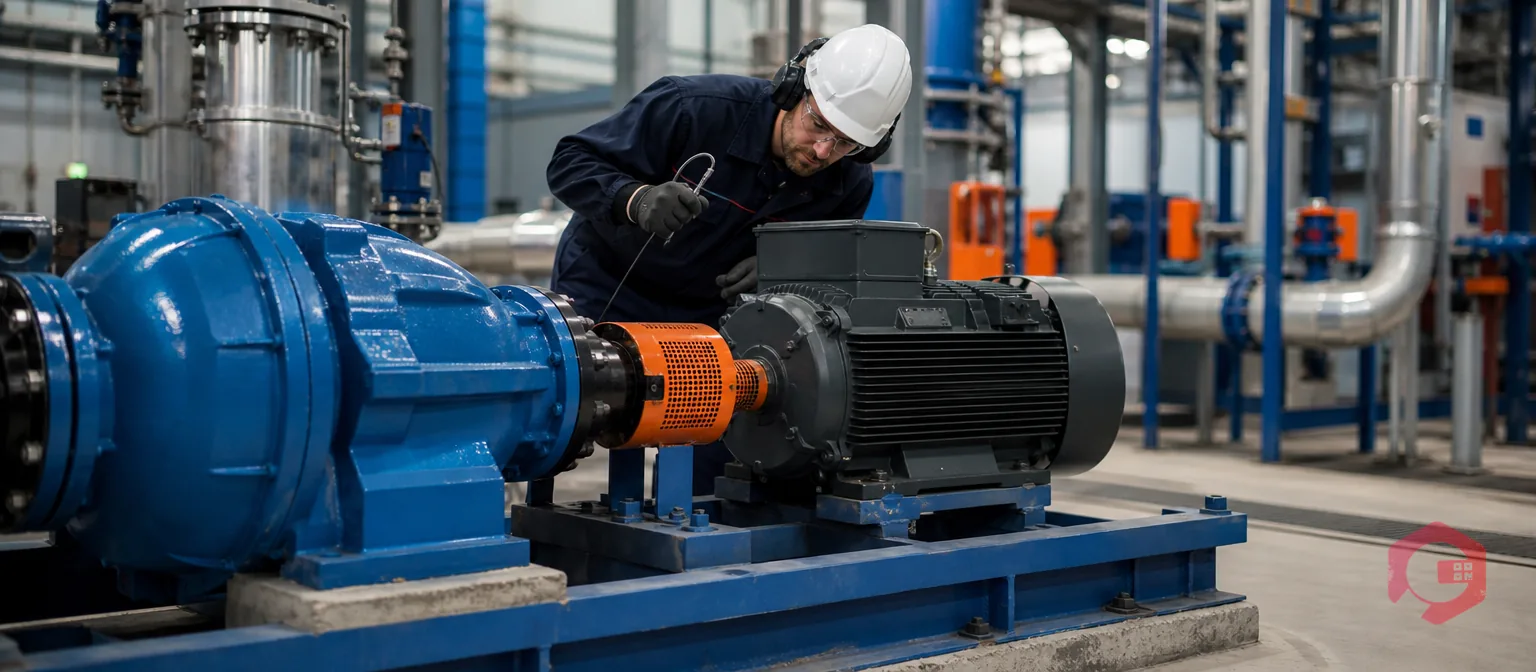
CBM requires eyes and ears inside the machine. Common tools include:

  • Vibration Analysis: Ideally used for rotating assets like motors and pumps.
  • Infrared Thermography: Perfect for detecting loose connections in electrical panels.
  • Ultrasonic Sensors: Used to detect air leaks or early bearing fatigue.

What is Reliability Centered Maintenance (RCM)?

If CBM is the "Medical Checkup," then Reliability Centered Maintenance (RCM) is the comprehensive "Lifestyle Plan."

While CBM focuses on when to perform maintenance, RCM asks a deeper, more fundamental question: "Should we be performing maintenance on this asset at all, and if so, what kind?"

The Core Concept: The Strategic Framework

RCM acknowledges a hard truth that many facility managers struggle to accept: Not all assets are created equal.

A breakdown on your main production line’s turbine is a crisis; it stops revenue. A breakdown on the exhaust fan in the cafeteria is merely a nuisance. RCM is a logic-based framework used to determine the best maintenance strategy for every single asset based on its criticality.

It shifts the focus from simply "preserving the equipment" to "preserving the system's function."

Key Benefits:

  • Budget Optimization: RCM allows you to ruthlessly prioritize. You allocate your budget and best technicians to critical assets (Class A) while deliberately allowing non-critical assets (Class C) to run-to-failure if safe to do so.
  • Safety & Compliance: For assets where failure could cause injury or environmental violation, RCM mandates strict preventive measures, ensuring you are always audit-ready.
  • Risk Management: It removes the guesswork. You aren't just "maintaining"; you are managing risk across the entire plant.

Core Implementation Steps:

RCM is not a quick fix; it is a process.

  • Asset Criticality Assessment: Ranking your assets (A, B, or C) based on their impact on production and safety.
  • FMEA (Failure Mode and Effects Analysis): Identifying exactly how things fail. Does the bearing seize? Does the belt snap?
  • Strategy Selection: This is the output. The RCM analysis might tell you that Asset A needs real-time CBM sensors, Asset B needs monthly lubrication (PM), and Asset C requires no maintenance until it breaks.

Key Differences Between CBM and RCM

The confusion between these two methodologies often stems from the fact that they share the same ultimate goal: reducing unplanned downtime. However, their approach, scope, and execution are fundamentally different.

To understand the difference, you have to look at the primary question each method attempts to answer.

The "When" vs. The "What":

  • Condition Based Maintenance (CBM) answers the question: “When do we perform maintenance?” It is a tactical execution. It looks at a specific machine in real-time and dictates actions based on the current health of that asset. Its focus is narrow and deep—analyzing vibration curves, oil particles, and temperature spikes.
  • Reliability Centered Maintenance (RCM) answers the question: “What maintenance strategy should we use?” It is a strategic planning framework. It looks at the entire facility and dictates the rules of engagement. Its focus is broad and high-level—analyzing risk, safety consequences, and failure modes to determine the best course of action.

Input vs. Output:

  • CBM runs on Data: It relies on inputs from the physical world—telemetry, sensor readings, and measurements. If you don't have the hardware (sensors) or the software  to interpret that data, you cannot perform CBM.
  • RCM runs on Logic: It relies on inputs from your team—operational knowledge, failure history, and criticality assessments. It is an analytical exercise that results in a maintenance plan.

The Relationship: The Architect and The Tool:

This is the most critical distinction to understand: CBM and RCM are not competitors; they have a hierarchical relationship.

Think of RCM as the Architect. The Architect looks at the blueprint and decides which walls are load-bearing (Critical) and which are decorative (Non-Critical).

  • For the load-bearing wall, the Architect mandates high-grade steel and constant monitoring.
  • For the decorative wall, the Architect accepts standard materials.

In this analogy, CBM is the monitoring tool that the Architect selected.

You effectively use RCM to decide where to apply CBM. An RCM analysis might conclude: "This turbine is critical to our operation (Asset Class A). We cannot allow it to fail. Therefore, the RCM strategy dictates that we install vibration sensors and use a CBM program."

Choosing the Right Strategy for Your Operation

You likely don't need to choose just one. The best maintenance operations use a mix. Here is how to decide where to apply them.

When to Prioritize CBM:

  • Scenario: You have critical assets (like compressors or pumps) with random failure patterns where "age" isn't a good indicator of health.
  • Requirement: You need a level of digital maturity. You need sensors and a CMMS like Cryotos that can handle Dynamic Scheduling—triggering maintenance based on meter readings or usage hours rather than just calendar dates.  
  • Outcome: Immediate reduction in catastrophic failures and optimized parts inventory.

When to Prioritize RCM:

  • Scenario: You are managing a complex facility with thousands of assets and a limited budget. You need to know which machines deserve your attention.
  • Requirement: You need a team willing to sit down and analyze failure modes.
  • Outcome: A long-term culture of reliability. This is best for ensuring safety compliance and justifying budgets to upper management.

Conclusion

In the battle of Condition Based vs. Reliability Centered Maintenance, the winner is the facility manager who uses both. CBM gives you the data to act in the moment. RCM gives you the wisdom to plan for the future. Neither strategy can function effectively on paper alone; they require a robust digital backbone.

Whether you are setting up a complex logic-tree for RCM or connecting IoT sensors for CBM, you need a system that simplifies the chaos. Cryotos CMMS is designed to be that backbone. From Generative AI that lets you create work orders by voice, to Business Intelligence Dashboards that visualize your reliability metrics (MTBF/MTTR), Cryotos adapts to your strategy, not the other way around.

Want to Try Cryotos CMMS Today? Lets Connect!
Thank you! Your submission has been received!
Oops! Something went wrong while submitting the form.
Related Post
No items found.