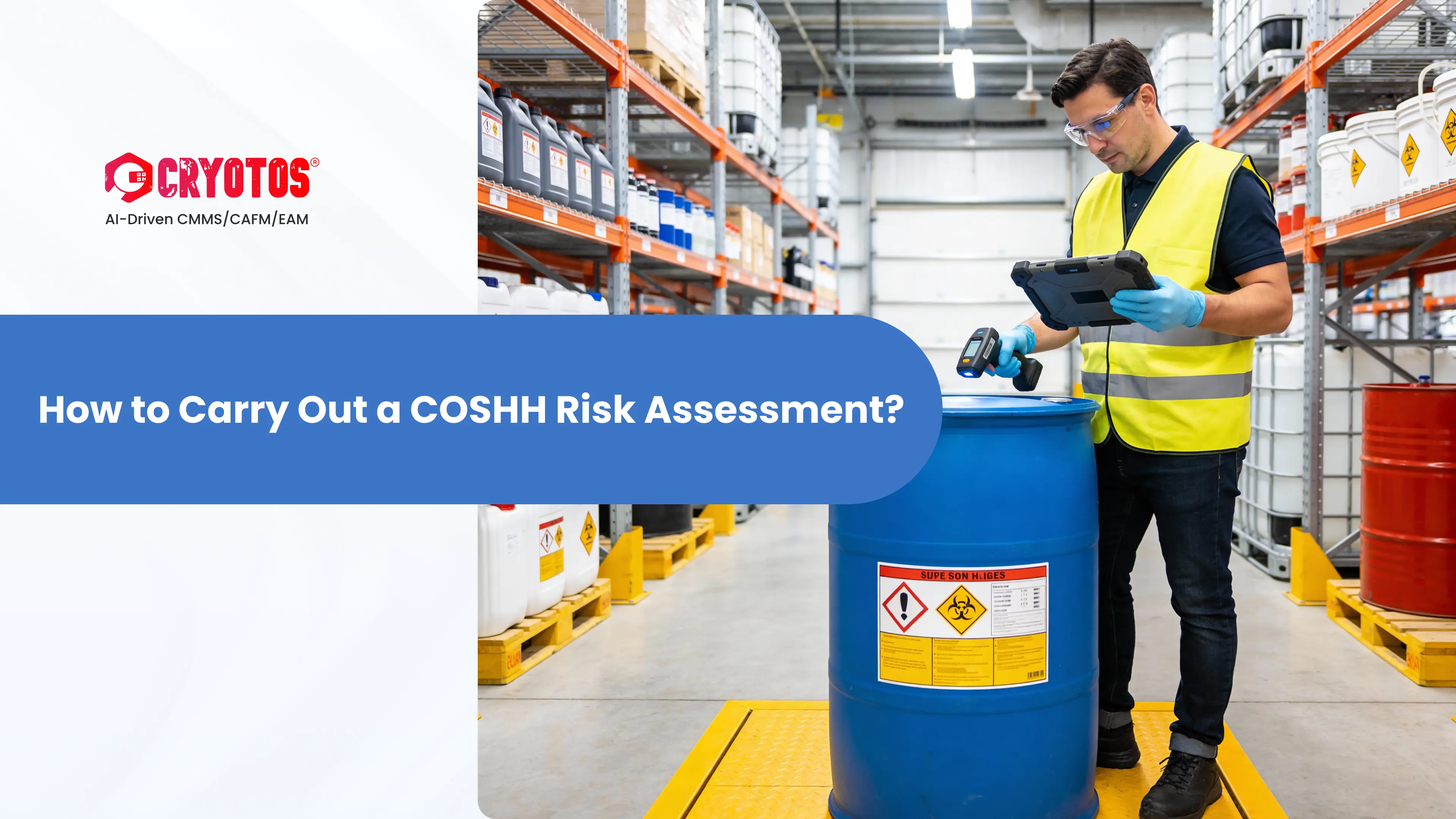
Let's face it: safety regulations often translate into red tape delays when it comes to getting to the actual work for most of the people in industry. But at the end of it all, that paperwork is what stands between an otherwise healthy work space and dramatic consequences, at least when it comes to hazardous substances. Thousands of workers become ill in a year just because of exposure to those hazardous substances. We are not talking about burns achieved at once, but diseases like silicosis, occupational asthma, and dermatitis-with a long latency period-that take away years of life quality many years down the line.
This guide is focused on the Control of Substances Hazardous to Health Regulations 2002 (COSHH). Indeed, whether you are a Plant Head or a Maintenance Manager, knowing about this does not only mean you can escape hefty fines or prosecution because there are severe penalties involved; it is about ensuring that your workers come in and go home as healthy as when they came in at the end of the day.
By the end of this guide, you will have a clear, actionable roadmap to ensuring your workplace is COSHH compliant, moving from "paper safety" to active protection.
There is a widespread misconception in the industry that simply collecting a folder full of Safety Data Sheets (SDS) from your suppliers constitutes a COSHH assessment. It does not.
A Safety Data Sheet tells you what a chemical is. A COSHH risk assessment looks at how that chemical is used in your specific environment and whether that use poses a threat to your people.
In practice, this means that a careful examination is conducted of what could cause harm to people, followed by a decision as to whether enough precautions are taken to avert that harm. The data is then condensed into action safety instructions.
This isn't just best practice; it is statutory law. The assessment is the core requirement of the Control of Substances Hazardous to Health Regulations 2002, which sits under the umbrella of the Health and Safety at Work Act 1974.
The law requires you to control exposure to materials that cause illness. If you fail to adequately assess the risks and a worker develops an occupational disease, the lack of a suitable and sufficient assessment is often the first point of failure cited in legal proceedings.
While dangerous, not every hazardous material falls under COSHH. Some substances have their own specific, stricter regulations due to their extreme nature. These include:
If your maintenance teams encounter these, a standard COSHH assessment is not sufficient; you must refer to their specific legislative frameworks.
You cannot control hazards unless you know they exist. This step requires you to leave your desk and walk the floors to examine the operational activities and what is being used regularly in those activities. Do not rely on purchase orders alone; check cupboards for old bottles or workbenches for unlabeled containers. Process-generated hazards should be identified, such as those generated during work, such as silica dust from drilling or fumes from welding-these won't have a safety data sheet.
Once identified, you will now need to find out how these substances work with regard to your workforce. A substance is considered a risk only if there is a route through which it can enter the body, so you will need to observe how the workers work with this material. Aside from frequency and duration of work, think about the potential health effects as well. A very poisonous substance, once per year in a closed-system exposure, poses a profile of risk that varies considerably from the risk of a mild irritant exposed by hand every hour.
This stage is very dangerous. It is the stage when you decide how to protect your team. You must apply the Hierarchy of Control, which in most cases advocates for collective protection as the first step to individual protection. Personal Protective Equipment (PPE) are usually the last resort and often inappropriately used since they should be virtually relied on in case other alternatives do not sufficiently reduce the need for risk. If you jump to using PPE without considering other alternatives, then chances are you're non-compliant.
If you Employ five or more, there becomes a legal binding compulsion to record the significant findings of your assessment. But in maintenance management by best practice, it should be documented irrespective of the size of the team so that an audit trail can be created. That record proves that you have understood the risks and have processes to mitigate them, which becomes your primary line of defense in a legal or regulatory probe into your operations.
An assessment is useless if it remains in a folder; these may be put into practice for the actual world on the shop floor. This would involve putting up the proper engineering controls and ensuring that the workforce actually uses them. You should also check if the people who install these controls are qualified-a poorly installed extraction fan can often worsen exposure by blowing fumes outward rather than removing them.
This is where Maintenance Management Systems, like Cryotos, come into play. These engineering controls, like local exhaust ventilation (LEV), are mechanical systems that deteriorate with time-filters clog, belts slip, and seals gum up. You really must put in a program of regular maintenance to ensure the continued operation of these controls in the intended manner. In the UK, the majority of LEV systems require a statutory thorough examination and testing (TExT) at a minimum of every 14 months.
Accidents will occur with or without preventive measures; it must also be included in risk assessment. It should have all of the anticipated events that might go wrong: chemical spills, fires, and even accidental ingestion. The preparations will ensure that a small accident never grows into a large tragedy. All emergency equipment must be specifically suited to the sort of chemicals you have on site-an all-purpose first aid kit will probably not suffice for cyanide or hydrofluoric acid burns.
A COSHH assessment can be termed a "living document" since it is not a one-time task. The working environment is constantly changing, processes change, new chemicals are introduced, and machinery is upgraded. In order to keep your assessment valid you need to do regular reviews. No one will believe that you still rely on the assessment done five years before; this would mean that you are exposing your crane drivers to the risks that remain unmanaged.
One of the biggest mistakes managers make is assessing risks from behind a desk. Your technicians often know the "workarounds" or habits that management misses-like turning off a noisy ventilation fan or taking off gloves because they reduce grip. If you don't engage the people doing the job, you are assessing a theoretical process, not the reality of the shop floor.
Complexity is the enemy of safety. If your assessment is filled with dense legal jargon and complex chemical formulas, your workforce will likely ignore it. The goal is to communicate risk, not to impress an auditor with big words. Ensure that the instructions are clear enough that a new apprentice could read them and understand exactly how to work safely.
While templates are a good starting point, relying on a generic assessment found online is dangerous. Every facility is unique; a solvent used in a well-ventilated warehouse poses a different risk than the same solvent used in a confined plant room. In a court of law, a generic assessment that fails to account for your specific site conditions is often viewed as evidence of negligence.
Managing hundreds of paper assessments is a logistical nightmare and prone to human error. In Industry 4.0, safety should be integrated into your workflow, not kept in a separate filing cabinet. By digitizing your COSHH data, you ensure that safety information is available right where the work happens-on the technician's mobile device.
The aim of COSHH is not to ban certain chemicals but to control their use when necessary. It is the interface between the substance and a safe worker. Consider hazards, assess risks, and keep your controls in place; thereby, you are protecting your most valuable asset: your people-a safe workplace is a productive workplace. Downtime caused by accidents or long-term sickness goes against your performance just as much as mechanical failure.
Ready to take the headache out of compliance? Cryotos CMMS doesn't just manage repairs; it manages safety. From attaching SDS files directly to Work Orders to automating statutory testing reminders for your LEV systems, Cryotos ensures your COSHH compliance is integrated, not an afterthought.

Cryotos AI predicts failures, automates work orders, and simplifies maintenance—before problems slow you down.