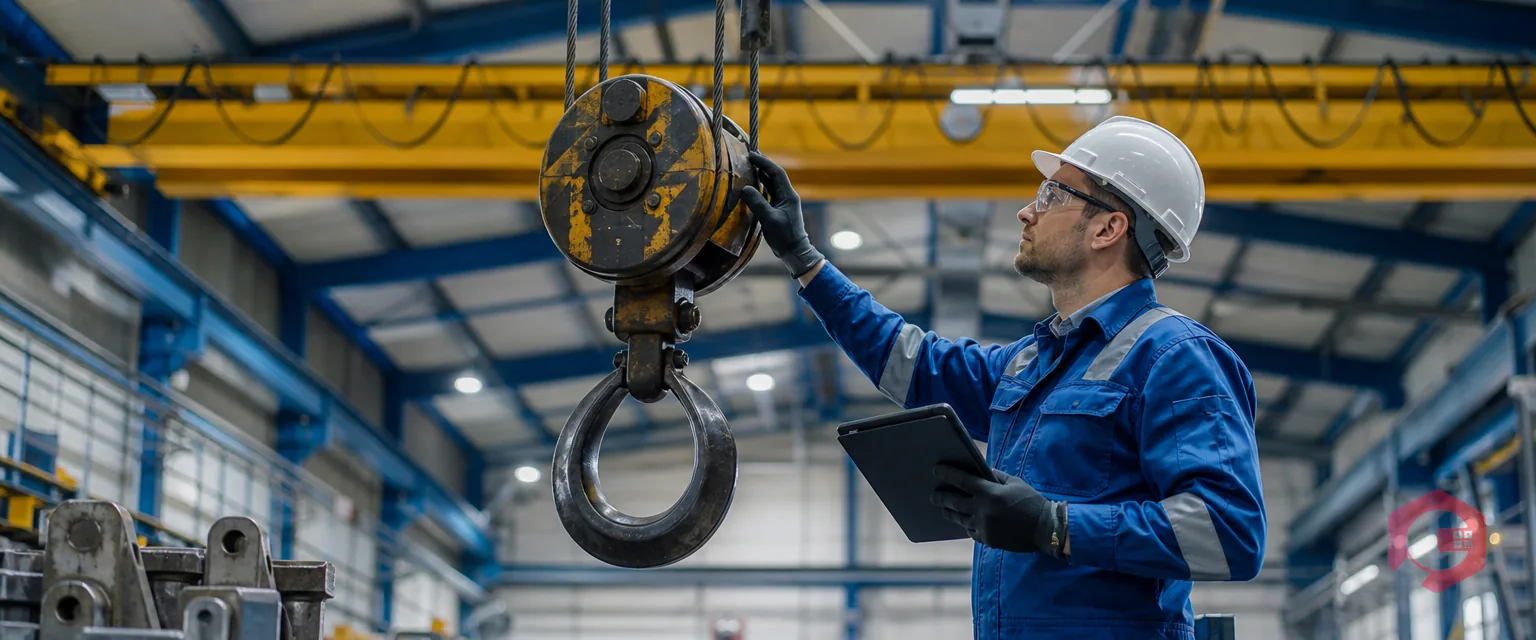
Every year, thousands of workers in construction, manufacturing, and utilities face life-threatening conditions at work. Behind each statistic lies a tragedy that could have been avoided: a maintenance oversight, a skipped inspection, or an unfulfilled safety procedure.
Most serious workplace injuries and fatalities occur due to common, identifiable causes. Understanding these isn't just about compliance; it's about saving lives.
According to the U.S. Bureau of Labor Statistics, over 5,000 workers die from workplace injuries annually in the US alone. Let's explore the seven leading causes — and how systematic maintenance approaches can prevent these devastating outcomes.
Poor Equipment Maintenance
Neglected equipment kills. When hydraulic systems fail, safety guarding malfunctions, or brakes give way, the consequences are catastrophic. Beyond obvious mechanical failures, silent deterioration — worn electrical insulation, corroded structural supports, degrading hoses — goes unnoticed until disaster strikes.
Common equipment-related hazards include:
- Hydraulic system failures causing sudden, uncontrolled movement of heavy components
- Worn or missing machine guards exposing workers to rotating parts and cutting edges
- Degraded brake systems on forklifts, cranes, and mobile plant equipment
- Corroded or cracked structural supports on elevated platforms and scaffolding
- Faulty pressure relief valves leading to catastrophic vessel or pipe failures
- Deteriorated electrical insulation causing shock, arc flash, or fire hazards
How CMMS prevents equipment-related incidents:
- Automated preventive maintenance schedules ensure critical inspections never get skipped
- Digital checklists prompt technicians to inspect safety-critical components at every service
- Equipment history logs surface recurring failure patterns before they become fatalities
- Real-time IoT sensor alerts flag abnormal vibration, temperature, or pressure readings instantly
- Work order workflows enforce sign-off requirements before equipment returns to service
Lack of Proper Training
A worker who doesn't understand lockout-tagout procedures risks electrocution. Someone operating a lathe without proper training might lose a limb in seconds. According to OSHA training requirements, training gaps persist across industries because organizations lack systems to track certifications, expiration dates, and refresher course needs.
Common training deficiencies that lead to accidents:
- Workers operating heavy machinery without documented, verified competency assessments
- Expired confined space entry certifications not flagged before job assignments
- New employees performing high-risk tasks before completing mandatory induction programs
- Supervisors unaware that technician licenses have lapsed or require renewal
- No system tracking which workers are qualified for specific equipment or procedures
CMMS solutions for training management:
- Centralized training records store all certifications, licenses, and expiry dates in one place
- Automated alerts notify supervisors when a worker's certification is due for renewal
- Work order assignment logic prevents unqualified workers from being assigned to restricted tasks
- Induction and competency maintenance checklists are embedded directly into onboarding work orders
- Training compliance dashboards give managers real-time visibility across the entire workforce
Inadequate Hazard Identification
The most dangerous hazards are those that go unnoticed. Exposed wiring behind panels, chemical residue in ventilation systems, or structural fatigue in supporting beams — these often escape attention until someone gets hurt.
Why hazard identification fails:
- Inspections are infrequent, informal, or rely entirely on worker memory rather than structured checklists
- There is no standardized process for reporting near-misses or minor hazards before they escalate
- Hazard reports are submitted on paper, lost, or not escalated to the right person in time
- Teams work in silos — maintenance, operations, and safety don't share hazard information
- No feedback loop exists to confirm identified hazards were actually resolved
Common unnoticed hazards in daily operations:
- Worn anti-slip surfaces on stairs and walkways that degrade gradually over months
- Slow hydraulic fluid leaks that create slip hazards and fire risks near ignition sources
- Partially blocked emergency exits or fire suppression equipment that pass casual inspection
- Vibration-induced loosening of bolts and fasteners on structural or rotating equipment
- Chemical cross-contamination in shared storage areas that isn't visible to the naked eye
- Heat buildup in electrical panels due to overloading or poor ventilation
Using a digital work order management system ensures every reported hazard is logged, assigned, tracked, and closed — nothing falls through the cracks.
Unsafe Work Practices
When time pressures intensify, rational workers make irrational decisions. The technician skips the safety check to meet a deadline. The operator removes machine guards to work faster. The maintenance worker enters a confined space without proper monitoring to expedite the job. Research from the National Safety Council shows these shortcuts seem minor until they result in a serious incident — or fatality.
Common unsafe practices in industrial settings:
- Bypassing lockout-tagout procedures to save a few minutes on a quick repair
- Working at height without attaching fall arrest lanyards to a certified anchor point
- Removing machine guarding to clear jams or access components during production
- Entering confined spaces without gas testing, atmospheric monitoring, or a standby person
- Operating equipment beyond rated load capacity under production pressure
Root causes driving unsafe behaviors:
- Production targets that implicitly reward speed over safety compliance
- Inadequate supervision or safety culture that normalizes minor rule-bending over time
- Poorly designed work procedures that make the safe way slower or harder than the unsafe shortcut
- No consequence or correction when unsafe behaviors are observed and ignored by supervisors
- Workers unaware of the actual risk level associated with tasks they perform daily
- Fatigue from excessive shift lengths reducing risk perception and decision-making quality
How CMMS enforces safe work procedures:
- Digital work orders embed mandatory safety steps that cannot be skipped or bypassed
- Permit to Work and LOTO workflows require supervisor sign-off before high-risk tasks begin
- Photo evidence requirements in checklists confirm safety controls are physically in place
- Audit trails record who did what and when, creating accountability without surveillance culture
- Safety non-conformance reports are auto-escalated to management for immediate follow-up
Electrical Hazards
Electricity kills instantly and without warning. Arc flash events, electrocution from live conductors, electrical fires from faulty wiring — these hazards remain among the deadliest in industrial environments. According to NFPA electrical safety standards, the invisible nature of electrical danger makes it particularly insidious. A wire that looks safe might carry lethal voltage.
Common electrical hazards in industrial settings:
- Damaged or deteriorated cable insulation on aging plant and equipment wiring
- Overloaded circuits and distribution boards without proper load monitoring or protection
- Improper or missing earthing and bonding on metal equipment and structures
- Electrical panels in wet or corrosive environments without adequate IP-rated enclosures
- Unlabelled or incorrectly labelled switchgear creating confusion during isolation
- DIY or non-compliant electrical repairs performed by unqualified maintenance personnel
Critical electrical safety requirements:
- All electrical work must be performed by certified, licensed electricians only
- Lockout/Tagout (LOTO) procedures must be completed before any work on electrical systems begins
- Arc flash hazard assessments must classify equipment and define required PPE ratings
- Thermographic inspections must be scheduled annually on all high-voltage switchgear
- Residual current devices (RCDs) must be tested regularly per manufacturer and statutory requirements
- Electrical inspection records must be maintained and accessible to maintenance and safety teams
CMMS role in electrical safety compliance:
- Schedules and tracks mandatory electrical inspection and testing cycles automatically
- Stores test results, certificates, and compliance documents against each electrical asset
- Triggers alerts when RCD testing, thermographic scans, or statutory inspections are overdue
- Enforces LOTO workflows as a required step within electrical work order procedures
- Generates compliance reports for auditors, insurers, and regulatory authorities on demand
Falls from Heights
Falls represent the leading cause of fatalities in construction and one of the most serious hazards across all industries. Working on roofs, scaffolding, ladders, and elevated platforms makes gravity an unforgiving risk factor. A momentary loss of balance, failed safety harness anchorage, or compromised scaffold structure can result in fatal falls.
Common fall scenarios and their causes:
- Scaffold boards that are damaged, incorrectly spanned, or missing edge protection rails
- Ladders used at incorrect angles, on unstable ground, or without a second person footing
- Safety harnesses with expired webbing, corroded fittings, or uncertified anchor points
- Roof work carried out without edge protection or safety nets in place beneath the work area
- Elevated work platforms (EWPs) operated beyond rated capacity or on uneven ground
- Unprotected floor penetrations and open edges in construction and industrial facilities
Equipment requiring systematic inspection:
- All scaffolding structures — before first use, after modification, and after adverse weather
- Fall arrest harnesses and lanyards — pre-use check by wearer plus periodic formal inspection
- Ladder condition and footing — every use, with formal inspection records kept on file
- Elevated work platform pre-start checklists — operator-completed before every shift
- Roof anchor points and static lines — annual load testing and certification by competent persons
- Fixed access platforms, handrails, and gratings — included in scheduled maintenance rounds
CMMS features preventing fall-related incidents:
- Schedules scaffold inspections and generates work orders automatically after weather events
- Asset tracking monitors harness inspection dates, service life, and retirement criteria per record
- Ladder and EWP pre-start checklists are digitised and completed on mobile before each use
- Fall protection equipment inspection history is stored and auditable at any time
- Overdue inspections trigger escalation alerts to safety officers and site supervisors immediately
- Defect reports raised in the field are auto-converted into corrective maintenance work orders
Exposure to Hazardous Substances
Chemical burns, respiratory damage, poisoning, long-term cancer risk — hazardous substances threaten workers in both immediate and insidious ways. Solvents, acids, heavy metals, combustible dust, toxic gases — industrial environments contain countless materials that can harm or kill. The EPA's chemical safety guidelines emphasize proper handling and exposure monitoring.
Types of hazardous substances and their risks:
- Industrial solvents and degreasers — skin absorption, respiratory damage, and fire/explosion risk
- Acids and caustic alkalis — severe chemical burns on contact with skin, eyes, or airways
- Heavy metals (lead, mercury, cadmium) — cumulative toxicity causing neurological and organ damage
- Combustible dusts (wood, grain, metal powder) — explosion risk in confined or poorly ventilated spaces
- Toxic and asphyxiating gases (H2S, CO, ammonia) — incapacitation and death at surprisingly low concentrations
- Asbestos-containing materials in older plant and buildings — fatal lung disease from fibre inhalation
Exposure scenarios leading to injury:
- Chemical storage areas without proper segregation allowing incompatible substances to react
- Ventilation systems that haven't been serviced, allowing toxic vapour concentrations to build
- Workers handling hazardous substances without correct PPE due to stock shortages or poor control
- Unlabelled or mislabelled containers leading workers to handle substances without understanding the risk
- Maintenance tasks on equipment containing residual hazardous substances without proper decontamination
- Spill response kits that are expired, incomplete, or inaccessible when a chemical incident occurs
CMMS solutions for hazardous material management:
- Maintains a live register of all hazardous substances on site with SDS documents attached to each asset
- Schedules regular inspection and replenishment of spill kits, PPE stocks, and emergency equipment
- Triggers PPE compliance checks and chemical handling competency verification within work orders
- Tracks ventilation system service history and schedules filter changes and airflow testing automatically
- Generates chemical exposure incident reports and links corrective actions to the responsible asset or area
How CMMS Software Enhances Safety Management
Across all seven causes, one pattern emerges: systematic management prevents incidents that ad-hoc approaches miss. Purpose-built manufacturing maintenance software provides the infrastructure to transform safety from reactive response into proactive protection.
- Preventive maintenance scheduling — Automated PM triggers ensure equipment is inspected and serviced before failures occur, not after an incident forces the issue
- Digital work order enforcement — Safety steps, permit requirements, and LOTO procedures are embedded directly into work orders, making compliance the path of least resistance
- Asset history and failure analysis — Complete maintenance records allow teams to spot deterioration trends and address root causes before they escalate to injuries
- Training and certification tracking — Centralised records with expiry alerts ensure only qualified workers are assigned to high-risk tasks at any given time
- Real-time hazard reporting — Mobile-first defect reporting tools mean hazards identified in the field are escalated and actioned in minutes, not days
- Compliance documentation — Inspection records, test certificates, and audit trails are stored and retrievable on demand, supporting regulatory compliance and incident investigations
Best Practices for Using CMMS to Reduce Injuries and Fatalities
Technology enables safety excellence, but success requires deliberate implementation and ongoing commitment.
Establish Comprehensive Preventive Maintenance Programs:
- Map every safety-critical asset and define inspection frequency based on manufacturer specs and risk level
- Build checklists that cover safety components explicitly — guards, brakes, emergency stops, and protective devices
- Set escalation rules so overdue safety inspections automatically alert supervisors and safety officers
- Review PM completion rates monthly and investigate any recurring skipped or deferred safety tasks
Build Safety into Work Order Workflows:
Don't treat safety as separate from maintenance operations.
- Embed Permit to Work and LOTO steps as mandatory, non-skippable stages in high-risk work orders
- Require photo evidence of safety controls (guards reinstated, isolation confirmed, PPE worn) before job closure
- Link work orders to the relevant risk assessments and method statements for each task type
- Configure work order templates for confined space entry, working at height, and hot work with all safety prerequisites built in
Maintain Complete Training and Certification Records:
Track not just initial training but refresher requirements, skill assessments, and equipment-specific qualifications.
- Upload all training certificates to individual worker profiles within the CMMS system
- Set automated renewal alerts 60 and 30 days before any certification expiry date
- Block work order assignment for workers whose relevant certifications have lapsed or been suspended
- Generate monthly training compliance reports for department heads and safety committees
Conclusion
The seven causes of serious workplace injuries and fatalities share one characteristic: they're all preventable through systematic safety and maintenance management. Equipment failures, training deficiencies, unidentified hazards, unsafe practices, electrical hazards, fall risks, and hazardous substance exposure don't occur randomly — they result from management systems failing to properly oversee and control risks.
For organizations in high-risk industries, implementing a maintenance management software represents more than operational efficiency — it fulfills the fundamental responsibility of ensuring every worker returns home safely. In safety management, there are no small failures. Every missed inspection, every skipped maintenance task, and every undocumented hazard contributes to the possibility of tragedy.