Preventive maintenance (PM) is the practice of performing scheduled inspections, servicing, and repairs on equipment before failures occur - reducing unplanned downtime and extending asset life. Unlike reactive maintenance, which fixes problems after they happen, preventive maintenance keeps critical assets running at peak performance.
Studies show that facilities with structured PM programs experience up to 30% lower maintenance costs and significantly fewer emergency breakdowns. Yet many teams still struggle to identify which tasks to prioritise and how often to perform them.
This guide covers 50+ preventive maintenance examples across manufacturing, fleet, facilities, healthcare, and food & beverage - with specific tasks, recommended frequencies, and a quick-reference table you can use immediately.
What Is a Preventive Maintenance Example?
A preventive maintenance example is any scheduled task performed on an asset at a fixed interval - or triggered by usage, condition, or sensor data - with the specific goal of preventing failure before it happens. The key word is scheduled: if you're responding to a breakdown, that's corrective maintenance, not preventive.
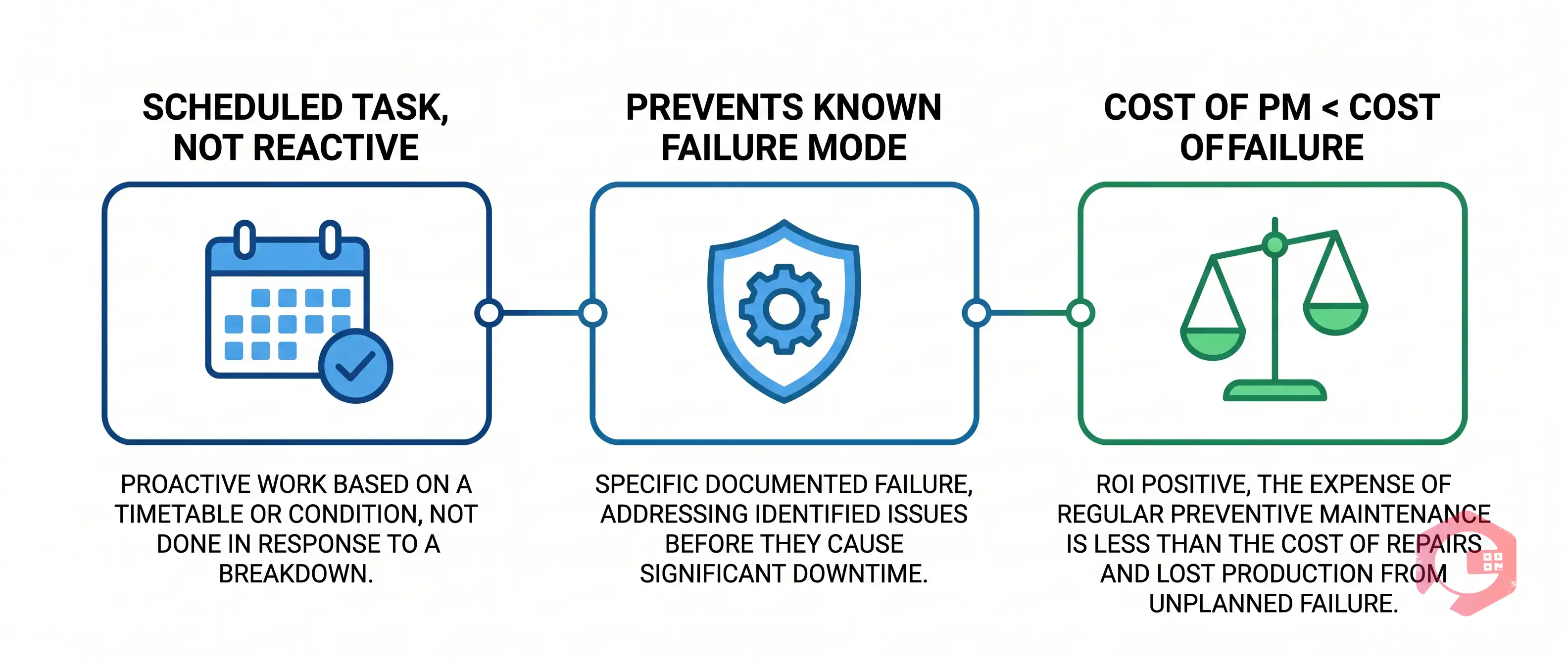
Not every maintenance task qualifies as a true PM task. The best PM programs focus on activities that pass all three of these criteria:
The 3 Criteria That Make a Task Worth Scheduling
The task prevents a known failure mode — it addresses a specific, documented way the asset can fail, not just a general assumption that maintenance is good.
The failure mode can be detected or delayed by the task — lubrication prevents friction wear; filter replacement prevents airflow restriction; bearing inspection catches developing faults before they progress to failure.
The cost of the task is less than the cost of the failure it prevents — time and labour to perform the PM must be less than the combined cost of emergency repair, downtime, and secondary damage from letting the failure occur.
With those criteria in mind, here are the most impactful preventive maintenance examples by industry.
Preventive Maintenance Examples in Manufacturing
Manufacturing environments run some of the most complex, high-stakes equipment in any industry. Unplanned downtime on a production line can cost anywhere from $5,000 to over $250,000 per hour, according to McKinsey's smart factory research. Strong PM programs in manufacturing focus on three equipment classes: conveyors and material handling, rotating machinery, and hydraulic/pneumatic systems.
Conveyor Belt Maintenance
Daily: Visual inspection of belt tracking and tension; check for material spillage at transfer points and clear any build-up under belt runs.
Weekly: Lubricate idler bearings and check idler spin — seized idlers cause belt damage and tracking problems; replace any non-rotating idlers found on walk-down.
Monthly: Inspect belt splices for separation or cracking; check drive pulley lagging for wear that causes slippage; measure take-up tension against design specification.
Quarterly: Full belt surface inspection for cuts, tears, and delamination; check all skirt rubber seal condition; measure drive motor current draw against baseline to detect increasing mechanical resistance.
CNC Machine & Rotating Equipment
Daily: Check spindle oil level and coolant concentration; clean chip conveyor and verify coolant pump operation; inspect way covers and confirm all safety guards are in place before startup.
Weekly: Check and top up axis drive lubricants; inspect tool changer mechanism for debris accumulation; check coolant filter condition and replace if delta pressure exceeds limit.
Monthly: Measure spindle runout with dial indicator; check all axis ballscrew backlash and compare to acceptance limits; verify axis positioning accuracy with calibration bar or artefact.
Annually: Full spindle bearing replacement based on operating hours; gearbox oil change; laser calibration of all axes; check machine level and realign on levelling bolts if required.
Compressors and Hydraulic Systems
Weekly: Check compressor oil level and inspect for leaks at fittings, hoses, and seals; drain moisture from compressed air receivers and check auto-drain function is cycling correctly.
Monthly: Replace compressor air intake filter; check belt tension and condition on belt-driven units; measure system pressure and compare to unloaded setpoint for compressor health trend.
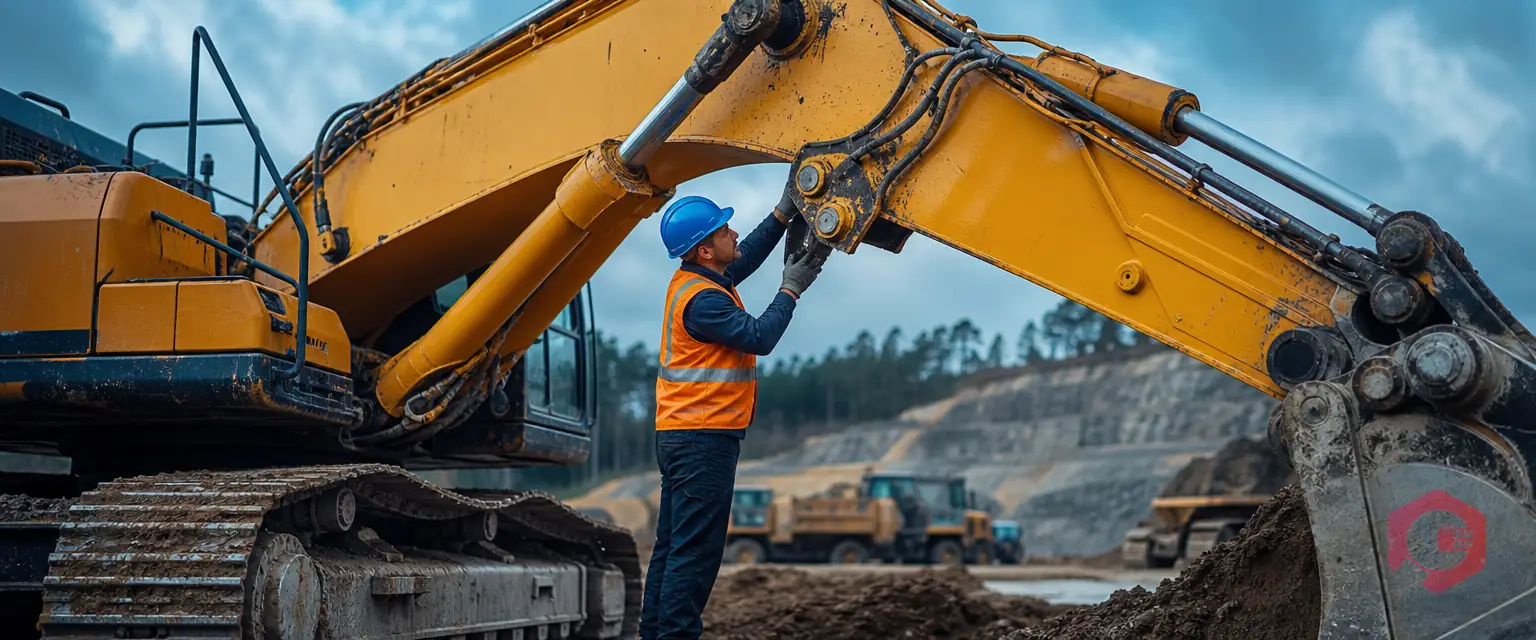
Quarterly: Change hydraulic system filter elements and check oil for contamination or discolouration; inspect all hydraulic hoses for cracking, swelling, and chafing at clamp points; send oil sample to lab on systems with high cycle rates.
Preventive Maintenance Examples for Fleet & Vehicles
Fleet operators face a dual pressure: keep vehicles on the road and keep drivers safe. Industry data consistently shows that each dollar spent on preventive fleet maintenance saves between $8 and $10 in breakdown and repair costs. The following are the highest-priority PM tasks for any mixed fleet.
Every 5,000–10,000 miles: Engine oil and filter change — prevents metal-to-metal wear and extends engine life; schedule by whichever comes first: mileage or 3–6 months.
Every 10,000–20,000 miles: Tyre rotation and pressure check — equalises wear across all four tyres and maintains safe handling; inspect tread depth and check for sidewall damage or embedded objects.
Every 10,000–15,000 miles: Brake pad thickness measurement — replace when below 3mm to prevent rotor scoring and maintain full stopping performance.
Every 30,000 miles: Air filter replacement — a clogged filter reduces fuel efficiency by up to 10% and increases engine load and emissions.
Every 30,000–60,000 miles: Transmission fluid service — prevents gear wear and slipping; particularly critical for vehicles operating in stop-start urban conditions.
Annually: Battery load test and terminal cleaning; inspect all belts and hoses for cracking; check all lights, signals, and wiper function; verify tyre age against the 5-year replacement guideline regardless of tread depth.
Preventive Maintenance Examples in Facilities & Buildings
Facility managers oversee the widest variety of assets - from multi-storey HVAC systems to fire suppression equipment. Deferred maintenance on facilities increases long-term repair costs by up to 400% compared to proactively maintained buildings. The following PM examples cover the highest-risk systems in any commercial facility.
HVAC System Maintenance
Monthly: Replace or clean HVAC air filters in high-traffic areas — blocked filters increase fan motor load, reduce airflow efficiency, and degrade indoor air quality and occupant comfort.
Quarterly: Check refrigerant charge and inspect coil condition on split systems and chillers; clean evaporator and condenser coils to maintain heat transfer efficiency; lubricate fan motor bearings and check drive belt tension.
Annually: Full service including ductwork inspection for leaks, balancing air distribution to design specification, checking all damper actuators, testing economiser function, and verifying thermostat and BMS calibration against independent measurements.
Electrical & Plumbing Systems
Monthly: Test all ground fault circuit interrupters (GFCIs) and residual current devices (RCDs) using built-in test buttons; verify emergency lighting battery packs with full discharge function test.
Quarterly: Inspect all panel boards for overheating, buzzing, or tripped breakers; check plumbing fixture flow rates and inspect all visible pipework for corrosion, drips, or water staining that indicates hidden leaks.
Annually: Thermographic scan of all main electrical panels, distribution boards, and motor control centres — detects loose connections and overloaded circuits before they cause arc flash events or fires.
Every 3–5 years: Water heater element inspection and anode rod replacement; full electrical insulation resistance (megger) testing on critical circuits; drain and inspect sump pumps and backflow prevention devices.
Fire Safety & Security Systems
Monthly: Visual inspection of all fire extinguishers — confirm pressure gauge is in green zone, no physical damage, and access path is clear; check all emergency exit signs and test emergency lighting battery function.
Annually: Full fire extinguisher service by certified technician; smoke and heat detector sensitivity testing per NFPA 72 or equivalent; sprinkler head inspection for corrosion, paint overspray, and obstructions.
Every 5 years: Sprinkler system internal inspection and full flow test; fire suppression system hydrostatic pressure test; fire panel battery replacement; update evacuation plans and test all alarm zones with full building evacuation drill.
Preventive Maintenance Examples in Healthcare
Healthcare equipment maintenance is regulated, life-critical, and heavily documented. The Joint Commission's Environment of Care standards mandate documented PM programs for all medical equipment. Failures in healthcare PM directly impact patient safety - making this one of the highest-stakes PM environments in any industry.
Daily / Per-use: Visual inspection of patient-contact equipment for damage or contamination before each use; verify defibrillator readiness status indicator and replace pads and batteries per display indicators.
Weekly: Run diagnostic self-tests on infusion pumps, ventilators, and bedside monitors per OEM procedure; check suction machine vacuum levels and clean or replace filters.
Monthly: Calibrate patient monitoring equipment including SpO2 sensors, blood pressure cuffs, and ECG leads against reference devices; verify IV pump drug library is current and approved by pharmacy.
Quarterly: Preventive maintenance on surgical power tools — clean, lubricate, and test per OEM procedure; inspect steriliser cycle performance with biological indicators and verify cycle documentation.
Annually: Full PM service on diagnostic imaging equipment (X-ray, ultrasound); radiological safety survey; compliance checks for all equipment on the Joint Commission's Alternate Equipment Management (AEM) list; log all service records in the CMMS for survey readiness.
Preventive Maintenance Examples in Food & Beverage
Food and beverage production combines the complexity of heavy manufacturing with strict food safety regulations. PM failures in this environment don't just cause downtime - they can trigger product recalls, regulatory shutdowns, and brand damage. The FDA's Food Safety Modernization Act (FSMA) requires documented preventive controls for equipment that contacts food, making PM a compliance requirement, not just a best practice.
Daily: Clean and sanitise all food-contact surfaces including conveyor belts, mixing equipment, and filling nozzles per the HACCP plan; inspect seals and gaskets on processing equipment for cracks or damage that could harbour pathogens.
Weekly: Lubricate conveyor chains, mixers, and conveyor drives with food-grade lubricants only; inspect hoppers, chutes, and transfer points for metal-to-metal contact that could generate metallic contamination.
Monthly: Check and calibrate all temperature monitoring equipment in cold stores, cooking tunnels, and pasteurisation units — temperature deviations are a critical FSMA non-conformance trigger.
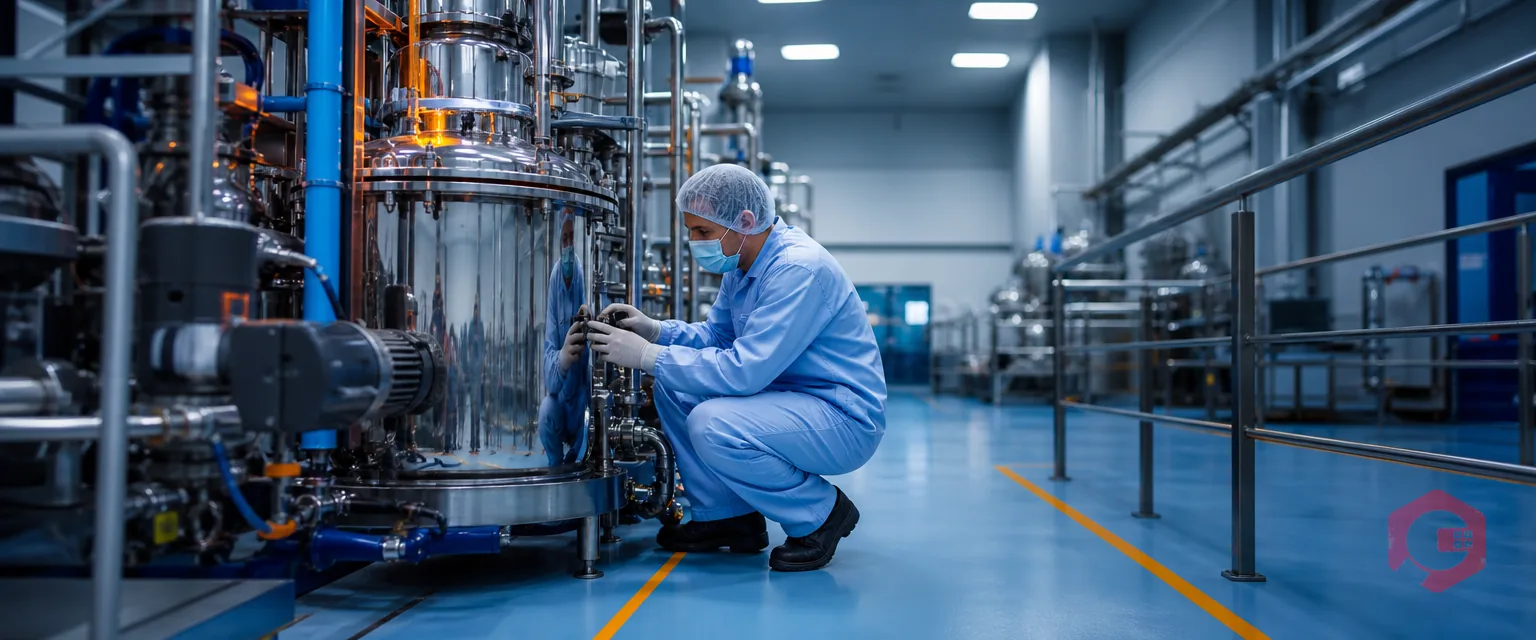
Quarterly: Full inspection of all pressure vessels and heat exchangers; replace pump seals and gaskets as a preventive measure on lines producing allergen products or high-risk ready-to-eat items.
Annually: Comprehensive internal cleaning and inspection of all tanks, silos, and storage vessels; calibration audit of all weighing and dosing equipment; review of all PM records against the FSMA preventive controls plan for regulatory compliance.
Modern PM Examples: IoT-Triggered & Condition-Based Maintenance
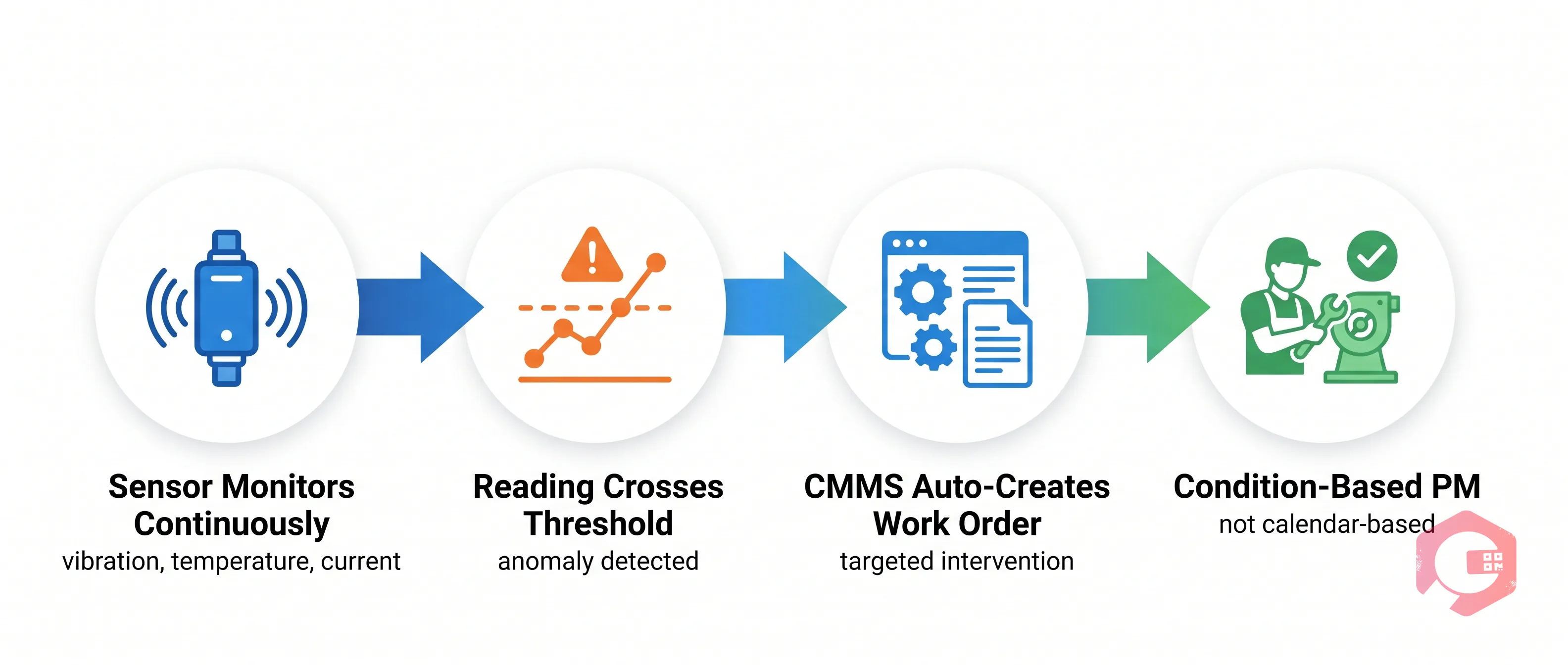
Traditional time-based PM schedules work well for assets with predictable wear patterns. But for complex rotating machinery and critical systems, condition-based PM - triggered by real sensor data rather than the calendar - delivers better outcomes. According to Deloitte's predictive maintenance research, condition-based and IoT-triggered PM programs reduce maintenance costs by 25%, eliminate breakdowns by 70%, and cut downtime by 35% compared to time-based schedules alone.
Vibration Sensor-Based Bearing Checks
Wireless vibration sensors attached to motors, pumps, and fans continuously measure vibration amplitude and frequency. When vibration crosses a predefined threshold - typically 3-5x the baseline reading - the CMMS automatically generates a work order for bearing inspection. This replaces a monthly calendar-based check with a targeted intervention triggered only when the asset actually needs attention.
Thermal Imaging for Electrical Panels
Fixed thermal cameras mounted inside high-voltage panels or MCC rooms monitor connection temperatures in real time. A connection running 15°C above ambient temperature triggers an alert and a work order for re-torquing - catching the fault weeks before it could cause an arc flash event. This replaces an annual manual thermography walkdown with continuous monitoring.
CMMS-Automated PM Scheduling
Modern CMMS platforms like Cryotos connect directly to IoT sensors, SCADA systems, and metering devices. When a pump accumulates 500 operating hours, the CMMS automatically creates and assigns a lubrication work order - no manual tracking required. Cryotos supports both static PM schedules (fixed time intervals) and dynamic PM schedules (usage-based: hours, mileage, cycles), so your PM program matches the actual wear pattern of each asset rather than a conservative calendar estimate.
Preventive Maintenance Frequency Quick-Reference Guide
Use this reference as a starting point for your PM schedule. Actual frequencies should be adjusted based on manufacturer recommendations, operating environment, and historical failure data.
Asset
Maintenance Task
Frequency
Benefit
HVAC filters
Replace filter media
Monthly–Quarterly
Maintains airflow efficiency; prevents fan motor overload
Conveyor belts
Tension check & lubrication
Weekly
Prevents slippage, misalignment, and idler bearing seizure
Vehicle engine
Oil & filter change
Every 5,000–10,000 miles
Prevents metal wear; extends engine life by 2–3×
Electrical panels
Thermography scan
Annually
Detects hot spots before arc flash or fire events
Air compressors
Intake filter replacement
Monthly
Reduces energy consumption by up to 10%
Fire extinguishers
Visual inspection + annual service
Monthly / Annually
OSHA compliance; ensures readiness in emergencies
CNC machines
Spindle runout + coolant check
Monthly
Maintains part quality; prevents spindle bearing failure
Medical equipment
Calibration & functional test
Per OEM / Quarterly
Joint Commission compliance; patient safety
Vehicle brakes
Pad thickness measurement
Every 10,000 miles
Prevents rotor damage & safety incidents
Hydraulic systems
Oil analysis
Semi-annually
Detects internal wear before catastrophic pump failure
How to Track and Execute PM Examples with a CMMS
Having a list of PM examples is a starting point. Executing them reliably - across dozens of assets, multiple technicians, and shifting production schedules - requires a system. A Computerised Maintenance Management System (CMMS) turns your PM task list into an automated, trackable workflow.
Here's how teams use Cryotos CMMS to manage preventive maintenance programs:
Automated PM scheduling: Configure PM tasks once — daily, weekly, monthly, or usage-triggered — and Cryotos automatically creates and assigns work orders on schedule, without anyone needing to manually check a spreadsheet or remember a deadline.
Mobile-first execution: Technicians receive PM work orders on the Cryotos mobile app, complete checklists at the asset location, attach photos and notes, and close the work order in real time — eliminating paper-based backlog and transcription errors.
PM compliance tracking: Cryotos tracks which scheduled PMs were completed on time and which were overdue, giving maintenance managers a clear PM compliance rate by asset, team, and department to drive accountability and identify scheduling bottlenecks.
Asset history and failure analysis: Every completed PM work order is stored against the asset record, building a full maintenance history. When an asset fails, technicians can see all recent PM activity and identify whether a missed or inadequate PM contributed to the failure.
Teams using Cryotos report a 30% reduction in unplanned downtime and 25% faster repair times after implementing structured PM programs. If your team is still managing PM from spreadsheets or whiteboards, the efficiency gains from a CMMS are immediate and measurable. See also: Work Order Management and Downtime Tracking.
Frequently Asked Questions
What is a simple example of preventive maintenance?
A simple example of preventive maintenance is changing the engine oil in a vehicle every 5,000-10,000 miles. Rather than waiting for the oil to degrade completely and cause engine wear, you replace it on a fixed schedule - keeping the engine lubricated and extending its life. The same principle applies to any asset: replace, inspect, or service it before it fails.
What are the 5 most common preventive maintenance tasks?
The five most widely performed PM tasks across industries are: (1) lubrication of moving parts, (2) filter replacement on HVAC, compressors, and engines, (3) visual inspection and cleaning of electrical connections, (4) belt and hose inspection and replacement, and (5) calibration of instruments and sensors. These five tasks alone account for the majority of PM activity in most maintenance programs.
What are examples of preventive maintenance on a car?
Common car PM examples include oil and filter changes, tyre rotation and pressure checks, brake pad thickness measurement, air filter replacement, coolant flush, transmission fluid service, battery load testing, and wiper blade replacement. Most manufacturers publish a maintenance schedule in the owner's manual that specifies intervals for each task based on mileage or time, whichever comes first.
How often should preventive maintenance be performed?
Frequency depends on the asset, its operating environment, and the cost of failure. Critical assets in high-use environments (production machinery running 24/7) need more frequent PM than low-use backup equipment. A good starting point is the manufacturer's recommended service intervals, adjusted over time based on what your maintenance data shows: if technicians consistently find nothing wrong at an inspection, the interval may be too short; if they find significant wear every time, it may be too long.
What is the difference between preventive and corrective maintenance?
Preventive maintenance is performed on a schedule before failure occurs - the goal is to prevent the failure from happening. Corrective maintenance is performed after a failure has already occurred - the goal is to restore the asset to working condition. Preventive maintenance costs are predictable and controllable; corrective maintenance costs are unpredictable and often 3-10x higher due to emergency labour rates, expedited parts, and secondary damage caused by the failure.