

In 2005, a catastrophic explosion at the BP Texas City refinery killed 15 workers and injured over 170 others. The incident resulted in $2.1 billion in settlements and fines. The root cause? A breakdown in permit-to-work procedures during startup operations. This tragedy is just one example of how a single overlooked permit can cascade into millions in losses, devastating injuries, and irreparable damage to company reputation.
For oil and gas facilities operating under extreme pressures, hazardous environments, and complex simultaneous operations, permit-to-work (PTW) systems are not administrative formalities-they are the last line of defense between routine maintenance and catastrophic failure. Yet many facilities still rely on paper-based systems prone to human error, miscommunication, and gaps in accountability.
Digital PTW systems offer a proven solution to these vulnerabilities. By automating workflows, enforcing compliance checks, and creating real-time visibility across operations, modern PTW software is transforming how oil and gas companies manage high-risk work. This article explores why digital PTW is no longer optional for companies that want to protect their workers, assets, and bottom line.
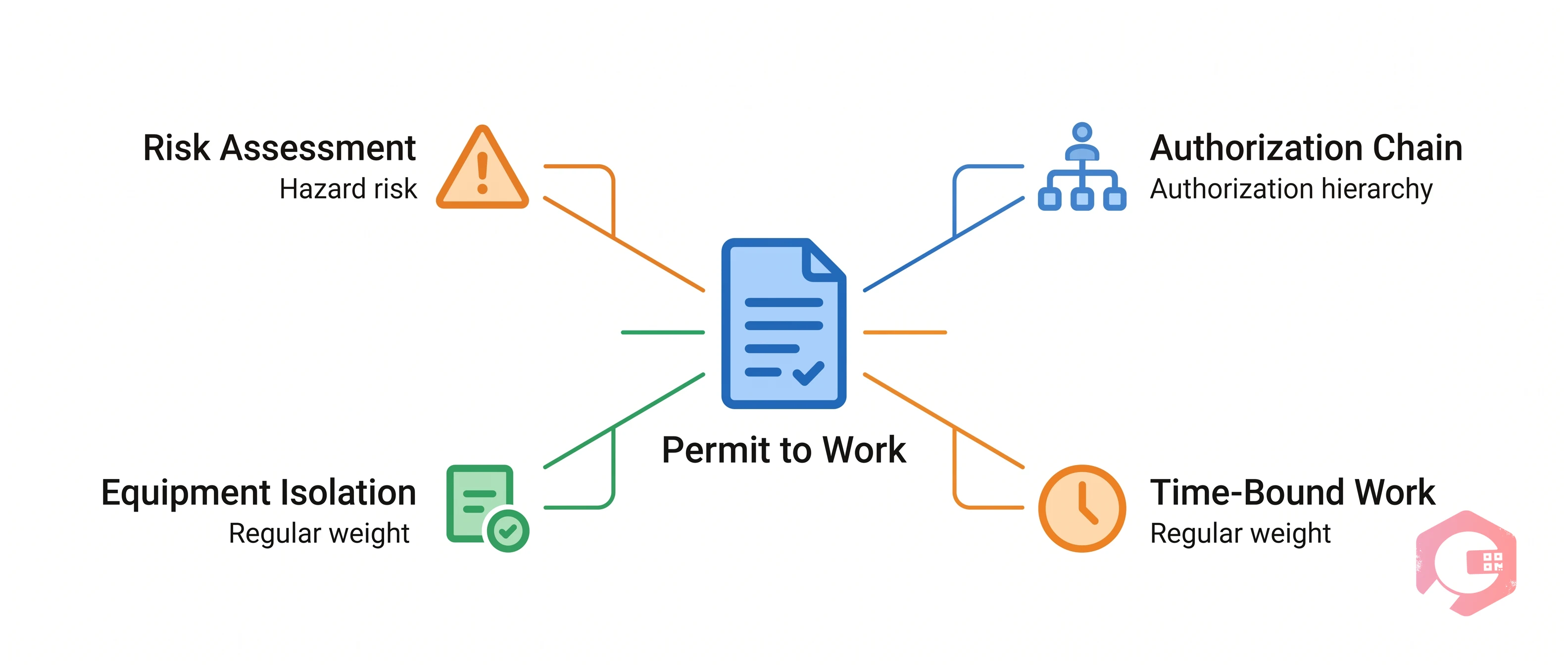
A Permit to Work (PTW) system is a formal written procedure that authorizes specific personnel to carry out high-risk work during a defined time period and under specified conditions. In oil and gas operations, PTW systems govern activities such as hot work (welding, cutting), confined space entry, electrical isolation, excavation, and working at heights.
The primary purpose of a PTW system is to ensure that all necessary safety precautions are identified, communicated, and verified before work begins. This includes risk assessments, equipment isolation, atmospheric testing, emergency response readiness, and coordination with simultaneous operations in adjacent areas.
According to OSHA and API guidelines, effective PTW systems must include clear authorization hierarchies, competency verification, pre-work hazard analysis, and documented handover procedures when shifts change. When these protocols are followed correctly, PTW systems dramatically reduce the likelihood of incidents caused by miscommunication, inadequate preparation, or unauthorized work.
The financial impact of PTW-related incidents extends far beyond immediate medical costs and equipment damage. When permits are improperly issued, expired, or bypassed entirely, the consequences can include:
Industry studies suggest that for every $1 invested in digital safety systems, companies realize $4-$6 in avoided incident costs. Given that a single major PTW failure can cost $50-$100 million when all factors are considered, the ROI case for digital PTW is compelling.
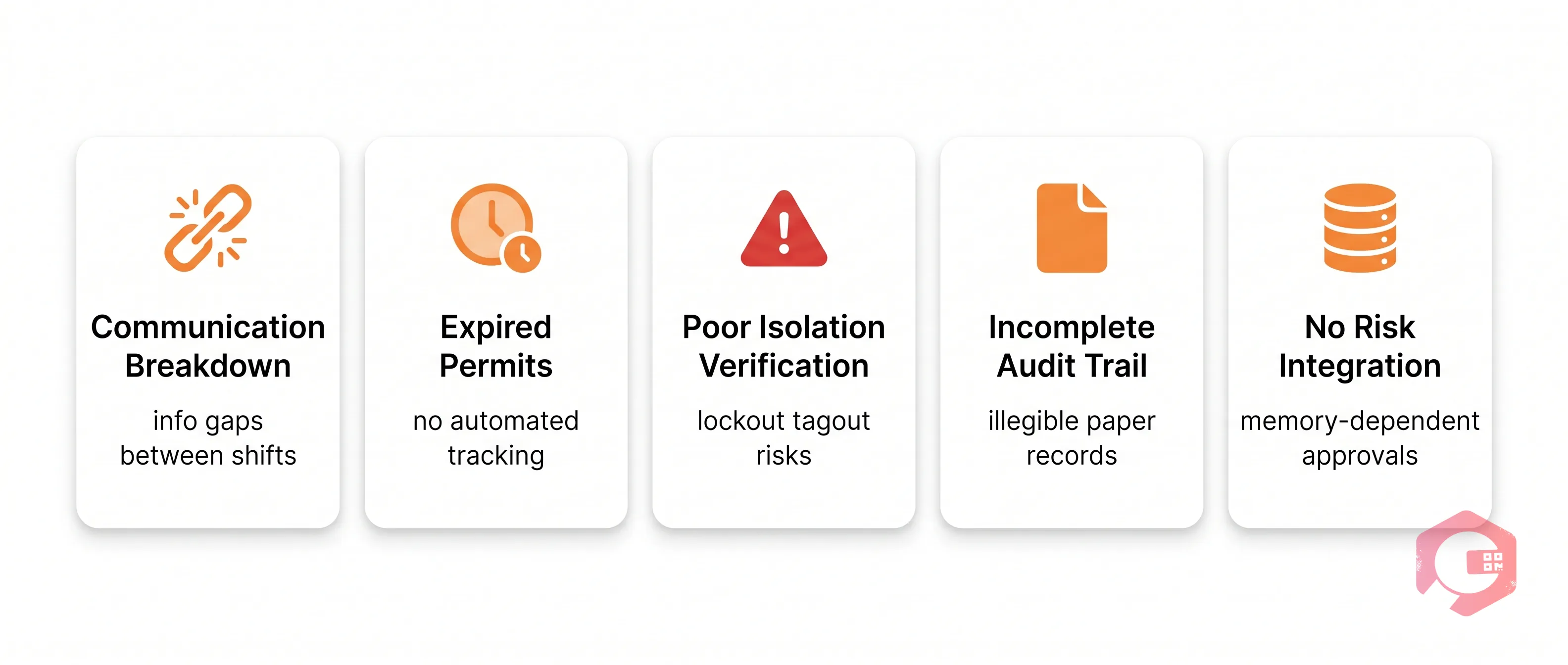
Despite widespread awareness of PTW importance, many oil and gas facilities continue to rely on paper-based permit systems that introduce multiple points of failure:
Paper permits often reside in filing cabinets or clipboards at job sites, making it difficult for control room operators, supervisors, and adjacent work crews to know what activities are authorized at any given moment. When shift changes occur, critical information about ongoing permits may not transfer effectively, leading to dangerous assumptions.
Without automated tracking, permits can remain active beyond their authorized time windows. Workers may continue hazardous activities under expired permits, believing they still have authorization. Conversely, permits may be renewed automatically without fresh hazard assessments, allowing conditions to change without review.
Paper-based systems struggle to enforce lockout/tagout verification. Equipment may be de-energized according to one permit while another crew assumes it remains energized. Without real-time visibility into isolation status, re-energization mistakes become common, leading to electrocution, release of hazardous materials, or unexpected equipment startup.
When auditors or investigators need to reconstruct what happened before an incident, paper permits are often incomplete, illegible, or lost. Missing signatures, vague hazard descriptions, and inconsistent formats make it difficult to demonstrate compliance with API, OSHA, and internal standards.
Paper permits rarely integrate with risk assessment tools, JSA (Job Safety Analysis) databases, or previous incident reports. This means permit issuers must rely on memory and experience rather than data-driven insights about similar past activities, increasing the likelihood of overlooked hazards.
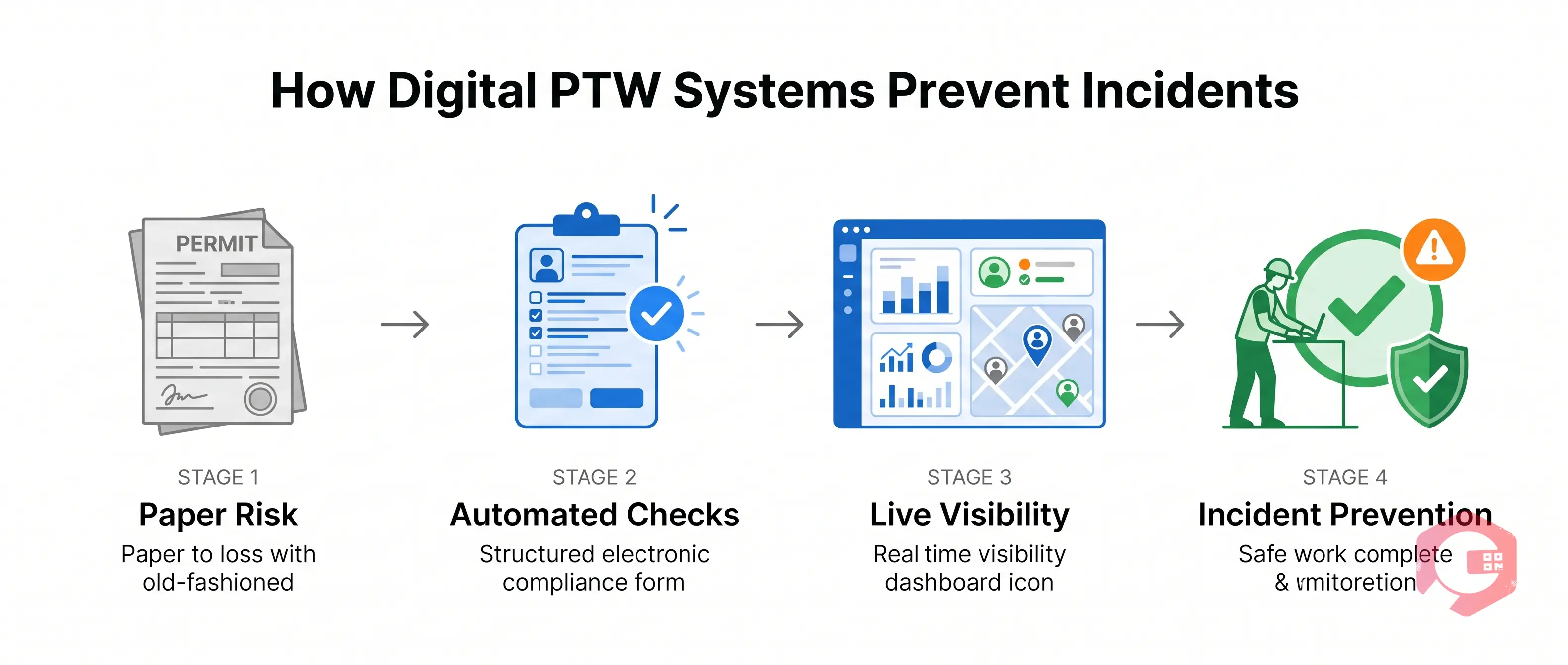
Modern digital PTW systems address these vulnerabilities through automation, real-time visibility, and integrated safety workflows. Here's how they reduce incident risk:
Digital systems enforce mandatory fields, competency verification, and approval hierarchies before permits can be issued. If a required atmospheric test result is missing or a supervisor's signature is absent, the permit cannot proceed. This eliminates the "I'll get to it later" shortcuts that paper systems allow.
Control room operators, safety officers, and field supervisors can view all active permits on dashboards or mobile devices. When simultaneous operations are planned, the system flags potential conflicts (e.g., hot work near a confined space entry) and requires additional coordination measures before approval. This visibility ensures that no crew operates in isolation without awareness of adjacent hazards.
Digital PTW platforms automatically notify permit holders when expiration is approaching and lock out work when time limits are exceeded. Renewal requests trigger fresh risk assessments, ensuring that changing conditions are evaluated before work continues. This prevents the dangerous practice of working under stale authorizations.
Leading permit to work software integrates directly with lockout/tagout systems, electrical isolation records, and P&ID (piping and instrumentation diagram) databases. Before a permit is issued, the system verifies that all required energy sources have been confirmed isolated and that lock devices are in place. This integration eliminates the most common cause of energization-related incidents.
Digital systems capture detailed permit data-task types, locations, hazards identified, near-miss reports-and analyze patterns over time. If a particular type of work in a specific area has a higher-than-average incident rate, the system can flag it and require enhanced precautions. This continuous improvement loop is impossible with paper-based tracking.
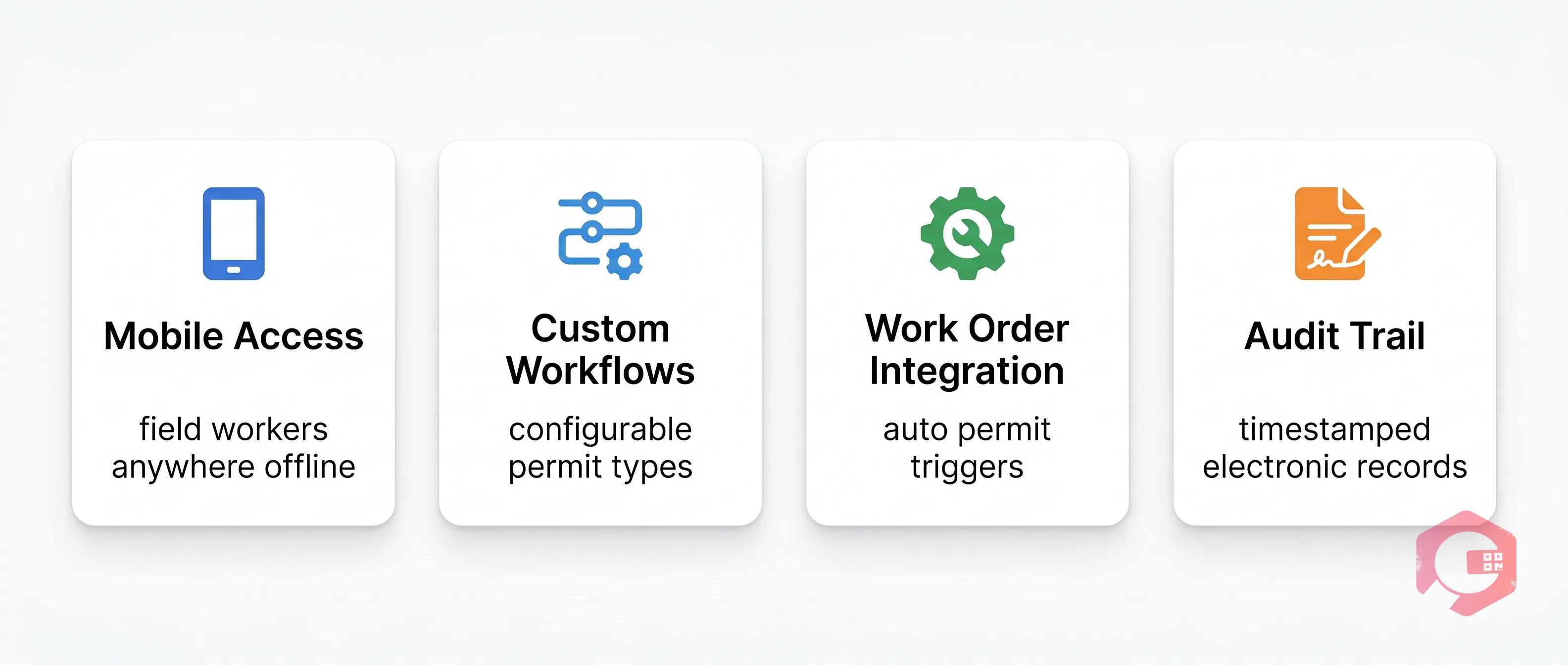
When evaluating digital PTW platforms for oil and gas operations, prioritize solutions that offer:
Field technicians and contractors need the ability to request, review, and acknowledge permits from mobile devices at the job site. Offline functionality is critical for remote locations with limited connectivity. Mobile access ensures that workers always have the latest permit information without returning to control rooms or offices.
Not all permits require the same approval chain or safety checks. A cold work permit for routine valve maintenance has different requirements than a confined space entry permit for tank cleaning. The system should allow administrators to define custom workflows, mandatory fields, and approval hierarchies for each permit classification.
PTW systems should integrate seamlessly with CMMS (Computerized Maintenance Management Systems) so that work orders automatically trigger permit requirements when applicable. This integration prevents the common mistake of beginning work without realizing a permit is needed and ensures that permit costs and time are factored into maintenance schedules.
Every action in the permit lifecycle-request, approval, closure, extension-should be logged with timestamps and digital signatures that meet regulatory standards. During audits or investigations, this complete audit trail provides irrefutable documentation of compliance.
When incidents or near-misses occur, the system should allow direct linkage to related permits. This enables root cause analysis teams to quickly identify whether permit procedures were followed correctly and whether improvements are needed. Integration with safety checklists and compliance workflows creates a closed-loop safety system.
EHS managers and operations directors need visibility into permit volumes, average approval times, most common permit types, and compliance rates. Real-time dashboards and automated reports support continuous improvement initiatives and demonstrate safety performance to stakeholders.
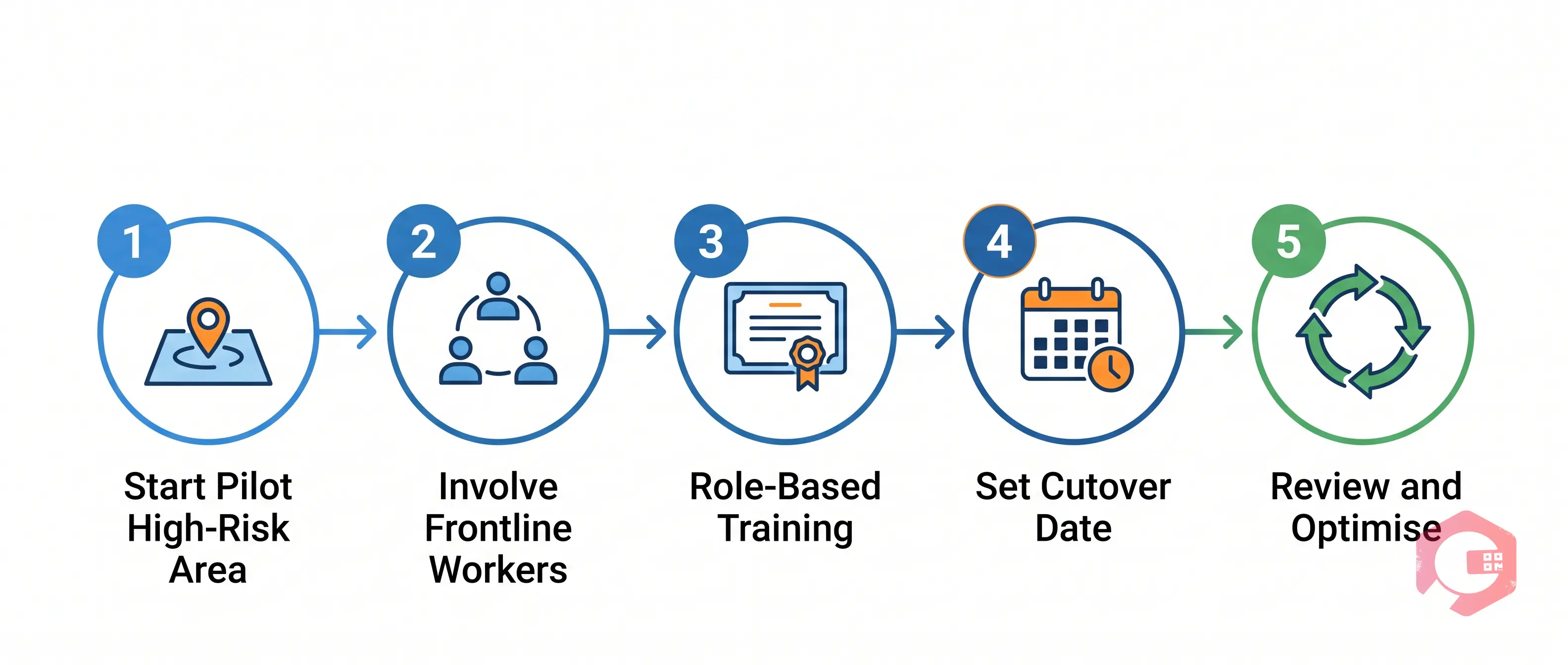
Successful digital PTW implementation requires more than software deployment. Follow these best practices to ensure adoption and maximize safety impact:
Rather than attempting facility-wide rollout immediately, begin with a single unit or process area known for high permit volumes or incident history. This allows your team to refine workflows, identify training needs, and demonstrate value before expanding to other areas.
The technicians, operators, and contractors who use the system daily must have input during configuration. Their feedback on permit request workflows, mobile interface usability, and required fields will determine whether the system is seen as a helpful tool or an administrative burden. Co-creation builds buy-in and reduces resistance.
Different users have different needs. Permit issuers need training on hazard identification and approval workflows. Contractors need training on mobile permit requests. Control room operators need training on real-time monitoring and conflict resolution. Role-based training ensures that everyone understands their responsibilities.
Running paper and digital systems in parallel inevitably leads to confusion, double entry, and reduced adoption. After a reasonable transition period, set a hard date when paper permits are no longer accepted. This clarity forces users to commit to the new system and prevents backsliding.
After go-live, schedule quarterly reviews with permit coordinators, safety managers, and system users to identify bottlenecks, unnecessary steps, or unclear fields. Digital systems offer the flexibility to refine workflows over time-leverage this advantage to keep the system aligned with actual work practices.
The oil and gas industry operates in inherently hazardous environments where the margin for error is razor-thin. A missed signature, an expired permit, or a failure to communicate simultaneous operations can result in explosions, toxic releases, or fatalities-along with financial losses that dwarf the investment in digital safety systems.
Digital PTW systems are not experimental technology. They are proven solutions deployed successfully across hundreds of oil and gas facilities worldwide, delivering measurable reductions in incident rates, improved compliance, and stronger safety cultures. The question is no longer whether to digitize permit-to-work systems, but how quickly your organization can make the transition. To Explore how Cryotos can help you implement a digital PTW solution tailored to your operations, request a demo today.



Cryotos AI predicts failures, automates work orders, and simplifies maintenance—before problems slow you down.



