
The ABC model of behaviour-based safety (BBS) is a framework that breaks down workplace actions into three parts: Antecedent, Behaviour, and Consequence. Safety teams use it to find out why workers take unsafe actions and how to guide them toward safer habits. According to OSHA's safety management guidelines, human behaviour plays a role in up to 80% of workplace incidents. It gives teams a clear way to observe, measure, and improve safety at any site.
When paired with a Computerized Maintenance Management System like Cryotos, the ABC model of behaviour-based safety turns into a data-driven process instead of a paper exercise. Digital safety inspections, incident reporting, and corrective action management turn behavioural observations into measurable outcomes that reduce risk. It gives every team a shared way to understand why incidents happen.
Key Takeaways
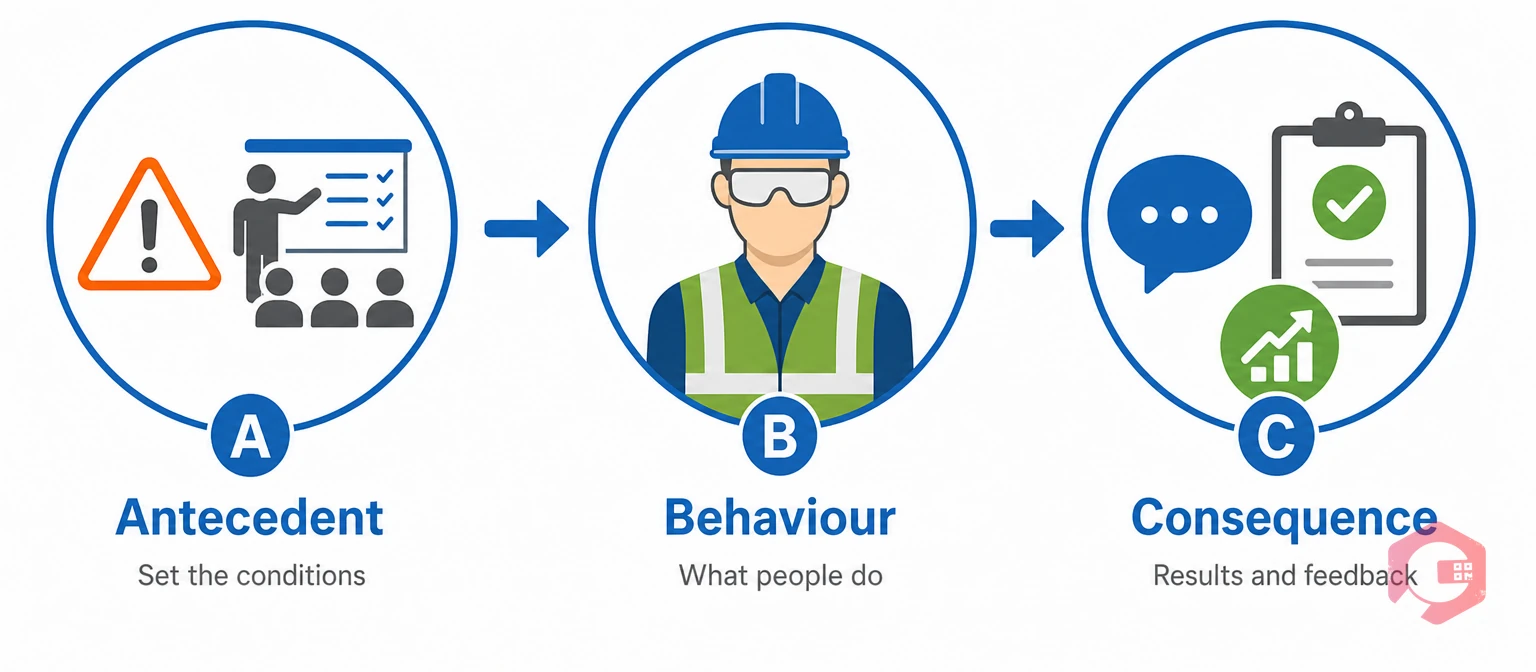
The ABC model of behaviour-based safety is a behavioural analysis tool rooted in applied behaviour analysis (ABA) that identifies why a specific safety behaviour occurs. ABC stands for Antecedent, Behaviour, and Consequence. These three linked stages explain every workplace action.
An antecedent is any event, condition, or cue that occurs before a behaviour and sets the stage for that action. In the workplace, antecedents include training, warning signs, safety talks, peer pressure, and the state of equipment. A clear lockout-tagout sign posted at a machine is a good antecedent. A missing guard rail is a bad one.
Behaviour in the BBS context is the observable, measurable action a worker takes during a task. BBS programs focus only on what you can see and record — not on attitudes or feelings. Examples: wearing PPE, following a permit to work, or skipping a risk check before starting work.
A consequence is whatever follows the behaviour. Consequences can be positive (a thank-you, a bonus) or negative (an injury, a write-up). They can be fast or delayed. The Cambridge Center for Behavioral Studies says the best way to keep safe habits going is to give feedback that is quick, certain, and positive.
Most sites that rely only on controls and policies still see repeat incidents. The reason is simple: policies cover systems, but they do not cover the human actions that interact with those systems. The ABC model of behaviour-based safety fills that gap. It targets the actions workers take on the floor, in the field, or during maintenance.
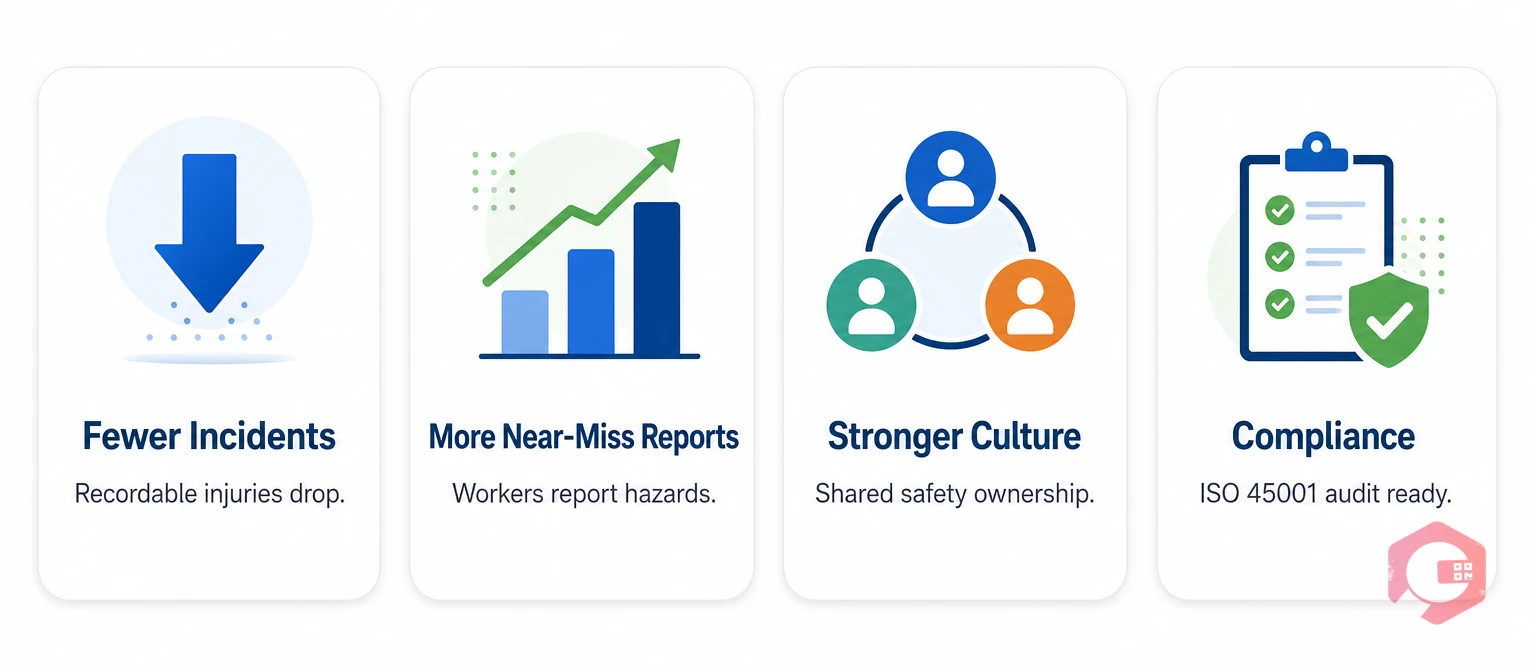
A good BBS program delivers real, measurable results.
Teams that tie safety findings to their maintenance work catch hazards faster and fix them through work orders.
Putting the ABC model to work takes a clear process, trained observers, and a system for tracking what you find. Here is how most teams do it.
List the key safe behaviours for each task or area. Make them specific. For example, "technician checks zero-energy state before opening a panel" is better than "technician works safely." Link these target behaviours to your existing permit to work procedures so every high-risk task has a clear behavioural checklist.
Trained observers watch workers during tasks and write down what they see. The goal is to note both safe and unsafe actions without stopping the work. Mobile tools let observers do this from the field, snap photos, add notes, and submit findings on the spot.
For each action you see, find the trigger (antecedent) and what came after (consequence). This step reveals patterns. For example, workers may skip a safety check (behaviour) because the checklist is in an office far away (antecedent) and nothing happens when they skip it (consequence).
Once you see the ABC chain, fix the root cause. You can change the antecedent (put the checklist on a mobile device), reward the right behaviour (positive feedback), or add a real consequence (flag the missed step in the system). Automated workflows assign tasks, track who owns them, and escalate overdue items.
Track safety trends over time. Check how many observations were done, what share of actions were safe versus unsafe, and how fast fixes got closed. Real-time dashboards show this data to every stakeholder.
Use the safety compliance checklist to standardize your observation criteria across teams and locations.
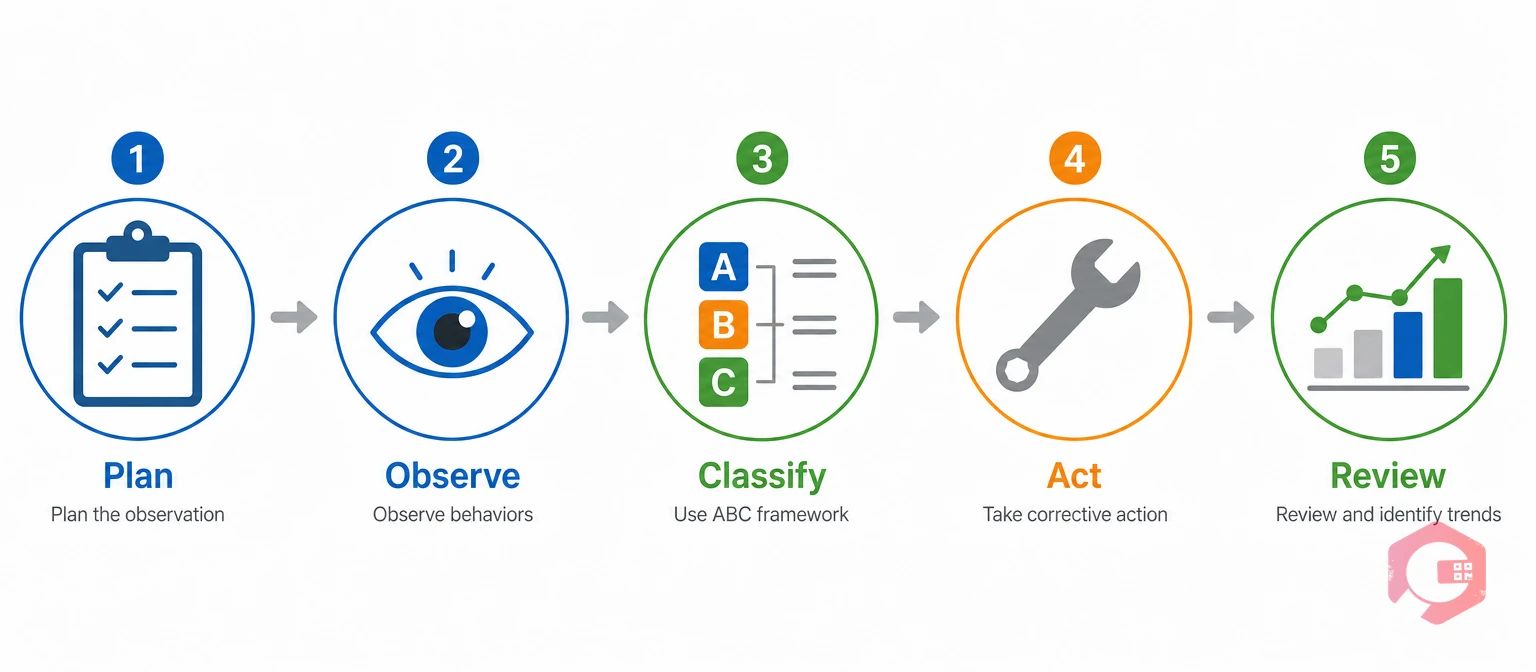
The Five-Step BBS Observation Cycle:
This gives teams a clear structure to follow each week without paper forms. Teams that use this cycle close safety items 40% faster because each step feeds into the next.
Understanding the most frequent antecedents and consequences within the ABC model of behaviour-based safety helps safety teams design better interventions. Here are the patterns that show up most often in plants, oil and gas sites, food facilities, and maintenance shops.
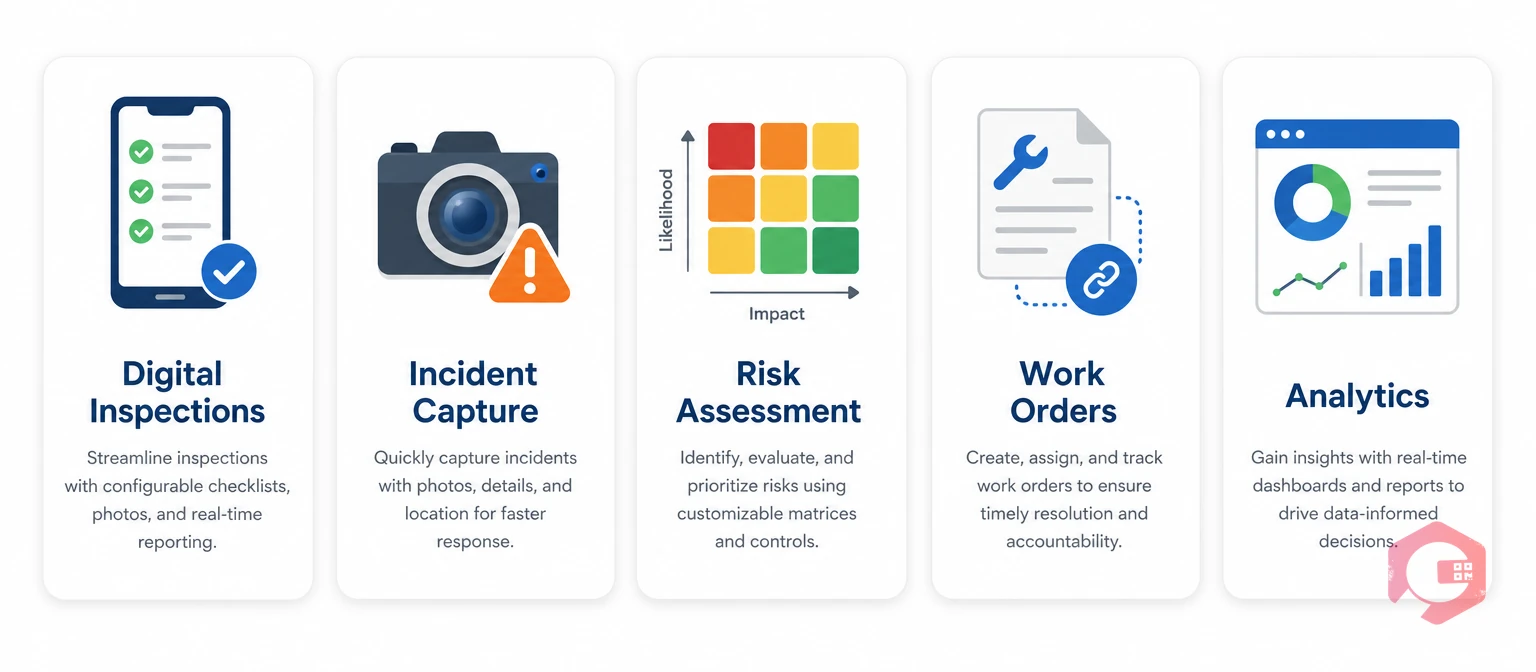
Paper-based BBS programs fail because forms get lost, corrective actions are forgotten, and trend data never gets reviewed. Digital safety management fixes all of these problems by moving the full BBS workflow into one connected platform.
Custom checklists let observers catch unsafe actions before they cause incidents. Inspections run on phones, work offline, and sync when the network comes back.
Field teams log unsafe acts and near misses right away with photos, notes, and location tags. Trends in these reports show repeat problems that need big fixes, not just one-off patches.
Every safety finding can link to a risk assessment. This ties hazards to unsafe actions, ranks risks by how bad and how likely they are, and stores it all in one place. Use the regulatory compliance checklist to ensure every assessment meets your industry standards.
Link safety findings to work orders so unsafe equipment gets fixed fast. This closes the gap between finding a hazard and fixing it.
Real-time dashboards track safety trends, spot repeat problems, and measure how well fixes are working. Leaders get one view of safety across every site.
The ABC model of behaviour-based safety only works when findings are acted on. A CAPA workflow makes sure every unsafe behaviour leads to a fix that is documented, tracked, and finished.
Maintenance teams using Cryotos have reported up to 30% reduction in unplanned downtime and 25% faster repair turnaround, because safety fixes and maintenance work orders run through the same system.
BBS programs produce data that feeds right into your audit and compliance work. Audits go faster when every finding, fix, and risk assessment lives in one digital system.
Teams that run their BBS program, inspections, and maintenance in one platform cut audit prep time by up to 50%.
The ABC model breaks every workplace behaviour into three parts: the Antecedent (what happens before the behaviour), the Behaviour itself (what the person does), and the Consequence (what happens after). Safety teams use this framework to understand why unsafe behaviours occur and to design interventions that encourage safe work practices instead.
Standard safety management focuses on controls, rules, and looking into incidents after they happen. Behaviour-based safety adds a proactive layer by observing and measuring the human behaviours that interact with those controls. The ABC model spots the triggers behind unsafe actions so teams can stop incidents before they happen.
Yes. Maintenance tasks often carry high risk — work at height, electrical work, and confined spaces. The ABC model helps teams see which triggers lead to shortcuts and what rewards would push safer habits. Tying safety findings to work orders keeps both teams accountable.
At minimum, you need a structured observation checklist, a corrective action tracking system, and a reporting dashboard. Digital tools that combine inspections, incident reports, risk checks, and permits in one mobile-friendly place give the best results. Every piece of BBS data stays connected.
Most facilities see a measurable reduction in unsafe behaviours within 90 days of launching a structured BBS program. Full results — fewer injuries and a stronger safety culture — show up within 6 to 12 months. The speed depends on team size and how often observations happen.
Ready to digitize your behaviour-based safety program and connect it with your maintenance operations? Schedule a free demo to see how Cryotos helps you reduce unsafe behaviours, strengthen compliance, and build a safer workplace with integrated maintenance and safety management.

Cryotos AI predicts failures, automates work orders, and simplifies maintenance—before problems slow you down.