

Asset management best practices are the structured methods maintenance teams use to track, maintain, and optimize physical assets throughout their entire lifecycle - from acquisition to disposal. When done right, effective asset management can reduce unplanned downtime by up to 30%, extend equipment lifespan, and significantly lower maintenance costs. This guide walks you through 8 proven best practices, the KPIs that matter, and how modern CMMS software puts them into action.

Asset management is the systematic process of developing, operating, maintaining, and disposing of physical assets in the most cost-effective way. For maintenance teams, that means knowing what you own, where it is, what condition it’s in, and what it costs to keep running. According to the ISO 55000 standard, asset management involves balancing cost, risk, and performance across the full asset lifecycle to deliver organizational value.
Every physical asset passes through four stages, and each one demands a different management approach:
Most teams start reactive - fixing equipment after it fails. But research by McKinsey & Company shows that predictive maintenance strategies can reduce maintenance costs by 10-25% and cut downtime by 35-45% compared to purely reactive approaches. The shift to proactive management - through scheduled PM, condition monitoring, and IoT data - is where the real ROI lives.
Poor asset management isn’t just an operational headache - it’s a financial liability. Unplanned equipment failures cost industrial companies an estimated $50 billion annually in lost production, according to Plant Engineering. When assets aren’t tracked, maintained on schedule, or monitored for health, teams end up in a constant cycle of emergency repairs, missed SLAs, and ballooning spare parts costs.
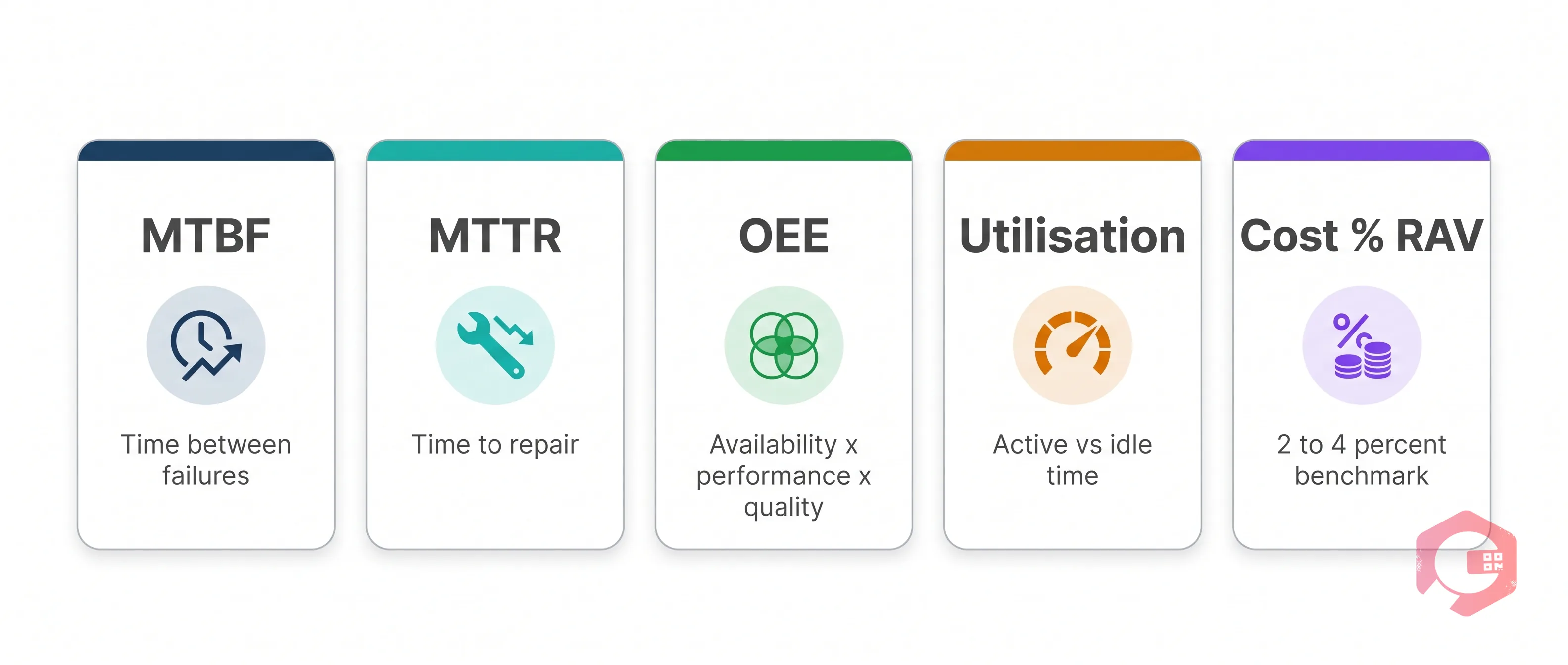
Before diving into best practices, it helps to know what success looks like. These five KPIs should anchor your asset management program:
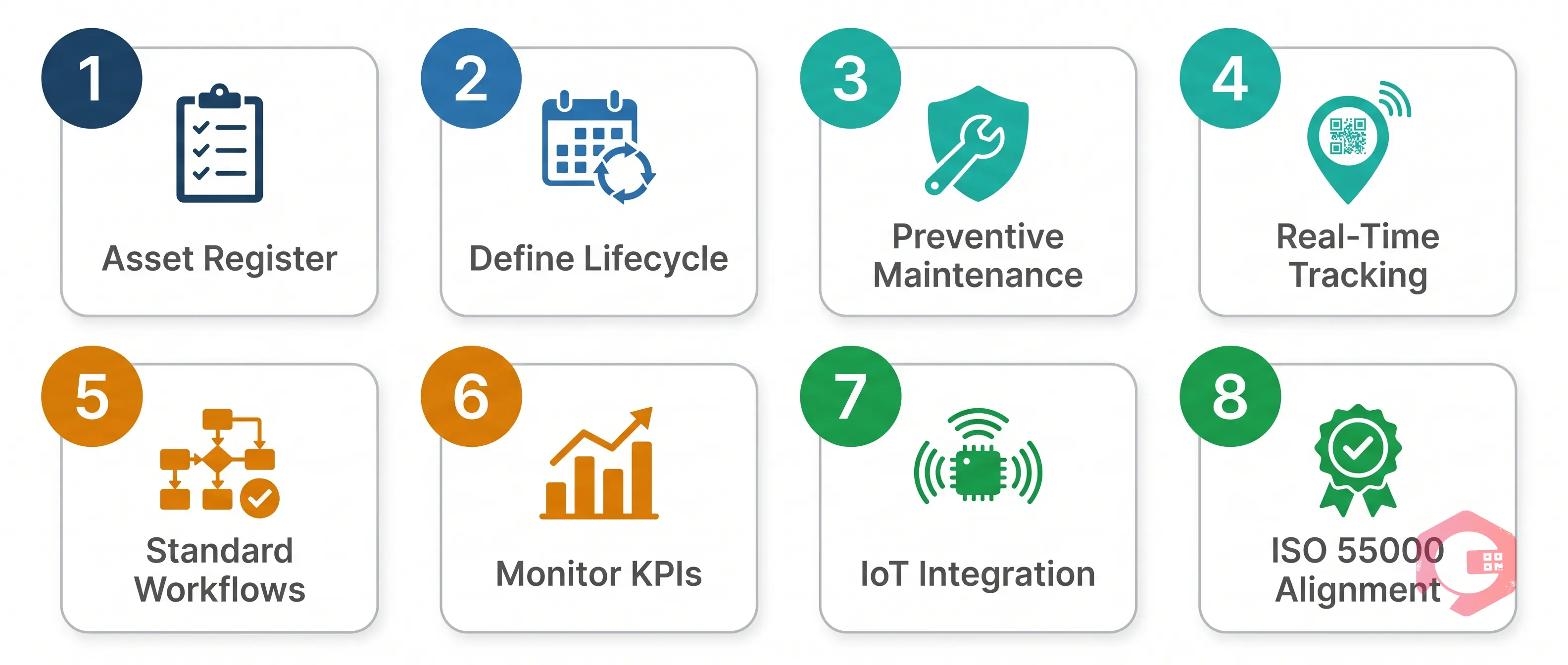
These eight practices form the foundation of a mature, high-performing asset management program - whether you’re running a single facility or managing assets across multiple sites.
Your asset register is the single source of truth for everything you own. It should capture the asset name, unique ID, location, manufacturer, model, serial number, installation date, warranty status, and maintenance history. Without a complete, up-to-date register, every other best practice falls apart. Use a dedicated asset management system rather than spreadsheets - version control issues and manual errors cost teams hours of rework every week.
When a new asset arrives, document its expected service life, planned maintenance intervals, and end-of-life criteria before it even goes into service. A manufacturing plant that defines lifecycle parameters upfront can predict replacement costs 3-5 years in advance, making capital planning far more accurate. Tie this data to your preventive maintenance schedules so PM tasks trigger automatically as the asset ages.
Preventive maintenance (PM) is the single highest-impact practice in this list. Scheduling regular inspections, lubrication, calibration, and part replacements based on time or usage keeps assets healthier longer and dramatically reduces emergency work orders. A food processing company that shifted from reactive to a PM-first model using Cryotos reduced unplanned downtime by 28% within six months. Set up both static PMs (fixed intervals, e.g., every 30 days) and dynamic PMs (usage-triggered, e.g., every 500 operating hours) to cover all asset types.
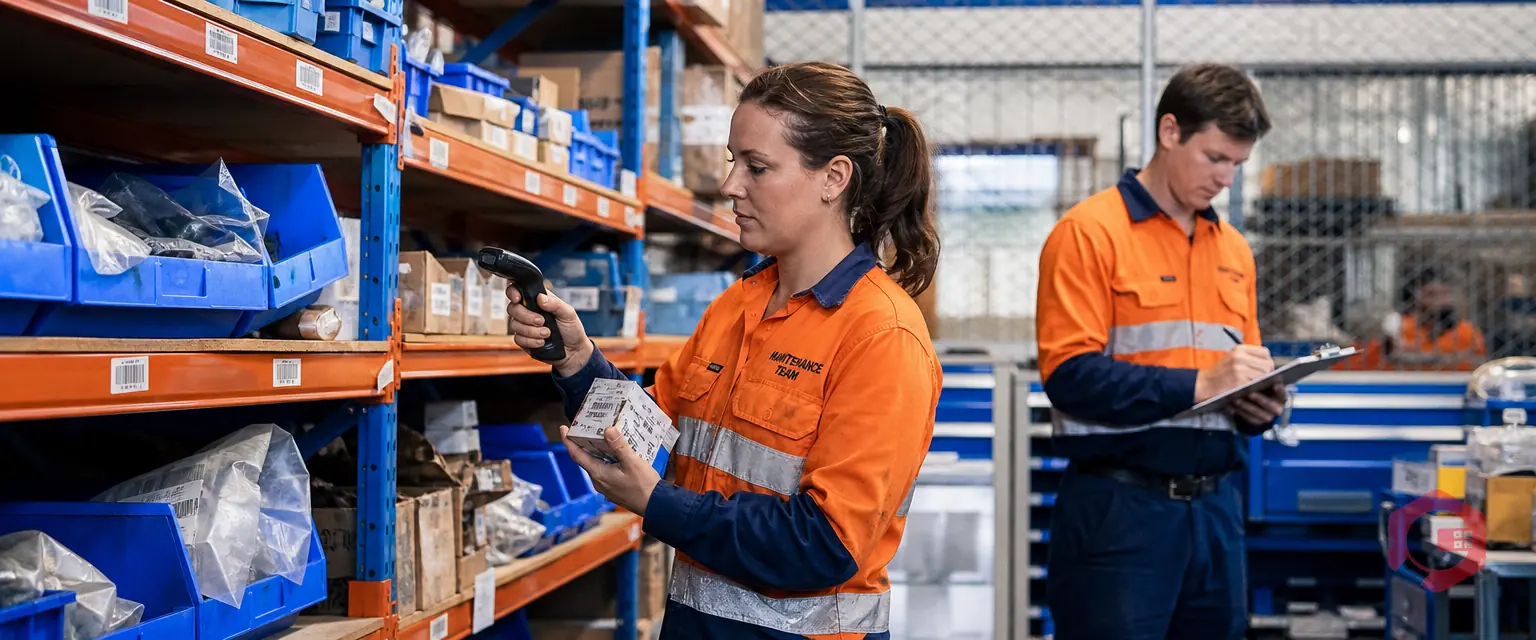
You can’t manage what you can’t locate. Real-time asset tracking via GPS for mobile equipment, NFC tags for shop-floor machinery, and QR codes for tools and spare parts gives technicians instant access to asset specs and history right from their phone. It also eliminates the classic “where is the forklift?” problem that disrupts production schedules daily in facilities without tracking infrastructure.
Inconsistent work order processes lead to missed steps, incomplete documentation, and accountability gaps. Standardize your workflows with predefined checklists, required sign-off fields, and automatic escalation rules for overdue tasks. Well-designed work order management ensures every technician follows the same process - regardless of shift or experience level - and every completed job leaves a full audit trail.
Tracking KPIs isn’t just a reporting exercise - it’s how you spot deteriorating assets before they fail. Set thresholds: if MTBF drops below a defined floor for a critical asset, trigger an investigation. If MTTR climbs above your target, audit technician response and parts availability. A good CMMS platform gives you a BI dashboard with drill-down capability from org-level to individual asset level, so you’re never guessing where the problem is.
IoT sensors on critical equipment - monitoring vibration, temperature, pressure, and current draw - feed real-time data that flags anomalies long before failure occurs. According to Deloitte’s Industry 4.0 research, predictive maintenance enabled by IoT can increase equipment uptime by 10-20% and reduce overall maintenance costs by 5-10%. Connect your IoT data stream to your CMMS so that when a sensor crosses a threshold, a work order is automatically created and assigned.
ISO 55000 provides the international framework for asset management systems - covering policy, strategy, objectives, and continual improvement. Aligning your program with ISO 55000 isn’t just about certification; it’s about having a structured, defensible approach that satisfies auditors, insurers, and regulators. Key requirements include documented asset management plans, defined roles and responsibilities, and regular performance reviews. Many industries - including utilities, transport, and oil & gas - now expect ISO 55000 alignment as a baseline.
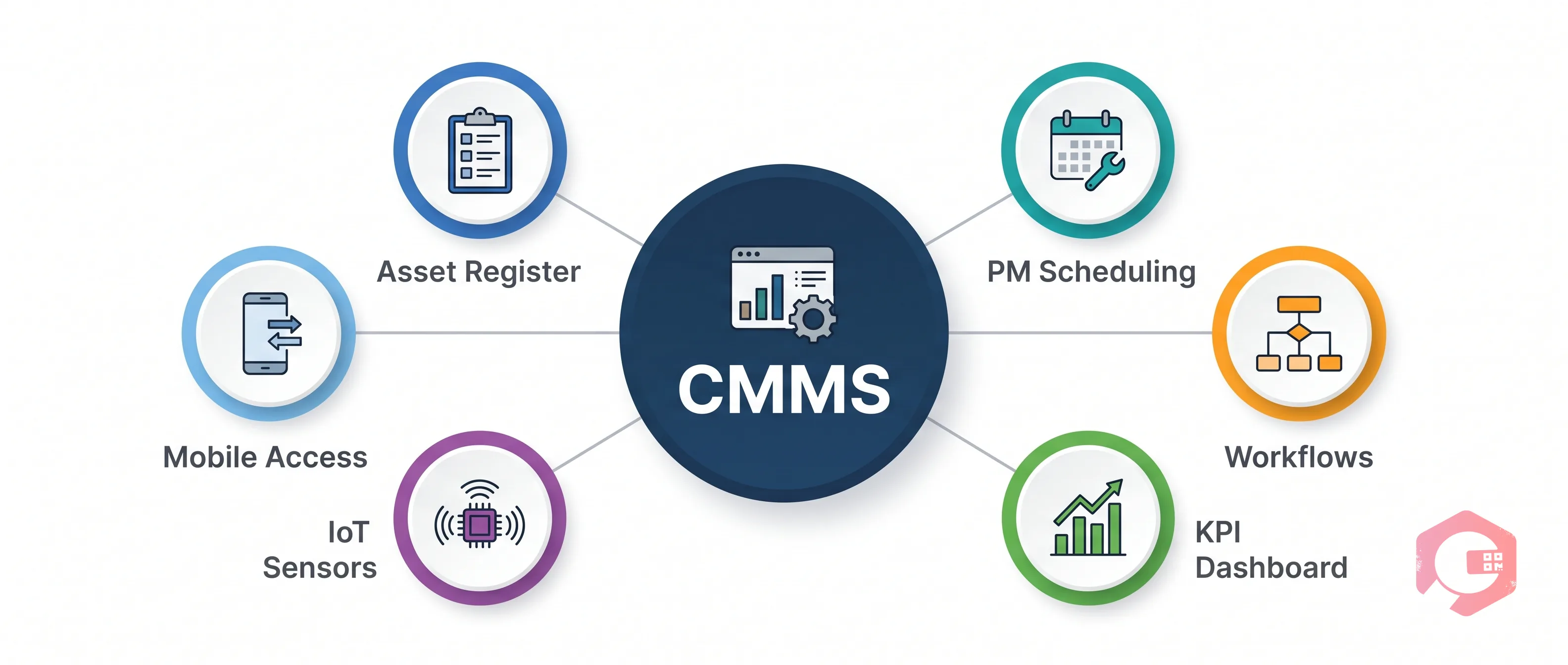
A Computerized Maintenance Management System (CMMS) is the operational backbone that makes all eight practices above achievable at scale. Without software, most of these practices stay theoretical - documented in binders no one reads. With the right CMMS, they become automated, measurable, and continuously improving.
Cryotos CMMS brings together asset tracking, preventive maintenance scheduling, work order management, IoT integration, and BI reporting in a single platform. Maintenance teams using Cryotos have reported a 30% reduction in downtime and 25% faster repair times - results driven directly by the practices outlined in this guide. The mobile-first app means technicians can access asset history, log work, and update records from the shop floor, eliminating the paper-based lag that undermines data quality in most facilities. Explore how Cryotos CMMS can help your team put these best practices into action from day one.
Use this checklist to assess where your program stands today and identify your highest-priority gaps:
The most impactful practices are maintaining a complete asset register, scheduling preventive maintenance for all critical equipment, and tracking KPIs like MTBF and MTTR consistently. These three together create the visibility and control that everything else in your asset management program depends on.
ISO 55000 is the international standard that defines requirements for establishing, implementing, maintaining, and improving an asset management system. It covers the full asset lifecycle and emphasizes aligning asset management with organizational strategy. ISO 55001 is the certifiable standard within the series, while ISO 55002 provides implementation guidance.
Start by auditing all existing assets and building a complete register. Then define lifecycle stages, PM schedules, and performance targets for each asset class. Document roles and responsibilities, establish your KPI review cadence, and select a CMMS to automate and track execution. Revisit and update the plan annually or after any major operational change.
The five essential KPIs are MTBF (Mean Time Between Failures), MTTR (Mean Time to Repair), OEE (Overall Equipment Effectiveness), asset utilization rate, and maintenance cost as a percentage of Replacement Asset Value (RAV). Track these on a rolling 30/60/90-day basis to identify trends before they become failures.
Ready to put these asset management best practices into action? Cryotos CMMS gives your maintenance team the tools to build a centralized asset register, automate PM schedules, track real-time asset health, and connect IoT data - all in one platform. See how leading manufacturing and facilities teams are using Cryotos to reduce downtime by 30% and cut repair times by 25%. Request a free demo today.



Cryotos AI predicts failures, automates work orders, and simplifies maintenance—before problems slow you down.



