Renewable energy infrastructure runs around the clock in demanding environments. A CMMS built for renewable energy gives solar and wind farm operators the tools to plan, track, and automate maintenance across distributed assets — reducing unplanned downtime and extending the working life of expensive equipment.
At its core, a renewable energy CMMS provides a centralized system for managing asset registers, work orders, preventive maintenance schedules, spare parts inventory, and compliance documentation. Unlike generic CMMS software, a renewable energy CMMS understands the difference between a photovoltaic (PV) string inverter and a wind turbine gearbox — and routes work orders, spare parts, and compliance documentation accordingly.
Why Renewable Energy Assets Require Specialized Maintenance Management
Solar and wind farms present unique maintenance challenges:
Geographic Dispersion and Remote Access: Field technicians may spend hours traveling between assets. A CMMS with offline mobile capability allows technicians to access work orders, record findings, and close tasks without requiring cellular connectivity.
Asset Complexity and Volume: A utility-scale solar farm may contain thousands of individual panels, hundreds of string inverters, and dozens of combiner boxes. Managing this volume without a structured CMMS leads to missed inspections, undocumented failures, and regulatory gaps.
Weather-Dependent Operations: Wind turbine maintenance at height is restricted during high wind events. A CMMS can flag these constraints within work order templates, ensuring technicians receive pre-task safety checks appropriate for the conditions.
Regulatory and Grid Compliance: Renewable energy operators are subject to grid operator requirements, environmental permits, and safety standards including IEC 61400 for wind turbines and IEC 62446 for solar PV systems.
How CMMS Supports Solar Farm Maintenance
PV Panel Inspection and Cleaning Schedules: A CMMS automates the scheduling of panel cleaning cycles based on location-specific soiling rates, weather data, or fixed intervals. Technicians receive mobile work orders with inspection checklists covering visual defects, hotspot detection, and cleaning verification.
Inverter Preventive Maintenance: String and central inverters are among the highest-value, most failure-prone components in a solar farm. A CMMS schedules inverter PM tasks — filter cleaning, capacitor checks, firmware updates, thermal imaging — at manufacturer-recommended intervals.
Thermal Imaging and Fault Documentation: A CMMS provides the framework for logging thermal imaging results against individual asset records, tracking remediation actions, and confirming resolution — creating a complete fault-to-fix audit trail.
Combiner Box and Electrical System Maintenance: A CMMS assigns these tasks by site zone, ensures technicians complete LOTO procedures before working on live equipment, and captures sign-offs as part of the permit-to-work workflow.
How CMMS Supports Wind Farm Maintenance
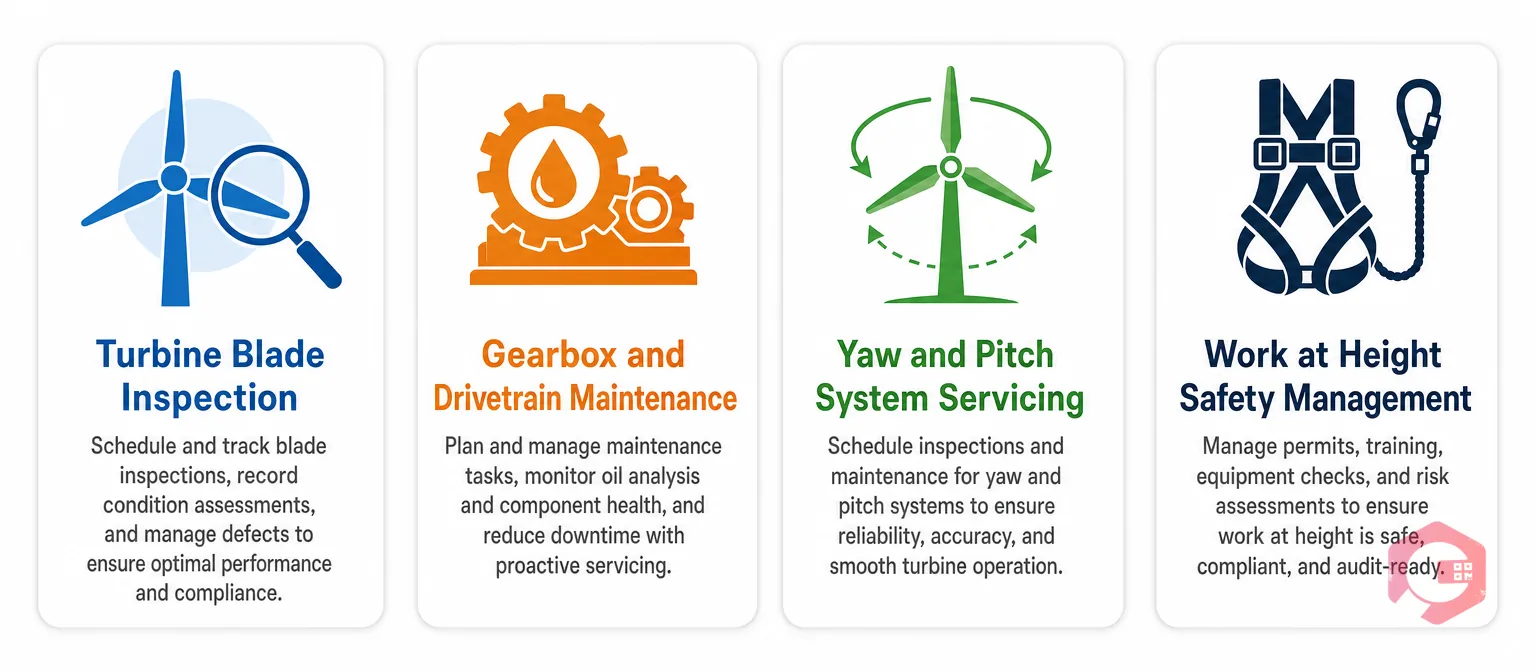
Turbine Blade Inspection and Repair Scheduling: A CMMS schedules blade inspections at required intervals, stores inspection reports with photographic documentation against each turbine record, and triggers repair work orders when defects are identified.
Gearbox and Drivetrain Maintenance: A CMMS tracks oil sample results, vibration analysis findings, and service intervals for each turbine’s drivetrain components. Oil change schedules, filter replacements, and bearing checks are automated.
Yaw and Pitch System Servicing: A CMMS manages these multi-step PM tasks with technician-level checklists, ensures the right lubricants are specified by component, and records completion with technician sign-off.
Safety Management for Work at Height: A CMMS integrates permit-to-work workflows into every turbine work order — requiring isolation confirmations, rescue plan acknowledgment, and authorized sign-off before any task at height begins.
Key CMMS Features That Renewable Energy Operators Need
Mobile Work Orders with Offline Mode: Field technicians in remote locations need full work order access without depending on cellular coverage.
SCADA and IoT Sensor Integration: A CMMS that integrates with these data sources can trigger condition-based maintenance automatically when a turbine’s vibration reading exceeds threshold or an inverter’s output drops below expected performance.
Asset Hierarchy Management: A renewable energy CMMS must model the full asset hierarchy: site → array or turbine string → individual panel or turbine → sub-components.
Permit to Work (PTW) Integration: A CMMS with built-in PTW workflows ensures no maintenance task begins without the required safety authorizations.
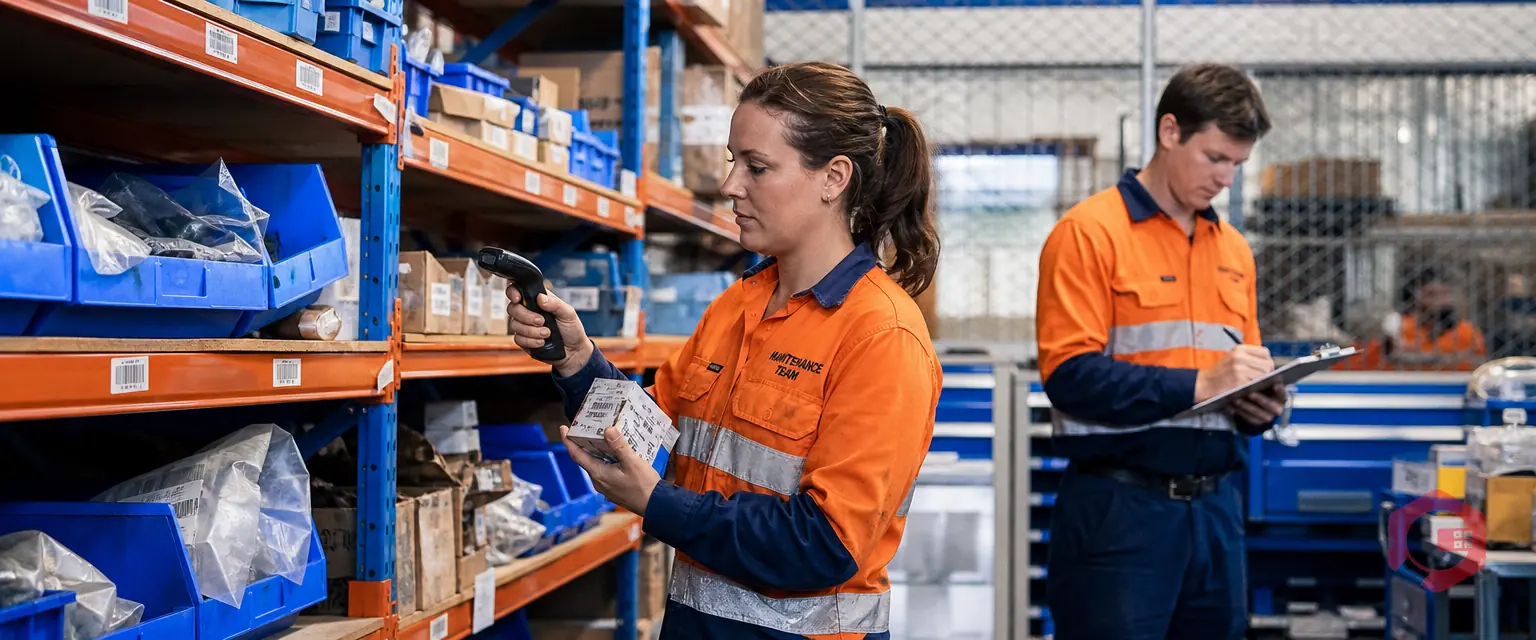
Spare Parts and Inventory Management: A CMMS tracks spare parts inventory by site warehouse, sets minimum stock levels for critical components, and generates purchase requests automatically when stock falls below threshold.
The Business Impact of CMMS on Renewable Energy Operations
Renewable energy operators who implement a structured CMMS consistently report: reduced unplanned downtime through automated PM schedules; lower maintenance cost per MWh as planned maintenance costs significantly less than reactive repair; improved asset lifespan through consistent adherence to manufacturer maintenance schedules; faster compliance documentation generated automatically; higher technician productivity through mobile work orders; and better spare parts availability through inventory alerts and reorder automation.
Conclusion
Renewable energy assets generate revenue only when they are operating. Every unplanned turbine stoppage, every inverter failure caught too late, and every missed PM creates a measurable gap between potential and actual energy output. A CMMS built for renewable energy closes that gap. Explore how Cryotos CMMS supports renewable energy operators with asset management, preventive maintenance automation, and compliance-ready audit trails — from a single turbine to a full multi-site portfolio.