An electrical maintenance program is a structured, documented system for inspecting, testing, servicing, and repairing electrical equipment and systems on a scheduled basis to ensure safe and reliable operation. According to the NFPA 70B Recommended Practice for Electrical Equipment Maintenance, poorly maintained electrical systems are one of the leading causes of unplanned industrial downtime — contributing to an estimated $7 billion in fire losses annually in the United States alone. A well-designed electrical maintenance program protects workers from arc flash and electrocution hazards, keeps equipment running at peak efficiency, and ensures compliance with OSHA, NFPA 70B, and NFPA 70E standards.
What Is an Electrical Maintenance Program?
An electrical maintenance program is a proactive system that defines how your organization inspects, tests, and maintains electrical assets — from switchgear and transformers to motors, panels, and control systems. The program spans three areas of concern: equipment reliability, personnel safety, and regulatory compliance.
Key Goals of an Electrical Maintenance Program
Equipment Reliability: Prevent unexpected failures that cause production stoppages, product loss, or cascading damage to connected systems.
Worker Safety: Protect electricians and maintenance technicians from arc flash, electrocution, and shock hazards through controlled work practices and proper PPE.
Regulatory Compliance: Meet NFPA 70B, NFPA 70E, and OSHA electrical safety requirements to avoid citations, penalties, and legal liability.
Cost Control: Reduce emergency repair costs and capital replacement expenses by catching deterioration early through routine inspection and testing.
Regulatory Standards Every Electrical Maintenance Program Must Follow
Three major standards govern how electrical maintenance programs are designed and executed. NFPA 70B provides detailed guidance on inspection intervals, test procedures, and acceptance criteria. NFPA 70E covers arc flash hazard analysis, energized electrical work permits, PPE selection, and safe work practices. OSHA’s Control of Hazardous Energy standard (1910.147) — commonly called Lockout/Tagout (LOTO) — requires written energy control procedures for every piece of equipment where maintenance exposes workers to electrical hazards.
The 7 Core Components of an Effective Electrical Maintenance Program
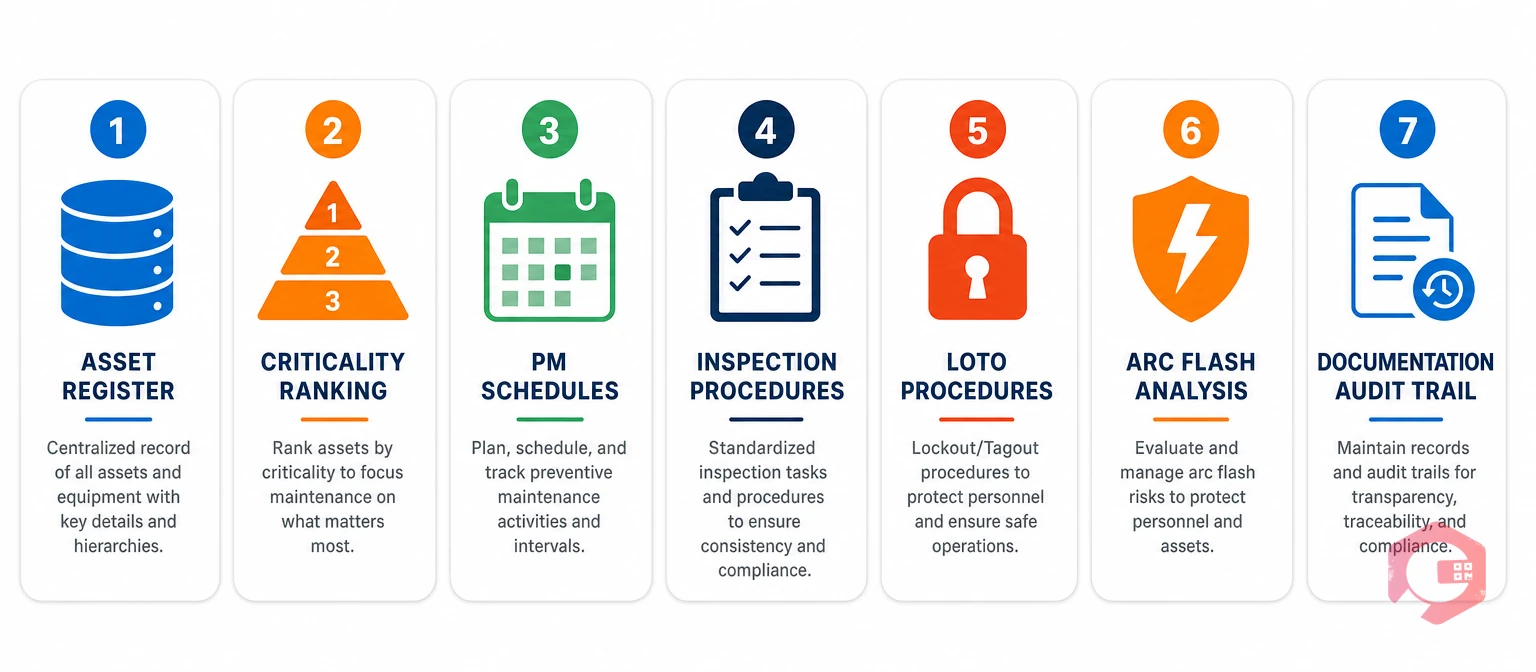
Every solid electrical maintenance program shares seven foundational components. Miss any one of them and you have gaps — in safety coverage, compliance documentation, or equipment reliability.
Equipment Inventory and Asset Register: The foundation of the entire program — capturing nameplate data, location, installation date, maintenance history, and associated single-line diagrams for every electrical asset. Use asset tracking software to keep this register current.
Risk Assessment and Criticality Ranking: Assigns each asset a priority score based on safety consequence of failure, production impact, redundancy availability, and failure probability.
Preventive Maintenance Schedules: Defines the who, what, and when of routine maintenance tasks — visual inspections, thermal imaging, insulation resistance testing, torque checks, cleaning, lubrication, and calibration. Cryotos’s preventive maintenance software lets you configure these with static or dynamic triggers.
Inspection and Testing Procedures: Written procedures specifying exactly what to inspect, what tests to perform, what instruments to use, and what pass/fail criteria to apply.
Lockout/Tagout (LOTO) Procedures: Equipment-specific written procedures that identify all energy sources, specify the sequence for de-energizing, and define verification steps before work begins.
Arc Flash Hazard Analysis: Calculates the incident energy at each electrical work location to determine the required PPE category and establish approach boundaries. Must be updated whenever changes to the electrical system could affect fault current levels.
Documentation, Records, and Audit Trails: Captures completed maintenance records, equipment test results, LOTO logs, arc flash label revision history, and training records. Use document management software that attaches records directly to asset histories.
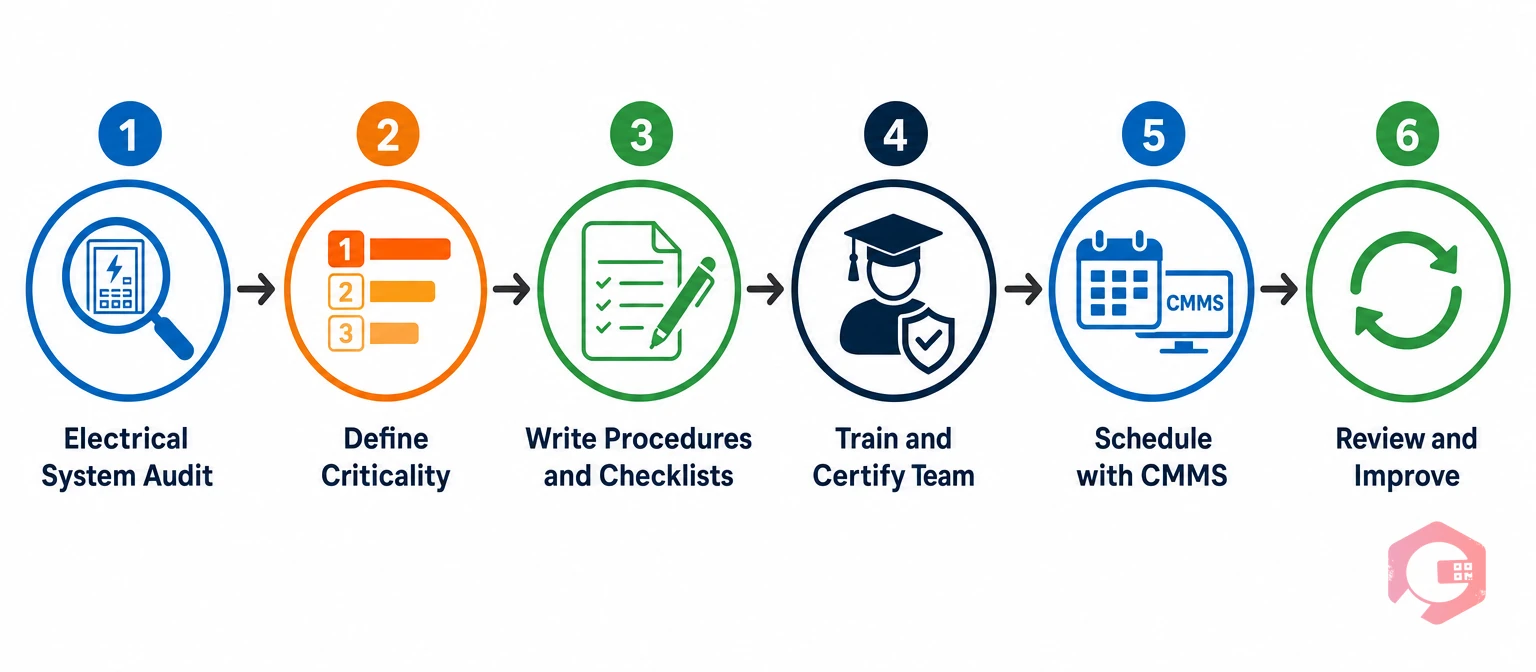
How to Build Your Electrical Maintenance Program Step by Step
Conduct an Electrical System Audit: Walk every area of your facility with single-line diagrams and verify all electrical equipment is captured in your asset register. Note equipment age, condition, and last maintenance date.
Define Equipment Criticality: Assign each asset a priority tier — High, Medium, or Low — using a scoring matrix rating safety risk, production impact, and failure probability.
Write Maintenance Procedures and Checklists: Develop step-by-step written procedures for every recurring maintenance task, build digital maintenance checklists with pass/fail fields, photo capture, and mandatory sign-off.
Train and Certify Your Electrical Maintenance Team: NFPA 70E requires all employees who work on or near exposed energized electrical conductors be trained as qualified persons. Training must be documented and task-specific.
Schedule and Track Maintenance with a CMMS: A CMMS gives you automated work order generation, mobile access for technicians, real-time visibility into overdue tasks, and integrated compliance reporting.
Review, Audit, and Continuously Improve: Schedule an annual program review evaluating PM completion rates, MTBF for critical electrical assets, emergency repair costs, and audit findings.
Electrical Maintenance Checklist by Equipment Type
Use the following checklist as a starting point for your maintenance procedures. Frequency should be adjusted based on manufacturer recommendations, equipment criticality, and operating environment. Key equipment types include switchgear and motor control centers, transformers, motors and drives, cables and wiring systems, and emergency and backup power systems — each with monthly, quarterly, annual, and multi-year inspection requirements as defined in NFPA 70B.
Common Mistakes That Undermine Electrical Maintenance Programs
No criticality differentiation: Treating a lighting panel and a main distribution board with the same maintenance frequency wastes resources on low-risk equipment while potentially under-maintaining high-impact assets.
Outdated LOTO procedures: Equipment changes constantly but LOTO procedures often lag behind. An outdated LOTO procedure for a modified piece of equipment is a serious safety hazard and an OSHA violation.
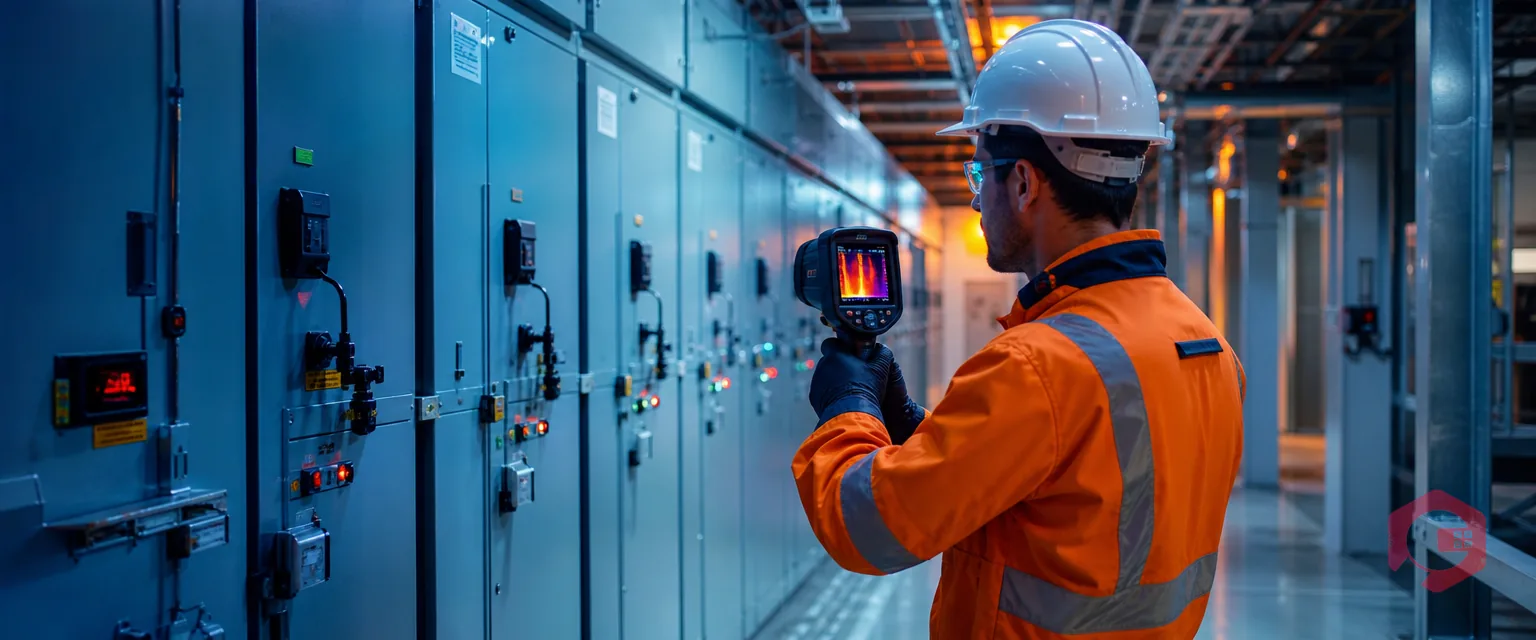
Deferred infrared inspections: Thermal imaging is often the first task cut when the maintenance budget tightens. This is backward — infrared inspections typically deliver the highest return of any electrical PM activity.
Treating arc flash analysis as a one-time event: System changes change fault current levels and can make old arc flash labels dangerously inaccurate.
Paper-based record keeping: Maintenance records stored in binders are difficult to search, easy to lose, and impossible to use for data-driven decisions about maintenance intervals.
How Cryotos CMMS Supports Your Electrical Maintenance Program
Cryotos brings all seven components of your program into a single connected platform. Asset QR code scanning stores complete nameplate data and full maintenance history. PM schedules generate work orders automatically. Digital checklists with photo capture ensure every step is completed and documented. Cryotos’s Permit to Work software automates LOTO procedures within the work order workflow. The Report Builder delivers compliance reports ready for OSHA audits. And IoT integration triggers work orders automatically when measured values exceed set limits. Explore what Cryotos can do for your facility.
Frequently Asked Questions
What is included in an electrical maintenance program?
An electrical maintenance program includes an equipment asset register, criticality-based PM schedules, written inspection and testing procedures, Lockout/Tagout procedures for every maintained asset, arc flash hazard analysis with current labels, documented maintenance records and test results, and a training program for all personnel performing or working near electrical maintenance activities.
How often should electrical systems be inspected?
NFPA 70B recommends visual inspections of switchgear and motor control centers every six months, infrared thermography at least annually, and full testing every three to five years. High-criticality or high-utilization equipment warrants more frequent intervals than these minimums.
What is the difference between NFPA 70B and NFPA 70E?
NFPA 70B covers how to maintain electrical equipment — inspection intervals, test methods, and acceptance criteria. NFPA 70E covers how to perform electrical maintenance safely — arc flash hazard analysis, PPE selection, approach boundaries, and safe work practices.
Can a CMMS manage an electrical maintenance program?
Yes. A CMMS automates PM work order generation based on schedules or runtime triggers, delivers digital checklists to technicians on mobile devices, maintains a searchable history of all maintenance records and test results, and generates compliance reports for audits.