Electrical safety compliance is the practice of meeting OSHA, NFPA 70E, and facility-specific standards that protect maintenance workers from shock, arc flash, and electrocution. For maintenance teams, electrical safety compliance means following three linked controls every day: applying OSHA-mandated safe work practices on energized equipment, executing lockout tagout (LOTO) procedures before servicing shut down gear, and using permit-to-work systems to authorize high-risk electrical tasks. Contact with electric current causes an average of 166 workplace deaths each year in the United States. Most of these involve maintenance and construction workers who interact with live circuits, panels, and switchgear as part of their daily work.
Key Takeaways
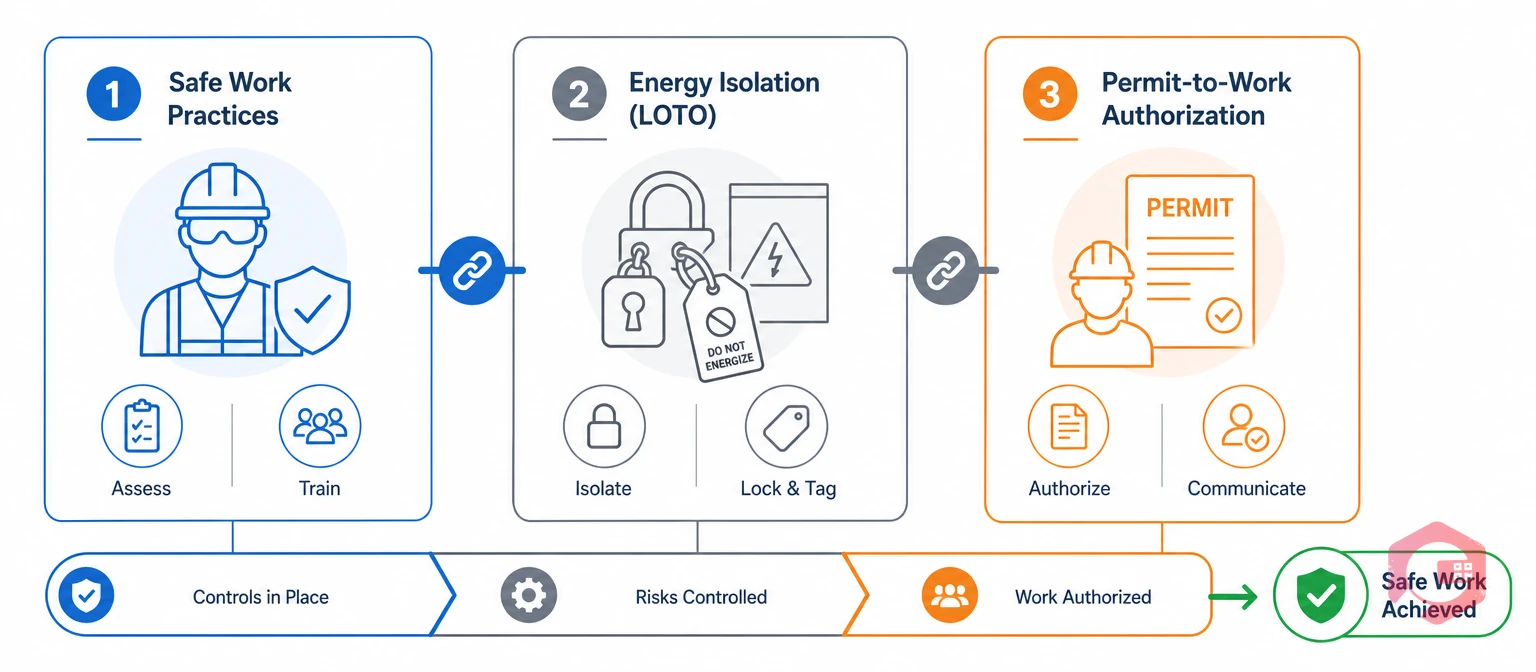
Electrical safety compliance is the process of meeting every OSHA and NFPA standard for electrical work. It goes beyond knowing the rules. True electrical safety compliance means your facility has written procedures, trained workers, correct equipment, and audit-ready records that prove each requirement is met.
For maintenance teams, electrical safety compliance covers three areas. First, safe work practices when workers approach or work on electrical gear. Second, energy isolation procedures that stop accidental startup during servicing. Third, permit controls that authorize and document high-risk electrical tasks. Each area has its own set of OSHA and NFPA rules, and all three must work together for a facility to pass an audit.
Electrical incidents follow patterns tied to gaps in procedure. A missing LOTO step, a skipped permit review, or an untrained worker on energized gear are the root causes behind nearly every serious electrical injury. That is why electrical safety compliance programs focus on closing those gaps with systems, not on counting on individual caution alone.
Three standards form the backbone of electrical safety compliance for maintenance work. Each one covers a different layer of protection, and maintenance teams need to meet all three to stay compliant.
OSHA electrical safety standards under Subpart S (1910.301 through 1910.399) set the baseline for electrical installation, maintenance, and safe work practices. Sections 1910.331 through 1910.335 cover the safety work practices that maintenance teams must follow when working on or near exposed live parts.
These sections apply to every qualified maintenance worker who may face electrical hazards during routine or non-routine tasks. Facilities that miss Subpart S requirements expose both workers and the organization to OSHA citations and fines.
OSHA's Control of Hazardous Energy standard requires employers to set up an energy control program with documented, machine-specific LOTO procedures. The standard applies whenever maintenance or servicing work puts workers at risk of unexpected startup or stored energy release. This standard is one of the most important pieces of electrical safety compliance for any facility with powered equipment.
LOTO violations are among OSHA's top 10 most-cited standards every year. OSHA issues more than 2,500 citations under 1910.147 each year, with fines reaching $16,131 per serious violation. Most of these citations come from missing written procedures, skipped verification, or outdated training records.
NFPA 70E is the standard that OSHA points to when enforcing electrical safe work practices. While OSHA sets the legal requirement, NFPA 70E gives maintenance teams the detailed methods they need to meet it. Key areas include arc flash risk assessment, shock hazard analysis, approach boundaries, and PPE selection based on incident energy calculations.
NFPA 70E bridges the gap between OSHA's legal requirements and the steps maintenance teams follow on the floor. Most facilities treat it as the operating manual for their electrical safety compliance program.
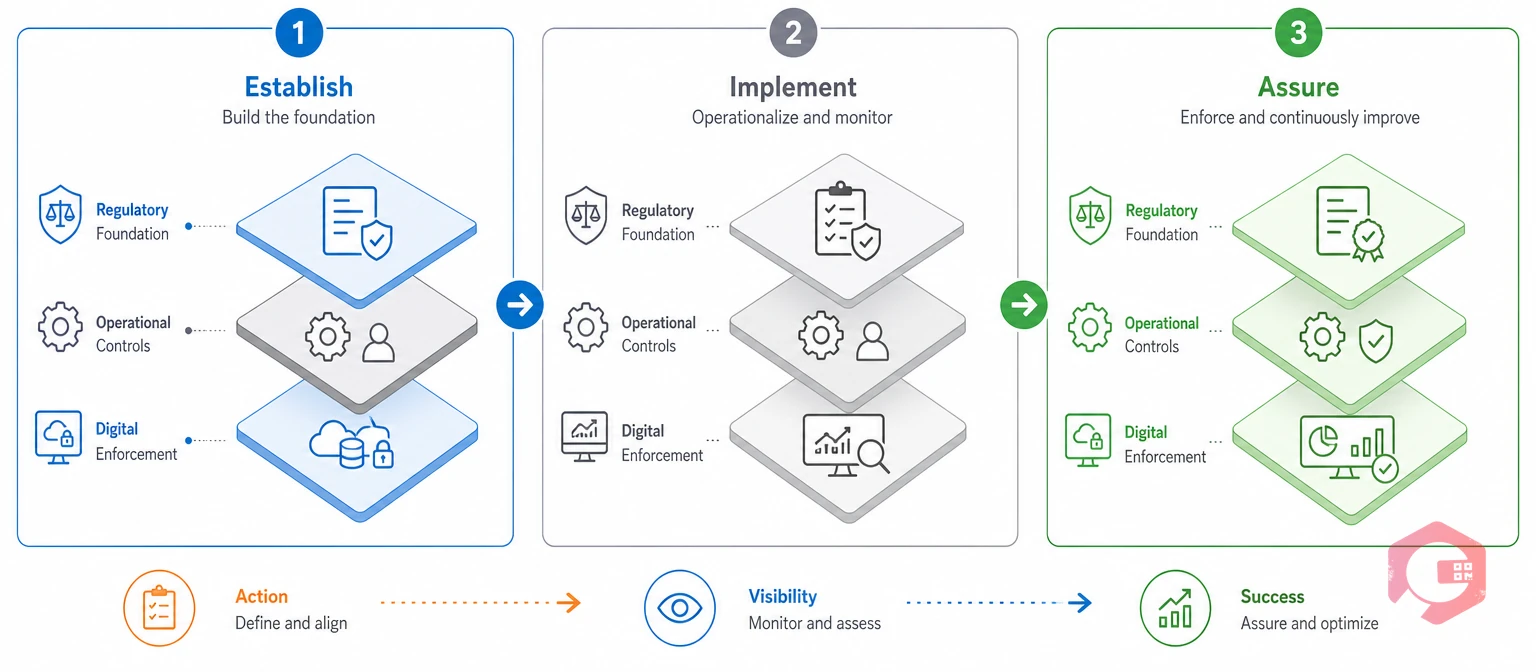
The Three-Layer Electrical Compliance Stack:
Each layer depends on the one below it. A CMMS checklist (Layer 3) adds no value without a correct LOTO procedure to enforce (Layer 2), and that procedure has no backing without the OSHA standard behind it (Layer 1). Most electrical safety compliance failures happen when one layer is missing or cut off from the others.
Wondering how much downtime electrical incidents cost your facility? Use the Cryotos unplanned downtime calculator to put a dollar figure on it.

Lockout tagout is the physical control that stops accidental startup of electrical gear. Every task that involves working on or near shut down electrical gear requires LOTO. OSHA 1910.147 sets the minimum, and NFPA 70E adds specific electrical isolation procedures on top of it. Together, these standards make LOTO the most critical step in any electrical safety compliance program.
LOTO is required whenever a maintenance worker could be exposed to unexpected startup or stored electrical energy. This includes panel maintenance, breaker replacement, motor servicing, cable termination, and any task where guards are removed from live parts.
The only exception is when shutting down power would create a bigger hazard or when the task cannot be done without live power, such as voltage testing or fault finding. In those cases, a live electrical work permit under NFPA 70E replaces LOTO — but never informally.
Most LOTO violations in electrical work fall into a short list of recurring failures that audit after audit reveals. Fixing these gaps is one of the fastest ways to improve your electrical safety compliance score.
Each of these gaps is a citable OSHA violation and a potential injury pathway. Closing them requires both clear procedures and a system that makes electrical safety compliance visible and trackable.
A permit-to-work system is an administrative control that documents authorization and hazards before electrical work starts. While LOTO physically isolates energy, a permit records the approval, scope, and conditions under which electrical work may go ahead. NFPA 70E requires a live electrical work permit whenever work is done on live parts at 50 volts or more. This permit layer is a core element of electrical safety compliance.
NFPA 70E Article 130.2(B) lists the minimum content for a live electrical work permit.
A permit to work software system puts this process online, routes permits for approval, and stores completed permits as compliance records. This cuts out the paper-form delay that causes many teams to bypass permits under production pressure.
The strongest electrical safety compliance programs link permits and LOTO into a single workflow. A maintenance work order that involves electrical isolation triggers a LOTO checklist on its own. If the task calls for live work, the system routes a live electrical work permit for approval before the technician can move forward.
This integration blocks the most dangerous gap in electrical safety compliance: a technician who starts work without either a completed LOTO or an approved permit. When both controls share the same workflow, skipping one becomes structurally hard instead of just procedurally discouraged.
An electrical safety compliance program is not a single document. It is a system of written procedures, trained workers, scheduled audits, and digital tools that work together to meet OSHA and NFPA 70E requirements on an ongoing basis.
NFPA 70E Article 110.3 requires every employer to put an electrical safety program in writing. The written program should include the scope of work covered, roles and duties, safe work practices, LOTO procedures, PPE requirements, and the process for issuing energized work permits. Maintenance teams using Cryotos have reported up to 30% reduction in unplanned downtime and 25% faster repair turnaround once these procedures are put into digital work order workflows.
A strong written program also assigns ownership. One person or team must own the program, update it when equipment or standards change, and make sure every maintenance worker has access to the current version.
OSHA and NFPA 70E both require that only qualified persons work on or near exposed live electrical parts. Being qualified means documented training on the specific hazards of the equipment and the safe work practices that apply to it.
Training records must be kept and be audit-ready. A safety compliance checklist helps facilities confirm that every qualified worker's credentials are current and on file.
Electrical safety compliance is not a one-time event. OSHA 1910.147 requires yearly LOTO procedure inspections. NFPA 70E requires periodic review of the electrical safety program and arc flash risk assessments at intervals of no more than five years, or whenever changes occur that affect the assessment.
A regulatory compliance checklist built into your maintenance system makes sure that none of these recurring audit tasks slip through the cracks.
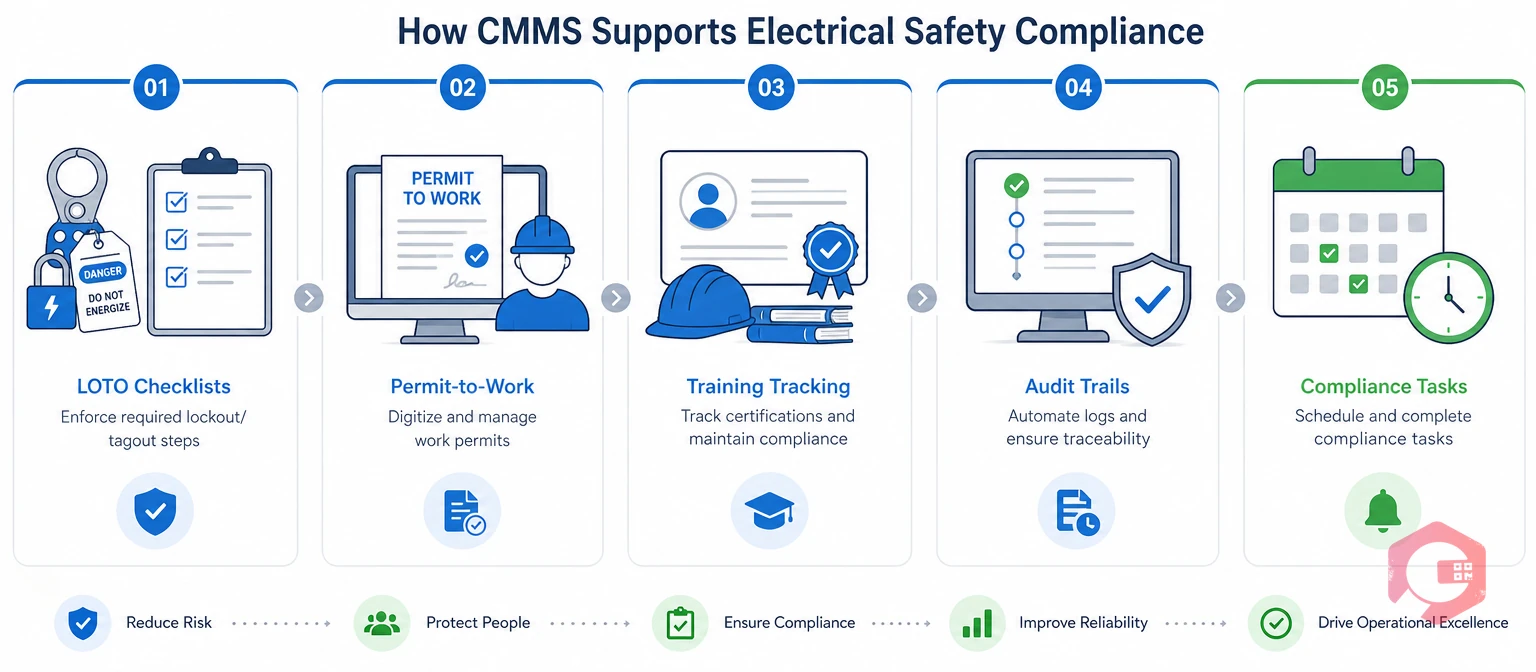
A Computerized Maintenance Management System turns written electrical safety compliance procedures into digital workflows that are enforced at the work order level. Instead of counting on technicians to remember every step, the system puts compliance into the task itself.
When electrical safety compliance steps are built into the maintenance workflow rather than tracked on separate spreadsheets, the gap between written policy and actual practice shrinks fast. The system makes it hard to skip a step — and gives you the records to prove it during any audit or inspection.
OSHA requires maintenance teams to follow safe work practices under 29 CFR 1910.331-335, set up a written energy control (LOTO) program under 29 CFR 1910.147, and shut down electrical equipment before work unless doing so would create a bigger hazard. Employers must also provide the correct PPE and make sure only qualified persons work on or near exposed live parts.
OSHA 1910.147 requires yearly inspections of each LOTO procedure. NFPA 70E requires periodic review of the electrical safety program and arc flash risk assessments at intervals of no more than five years. Most facilities run a full electrical safety compliance audit once a year and update arc flash assessments whenever the electrical system changes or the five-year interval is reached.
LOTO is a physical control that isolates energy sources to stop accidental startup during maintenance. A permit to work is a written control that documents approval, scope, hazard assessment, and required precautions before work begins. LOTO and permits serve different roles and are used together — LOTO for shut down work, and a live electrical work permit under NFPA 70E for live work that cannot be shut down.
OSHA fines for serious electrical safety violations can reach $16,131 per violation. Willful or repeated violations carry fines up to $161,323 per violation. LOTO citations are among the most common, with OSHA issuing thousands of citations under 1910.147 each year. Beyond fines, electrical incidents carry heavy costs in medical bills, lost workdays, equipment damage, and possible lawsuits.
Yes. Any maintenance worker who may face electrical hazards — including mechanical technicians who open panels, HVAC workers who service motor controls, or plumbers who work near live electrical gear — must get training matched to their exposure level. NFPA 70E draws a line between qualified persons (trained on specific electrical hazards) and unqualified persons (trained on awareness-level safe work practices), and both groups need documented training.
Electrical safety compliance is not a single checklist — it is a continuous system of standards, procedures, and digital enforcement that protects your maintenance team every day. Schedule a free demo to see how Cryotos ties LOTO workflows, permit-to-work approvals, and compliance tracking into one platform your team will actually follow.


Cryotos AI predicts failures, automates work orders, and simplifies maintenance—before problems slow you down.