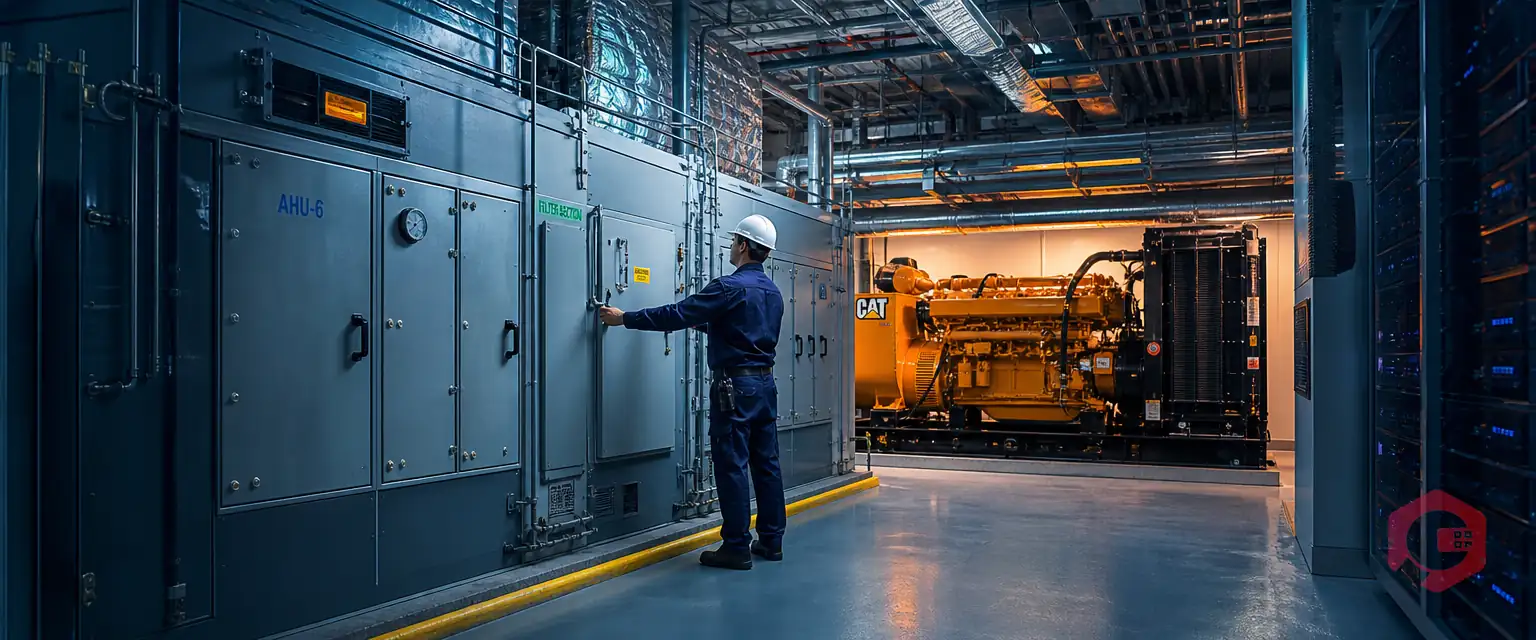
Healthcare facility maintenance carries a weight most other industries don't face. A missed preventive maintenance task isn't just a cost problem. It's a patient-safety incident waiting to happen. A failed operating room air handler risks a surgical site infection. A generator that doesn't start during an outage risks lives on ventilators. And unlike most industries, a hospital's maintenance program is also audited — unannounced, at any time, against a body of regulation most facility teams outside healthcare never encounter. This guide covers the three forces healthcare maintenance teams have to balance, why they conflict, and how a documented system keeps a facility survey-ready every day, not just before an inspection.
Key Takeaways
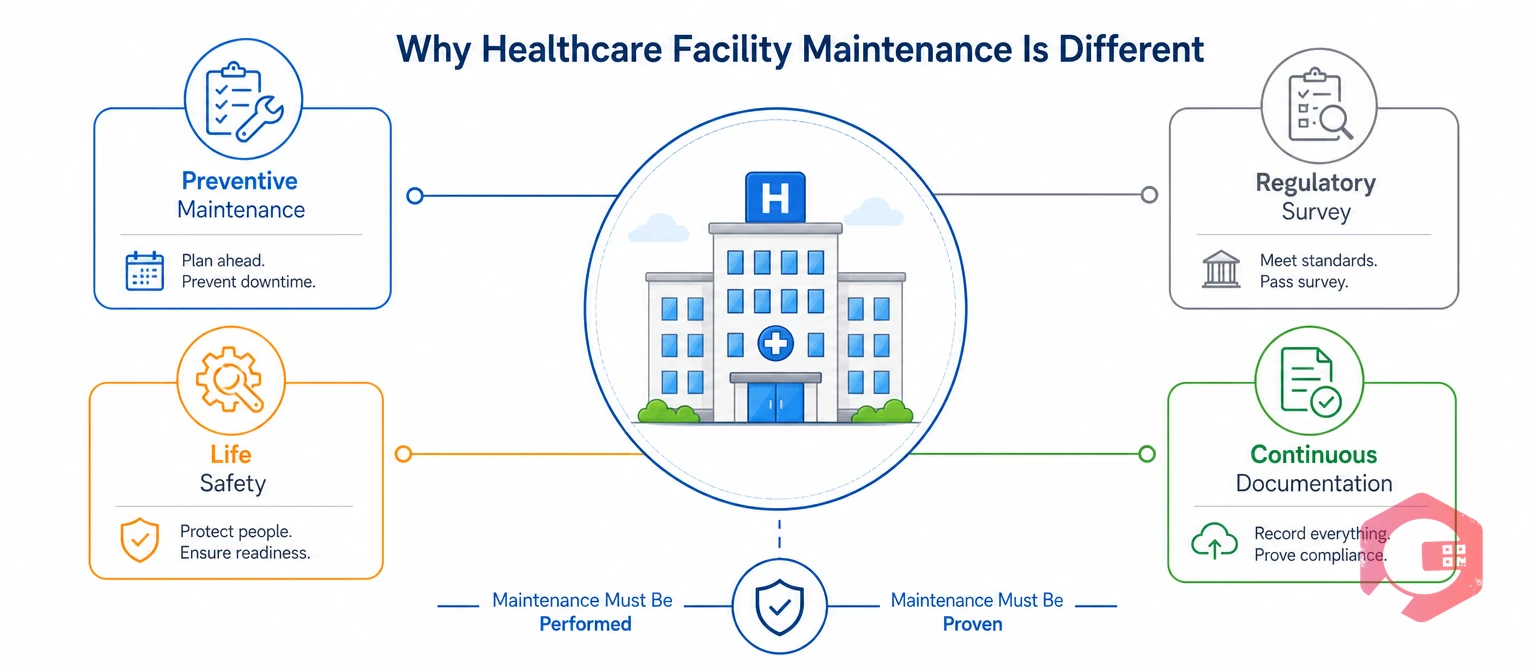
Every facility team deals with equipment that breaks and schedules that slip. Healthcare facility maintenance adds a layer most industries don't carry: regulatory survivability. A missed inspection isn't just a maintenance gap. It's a potential finding during an unannounced survey. That finding can put the hospital's accreditation, and its Medicare and Medicaid billing eligibility, at risk.
The Joint Commission is the accrediting body most U.S. hospitals rely on. Its Environment of Care standards govern how facility and equipment maintenance must be documented, not just performed. The Joint Commission's surveys arrive unannounced. A hospital can't schedule a maintenance catch-up before the surveyor walks in. The documentation has to already be current, every day of the year.
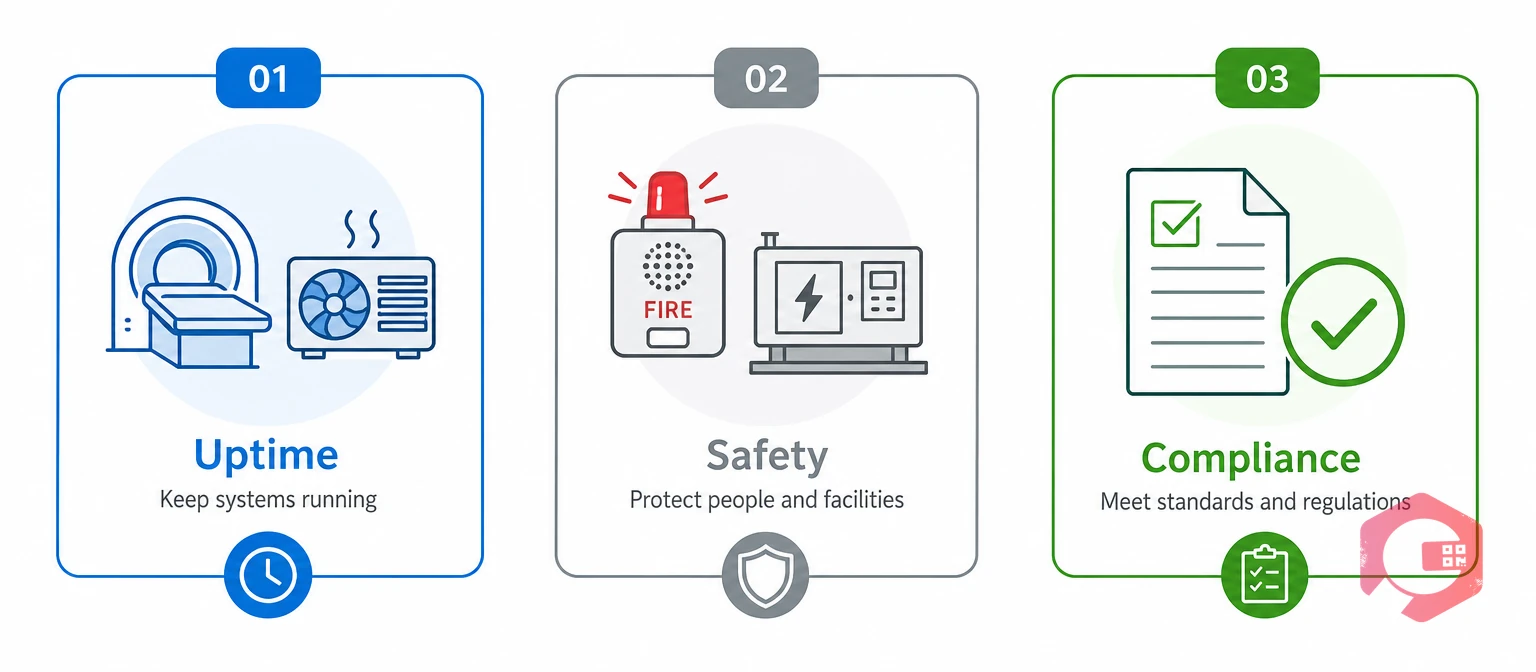
Healthcare maintenance decisions get pulled in three directions at once. The right call in one direction often isn't the right call in another.
A team that only optimizes for uptime can end up with equipment that runs but isn't documented to standard. A team that only optimizes for compliance paperwork can miss the equipment condition issues the paperwork was supposed to catch. The goal is one system that produces both: working equipment and the record to prove it.
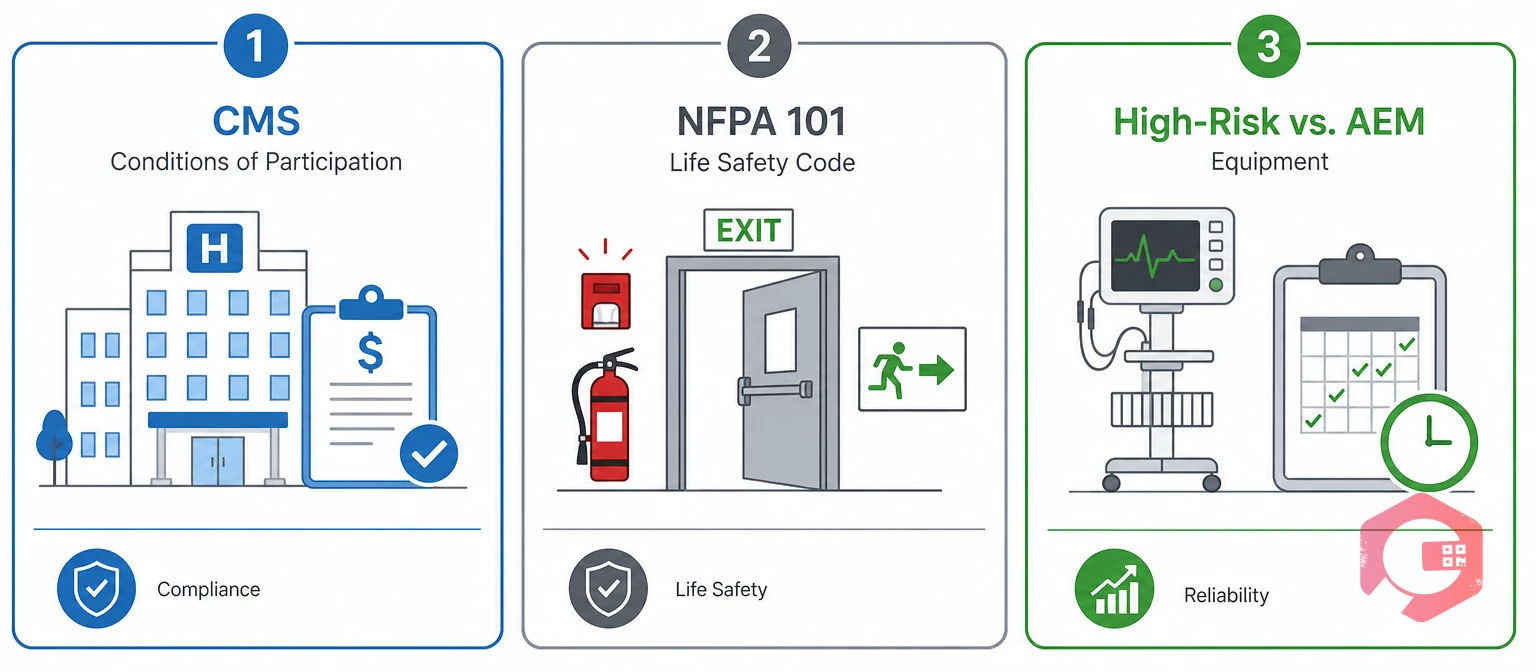
Healthcare facility maintenance sits under several overlapping regulatory frameworks. Each one has its own documentation expectations.
Hospitals participating in Medicare and Medicaid must meet the Centers for Medicare & Medicaid Services' physical environment requirements under 42 CFR §482.41. These rules cover the physical plant, equipment maintenance, and life safety. Non-compliance can put billing eligibility at risk, not just accreditation status.
CMS adopts the Life Safety Code by reference, governing fire alarm systems, suppression, and egress routes. When a life-safety deficiency can't be fixed right away, facilities must implement Interim Life Safety Measures. These are documented, temporary compensating actions that stay in place until the permanent fix is complete.
Not every piece of equipment needs the same maintenance rigor. High-risk equipment — defibrillators, ventilators, anesthesia machines — must follow manufacturer-recommended maintenance intervals exactly. For non-high-risk equipment, an Alternative Equipment Maintenance program allows facilities to adjust intervals. It's built on ANSI/AAMI EQ56 guidance, and it requires a documented, risk-based justification the surveyor can review.
Cryotos's asset tracking captures that risk classification directly on the asset record. The maintenance interval and its justification travel with the equipment instead of living in a separate spreadsheet.
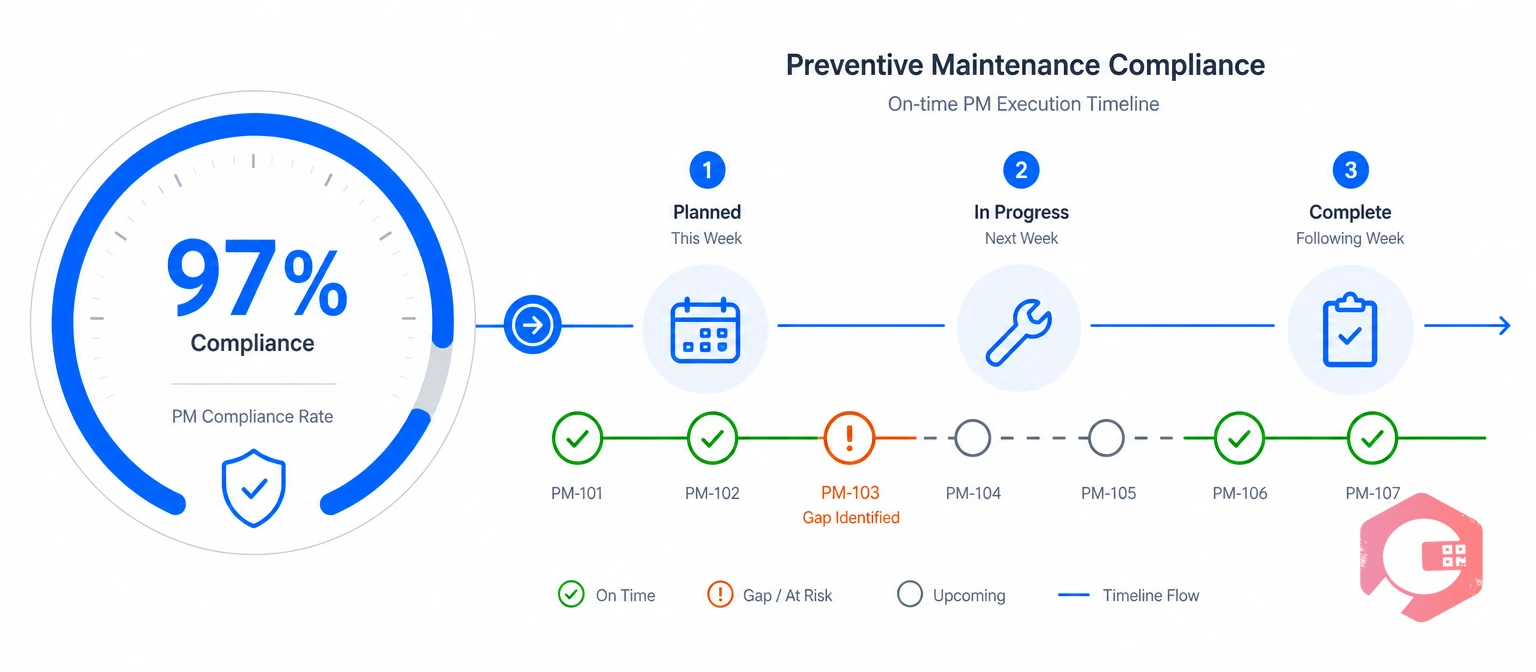
Surveyors don't check whether equipment is currently working. They check whether scheduled preventive maintenance was completed on time, every time, with a documented record. That single number, the PM compliance rate, is one of the most heavily scrutinized metrics in an Environment of Care review.
Most facilities aim for a PM completion rate in the high 90s. Falling short doesn't necessarily mean equipment is failing. It means the proof trail has gaps, and gaps are exactly what an unannounced survey is built to find.
Cryotos's preventive maintenance module schedules PM tasks against each asset's documented interval. The BI dashboard surfaces the completion rate in real time. A gap shows up weeks before a survey instead of during one.
Joint Commission surveys are unannounced, so "audit-ready" can't be a project a facility runs once a year. It has to be the default state of the maintenance program.
Every completed work order, inspection, and calibration needs a permanent, retrievable record. It can't be a folder someone assembles the week before a scheduled visit. Cryotos attaches inspection reports, calibration certificates, and compliance documentation directly to the work order and asset record. A surveyor's question gets an immediate, verifiable answer instead of a delay while someone searches for the file.
A hospital campus can carry thousands of items with a hard expiration or inspection date. Fire extinguishers, sprinkler heads, medical gas cylinders, generator load-bank tests, and equipment calibration certificates all expire on their own independent schedules.
Tracking that volume manually is where compliance gaps usually start, not from neglect but from scale. Cryotos's expiration reminder feature flags certifications, inspections, and warranties before they lapse, across every asset on the campus. Nobody has to remember a renewal date buried in a spreadsheet.
Fire alarm testing, medical gas system checks, generator load tests, and emergency power inspections each follow their own required frequency and documentation format. When those routines live in individual technicians' habits instead of a shared standard, consistency breaks down the moment staff changes.
Cryotos's maintenance checklists standardize these inspection routines. Every technician follows the same documented steps, in the same order, every time. A survey-critical inspection becomes a repeatable process instead of one person's institutional knowledge.
Cryotos brings uptime, safety, and compliance into one system instead of three disconnected processes. Asset records carry risk classification and maintenance intervals. PM schedules generate automatically against those intervals. Completed work orders attach their documentation permanently. Expiring certifications and inspections surface before they lapse.
Facilities running healthcare maintenance through Cryotos have reported up to a 30% reduction in unplanned downtime and 25% faster repair turnaround. Those outcomes matter clinically, not just operationally, when the equipment involved supports patient care directly. See Cryotos's healthcare CMMS solution page for a closer look at how this fits a hospital environment.
Healthcare facility maintenance combines equipment uptime, life-safety compliance, and regulatory documentation under unannounced survey conditions. A maintenance gap isn't just an operational issue. It can affect patient safety and put accreditation or Medicare and Medicaid billing eligibility at risk.
An Alternative Equipment Maintenance (AEM) program lets a healthcare facility adjust maintenance intervals for non-high-risk equipment away from manufacturer recommendations. It requires a documented, risk-based rationale that a surveyor can review. High-risk equipment like ventilators and defibrillators must still follow manufacturer-recommended intervals exactly.
Most healthcare facilities aim for a preventive maintenance completion rate in the high 90s. Surveyors check this documented completion rate directly. It shows that scheduled maintenance actually happened on time, not just that equipment currently appears to be working.
Interim Life Safety Measures are documented, temporary compensating actions. A healthcare facility puts them in place when a life-safety deficiency, such as a fire door out of service, can't be corrected right away. They keep the facility compliant with the Life Safety Code until the permanent repair is complete.
Uptime, safety, and compliance don't have to compete when they run through the same documented system. Schedule a free demo to see how Cryotos keeps a healthcare facility survey-ready every day, not just before an inspection.


Cryotos AI predicts failures, automates work orders, and simplifies maintenance—before problems slow you down.