
The hidden costs of not using Cryotos CMMS add up faster than most facility managers expect. On the surface, skipping a Computerized Maintenance Management System looks like a budget win — no software subscription, no onboarding time, no change management. But the reality is different. Organizations that rely on spreadsheets, paper work orders, or disconnected systems consistently spend more on reactive repairs, unplanned downtime, and compliance penalties than they would ever pay for a modern CMMS platform. Research from the Plant Engineering annual maintenance survey found that facilities without a CMMS spend up to 30% more on maintenance labor than those with one — and that's before counting asset replacement costs.
This post breaks down seven specific cost categories that quietly drain your maintenance budget when you don't have a system like Cryotos in place, along with the real numbers behind each one.
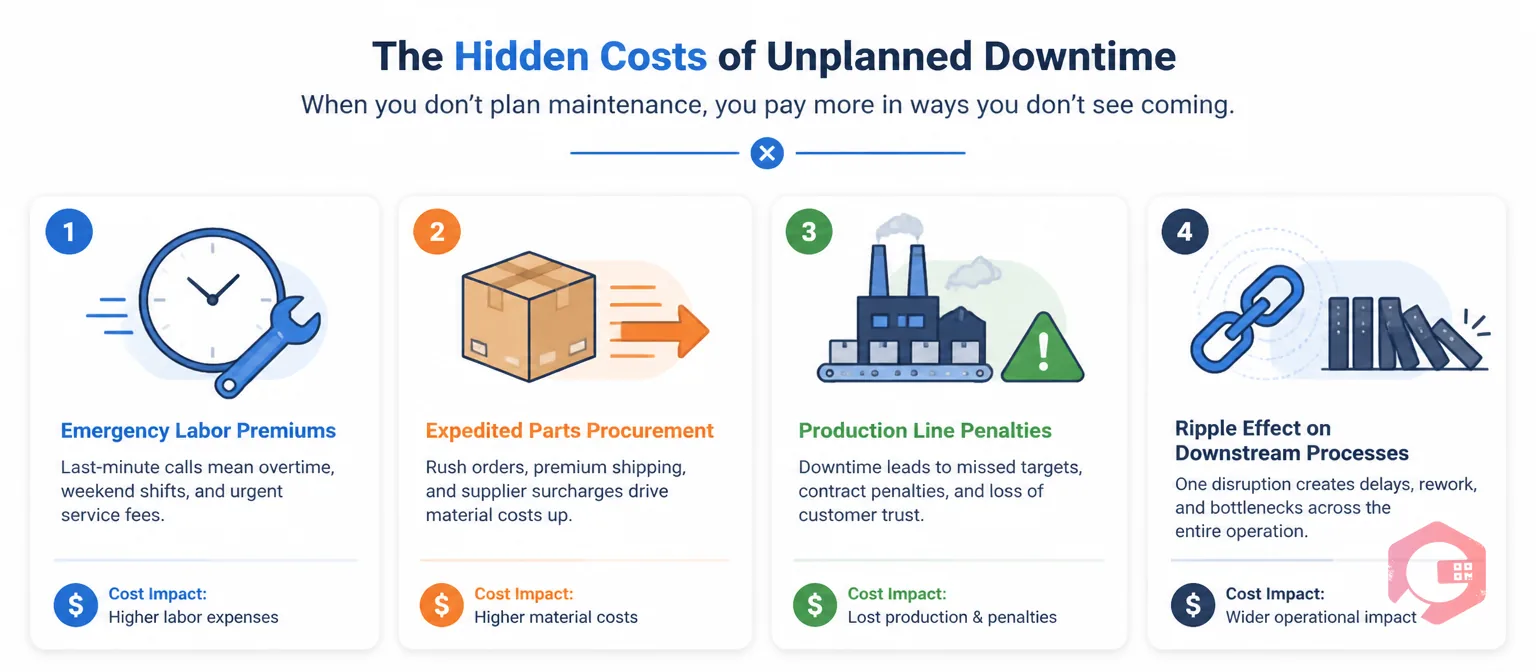
Unplanned downtime is the most visible symptom of poor maintenance management, but most organizations dramatically underestimate its true cost. A single hour of production line downtime can cost anywhere from $10,000 to over $250,000 depending on the industry, according to McKinsey & Company research on manufacturing operations. Without a CMMS, preventive maintenance tasks fall through the cracks. Work orders get missed, lubrication schedules slip, and equipment that should last 15 years fails at year eight.
Several factors compound the financial damage of unplanned downtime when you're running without a structured maintenance system:
Cryotos CMMS prevents this by automatically scheduling preventive maintenance based on calendar intervals, meter readings, or real-time sensor data. When a PM task is due, technicians receive a push notification with the full procedure, parts list, and safety checklist — so nothing gets overlooked.
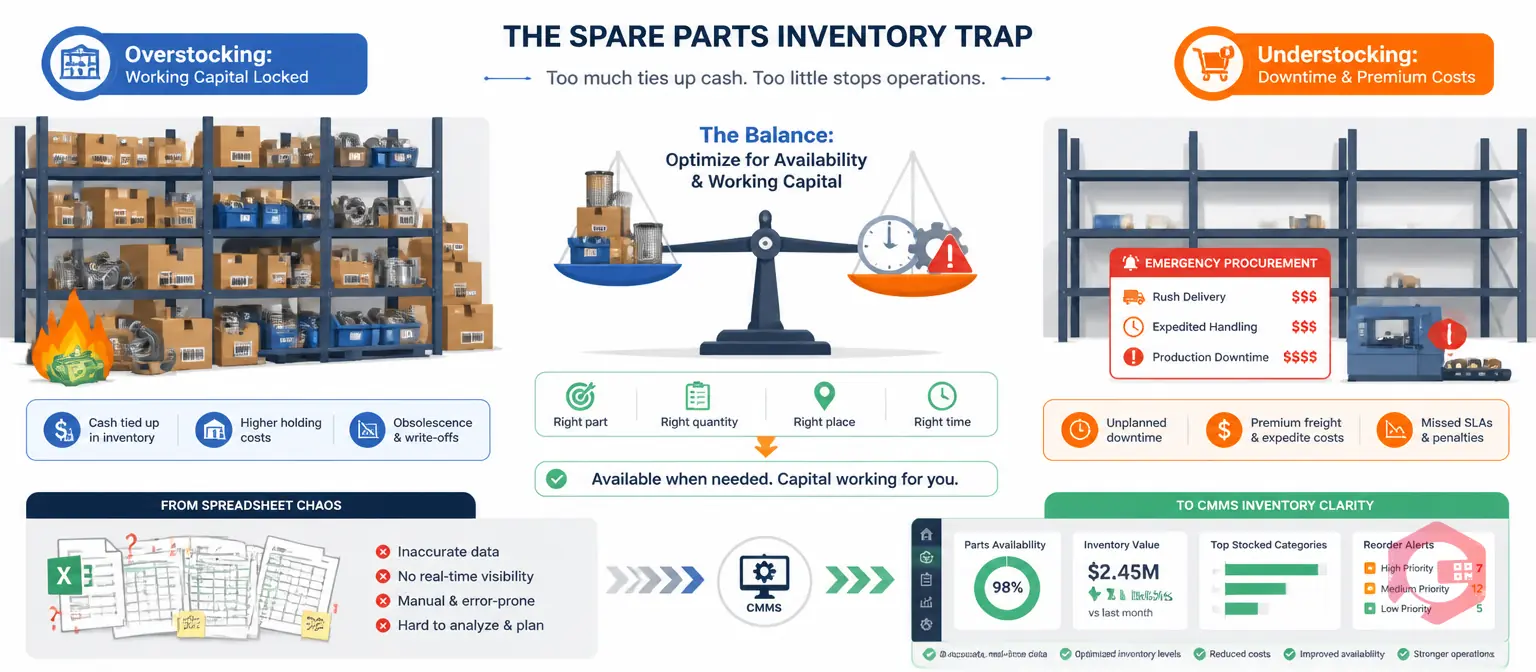
Organizations that manage spare parts on spreadsheets or whiteboards consistently run into one of two problems: they either overstock items that sit on shelves for years, or they run out of critical components exactly when they need them most. Both scenarios cost money in different ways.
Overstocking ties up working capital. According to Gartner, maintenance inventory carrying costs typically run between 20% and 30% of the inventory's total value annually — meaning a storeroom holding $200,000 in parts costs $40,000–$60,000 per year just to maintain. Understocking causes downtime-driven procurement at premium prices, as noted in the previous section.
Spreadsheets seem manageable until three technicians are editing the same file simultaneously, part numbers are entered inconsistently, and no one has set a reorder trigger. Within months, your parts data is unreliable. Cryotos CMMS solves this with a built-in spare parts inventory module that tracks stock levels in real time, alerts the procurement team when items drop below reorder thresholds, and links every part to the assets and work orders that consume it. The result is a lean, accurate storeroom that doesn't bleed cash.
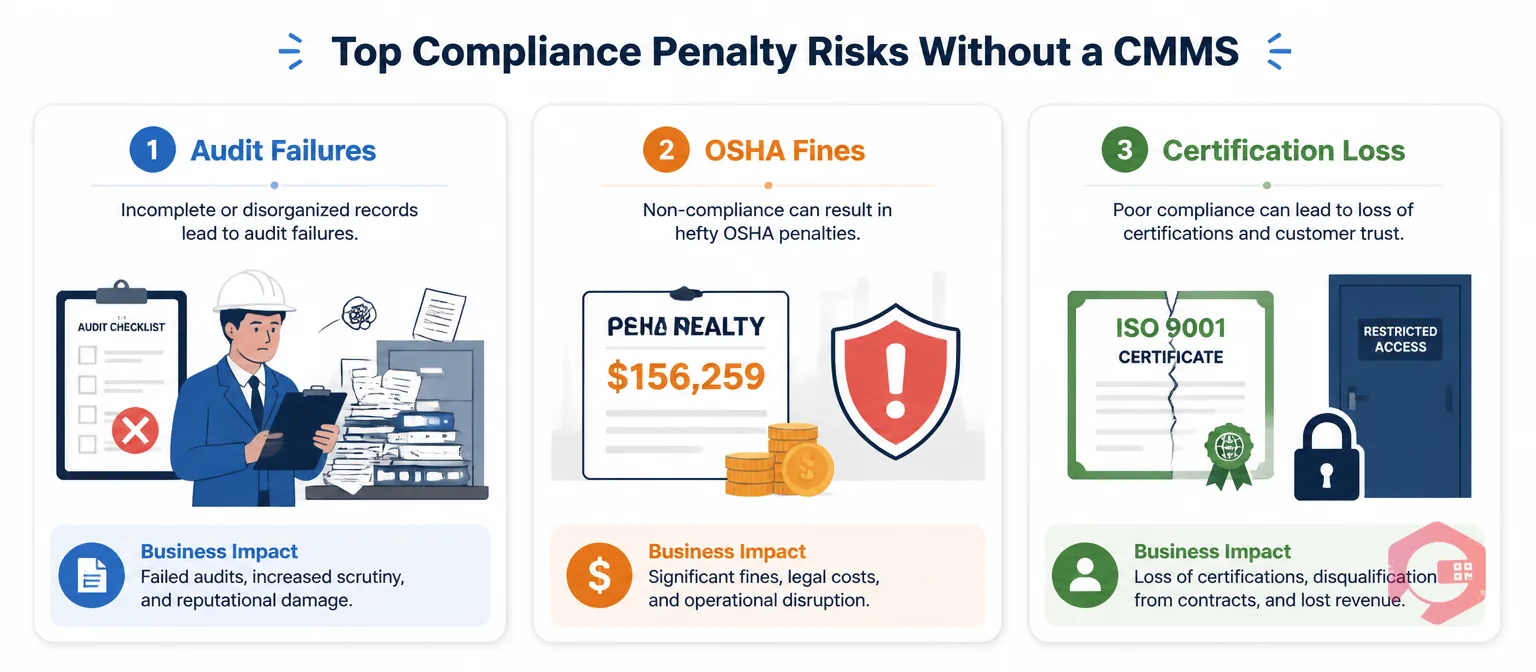
Maintenance records are legal documents. Regulatory bodies including OSHA, the FDA, and ISO certification auditors require documented evidence that safety-critical equipment has been inspected, tested, and serviced on schedule. When that documentation lives in binders, email chains, or disconnected spreadsheets, you face three compounding risks.
Cryotos CMMS automatically captures every work order completion with technician sign-off, timestamp, and photographic evidence. Audit reports that once took days to compile are generated in seconds, giving you documented proof of compliance at any moment.
Assets maintained on a reactive basis — fixed only when they break — typically reach end-of-life 20%–40% earlier than assets on a structured preventive or predictive maintenance program, according to data compiled by Reliable Plant magazine. When a $500,000 CNC machine that should last 20 years fails at year 13, you've lost seven years of productive life and incurred a capital replacement cost years ahead of schedule.
The financial impact of shortened asset lifespan goes beyond the replacement price tag:
Cryotos CMMS tracks the full maintenance history and total cost of ownership for every asset. When maintenance costs on an aging asset begin approaching replacement cost, the system flags it — giving your team data to make informed capital decisions rather than reactive ones.
Without a CMMS, maintenance technicians spend a disproportionate share of their time on tasks that don't actually fix anything. Research on industrial workforce efficiency found that maintenance workers in unstructured environments spend up to 30% of their time searching for information — looking up asset manuals, tracking down parts locations, waiting for work order approvals, or figuring out who did the last repair and what they found.
The productivity drain shows up in specific, measurable ways:
Cryotos CMMS gives every technician a clear, prioritized work queue on their mobile device. Work orders include asset history, repair procedures, required parts, and safety instructions — eliminating the search time and enabling technicians to spend their entire shift doing actual maintenance work.
Poorly maintained equipment doesn't just break — it runs inefficiently long before it fails. An HVAC system with dirty coils, a compressed air system with developing leaks, or a motor with bearing wear all consume significantly more energy than their well-maintained counterparts. The U.S. Department of Energy estimates that poor equipment maintenance increases energy consumption by 10%–30% across typical industrial facilities.
For a facility spending $800,000 annually on utilities, that's $80,000–$240,000 in preventable energy waste per year. Cryotos CMMS makes it possible to include energy-efficiency checks as part of every preventive maintenance task — ensuring that filter changes, leak detection, lubrication, and calibration happen on schedule, keeping equipment running at its designed efficiency rating.
The most serious hidden cost of skipping a CMMS is also the hardest to quantify: the human and financial impact of a preventable safety incident. Equipment that isn't maintained on schedule is equipment that fails unpredictably — and in industrial environments, unpredictable equipment failure causes injuries.
According to OSHA, the average cost of a single workplace injury — including medical costs, lost productivity, OSHA investigation time, and reputational damage — exceeds $40,000. Fatalities carry an average employer cost of over $1 million when all factors are included. Workers' compensation premiums also rise after incidents, compounding the financial impact for years.
Cryotos CMMS embeds safety checklists directly into work orders for safety-critical assets. Every inspection task requires technician sign-off before the work order can be closed. Hazardous equipment is flagged with safety procedures and lockout/tagout documentation accessible directly from the mobile app — so the right procedure is always followed, every time.
Organizations that implement a CMMS typically report ROI within 12–18 months, driven by reductions in unplanned downtime, lower parts procurement costs, and improved labor productivity. Some facilities see downtime reduction of 20%–30% within the first year alone, which often exceeds the entire annual cost of the software subscription.
Most Cryotos customers are operational within a few days to two weeks, depending on the size of the asset register and the level of historical data migration required. Cryotos offers guided onboarding, and its mobile-first interface means technicians can start using the system with minimal training — reducing the implementation disruption that often delays CMMS adoption.
Yes. Cryotos is designed to scale from small facilities managing a few dozen assets to large industrial operations with thousands of assets across multiple sites. The platform supports simple calendar-based PM schedules for straightforward equipment and condition-based maintenance triggers using IoT sensor integrations for more complex, critical assets.
Cryotos supports data import from CSV files, so existing maintenance records stored in spreadsheets can be migrated into the system. The Cryotos onboarding team can assist with formatting and importing historical data so you don't lose continuity when you make the switch.
If your facility is absorbing any of the costs described above, a structured maintenance platform will pay for itself quickly. Cryotos CMMS gives maintenance teams real-time work order management, automated PM scheduling, spare parts tracking, compliance documentation, and asset lifecycle analytics — in a single mobile-ready platform built for industrial environments. Book a free demo today and see exactly how much your current approach is costing you.
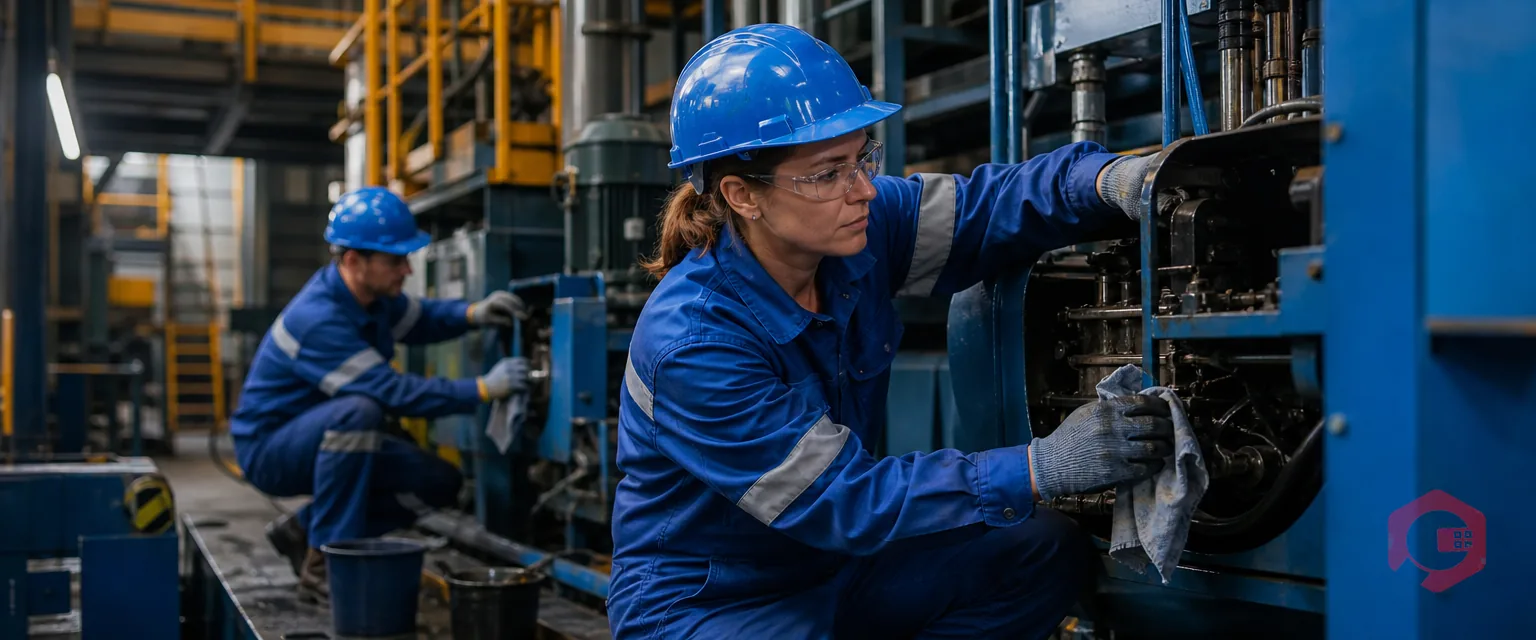


Cryotos AI predicts failures, automates work orders, and simplifies maintenance—before problems slow you down.



