A hot work permit checklist is a step-by-step list of the checks a team must complete before, during, and after any welding, cutting, brazing, or grinding job. It confirms that combustibles are cleared, fire protection works, the atmosphere is safe, and a trained fire watch is in place before anyone strikes an arc. No checklist means no permit, and no permit means no hot work.
Hot work is one of the most common causes of fires during maintenance, because sparks and slag can travel far beyond the work spot. This guide gives you a 10-point hot work permit checklist built around OSHA and NFPA rules. Each point explains what to check, why it matters, and what "done" looks like on the floor.
Key Takeaways

A hot work permit is a written approval that allows a named crew to do spark- or flame-producing work at a set place and time, under set conditions. It is the control document for hot work, and it sits inside a wider permit to work system.
In the United States, two rule sets shape most hot work programs. OSHA standard 29 CFR 1910.252 covers fire prevention for welding and cutting in general industry. The National Fire Protection Association publishes NFPA 51B, the standard most insurers expect sites to follow.
Hot work in maintenance is any task that makes sparks, flames, or heat that can ignite nearby materials. Common examples include:
If a task fits this list and happens outside a dedicated welding shop, it needs a permit and a completed hot work permit checklist.
The 10 checks below follow the life of a hot work job, from planning to final close-out. Grouping them this way makes it easy to see who owns each step and when it must be done.
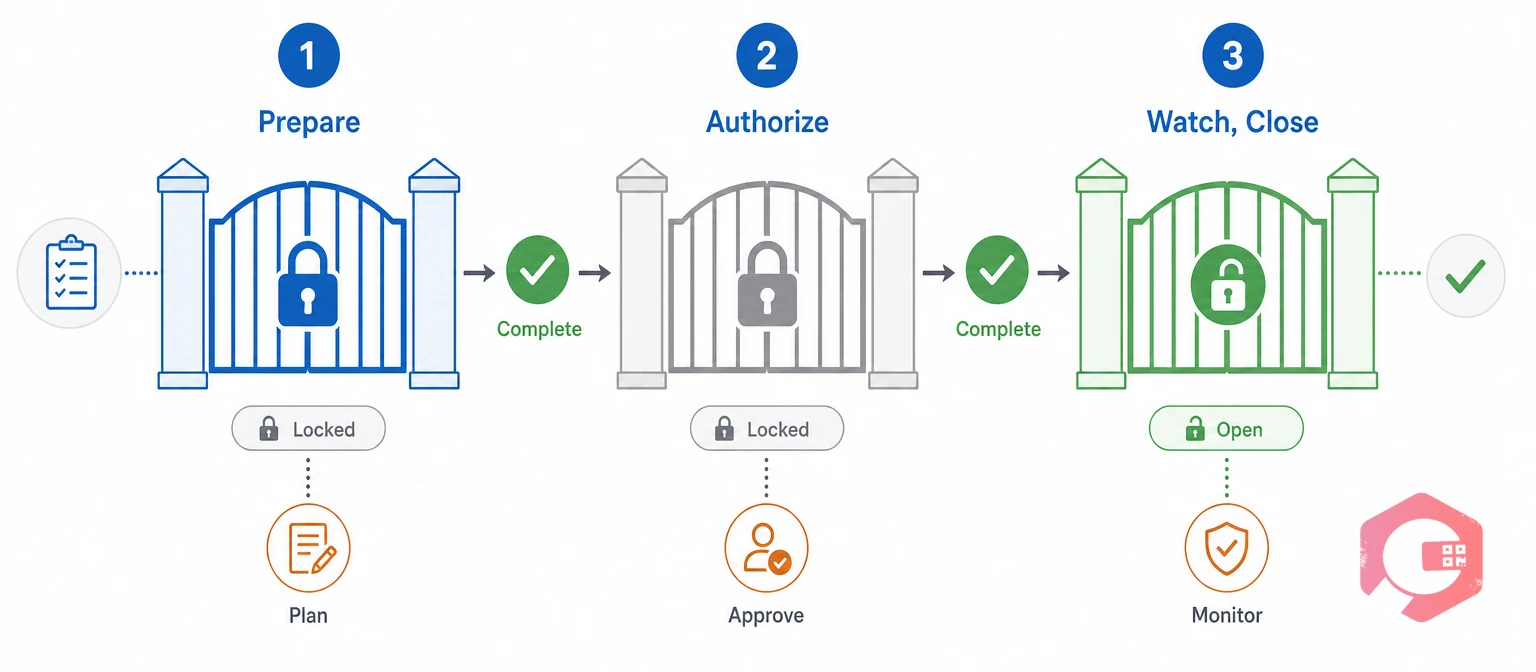
The Three-Gate Hot Work Approach:
A crew cannot pass a gate until every check inside it is complete. That one rule stops the most common shortcut, which is starting work while preparation is still under way.
Want this gate logic enforced for you? Cryotos maintenance checklists let you build each gate as a required step, so the next one stays locked until the current one is signed.
The safest hot work is the job you never do. NFPA 51B asks teams to consider other methods first, and most experienced safety leads treat this as the first item on any hot work permit checklist.
Record the answer on the permit. If the team chose hot work anyway, a short reason helps auditors see that the choice was deliberate.
OSHA 1910.252 requires that combustible materials be moved at least 35 feet (about 11 meters) from the work, or protected if they cannot be moved. Sparks and hot slag can travel that far, especially when work is done at height.
If the 35-foot zone cannot be made safe, the work should not go ahead in that spot, and the hot work permit checklist should record why.
Fires often start out of sight, on the far side of a wall or below a floor opening. This item on the hot work permit checklist covers the paths sparks can take that a quick look misses.
Treat any hidden space as part of the work area until someone has checked it with their own eyes.
Gas testing finds invisible hazards that a visual check cannot. A calibrated gas detector should test the work area, nearby drains, and any vessel or pipe that will be heated.
A gas reading is only valid for the conditions at the time of the test, so retest after breaks or any change and log each new result on the hot work permit checklist.
Hot work on or near live equipment can release stored energy, fuel, or product. Isolation closes that risk before the torch comes out.
When isolation and the hot work permit are tied together, nobody can restart a line while a welder is still on it.
Fire protection must be working and close at hand before hot work begins. NFPA 51B expects automatic sprinklers to stay in service during hot work wherever they exist.
If fire protection is out of service, hot work in that area should wait until it is restored. No hot work permit checklist should be signed while sprinklers are impaired without a formal impairment plan.
Faulty gear causes fires and injuries even when the area is clean. A short equipment check takes minutes and catches most problems.
Damaged equipment should be tagged out and replaced, not repaired on the spot. Add the equipment check to your hot work permit checklist so it happens on every job.
The fire watch is the main safeguard once sparks start flying. OSHA requires a fire watch whenever a fire could develop beyond minor levels, or when combustibles sit within 35 feet.
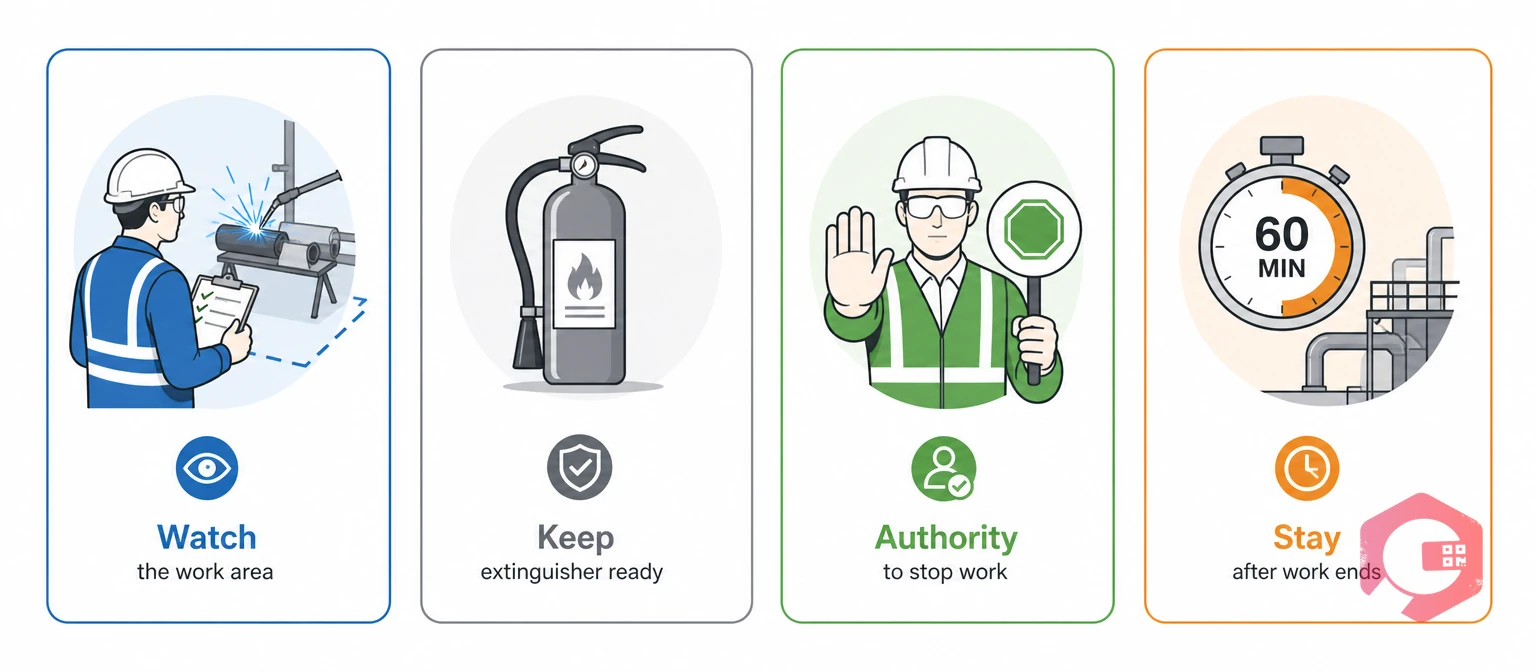
A fire watch is a trained observer who looks for and puts out fires during hot work. The watch stays with the job, keeps an extinguisher ready, has the authority to stop work, and should not weld, grind, or do any other task at the same time.
Most maintenance teams set the longer NFPA time as their standard, since smoldering fires often appear well after the welder has packed up.
The permit is issued only after checks 1 to 8 are complete. A trained Permit Authorizing Individual, or authorizer, often a supervisor or safety lead, should walk the area before signing.
If the task, location, or crew changes, stop work and issue a new permit.
Close-out is the step most often rushed, yet many hot work fires start after the crew leaves. A clear close-out routine protects the site through the risky period after work stops.
A permit that is never closed is a gap in your records, so track open permits daily. The close-out section is the last line on the hot work permit checklist, and it deserves the same care as the first.
A good hot work permit template captures every check in a set order, with a clear owner for each field. Use the table below to build or audit your own form.
| Section | Field | Completed By | Example Entry |
|---|---|---|---|
| Job details | Location, task, equipment ID | Requester | Boiler room, weld pipe support, Asset BR-104 |
| Time window | Start time, end time, shift | Requester | 08:00 to 16:00, day shift |
| Alternatives | Cold method considered and reason rejected | Requester | Bolted clamp rejected: support is cracked |
| Area prep | Combustibles cleared or shielded within 35 ft | Operator | Pallets moved; drain covered with blanket |
| Hidden spaces | Openings sealed, far side of wall checked | Operator | Pipe hole sealed; storeroom behind wall checked |
| Gas test | LEL reading, time, tester name | Gas tester | 0% LEL at 07:45, J. Patel |
| Isolation | LOTO or isolation permit number | Operator | LOTO-2231 applied to pump P-12 |
| Fire protection | Sprinklers in service, extinguisher type and location | Operator | Sprinklers live; 9 kg dry powder at work site |
| Fire watch | Name, start time, end time | Fire watch | R. Silva, 08:00 to 17:00 |
| Authorization | Authorizer signature and walk-down time | Authorizer | Signed 07:55 after site walk |
| Close-out | Final inspection time, systems restored, authorizer sign-off | Authorizer | Closed 17:05, no hot spots found |
Keep the order of the form the same as the order of the checks, so crews complete them in sequence without skipping ahead.
Most hot work incidents trace back to a small set of repeat mistakes, not to unknown hazards, and a weak hot work permit checklist usually lets them through. Teams that successfully prevent hot work fires watch for these patterns:
Most facilities can remove these mistakes by making each check a required, signed step rather than a box on a paper form.
A Computerized Maintenance Management System turns a paper hot work permit checklist into a guided digital workflow tied to the job itself. The permit, the checks, and the work order stay in one record from request to close-out.
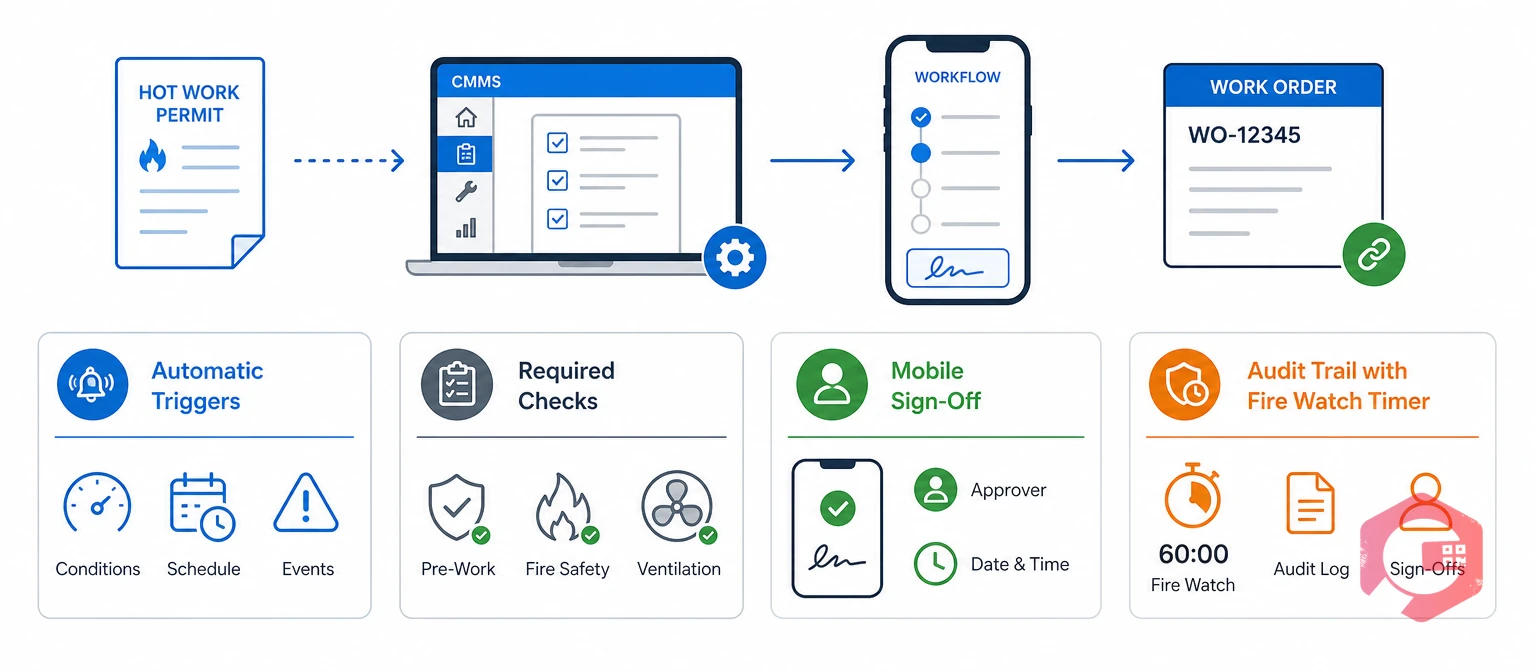
This structure matters for uptime as well as safety. Maintenance teams using Cryotos have reported up to 30% reduction in unplanned downtime and 25% faster repair turnaround. Faster permit approvals mean crews spend less time waiting and more time fixing equipment.
For a wider site review, pair your hot work program with a safety compliance checklist that covers every permit type.
A hot work permit checklist should cover the need for hot work, combustibles cleared within 35 feet, sealed openings, gas test results, isolation, fire protection, equipment and PPE checks, a named fire watch, signatures, and close-out. Each item should have a clear owner and a place to record results.
Most sites limit a hot work permit to a single shift or a single task, whichever ends first. If the work runs longer, or conditions change, the area should be checked again and a new permit issued.
OSHA requires a fire watch for at least 30 minutes after hot work ends. The 2019 edition of NFPA 51B extended this to one hour, with a further monitoring period afterward. Many sites use the longer time as their standard.
A trained and authorized Permit Authorizing Individual, or authorizer, signs the permit, usually a maintenance supervisor, safety officer, or facility manager. The hot work operator and the fire watch also sign to confirm they understand the conditions.
Yes. Contractors should follow the same permit process as your own staff, and they should receive a site briefing first. Outside crews are less familiar with your hazards, so the checks matter even more for them.
Usually not. A permanent welding shop built for hot work, with non-combustible surfaces and proper fire protection, is a designated area. Any welding or cutting outside that area still needs a permit.
A clear hot work permit checklist keeps welding and cutting jobs safe from the first spark to the last inspection. Schedule a free demo to see how Cryotos turns every hot work check, signature, and fire watch timer into one digital permit linked to the work order.


Cryotos AI predicts failures, automates work orders, and simplifies maintenance—before problems slow you down.