
A Permit to Work (PTW) in a warehouse is a formal, documented system that controls who can perform hazardous tasks - and under what conditions. Before any high-risk job begins, a supervisor reviews the risks, puts the right safety controls in place, and issues a written permit. No permit means no work. Warehouses handle heavy machinery, elevated racking, electrical systems, and chemical storage - making a structured PTW system not just good practice, but an operational necessity. According to OSHA, warehousing is one of the industries with the highest rates of nonfatal occupational injuries, and most of those incidents involve tasks a PTW system is specifically designed to prevent.
A Permit to Work is a written authorization that confirms a hazardous task has been assessed, the right controls are in place, and the named workers are authorized to begin. It's a two-way checkpoint - the permit issuer confirms the environment is safe, and the permit receiver confirms they understand the risks and controls before starting.
In a warehouse setting, a PTW applies whenever a task falls outside routine operations - maintenance on conveyor belts, work inside confined spaces like tanks or silos, electrical panel servicing, hot work near stored goods, or any task on elevated platforms. The permit creates a paper or digital trail showing the organization assessed the risk and took appropriate steps - critical for audits, incident investigations, and regulatory compliance.
A PTW is not the same as a risk assessment, though both often work together. The risk assessment identifies hazards; the permit is the formal gate - nothing starts without it being signed and active.
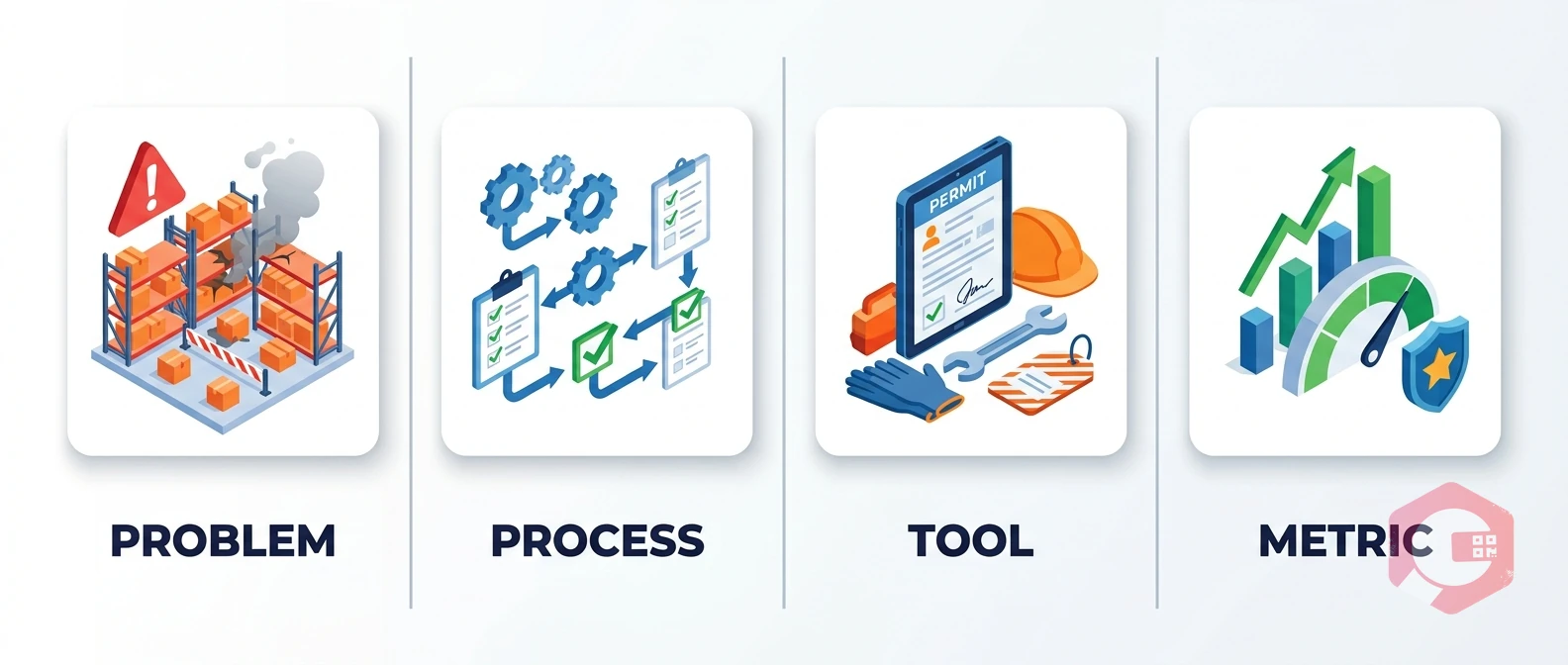
Not all hazardous tasks carry the same type of risk. Warehouses typically operate with several specialized permit types, each addressing a specific hazard category
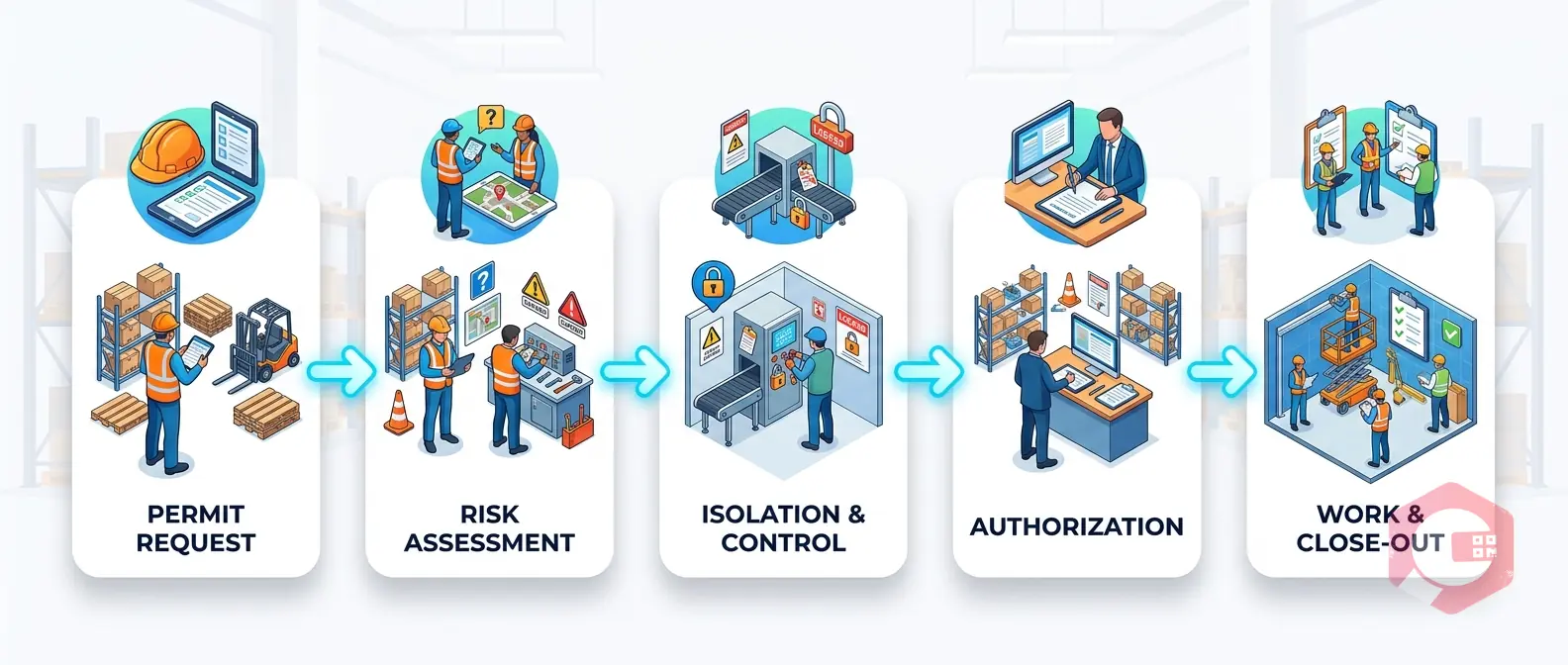
A well-run PTW system follows a consistent, repeatable process every time a hazardous task comes up. Here's how the flow typically works in a warehouse environment:
The maintenance technician or contractor identifies the task and submits a permit request - through a physical form or a digital system. The request includes a description of the work, location, estimated duration, and the names of workers involved.
The permit issuer (usually a safety officer or shift supervisor) reviews the task, visits the work site, and assesses hazards - identifying what could go wrong and what controls are needed.
Before signing off, the issuer ensures controls are implemented - LOTO applied, barriers erected, ventilation running, PPE confirmed. For electrical work, this step is non-negotiable before the permit is issued.
The completed permit is handed to the receiver (the worker or team lead). The issuer walks through the permit conditions, hazards, and emergency contacts. The receiver signs to confirm they understand everything before work begins.
Work begins only within the scope defined in the permit. If anything changes - a task expands, a new hazard appears, or time runs out - work stops and the permit must be reviewed or reissued.
When the task is complete, the area is cleaned and inspected, equipment is reinstated, and both issuer and receiver sign off on closure. The permit is archived as a formal record that work was completed safely and within scope.
Warehouses are dynamic environments. Forklift traffic, shifting inventory, changing shift patterns, and external contractors create a layered risk profile. Here are the most common scenarios where PTW makes a measurable difference:
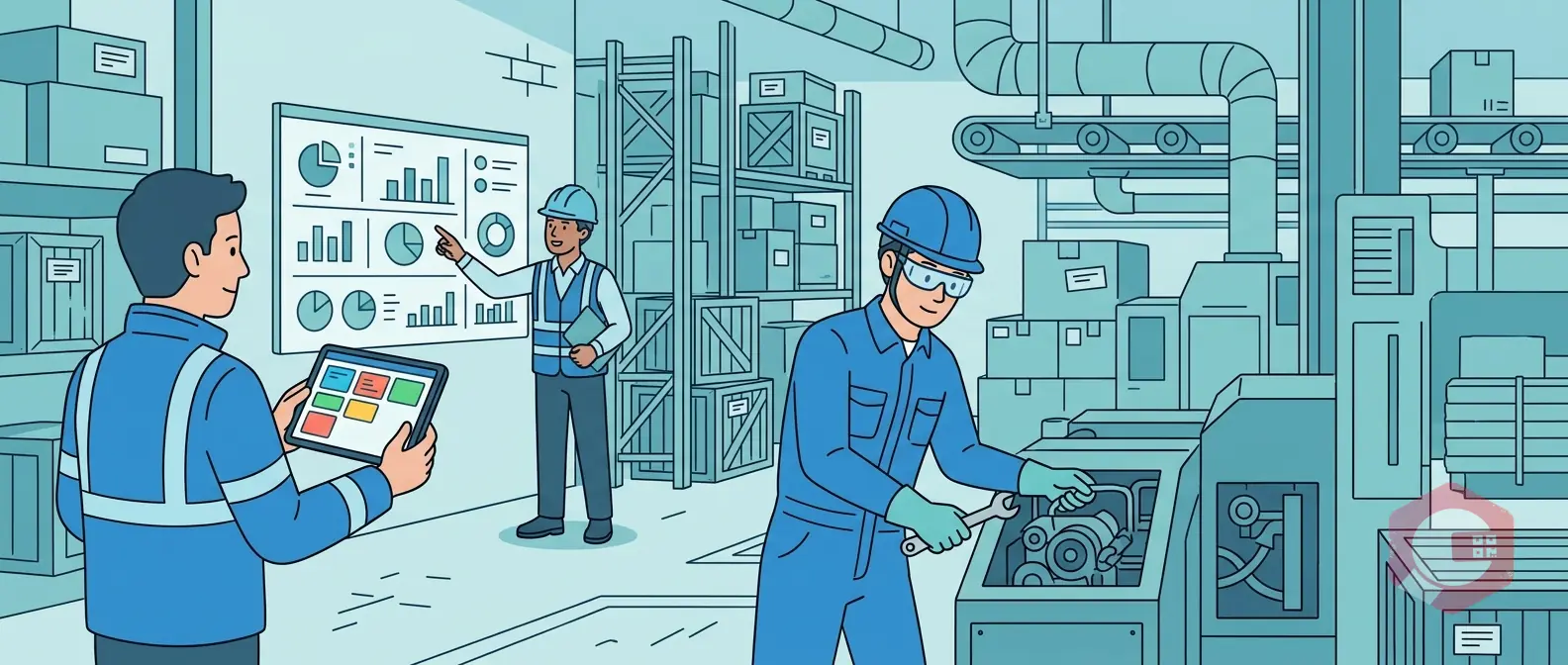
Having a PTW system isn't enough - how you run it determines whether it actually prevents incidents or just creates paperwork. These practices separate effective PTW programs from ones that exist only on paper

Paper-based PTW systems work - but they create real operational friction. Permits get lost, approval chains slow maintenance response, and audit trails require manual effort to compile. A CMMS (Computerized Maintenance Management System) solves this by embedding PTW directly into your maintenance workflow.
With Cryotos CMMS, when a work order is created for a high-risk task, the system automatically triggers a permit request. The workflow routes it to the right approver, sends notifications via mobile or WhatsApp, and holds the work order in a pending state until approval is confirmed.
Here's what that looks like in practice
The result is faster permit turnaround, fewer incidents caused by skipped steps, and compliance documentation that generates itself. For warehouses running multiple shifts and managing external contractors, that kind of system reliability is hard to replicate with paper.
Legal requirements vary by jurisdiction, but most countries require formal systems for managing high-risk tasks under general duty-of-care or specific regulations - such as OSHA 29 CFR 1910.146 for confined spaces in the US. Even where PTW isn't explicitly mandated, it's the recognized industry standard and provides critical protection during inspections or incident investigations.
Most permits are issued for a single shift or task window - typically no longer than one working day. If the task extends beyond that, the permit must be reviewed, site conditions re-checked, and the permit reissued. Multi-day shutdown permits should require daily sign-off to maintain accountability throughout.
Permit issuers must be trained, competent, and authorized by the organization - typically a safety officer, maintenance supervisor, or shift manager with both the technical knowledge to assess the hazard and the authority to sign off. Receivers are equally accountable - they sign to confirm they understand all conditions before starting.
Yes - and it should be. Contractors carry higher incident risk on unfamiliar sites. A PTW system forces a structured induction into site-specific hazards before any high-risk task begins, and many warehouses build credential verification and site briefing directly into their permit workflow.
A risk assessment identifies hazards and evaluates risk - it's an analytical document. A Permit to Work is an authorization document - it confirms that the risk assessment has been done, the controls are in place, and the specific task can now proceed safely. The risk assessment feeds into the permit; the permit gates the work.
Managing Permit to Work manually across multiple shifts, contractors, and warehouse zones is a compliance risk and an operational burden. Cryotos CMMS automates the entire PTW process - from permit request to closure - with full audit trails and real-time visibility across every active permit. Ready to take the friction out of your safety workflows? Explore how Cryotos can help your warehouse team work safer and faster.



Cryotos AI predicts failures, automates work orders, and simplifies maintenance—before problems slow you down.