IoT-based facility maintenance uses connected sensors and real-time data to predict equipment failures, automate work orders, and cut energy waste before costs spiral. Facilities that have adopted IoT-driven maintenance report operational cost reductions of 15–25%, according to a McKinsey analysis on industrial digitization. This guide breaks down exactly where those savings come from, gives you a framework to calculate your own ROI, and shows you what to look for in a connected maintenance platform.
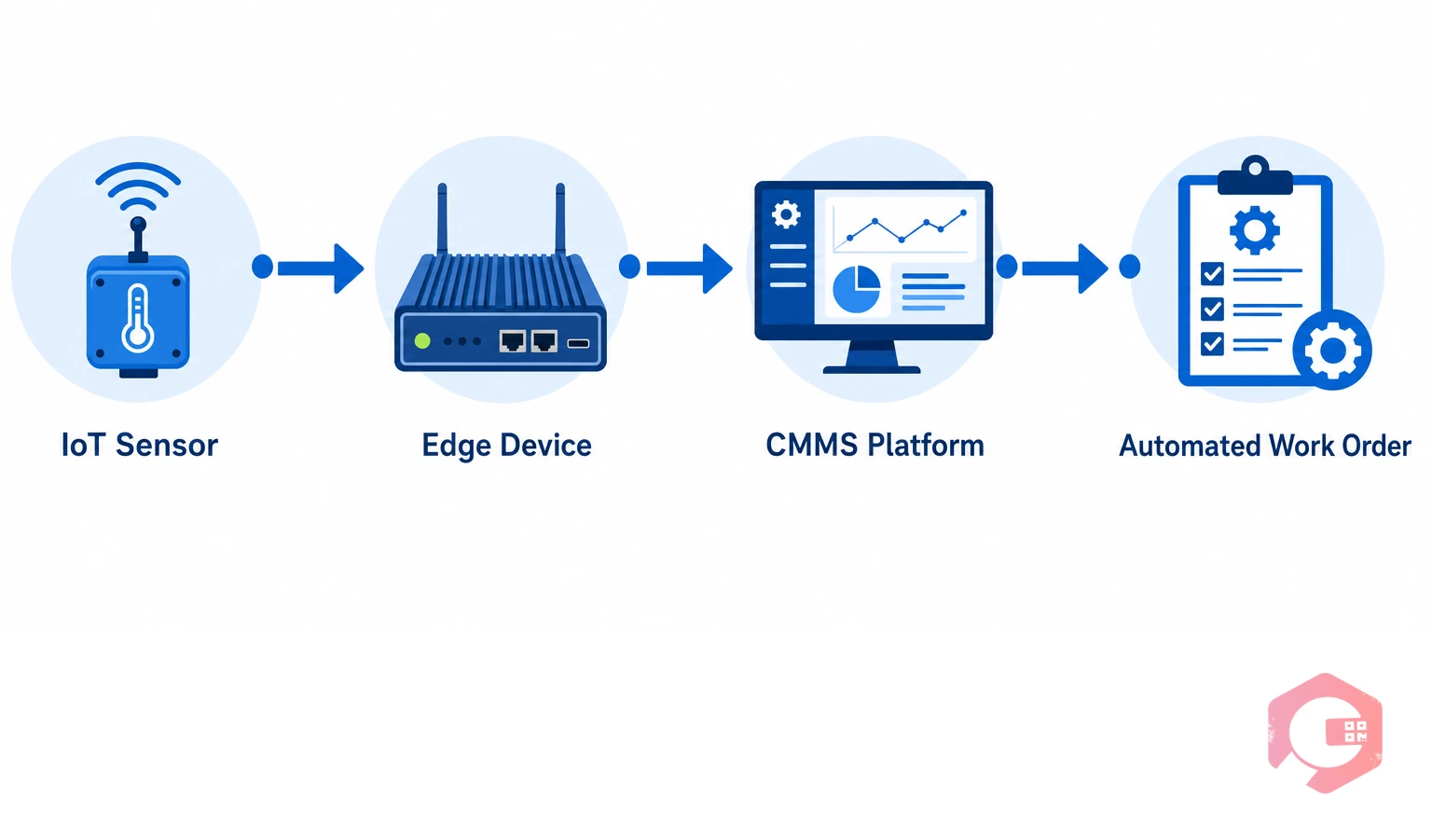
IoT-based facility maintenance connects physical assets — HVAC units, pumps, elevators, lighting systems, and electrical panels — to a digital monitoring layer through sensors and edge devices. These sensors continuously stream data on temperature, vibration, energy consumption, pressure, and runtime hours. That data feeds a maintenance platform, which flags anomalies, triggers work orders automatically, and builds a real-time picture of asset health across your entire facility.
The core shift is from time-based maintenance (servicing every 90 days whether needed or not) to condition-based maintenance (servicing when sensor data says the asset actually needs attention). That shift alone eliminates a large share of unnecessary maintenance spend and prevents the far more expensive unplanned breakdowns that reactive-only teams face.
According to the U.S. Department of Energy, predictive maintenance strategies enabled by IoT reduce maintenance costs by 10–25%, cut unplanned downtime by 35–45%, and extend equipment life by 20–40%.

Before you can understand where IoT saves money, you need to know what is actually driving your maintenance spend. A typical commercial facility’s maintenance budget breaks down roughly as follows:
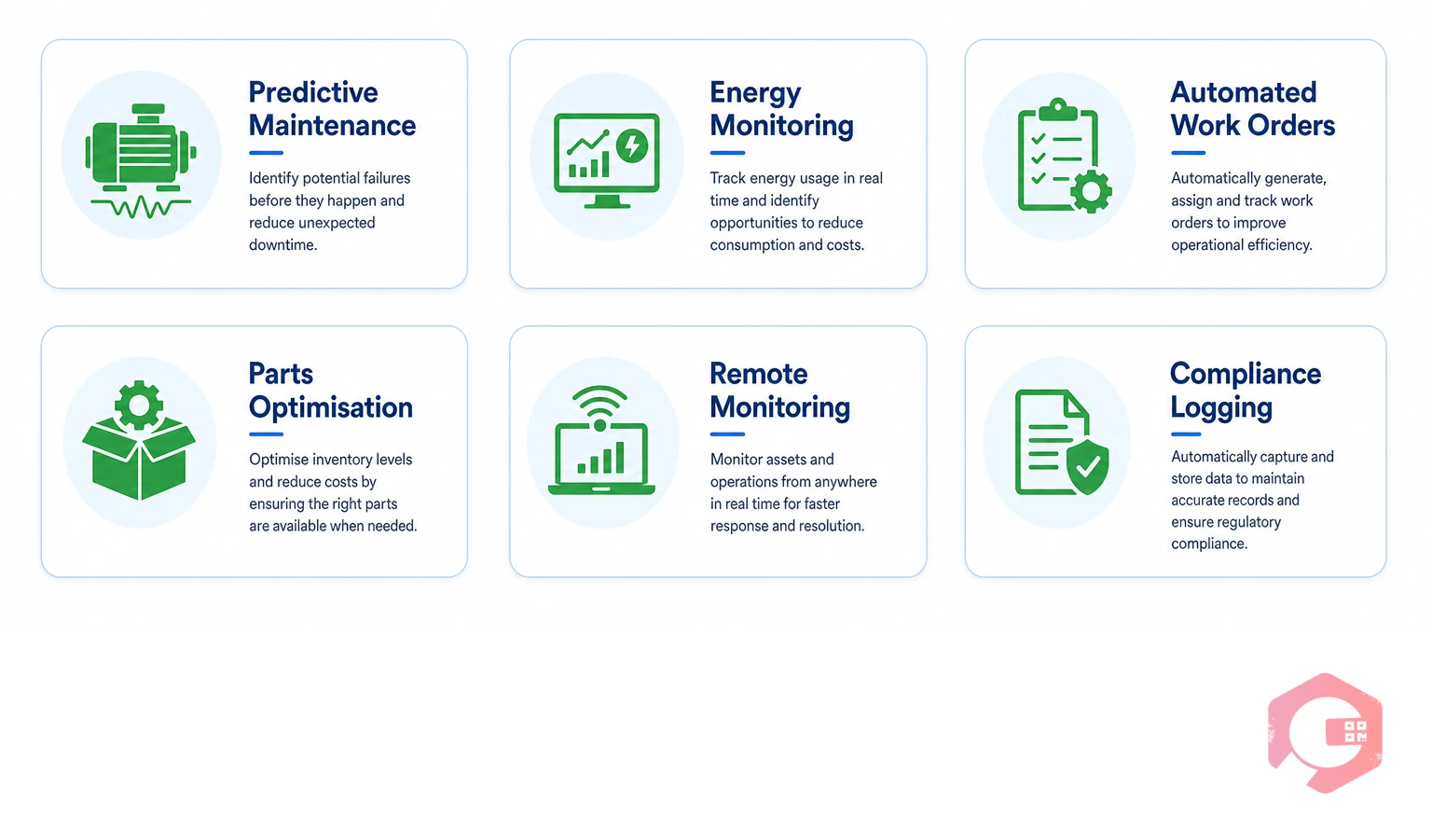
Vibration sensors on motors, temperature sensors on electrical cabinets, and pressure sensors on hydraulic systems detect degradation weeks before a failure occurs. A technician can schedule a planned repair during off-peak hours for a fraction of what an emergency breakdown would cost — including production losses, rush parts, and extended downtime.
A manufacturing plant in the automotive sector reduced its unplanned downtime by 38% within 12 months of deploying vibration-based IoT monitoring across 200 assets, cutting annual reactive maintenance spend by approximately $320,000. The Reliable Plant Institute consistently finds that facilities switching from reactive to predictive strategies cut total maintenance costs by 25–30%.
Smart meters and IoT-connected HVAC controllers reveal exactly when and where energy is being wasted — an air handling unit running at full capacity in an empty wing, a chiller cycling on-off due to a faulty sensor, lighting left on in unoccupied zones. Addressing these issues directly reduces energy spend by 10–20% in most commercial buildings without any capital equipment upgrades.
The International Energy Agency estimates that digital monitoring and control of building systems can reduce energy use in commercial buildings by up to 30%, making it the highest-ROI application of IoT in facility management.
When a sensor detects a threshold breach — say, a pump bearing temperature exceeding 85°C — a connected CMMS automatically creates a work order, assigns it to the nearest available technician, and attaches the sensor reading history to the job. No phone calls, no manual logging, no delays. Technicians spend more time fixing problems and less time chasing paperwork.
Teams using IoT-triggered automated work order management typically recover 1.5–3 hours of productive labour per technician per day — a significant cost recovery at scale across a large facility team.
When asset health data is connected to your parts inventory, you know which components are likely to need replacement in the next 30–60 days. That means you order parts based on actual predicted demand rather than a worst-case safety stock estimate. Facilities using condition-based parts planning typically reduce spare parts inventory carrying costs by 15–20%.
For multi-site facility operators — retail chains, hospital networks, commercial real estate portfolios — the cost of dispatching technicians to check on equipment status is enormous. IoT dashboards that show real-time asset health across all locations let facility managers triage remotely and only dispatch when a physical intervention is genuinely needed. Gartner research indicates that remote monitoring reduces unnecessary site visits by up to 40% in multi-location facility operations.
IoT sensors can continuously log environmental conditions — temperature in food storage zones, air quality in clean rooms, water quality in cooling towers — and automatically generate compliance records. This eliminates the manual inspection cycles that are easy to miss and the subsequent fines that follow. In regulated industries, a single missed inspection can cost more than a full year of IoT sensor deployment.
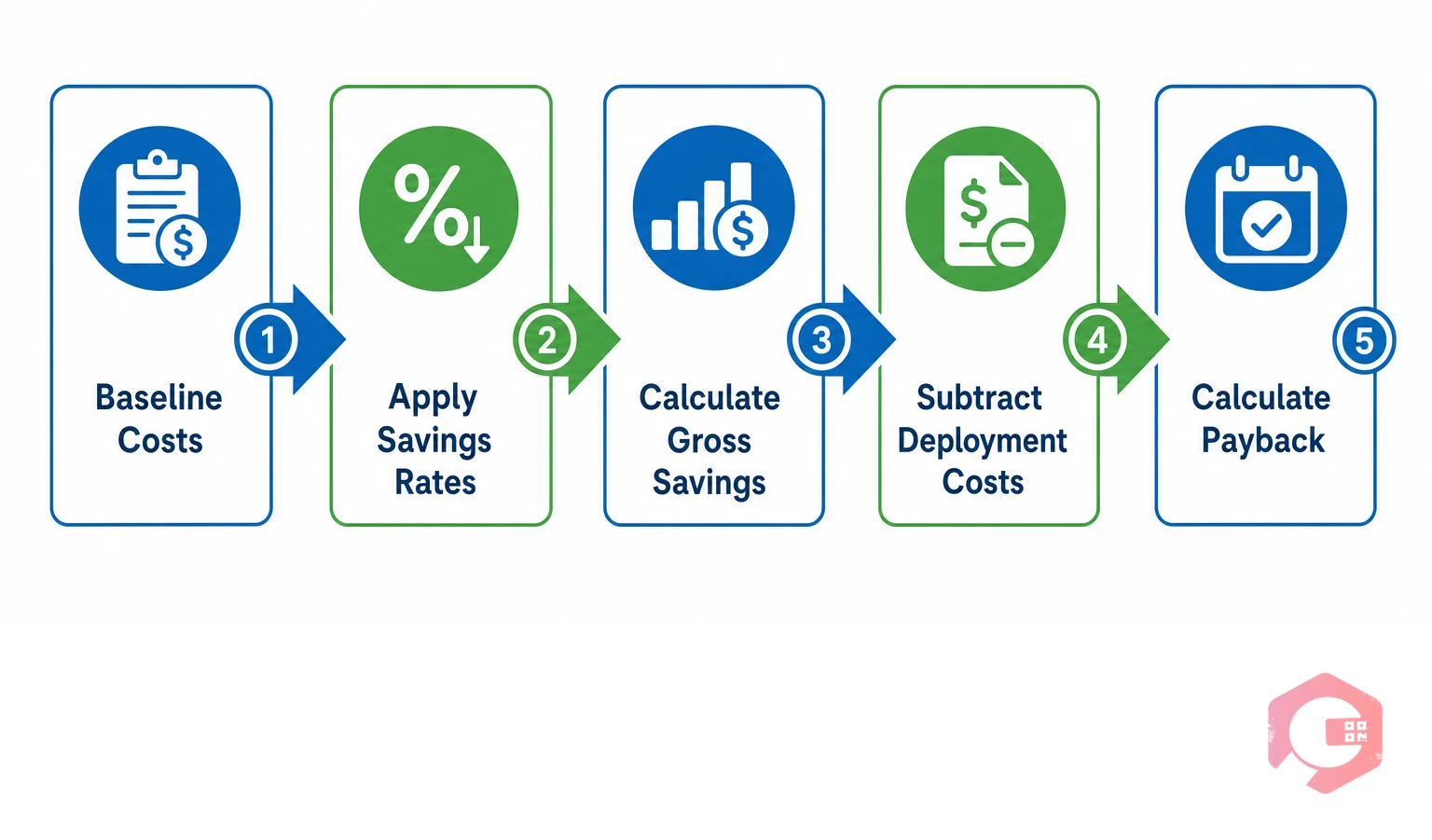
Most facility managers know IoT saves money but struggle to build a business case for leadership. Here is a straightforward framework you can apply with your own numbers:
Collecting IoT sensor data is only half the equation. The savings come from acting on that data fast and consistently — and that requires a CMMS platform that sits between your sensors and your maintenance team.
Cryotos CMMS integrates directly with IoT data streams from SCADA systems, PLCs, and edge devices. When a sensor reading crosses a threshold, Cryotos automatically raises a work order, assigns it based on technician location and skill, attaches the sensor history, and tracks resolution time — all without manual input. The result: faster response, lower labour cost, and a full audit trail for compliance.
On the preventive maintenance side, Cryotos supports dynamic PM schedules that trigger based on actual asset usage data from IoT sensors rather than fixed calendar intervals. This alone eliminates thousands of dollars in unnecessary scheduled maintenance tasks each year for a typical mid-size facility.
Cryotos customers report an average 30% reduction in unplanned downtime and 25% faster repair times after deployment — translating directly to lower maintenance costs and higher asset availability.
For a mid-size commercial facility (50,000–150,000 sq ft), expect $30,000–$80,000 in upfront hardware and integration costs, plus $8,000–$15,000 per year in software licensing. Most facilities recover this investment within 12–24 months through energy, labour, and parts savings.
The most common sensor types are vibration sensors (for rotating equipment), temperature sensors (for HVAC, refrigeration, and electrical panels), pressure sensors (for hydraulic and pneumatic systems), occupancy sensors (for lighting and HVAC demand control), and energy sub-meters (for utility cost attribution by zone or equipment).
Yes. Modular IoT systems allow small facilities to start with 5–10 sensors on their highest-cost or most failure-prone assets and expand gradually. Entry-level deployments targeting a single HVAC system or compressor can pay for themselves within 6 months if that asset has a history of costly failures.
Preventive maintenance runs on fixed schedules regardless of asset condition. Predictive maintenance uses real-time IoT sensor data to service equipment only when condition indicators show actual deterioration is approaching. Predictive maintenance typically costs 40–50% less than preventive maintenance per maintenance event because it eliminates unnecessary interventions.
If your team is ready to turn IoT sensor data into measurable cost reductions, Cryotos CMMS gives facility managers a direct bridge from IoT alerts to automated work orders, condition-based PM scheduling, real-time downtime tracking, and built-in compliance logging. Book a free demo today to see how Cryotos can help your facility cut maintenance costs and increase asset uptime.




Cryotos AI predicts failures, automates work orders, and simplifies maintenance—before problems slow you down.