
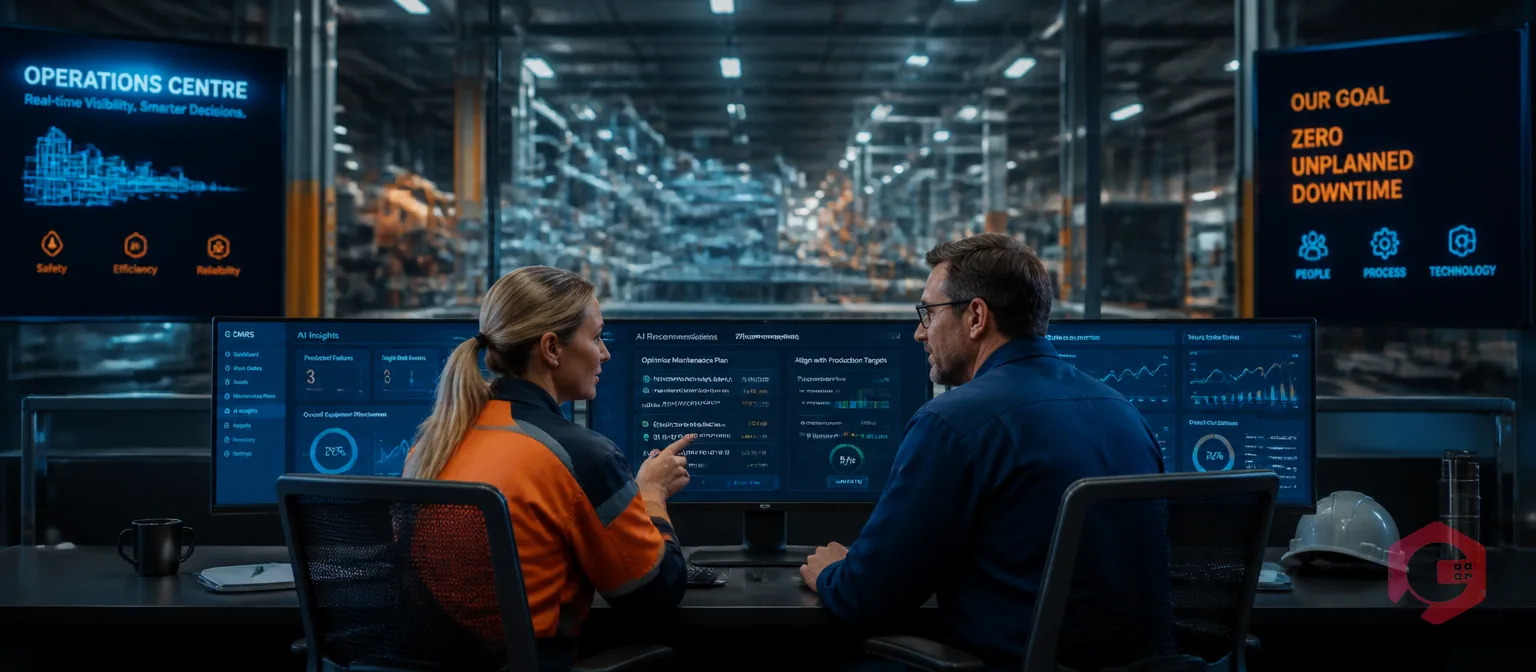
AI-powered CMMS platforms are closing the gap between maintenance and production by giving both teams real-time visibility, automated work order creation, and shared data — all from a single system. In most factories today, maintenance reacts to breakdowns while production chases output targets, with little overlap between them. A 2023 Deloitte study found that unplanned downtime costs manufacturers an average of $260,000 per hour. AI changes this by predicting failures before they happen, automatically scheduling maintenance around production windows, and feeding equipment health data directly to the shop floor. The result is fewer surprises, faster repairs, and a maintenance team that finally speaks the same language as production.
Ask any plant manager about the relationship between maintenance and production, and you'll hear the same story. Production wants maximum uptime. Maintenance wants enough time to do work properly. Neither team has full visibility into what the other is planning, so they end up colliding at the worst possible moments.
The root cause is simple: most traditional maintenance management systems were built to manage maintenance work, not to integrate with production scheduling. They track work orders and asset history, but they don't know when Line 3 has a high-priority run, or that a vibration alert on Motor 7 was quietly escalating for six days.
This gap creates three expensive problems. First, reactive maintenance: technicians respond to failures instead of preventing them, so breakdowns happen mid-shift when the line is running hot. Second, poor scheduling: PMs get pushed because production doesn't want to stop, then the equipment fails anyway. Third, blame cycles: when a machine goes down, each team points at the other, and nothing gets fixed systematically.
According to a McKinsey analysis, companies that align maintenance and production operations can reduce machine downtime by 30–50% and increase equipment lifespan by 20–40%. The challenge is creating that alignment in day-to-day operations, not just on a strategy slide. That's exactly where AI steps in.
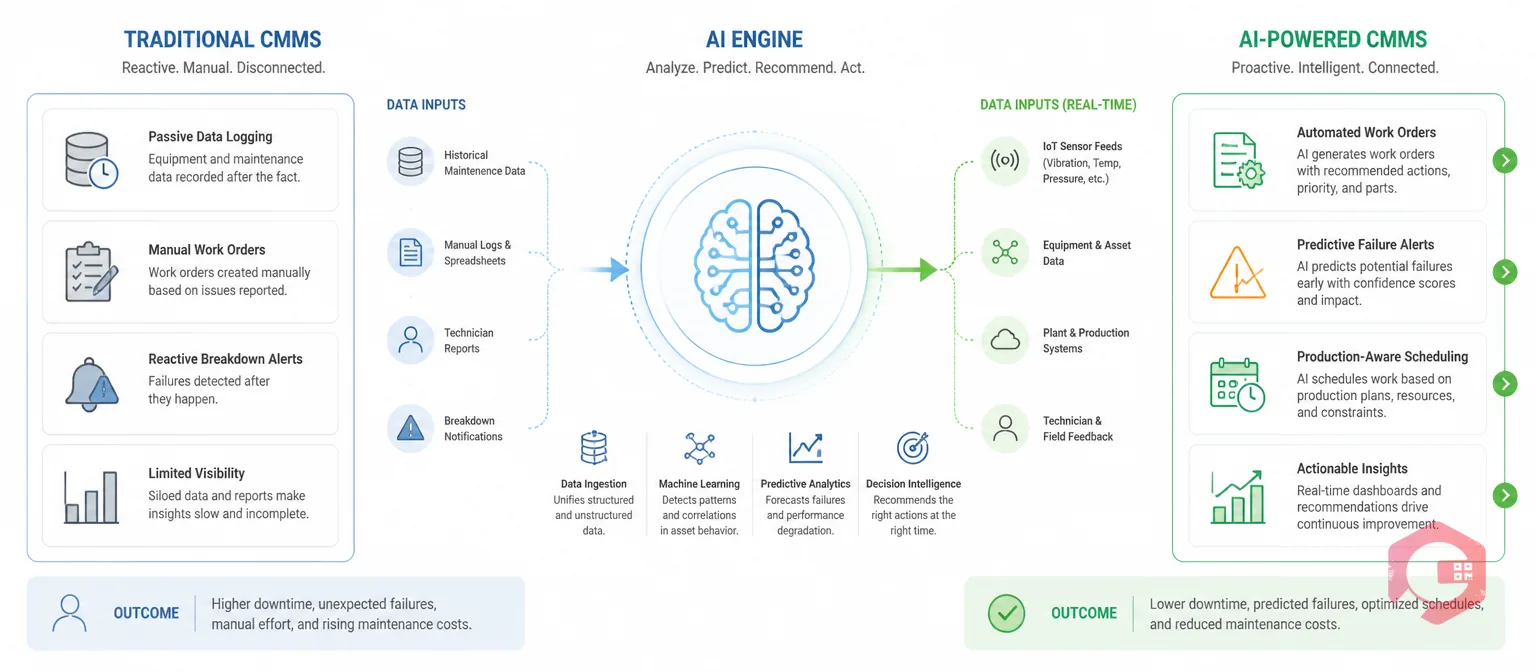
A traditional CMMS stores data. An AI-powered CMMS acts on it. This is the core difference, and it changes what's possible for both maintenance and production teams.
Traditional systems log work orders, track PMs, and generate reports. They're passive tools — useful for record-keeping, but they require a human to interpret the data and decide what to do. An AI layer changes the system from a database into an active decision-support engine.
Here's what that looks like in practice. When IoT sensor readings from a compressor show a temperature drift outside normal range, an AI-powered CMMS doesn't just log the anomaly — it cross-references it with failure history, checks the production schedule, and generates a prioritized work order automatically. It can even recommend the most likely root cause and pre-populate the repair checklist based on past similar failures.
Cryotos, for example, uses AI-driven work order creation through voice and photo inputs, so a technician can raise a job in seconds without navigating menus. The system also supports condition monitoring via SCADA and PLC integration, which means sensor data flows directly into the maintenance workflow without manual data entry.
The practical impact for production is that equipment health information becomes available to the people who plan production runs — not just the maintenance team. When both sides can see the same data, scheduling decisions get smarter.

The shift from a reactive maintenance culture to a connected one doesn't happen overnight. But AI-powered CMMS platforms create five specific mechanisms that make it possible:
Understanding where AI-powered CMMS platforms differ from traditional ones helps teams make the case for an upgrade. The table below compares both approaches across the dimensions that matter most for closing the maintenance-production gap:
| Capability | Traditional CMMS | AI-Powered CMMS |
|---|---|---|
| Failure detection | Manual or reactive | Predictive via IoT + ML models |
| Work order creation | Manual entry by technician | Auto-generated from sensor alerts or photos |
| PM scheduling | Calendar-based, fixed intervals | Dynamic, production-aware scheduling |
| Root cause analysis | Manual investigation | AI-guided 5 Whys with historical pattern matching |
| Production visibility | Siloed — maintenance team only | Shared dashboard for both teams |
| Downtime response | Reactive, post-failure | Proactive, pre-failure alert and action |
| ERP/IoT integration | Limited or manual | Native SAP, MS Dynamics, SCADA/PLC integration |
| Reporting speed | End-of-shift or manual pull | Real-time, auto-delivered dashboards |
The numbers from real deployments tell a clear story. Cryotos customers in manufacturing and heavy industry have reported a 30% reduction in unplanned downtime and 25% faster repair times after moving to an AI-powered CMMS. But the impact goes beyond raw metrics.
At BorgWarner, a global automotive components manufacturer, implementing a connected maintenance platform gave the maintenance team visibility into equipment health data that production supervisors previously never saw. Scheduling conflicts dropped, and the relationship between teams shifted from adversarial to collaborative. You can read more about the specifics in the BorgWarner case study.
For mid-market manufacturers, the gains often show up first in downtime tracking. When you can see Mean Time to Repair (MTTR) and Mean Time Between Failures (MTBF) in real time — rather than pulling a report at month-end — you can catch trends before they become crises. Teams that use these metrics proactively typically see MTTR improve within the first 90 days of using an AI-powered system.
The other shift that teams consistently report is in technician confidence. When a technician arrives at a job with AI-recommended repair steps, a pre-filled parts list, and the asset's full failure history on their phone, they complete the job faster and with fewer callbacks. That's not just efficient — it raises job quality and reduces the pressure that often drives burnout in maintenance roles.
According to a report by IDC, manufacturers using AI-integrated maintenance platforms achieve a 25% improvement in labor productivity and a 15% reduction in maintenance costs within the first year of deployment.
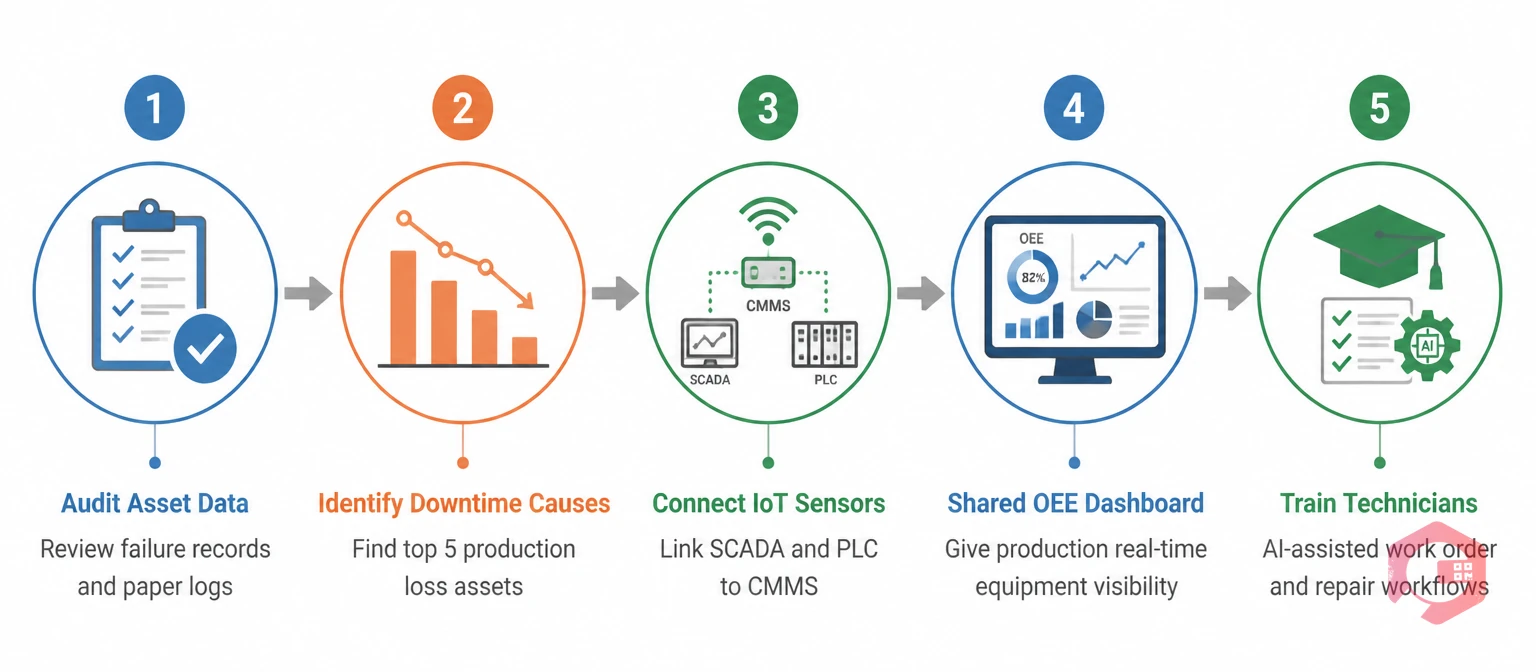
Most teams that successfully adopt an AI-powered CMMS don't try to transform everything at once. They start with the highest-pain area — usually unplanned downtime on a critical asset — and build from there.
Here's a practical starting sequence:
Platforms like Cryotos also support ERP integration with SAP and Microsoft Dynamics 365, which means your maintenance data can feed directly into procurement, inventory, and production planning — closing the loop completely across departments.
An AI-powered CMMS is a computerized maintenance management system that uses machine learning, sensor data, and automation to predict equipment failures, generate work orders, and optimize maintenance scheduling — rather than just recording maintenance activities after the fact.
AI in CMMS gives production teams real-time visibility into equipment health, flags potential failures before they disrupt a production run, and allows maintenance to be scheduled during planned downtime windows. This reduces unplanned stoppages and gives production planners more reliable uptime data to work with.
Yes. AI-powered CMMS platforms today are built for mid-market manufacturers, not just large enterprises. Cloud-based deployment, modular pricing, and IoT integration via standard protocols mean you can start with a small asset base and scale as you see results — without a large IT project.
At minimum, an AI CMMS needs asset failure history, work order records, and sensor readings from key equipment. Systems like Cryotos can also pull data from SCADA, PLC, and ERP systems to build more accurate predictive models over time.
Most manufacturers see measurable improvements in unplanned downtime and MTTR within 60–90 days of deployment. Full ROI — accounting for reduced parts spend, better labor productivity, and fewer emergency repairs — typically shows within 6–12 months based on Cryotos customer data.
If your maintenance and production teams are still operating as separate silos, an AI-powered CMMS is the most direct path to changing that. Cryotos brings together AI-driven maintenance intelligence, real-time workflow automation, and IoT integration in a single platform built for manufacturers. Book a demo to see how your team can cut downtime and get maintenance and production working from the same playbook.
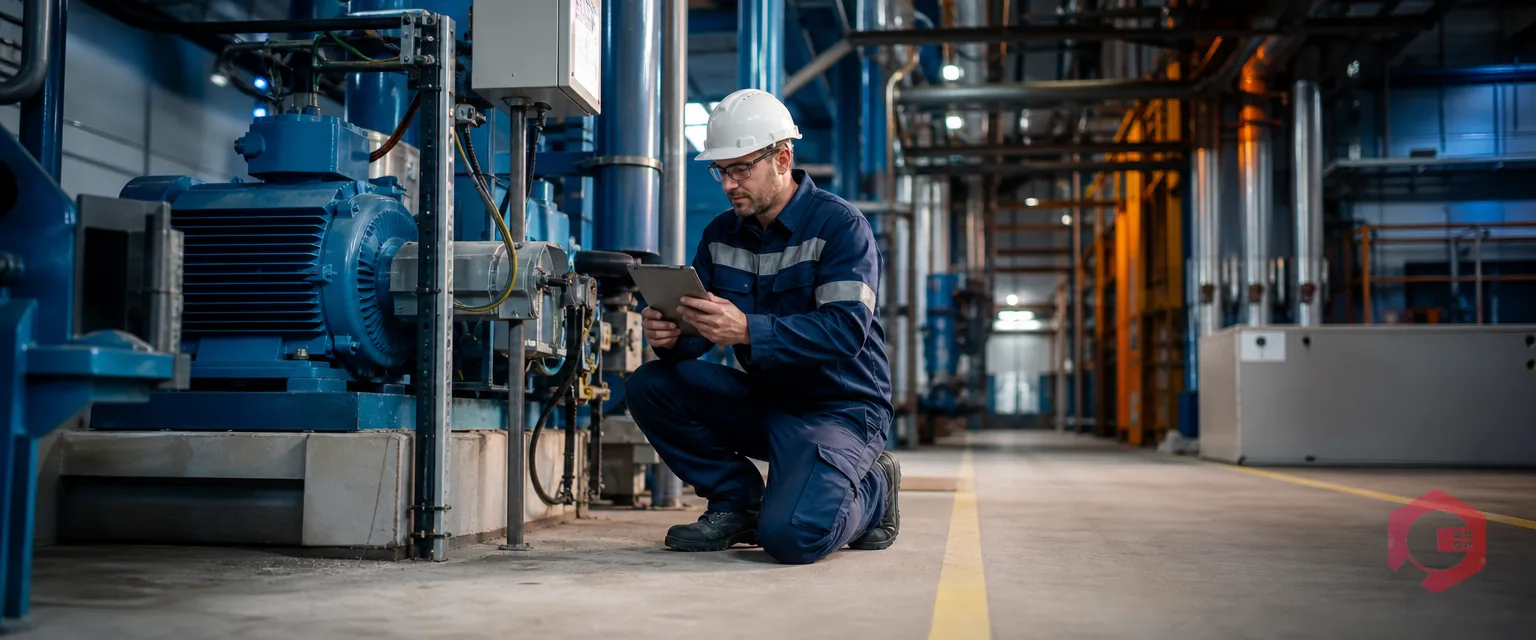
Cryotos AI predicts failures, automates work orders, and simplifies maintenance—before problems slow you down.



