
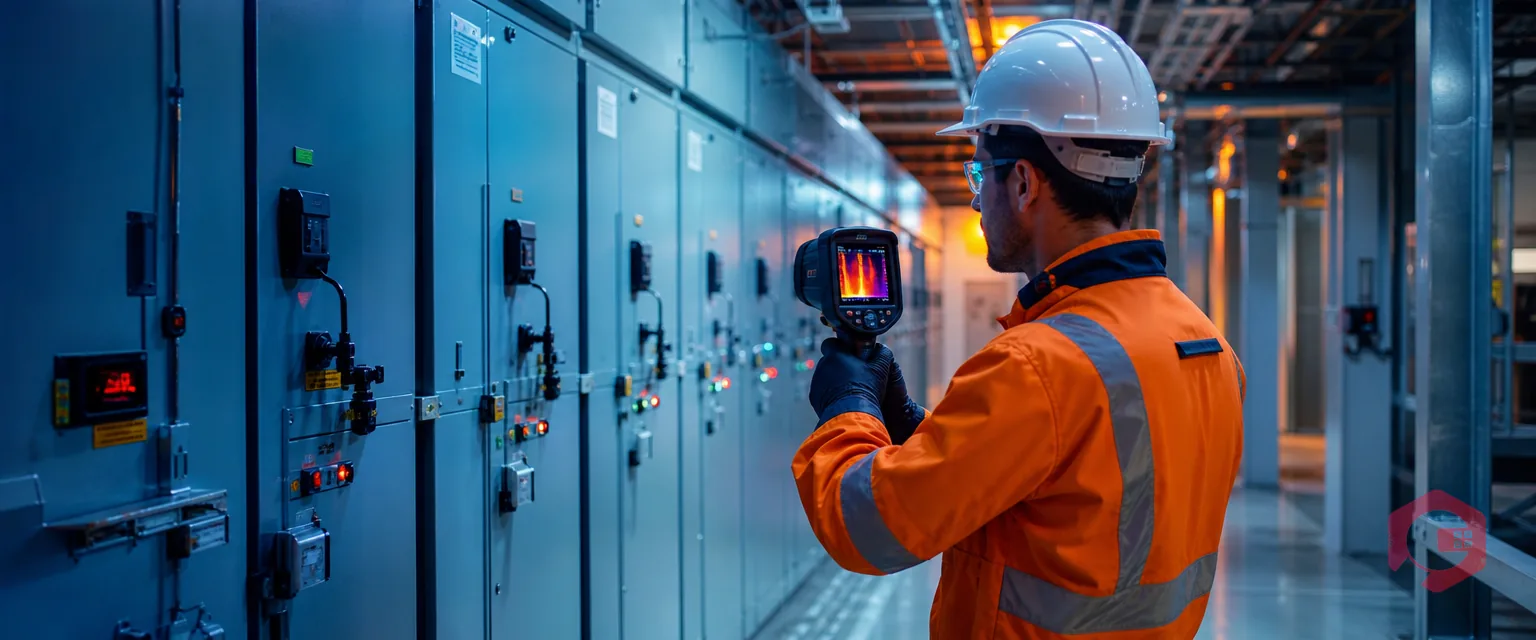
Infrared thermography vs. vibration analysis comes down to one difference. Infrared thermography finds heat-related faults on live electrical equipment. Vibration analysis finds mechanical faults inside rotating machinery. Both are non-contact techniques used in predictive maintenance, but they catch different failure types. For an electrical safety program focused on arc flash prevention, infrared thermography is the primary tool. It scans energized switchgear, panels, and connections without contact. Vibration analysis, by contrast, is built for motors, pumps, and other rotating equipment, where imbalance and bearing wear are the bigger risks. Most mature maintenance programs end up using both, on different assets.
Key Takeaways
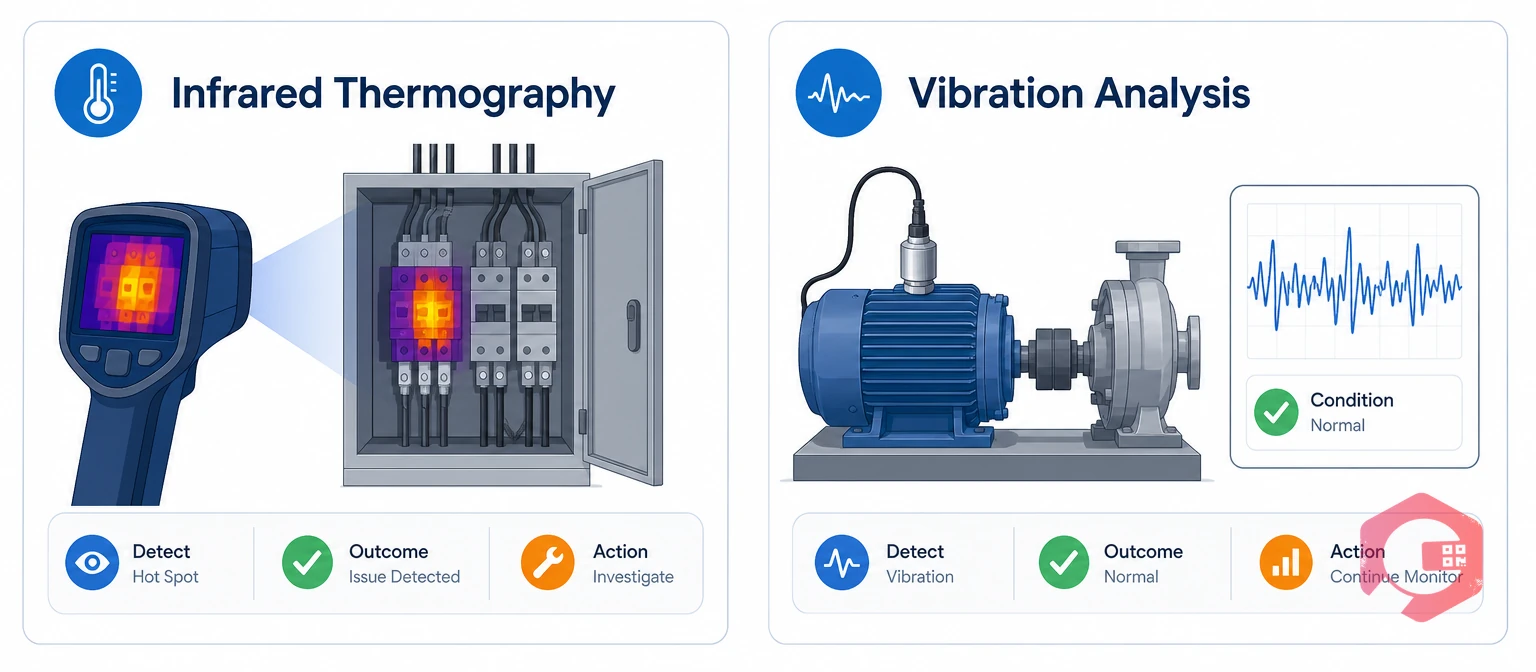
Infrared thermography and vibration analysis solve different problems. The table below shows where each one applies.
| Factor | Infrared Thermography | Vibration Analysis |
|---|---|---|
| What it detects | Heat problems: loose connections, overloads, phase imbalance | Mechanical faults: imbalance, misalignment, bearing wear |
| Best asset types | Electrical panels, switchgear, MCCs, cable trays | Motors, pumps, fans, gearboxes, compressors |
| Contact required | None. Scanned from a safe distance | Sensor contact or a mounted accelerometer |
| Primary safety role | Arc flash prevention on live equipment | Preventing mechanical failure and downtime |
| Typical scan interval | Quarterly to annual, by asset criticality | Continuous to monthly, by asset criticality |
| Relevant standard | NFPA 70E, NFPA 70B | ISO 10816 / ISO 20816 |
Neither technique replaces the other. They cover different failure domains. That is why most electrical safety programs end up using both instead of picking one.
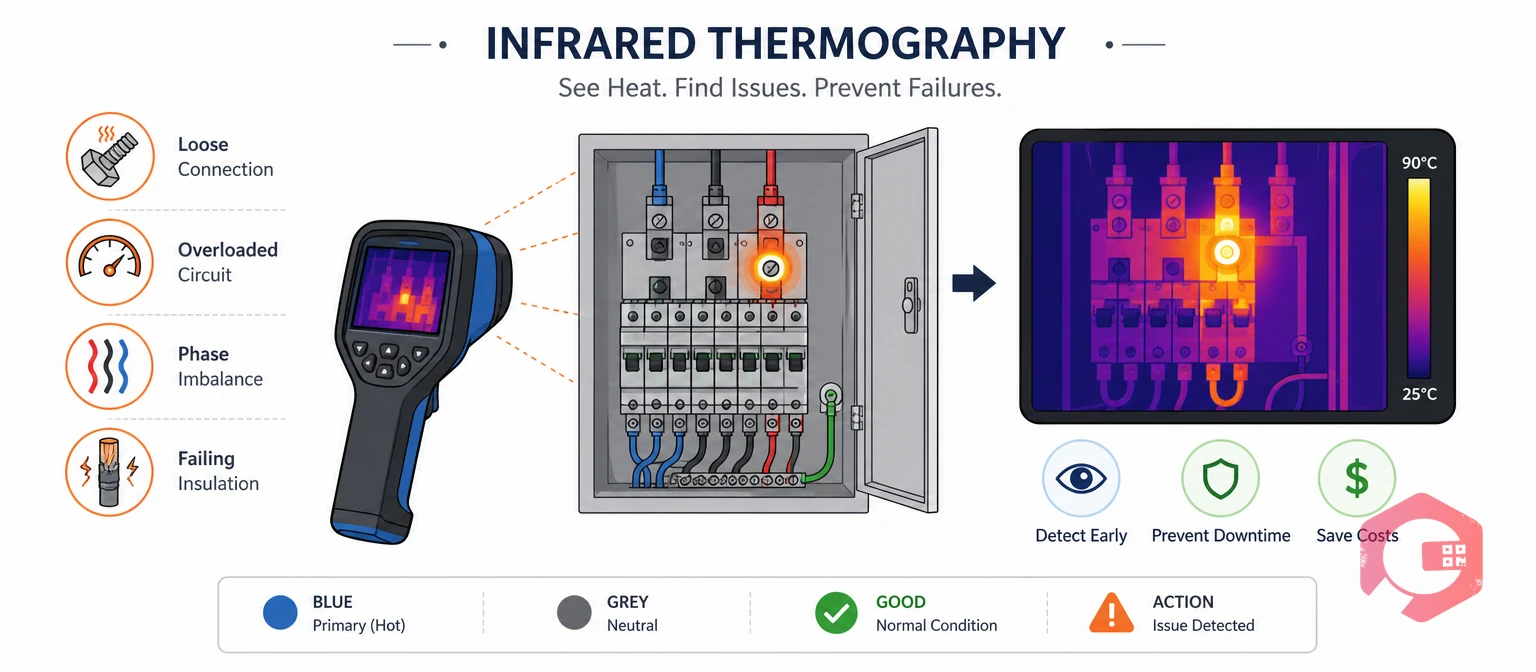
Infrared thermography is a non-contact method that uses a thermal camera to detect heat on live electrical equipment. A thermographer scans switchgear, panels, and connections while they stay energized and under normal load. That is when a developing fault shows the clearest heat signature.
The camera turns heat into a color-coded image. A loose lug, an overloaded breaker, or an imbalanced phase shows up as a bright hot spot. The camera never touches the equipment, so an inspector can scan a whole panel in minutes without opening it.
This makes thermography the standard first line of defense for electrical safety. Most conditions that lead to arc flash generate excess heat well before they fail.
Vibration analysis is a technique that measures how a rotating machine vibrates to catch mechanical faults early. Every motor, pump, or fan has its own normal vibration pattern. A change in that pattern almost always means a fault is developing.
Technicians use accelerometers and a spectrum analyzer to read the vibration signal. Each frequency points to a specific problem. That is what makes vibration analysis precise enough to name the exact fault, not just flag that something is wrong.
Vibration analysis rarely detects electrical hot spots. That is why it plays a supporting role, not the lead role, in an arc flash prevention program.
Curious how these findings tie into asset uptime? See how Cryotos EAM software tracks thermal and vibration history against every asset's maintenance record.
An arc flash is a sudden release of electrical energy caused by a fault in energized equipment. It can cause severe burns, equipment destruction, and weeks of downtime. Temperatures at the arc can exceed 35,000°F, nearly four times the heat of the sun's surface. That is why OSHA treats arc flash as one of the most severe electrical hazards a facility faces.
Most arc flash precursors are thermal, not mechanical. A loose busbar or an overloaded breaker builds heat silently for weeks before it fails. That is exactly the window infrared thermography is built to catch. Vibration analysis, tuned for rotating equipment, has no visibility into that failure path.
That is not a knock against vibration analysis. It is simply solving a different problem. NFPA 70E governs electrical safety in the workplace. The accompanying IEEE 1584 arc flash calculations assume facilities are actively finding and fixing thermal faults before they escalate. That job falls to thermography, not vibration monitoring.
Infrared thermography is the right choice whenever the equipment is electrical, energized, and a candidate for arc flash risk.
If an asset is electrical and stays energized during normal use, thermography should already be part of its inspection plan.
Vibration analysis fits when the concern is mechanical wear inside rotating gear, not heat on a live connection.
Vibration analysis and thermography rarely compete for the same asset. A switchgear panel needs thermography. A motor usually benefits from both.
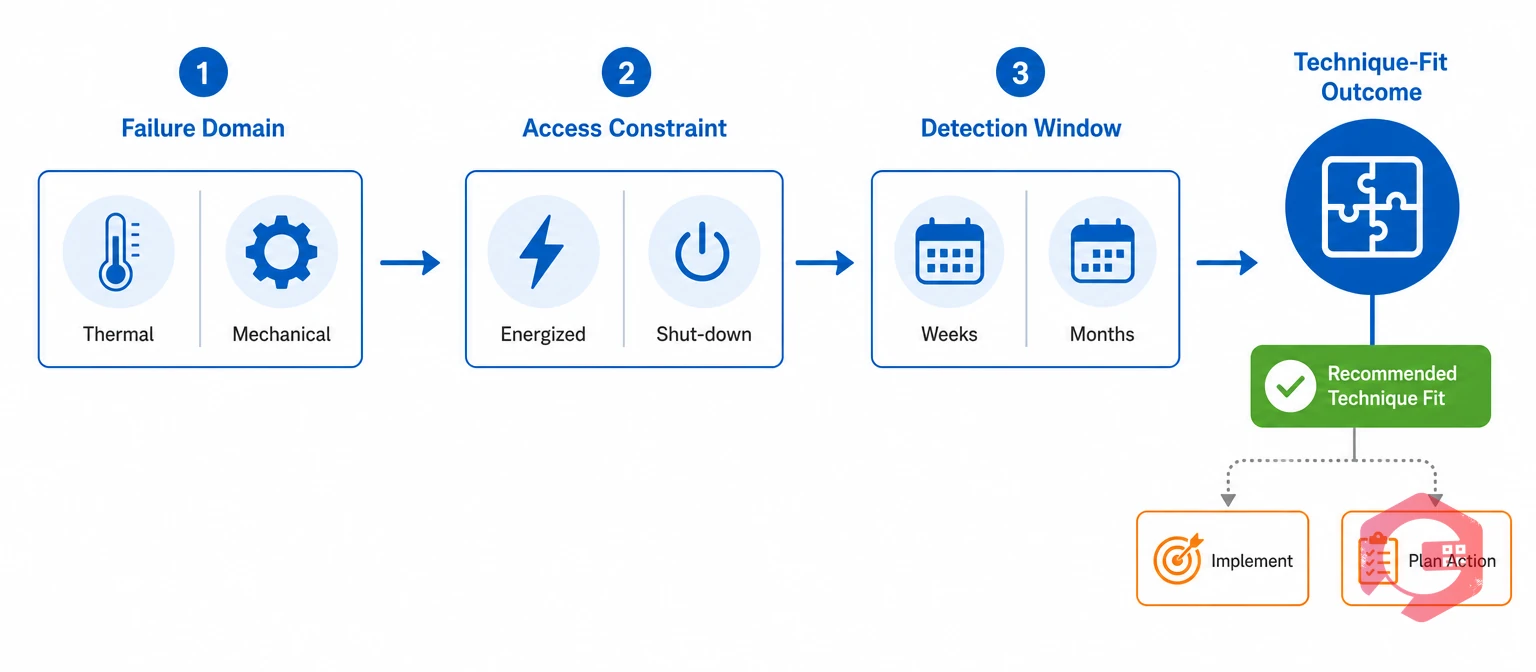
The Technique-Fit Framework: a fast way to decide which technique, or both, fits a given asset.
Run all three questions against an electrical asset with a motor attached, such as a motor control center. The answer is often "both": thermography on the panel, vibration analysis on the motor.
Most facilities start with whichever technique covers their highest-risk assets first. They add the second technique once the first proves its value. NIST research on advanced maintenance economics found this combined approach delivers the strongest downtime reduction.
A Computerized Maintenance Management System connects both techniques to one maintenance workflow. A finding from either one turns into tracked, completed work instead of sitting in a separate report.
Maintenance teams using Cryotos have reported up to 30% reduction in unplanned downtime. They also report 25% faster repair turnaround once condition-monitoring findings feed directly into tracked work orders.
Use infrared thermography for electrical safety and arc flash prevention. It scans live panels and connections without contact and catches the thermal faults, like loose connections and overloads, that lead to arc flash. Vibration analysis is built for rotating equipment and does not detect electrical hot spots.
No. Thermography detects heat. Vibration analysis detects motion faults like imbalance and bearing wear. A connection can run dangerously hot with no unusual vibration at all. A bearing can be failing mechanically with no unusual heat yet. The two techniques catch different failure modes.
Most facilities with electrical gear attached to rotating equipment, such as motor control centers and pump stations, benefit from both. Thermography covers the panel and connections. Vibration analysis covers the motor or pump itself. Faults in either failure domain get caught.
NFPA 70E does not name either technique by number, but it requires a documented electrical safety program and hazard analysis. Infrared thermography is the most widely accepted way to find developing thermal hazards early, so most compliant programs include it as a scheduled inspection.
A basic infrared camera can cost a few hundred to a few thousand dollars. Portable vibration analyzers typically run $3,000 to $15,000. Both costs are small next to a single unplanned outage or an arc flash incident.
Most facilities scan critical switchgear and high-load panels quarterly. Other panels get scanned once a year. Assets with a history of hot spots should be scanned more often until a stable trend is established.
You do not have to pick just one for your electrical safety program. Schedule a free demo to see how Cryotos schedules both, converts findings into tracked work orders, and builds the audit-ready records your program needs.



Cryotos AI predicts failures, automates work orders, and simplifies maintenance—before problems slow you down.



