
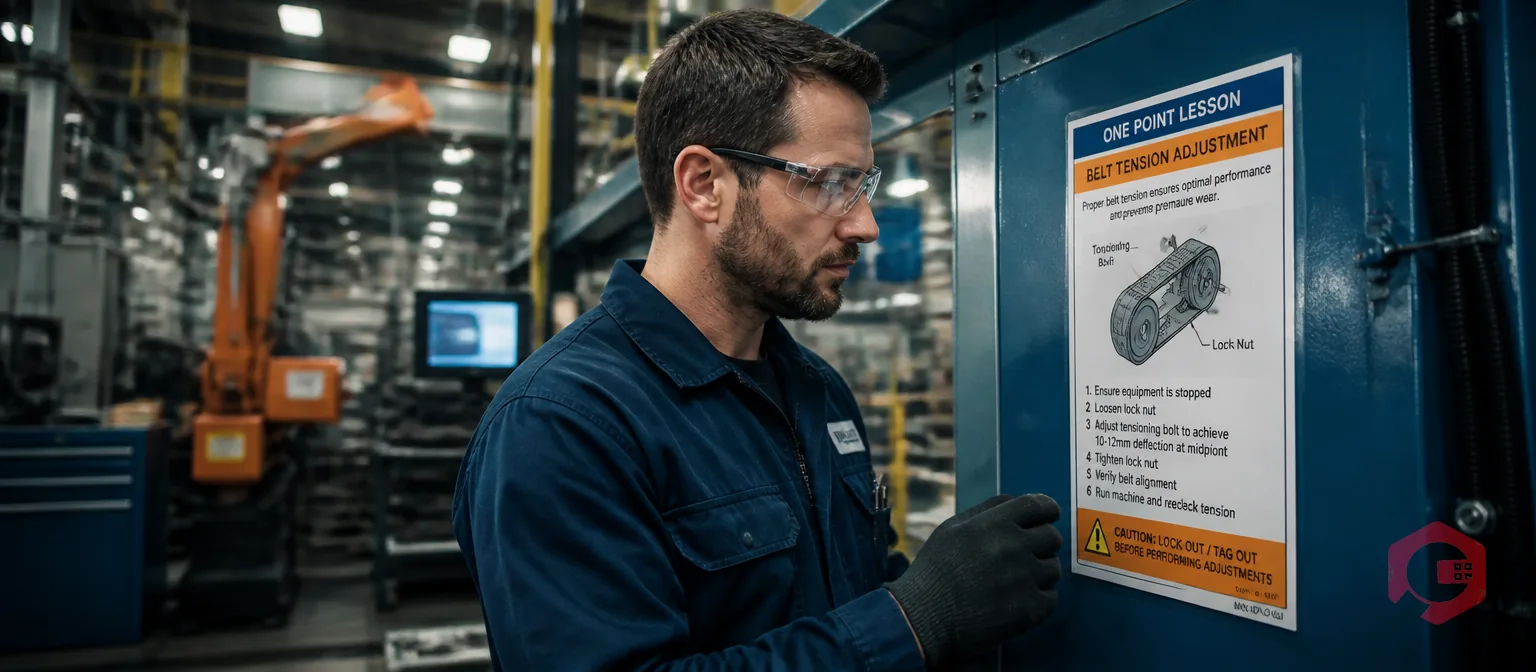
A one point lesson in maintenance is a single-page visual document that teaches one specific skill, procedure, or piece of equipment knowledge in under five minutes. Teams using one point lessons (OPLs) as part of their onboarding programs report cutting new-technician ramp-up time by 30–50% compared to traditional classroom training alone, according to lean manufacturing benchmarks published by the Japan Institute of Plant Maintenance.
If your maintenance team is still relying on thick training manuals and week-long classroom sessions to get new technicians productive, one point lessons offer a faster, cheaper, and more practical alternative. This guide explains what OPLs are, why they work, how to write them, and how to manage them inside your CMMS so they actually get used.
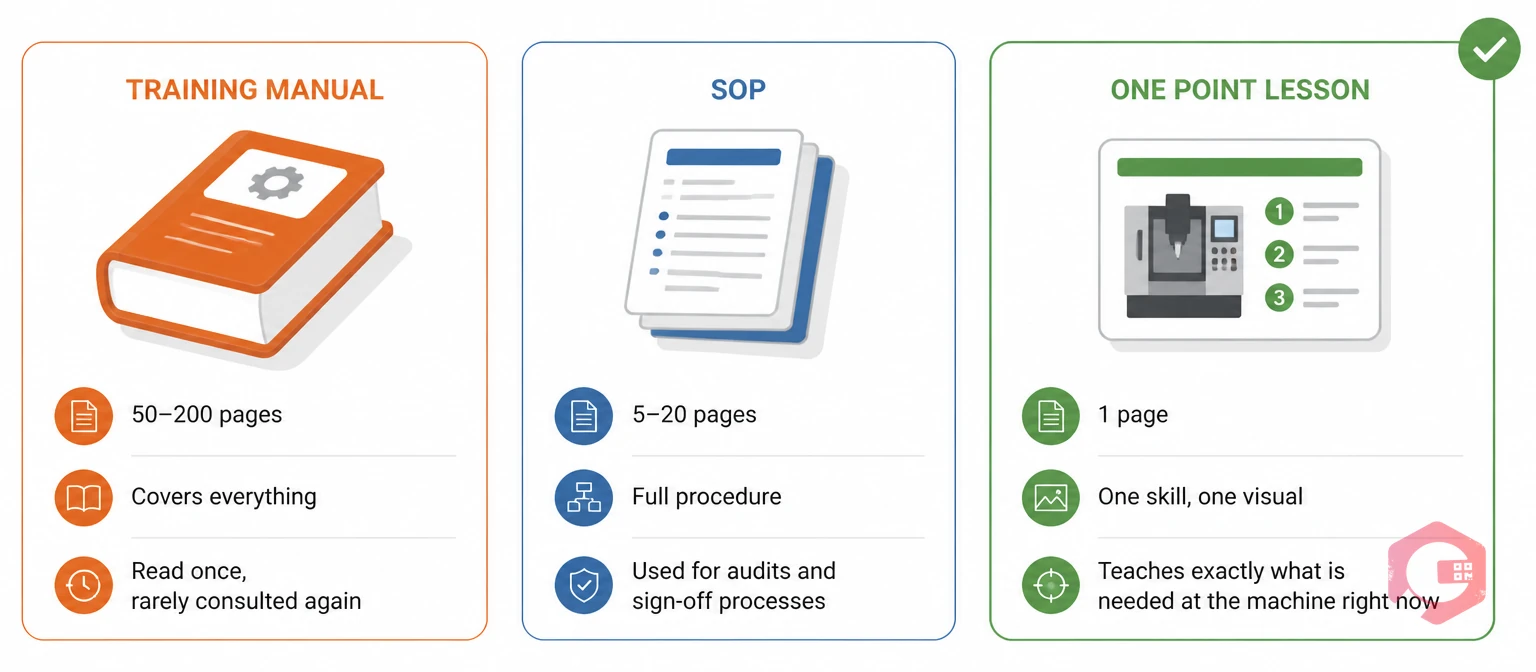
A one point lesson is a structured, one-page training document that focuses entirely on a single task, hazard, or piece of knowledge relevant to a specific machine or procedure. The page typically combines a clear heading, a visual (photo, diagram, or sketch), and three to five short bullet points. Nothing more. The constraint is the point — a technician should be able to read and absorb the lesson in under five minutes while standing at the machine.
OPLs are deliberately narrow. A lesson about how to lubricate a specific bearing is a good OPL. A lesson about "how to maintain the entire conveyor system" is not — that belongs in a manual. The value of an OPL comes from its focus: one asset, one topic, one reading.
One point lessons originated in Total Productive Maintenance (TPM), a methodology developed in Japan in the 1970s to involve operators directly in equipment care. TPM practitioners needed a way to transfer knowledge from experienced technicians to newer ones quickly, without pulling either person off the floor for a training session. The one-page format solved this problem. Today, OPLs are standard practice in lean manufacturing environments across automotive, pharmaceutical, food processing, and heavy industry sectors.

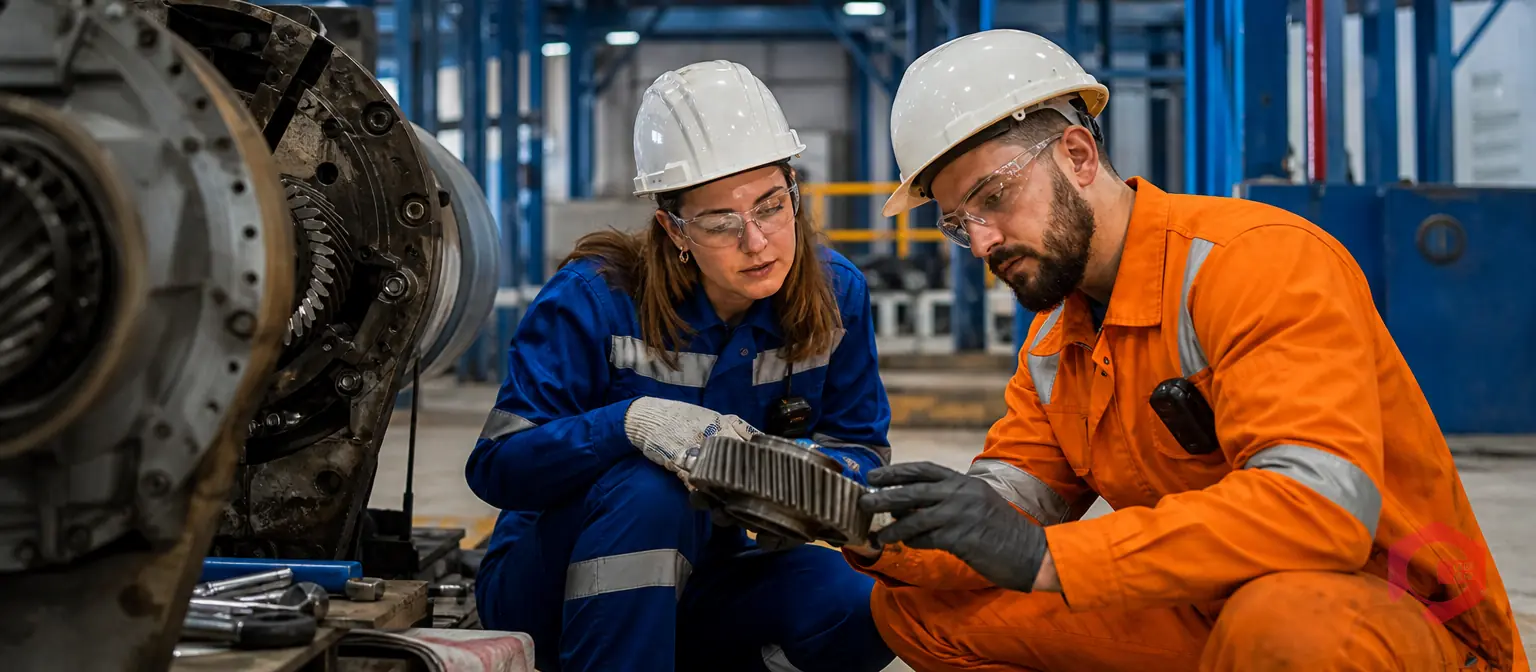
The average maintenance technician takes 3–6 months to reach full productivity after joining a new facility. That gap is not primarily about skill — most experienced technicians bring solid fundamentals. The gap comes from equipment-specific knowledge: how this particular pump behaves, where this machine's weak points are, what the previous failure history looks like, and what the specific procedure is for this site.
Traditional onboarding methods handle this badly. A thick equipment manual covers everything but teaches nothing quickly. Shadowing an experienced technician works but depends entirely on availability and the teacher's ability to explain well. Classroom training covers theory but rarely covers the machine sitting on your specific floor. The result is that new technicians spend weeks building context that an OPL library could deliver in days. According to Reliable Plant's workforce research, unstructured onboarding is one of the top three causes of early-career errors in maintenance roles — errors that directly drive breakdowns and near-misses in the first 90 days.
One point lessons reduce onboarding time through three mechanisms. First, they make equipment-specific knowledge searchable and self-service — a new technician can pull up the OPL for the press they are working on without finding a senior technician to ask. Second, they are written at the point of need, meaning they capture the real-world knowledge that experienced technicians carry in their heads before that knowledge walks out the door with them. Third, they are short enough that a technician actually reads them — a 50-page manual rarely gets opened; a one-page lesson gets read every time.
When a team builds an OPL library for its highest-frequency tasks and most failure-prone assets, new technicians gain access to the equivalent of hundreds of hours of accumulated site knowledge from day one. A study by McKinsey on manufacturing workforce productivity found that structured knowledge transfer programs — of which OPL libraries are a leading example — reduce the time to full productivity for new technical staff by 35–45%.
| Document Type | Length | Read Time | Best For | Weakness |
|---|---|---|---|---|
| One Point Lesson (OPL) | 1 page | 3–5 minutes | Single task, single asset, point-of-work learning | Too narrow for complex multi-step processes |
| Standard Operating Procedure (SOP) | 3–10 pages | 10–20 minutes | Multi-step processes, compliance-critical tasks, regulatory requirements | Long enough that technicians skip reading in practice |
| Training Manual | 20–100+ pages | Hours | Comprehensive onboarding, equipment overview, system-level knowledge | Almost never read at point of need; knowledge is hard to locate quickly |
The right answer for most maintenance teams is not to choose between these formats — it is to use all three at the right moment. Training manuals provide system-level context during initial onboarding. SOPs cover compliance-critical and multi-step procedures that require documented step-by-step compliance. OPLs fill the gap between the two: the specific, visual, point-of-work knowledge that does not belong in either a manual or an SOP but is exactly what a technician needs standing next to an unfamiliar machine.
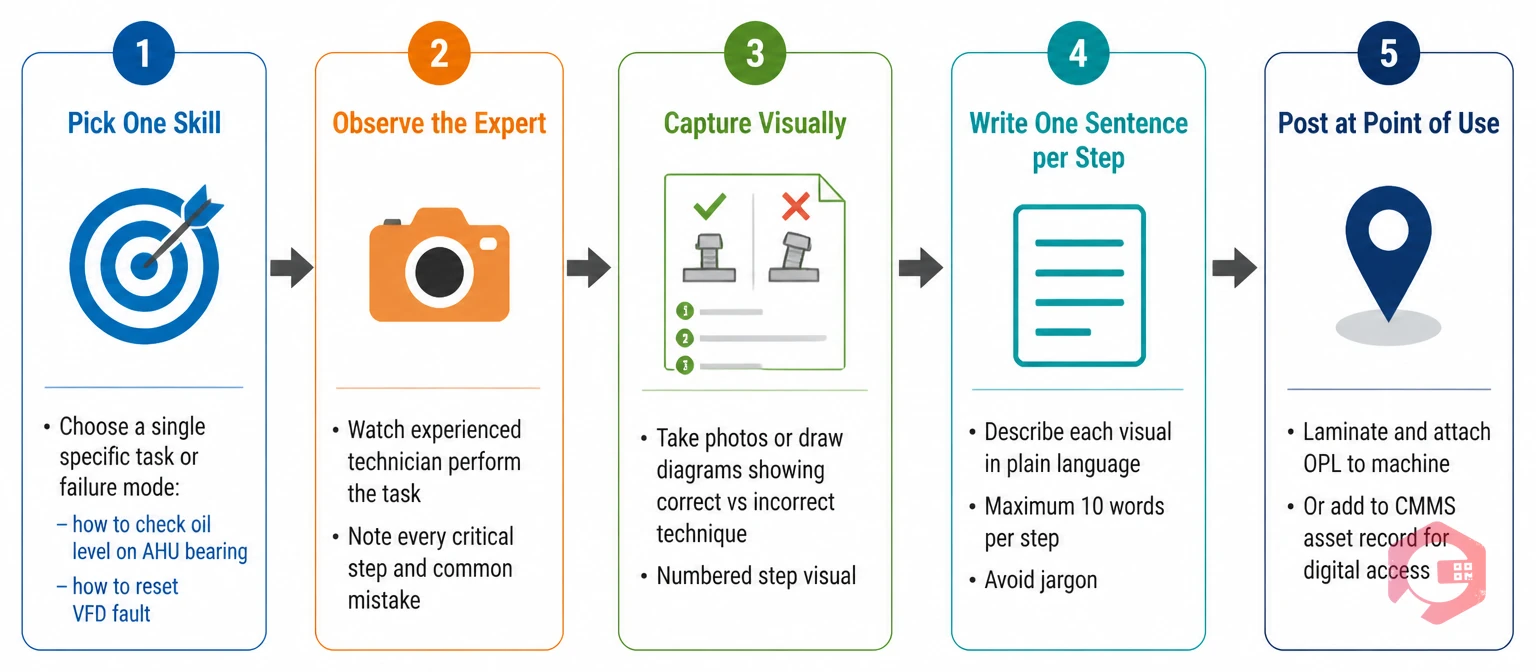
Writing an effective OPL requires resisting the instinct to include everything you know about a topic. The lesson works precisely because it does not try to cover everything. Follow these six steps:
To make the format concrete, here are three real-world examples from industrial maintenance settings:
An OPL library only delivers value if technicians can find the right lesson at the right time. A paper binder in the maintenance office fails this test — it does not travel to the machine, it does not get updated easily, and it disappears entirely when someone takes it home. A maintenance management software platform solves all three problems.
In Cryotos CMMS, one point lessons are stored directly against the asset they relate to using the AI-powered knowledge base and document management features. When a technician scans the QR code on a machine and opens a work order, they see every OPL linked to that asset in the same screen. No binder to find, no search query to run — the relevant lessons surface automatically at the point of work.
This integration matters particularly for onboarding. A new technician assigned their first work order on an unfamiliar machine sees the OPL library for that asset without asking anyone. The knowledge transfer is automatic. According to the OSHA training guidelines for maintenance workers, on-the-job, task-specific documentation is one of the most effective forms of safety and skills training — and a CMMS-linked OPL library is exactly that format at scale.
Beyond individual assets, Cryotos's maintenance checklists feature lets teams embed OPL references directly inside work order steps — so a technician performing a PM task sees the relevant lesson linked at the exact step where it applies. This is the highest-value form of OPL deployment: not a library technicians have to remember to consult, but knowledge that appears exactly when it is needed.
Teams using Cryotos report a 30% reduction in downtime and 25% faster repair times — results that reflect not just better maintenance scheduling, but the kind of knowledge transfer that OPLs make possible at scale. The work order management module keeps every lesson tied to action, so the OPL library grows alongside your real maintenance history rather than sitting as a separate project that nobody maintains.
In Total Productive Maintenance (TPM), a one point lesson is a single-page visual training document created by operators or technicians to transfer specific equipment knowledge to their colleagues. TPM uses OPLs to build operator autonomy — so that the people running a machine understand its basic care, common failure modes, and early warning signs without depending entirely on a maintenance specialist for every issue.
A one point lesson should fit on a single page and take three to five minutes to read. If it takes longer than that, it covers too much. The constraint is intentional — OPLs work because they are short enough to read at the machine, at the point of need, before or during a task. A lesson that requires more time becomes a document that gets skipped.
The most effective OPLs are written by the technicians and operators who work directly with the equipment, not by trainers or engineers at a desk. Floor-level authors produce lessons grounded in real experience — including the specific quirks, failure patterns, and tricks that do not appear in any official manual. Managers and safety teams should review OPLs for accuracy before they enter the library, but the authorship should come from the shop floor.
A useful starting target is five to ten OPLs per critical asset, covering the most common tasks, the most frequent failure modes, and any known safety hazards. A team managing 50 critical assets would aim to build a library of 250–500 lessons over 12–18 months. The library should grow continuously as new failure events, improvements, and knowledge gaps are identified — not be built once and left unchanged.
No — OPLs work best as a complement to, not a replacement for, formal onboarding and training. New technicians still need foundational skills training and safety certification. Where OPLs make the biggest difference is in the equipment-specific knowledge layer on top of that foundation: the site-specific, asset-specific context that only comes from experience. OPLs transfer that layer dramatically faster than any classroom format can.
If your maintenance team is losing weeks to onboarding ramp-up time or watching hard-earned equipment knowledge walk out the door when experienced technicians leave, one point lessons are the most practical fix available. Cryotos CMMS gives your team the tools to build, store, and deliver OPLs at the point of work — linked directly to assets, embedded in work orders, and accessible on any mobile device. See how Cryotos can help your team build a living knowledge base that cuts onboarding time and keeps your best maintenance knowledge where it belongs: with the people who need it most.

Cryotos AI predicts failures, automates work orders, and simplifies maintenance—before problems slow you down.



