
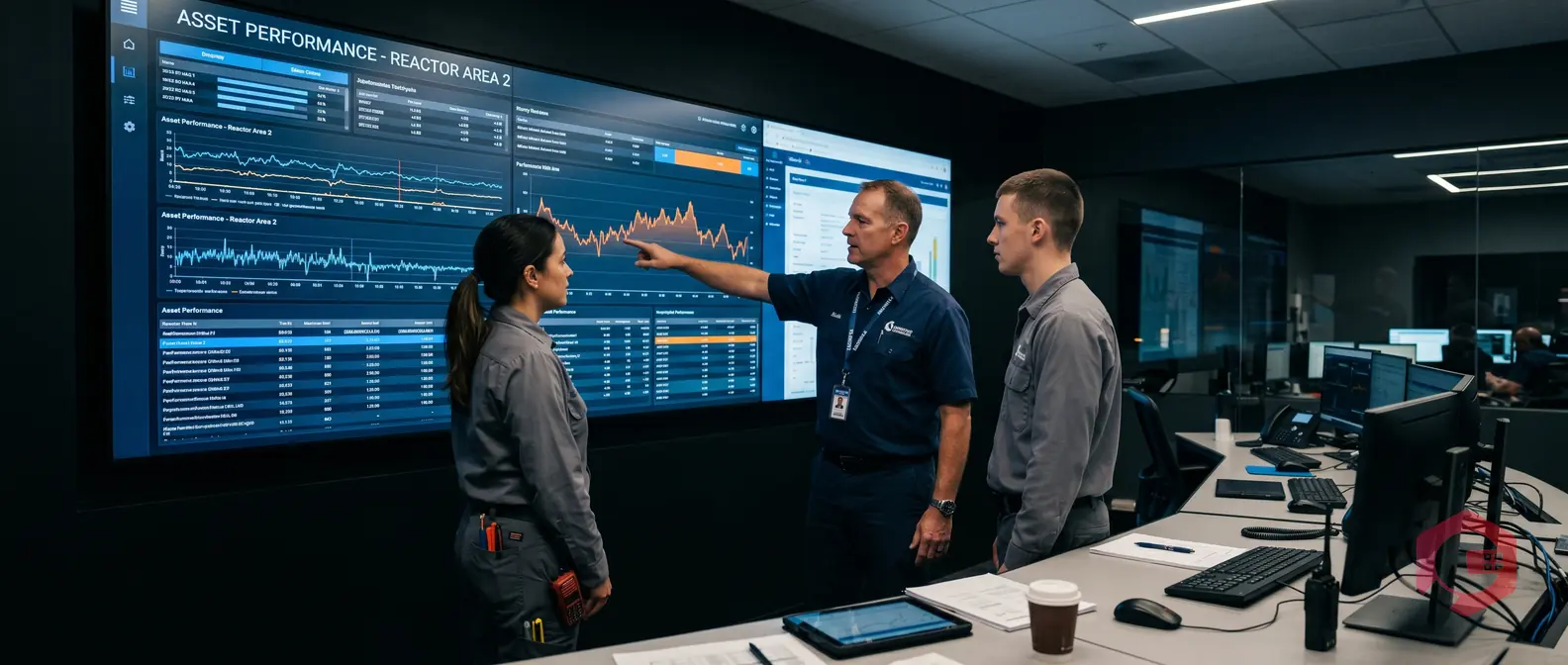
Transitioning from reactive to proactive maintenance means shifting from fixing equipment after it fails to preventing failures before they occur. Organizations that make this shift reduce unplanned downtime by up to 45% and cut overall maintenance costs by 25–30%, according to a McKinsey report on maintenance productivity. Cryotos CMMS gives maintenance teams the tools to make this transition structured, measurable, and permanent.
Reactive maintenance — also called "run-to-failure" or corrective maintenance — is the practice of waiting for equipment to break down before addressing it. According to the Plant Engineering maintenance survey, unplanned downtime costs industrial manufacturers an average of $260,000 per hour. Emergency repair labor costs 3–5x more than planned maintenance labor. Spare parts procured under urgency carry a 20–25% premium.

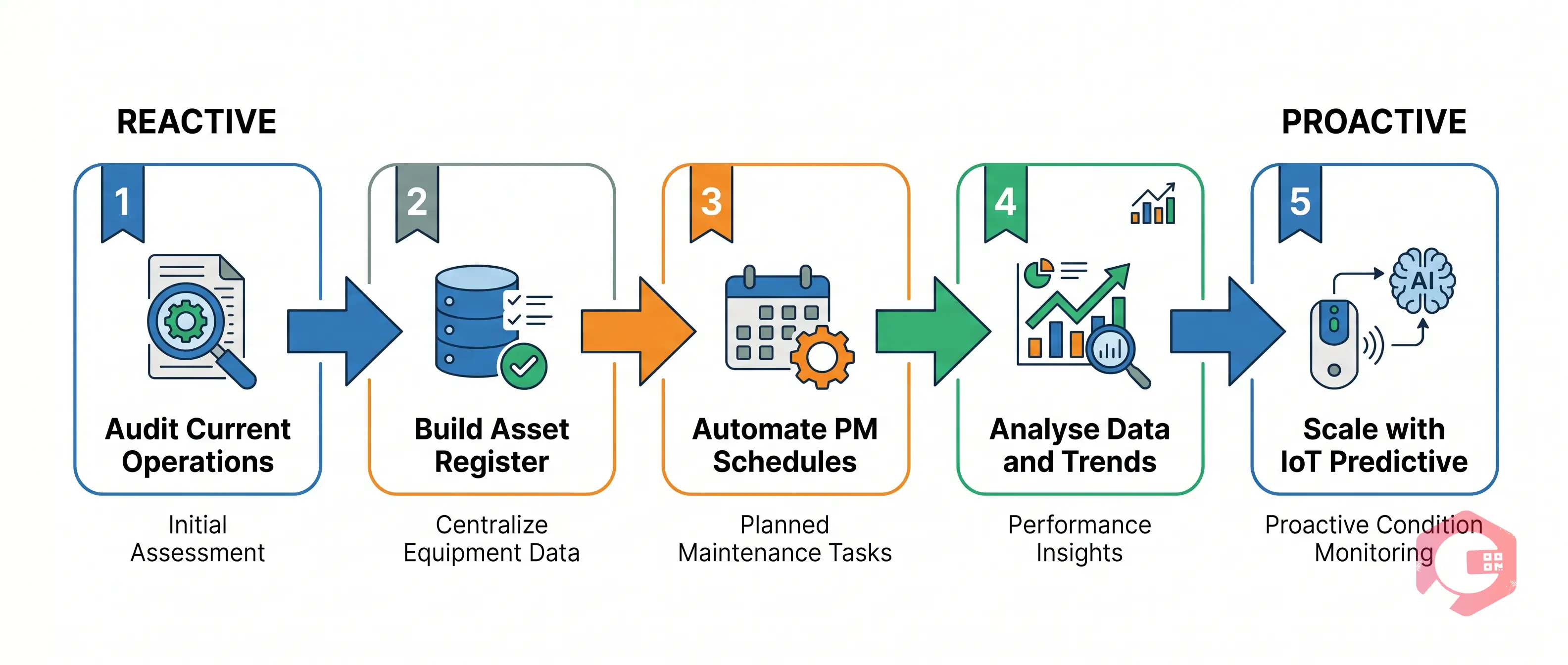
Pull your last 12 months of maintenance records. Answer: What percentage of work orders were reactive vs. planned? Which assets generated the most emergency work orders? What were your top five causes of unplanned downtime? Cryotos CMMS's work order management module makes this audit a 10-minute report, not a week-long project.
Every piece of equipment should be logged with its make, model, serial number, criticality rating, installation date, and associated documentation. In Cryotos CMMS, each asset gets a dedicated profile storing its full maintenance history, attached manuals, warranty information, and linked spare parts.
Cryotos CMMS allows you to create PM triggers based on time intervals (daily, weekly, monthly), meter readings (machine hours, production cycles), and condition thresholds (sensor-triggered work orders). Start with your most critical assets and implement manufacturer-recommended PM intervals.
After 60–90 days of structured PM execution, use the Cryotos analytics dashboard to track MTBF, PM compliance rate, reactive vs. planned maintenance ratio, and cost per work order by asset. This is where the transition genuinely takes hold — teams stop responding to yesterday's failures and start preventing tomorrow's.
Cryotos CMMS integrates with IoT sensors to monitor vibration, temperature, pressure, and other real-time parameters. Rather than inspecting a pump every 30 days regardless of condition, a vibration sensor detects an anomaly after 18 days and Cryotos automatically creates a work order. According to Deloitte, organizations reaching this level see 10–25% reductions in maintenance costs and 10–20% improvements in uptime.

Reactive maintenance addresses equipment failures after they occur. Proactive maintenance takes action before failures happen, based on time intervals, usage data, or asset condition monitoring.
Most organizations see measurable improvements within 60–90 days of implementing a structured PM program in a CMMS. A full transition typically takes 6–12 months.
Yes — small teams often benefit most from the transition because they have less capacity to absorb emergency work. Cryotos CMMS scales from single-site operations with a handful of technicians to multi-site enterprise deployments.
A CMMS like Cryotos automates the administrative work: generating work orders on schedule, alerting technicians to upcoming tasks, tracking spare parts, recording asset history, and surfacing performance data in real-time dashboards.
Transitioning from reactive to proactive maintenance is one of the highest-ROI operational improvements a facility can make. Start your free Cryotos demo today and see how quickly your maintenance program can shift from reactive to proactive.


Cryotos AI predicts failures, automates work orders, and simplifies maintenance—before problems slow you down.



