
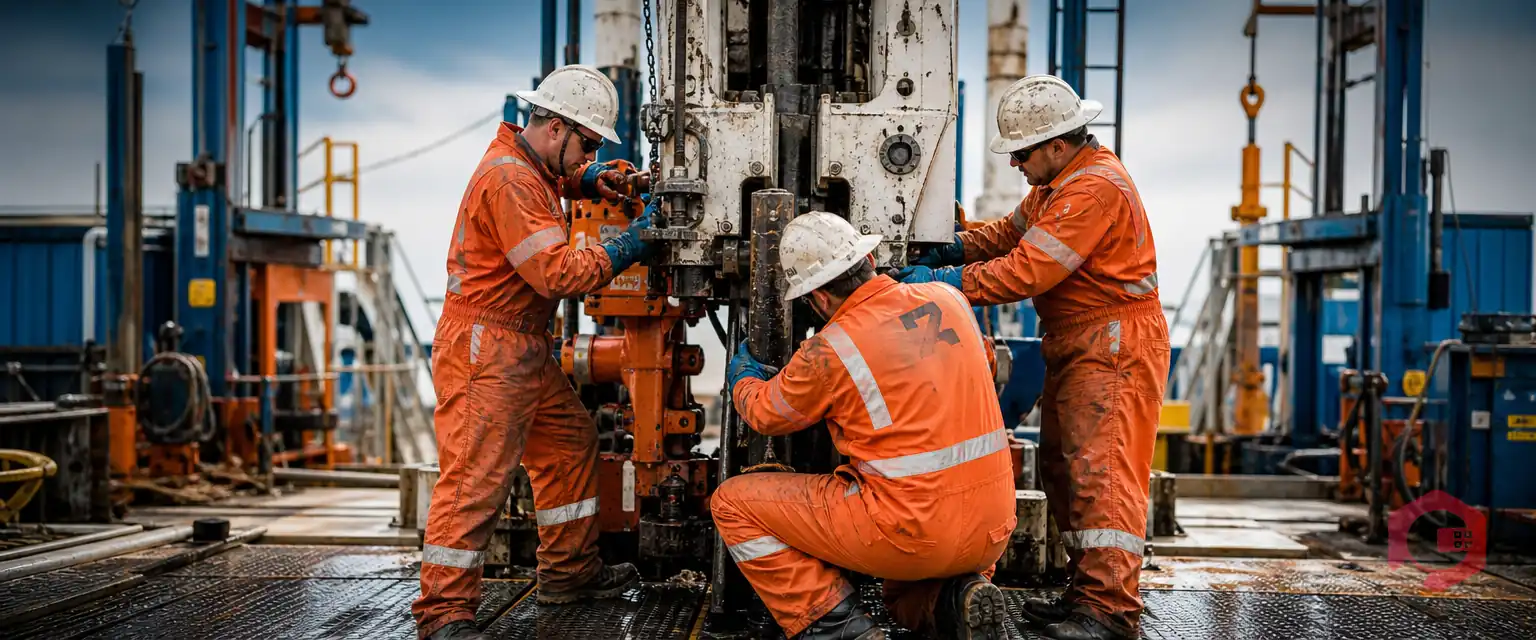
Unplanned downtime on drilling rigs happens when a critical system fails without warning. The rig stops. The day-rate clock does not. Preventive maintenance fixes this by servicing mud pumps, top drives, and other high-wear equipment on a schedule, before they break. On a rig, parts and specialists are rarely close by, and a crew rotation can hand off an unfinished problem to the next shift without meaning to. That is why a small issue can cost an hour in a factory and three days on a rig, and why the fix has to happen before the failure, not after it.
Key Takeaways
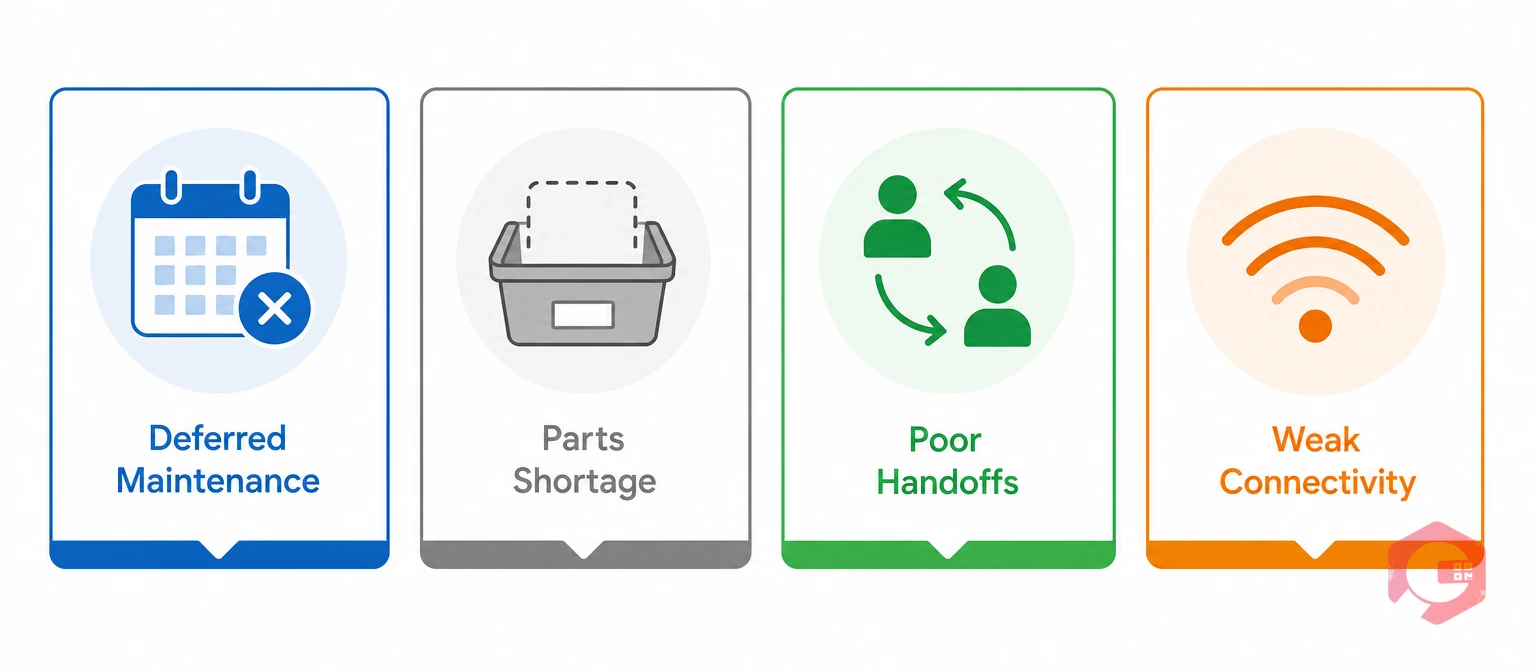
Unplanned downtime is the time a drilling rig stops producing because equipment fails without warning. It is different from a planned stop for a scheduled service window. A rig runs its mud pumps, top drive, drawworks, and generators around the clock. Many sites are remote or hard to reach. A replacement part can take days to arrive, and a specialist technician may not be on site at all.
Most failures are not random. They trace back to a service interval that slipped, a part that ran out of stock, or a paper log that never made it to the next crew. OSHA's Oil and Gas Well Drilling and Servicing eTool notes that proper maintenance prevents premature equipment failure. It also notes that drilling equipment faces constant stress and vibration during normal operation.
Each of these gaps is small on its own. Stacked together across a long drilling program, they add up to real lost days, and they tend to hit the same handful of assets over and over. A rig that tracks its history by asset usually finds that a small group of components, not the whole fleet, drives most of its unplanned stops, which is exactly where a PM program should focus first.
Preventive maintenance is scheduled service performed before equipment fails. The schedule can run on a calendar date or on actual usage. Instead of waiting for a mud pump to seize, a technician inspects and services it at a set interval. That catches wear while it is still a minor repair, not a rig-down event.
The cost of skipping this step is not just the repair bill. A rig sitting idle still pays crew wages, still burns the day rate, and still risks a missed drilling window. Preventive maintenance turns that unpredictable cost into a planned, budgeted one.
Cryotos customers running preventive maintenance software report exactly this shift. Teams have reported up to 30% reduction in unplanned downtime and 25% faster repair turnaround once PM schedules replace reactive fixes. The catch on a rig is that equipment usage swings hard from well to well, and a fixed calendar date does not always match how hard a pump actually ran. That is why most rig PM programs mix two kinds of schedule, covered in the next two sections.
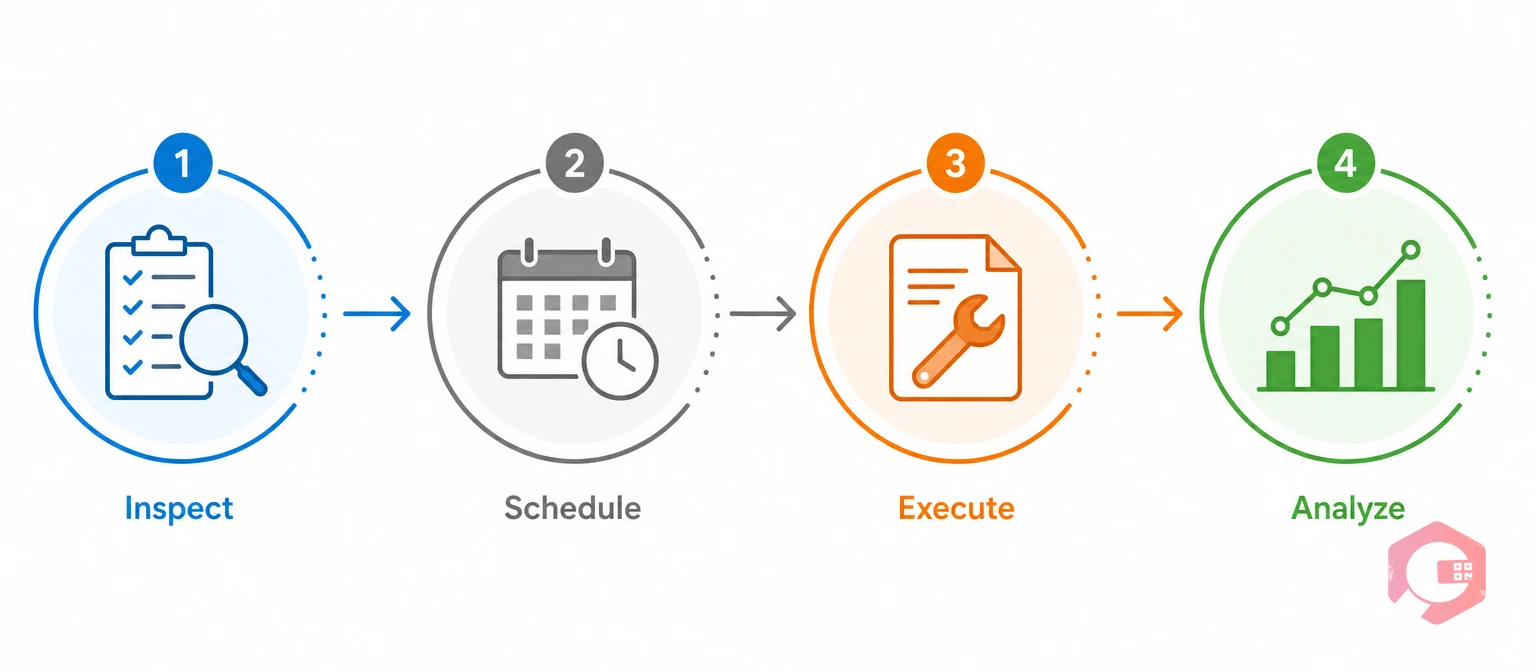
A PM program only works if it repeats the same way every time, on every crew rotation. The following framework breaks that repetition into four clear stages.
The Four-Stage Rig PM Cycle:
Rig operators moving from paper logs to a system built around this cycle see it show up fast in daily work. Each stage maps to a specific screen in oil and gas maintenance software, instead of a separate spreadsheet that only one person updates. That single change removes most of the handoff gap between crew rotations, since the next crew opens the same record the last crew closed, instead of starting from a blank page. Over a few rotations, the Analyze stage starts doing real work too, turning a list of closed work orders into a short list of assets that need a closer look.
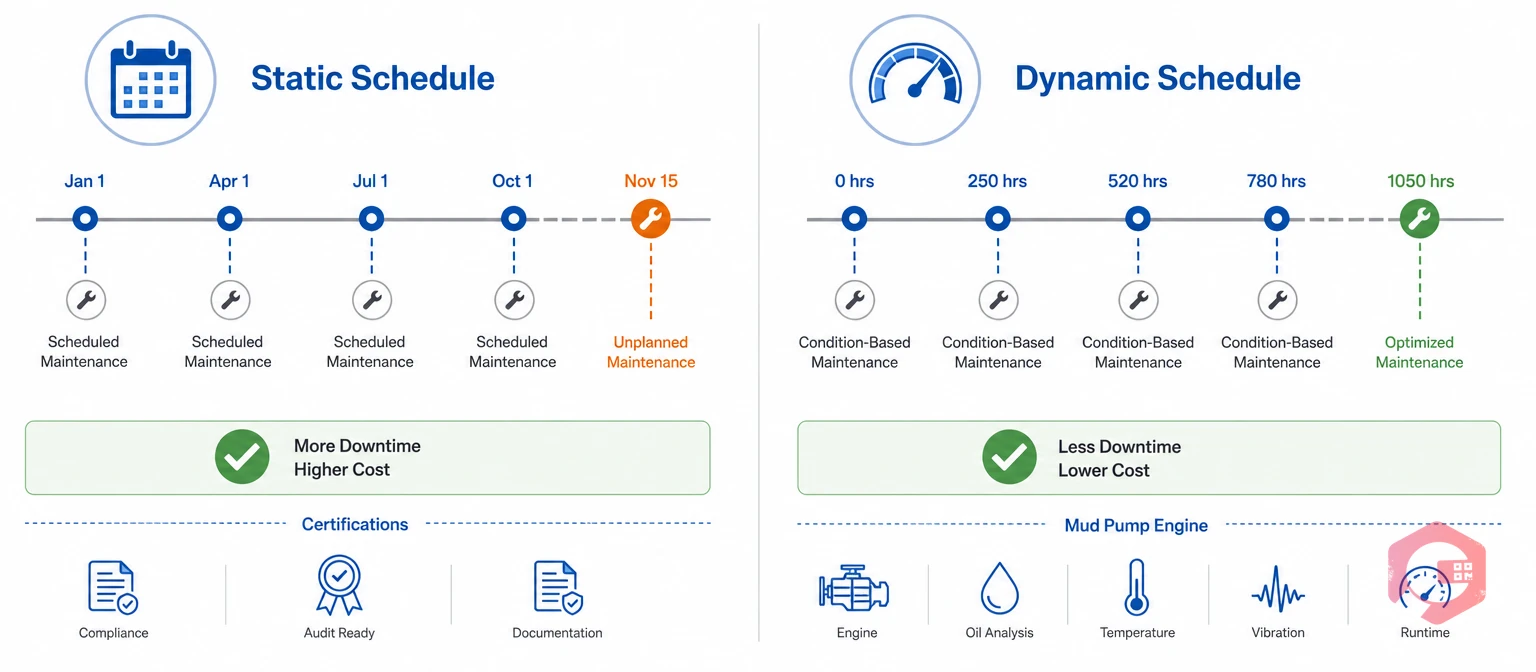
On a rig, equipment does not wear out on a calendar. It wears out based on how hard it ran. That is why most PM programs mix two types of schedule instead of relying on just one.
A static PM schedule is a fixed-interval task performed on a set calendar date. It runs on that date no matter how much the equipment has run. A dynamic PM schedule is a task triggered by actual usage instead. That usage might be pump hours, engine hours, or cycles. Both approaches sit inside the broader practice of maintenance, repair, and operations planning that most industrial equipment programs follow.
| Factor | Static Schedule | Dynamic Schedule |
|---|---|---|
| Trigger | Fixed calendar date | Runtime hours, cycles, or mileage |
| Best fit | Certifications, calibrations, safety inspections | Mud pumps, engines, top drives, drawworks |
| Main risk | Over-servicing light-use gear or missing heavy-use wear | Needs accurate meter data from the field |
| Typical owner | Compliance or safety lead | Rig maintenance supervisor |
Most rig operations run both types at once. Static schedules cover anything tied to a certification date. Dynamic schedules cover the equipment that takes the heaviest, most variable workload. Neither one alone covers the full picture on a working rig, and picking only one is a common early mistake that shows up as either wasted service visits or surprise failures a few months in.
A PM schedule only pays off if the process behind it holds up in the field. The practices below separate a program that reduces downtime from one that just generates paperwork.
None of this requires new hardware. It mostly requires moving the record off paper and into a system every rotation can open on day one, without a handover call.
Mean time between failures is one of the core measures described in NIST's reliability engineering handbook. Tracking it by asset, not just by completed work orders, turns downtime tracking into a planning tool instead of a monthly report nobody reads.
A PM program needs a scorecard, or it drifts back toward reactive work within a season.
Maintenance checklists keep every inspection consistent across crews, wells, and rotations, which makes those three numbers worth trusting month after month.
It catches wear on mud pumps, top drives, and other high-use equipment during a scheduled service window, before the part fails on its own. That moves the failure from an unplanned stop to a planned repair, with parts and a technician already lined up. Over time, it also builds a maintenance history that flags repeat problems early, so the same failure does not catch the next crew off guard weeks or months later.
Start with an asset register, then set static and dynamic PM schedules based on how each system is used. Keep critical spares in stock and route safety-critical repairs through a digital permit process. Reviewing failure patterns by asset closes the loop and stops the same issue from repeating on the next well.
Attach a standard checklist to every PM work order and trigger service by runtime hours for high-cycle equipment. Log parts used against each job, and keep the maintenance history visible to every crew rotation, not just the crew that did the work. Review the numbers monthly, so the program does not quietly slip back into reactive fixes.
A seal that is starting to wear usually shows small signs first, such as a minor leak or a change in pressure. A scheduled inspection catches those signs early. That lets a crew replace the seal on their own timeline instead of during an unplanned stop in the middle of a job.
It depends on the system. Safety and compliance items usually follow a fixed calendar date set by the manufacturer or a regulator. High-wear equipment like mud pumps and engines is better served by a runtime-based schedule tied to actual hours or cycles, since two rigs can put very different loads on the same model of pump over the same number of calendar days.
Unplanned downtime on drilling rigs is rarely one bad break. It is a maintenance process gap that compounds until something fails at the worst possible time, usually on the busiest day of the job. Closing that gap starts with treating PM as a system that every crew rotation can see and trust, not a task that lives in one person's head or one binder in the doghouse. Schedule a free demo to see how Cryotos turns rig PM schedules, checklists, and downtime data into one system your crews can actually use, on every rotation.


Cryotos AI predicts failures, automates work orders, and simplifies maintenance—before problems slow you down.



