

Shutdown and turnaround planning for a power plant starts with a constraint most other industries never face: the outage window isn't the plant's to choose. A factory can schedule its own downtime around production demand. A power plant has to get its outage window cleared by the grid operator first, on top of everything a normal industrial turnaround already requires. Coordinating maintenance inside a CMMS built for that reality means the technical scope, the regulatory clock, and the grid approval process all live in one place instead of three disconnected timelines. This guide covers what makes power plant outages different from a typical industrial turnaround, a framework for sequencing the approvals that actually gate the work, and how to keep contractors and parts moving inside a window you don't fully control.
Key Takeaways
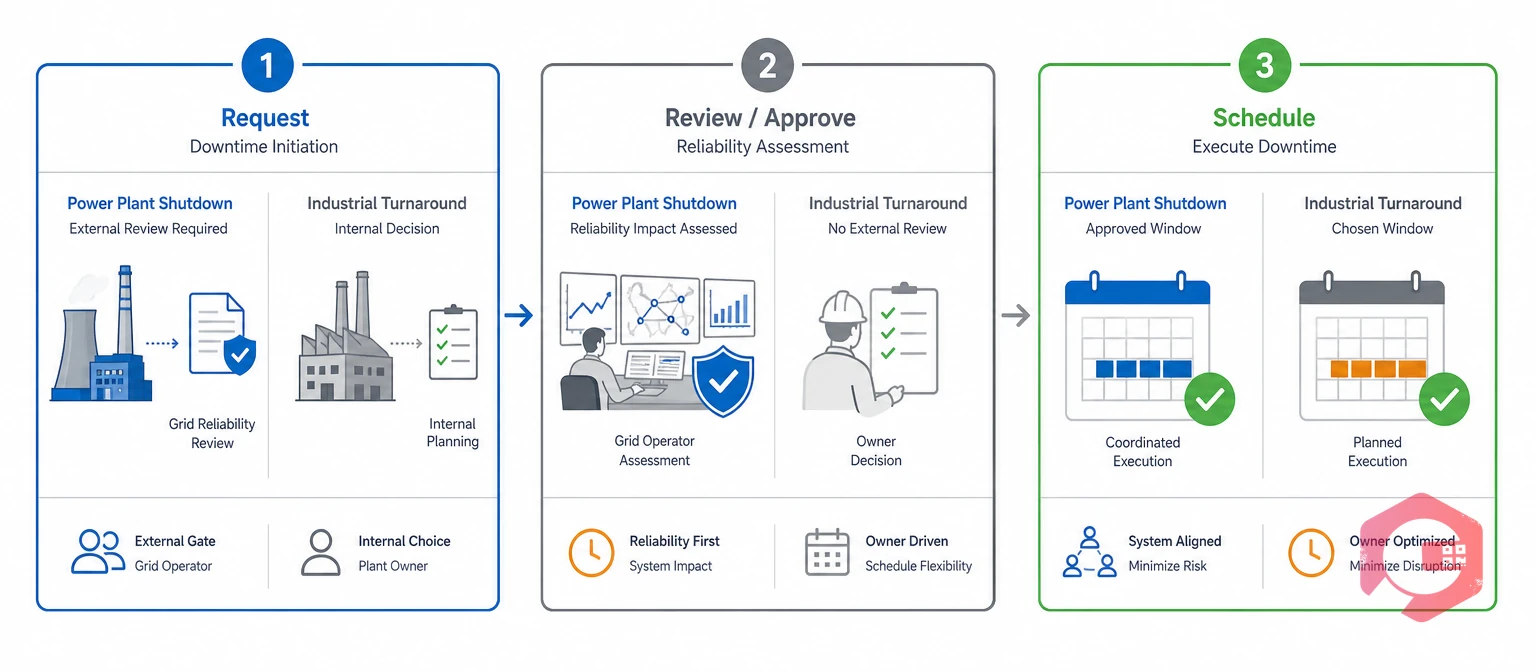
A refinery or chemical plant chooses its own turnaround window around production schedules and market demand. A power plant's outage window has to clear a grid reliability review first, because taking a generating unit offline affects the reliability of the entire interconnected system it feeds into, not just the plant itself.
That single difference reshapes the whole planning process. The maintenance scope can be fully ready, contractors booked, and parts on-site, and the outage still can't start until the grid operator confirms the system can absorb that unit's absence.
Generators typically submit outage requests to an independent system operator or regional transmission organization well in advance. The request goes through a reliability review. That review checks whether the grid can maintain adequate reserve margins with that unit offline, especially heading into summer or winter peak demand seasons.
A plant with a fully scoped, fully staffed turnaround ready to go can still have its preferred window denied or pushed. System-wide demand forecasts or other units' overlapping outages can create a reliability risk the grid operator won't accept. Planning has to build in flexibility for that approval process, not just for the technical work itself.
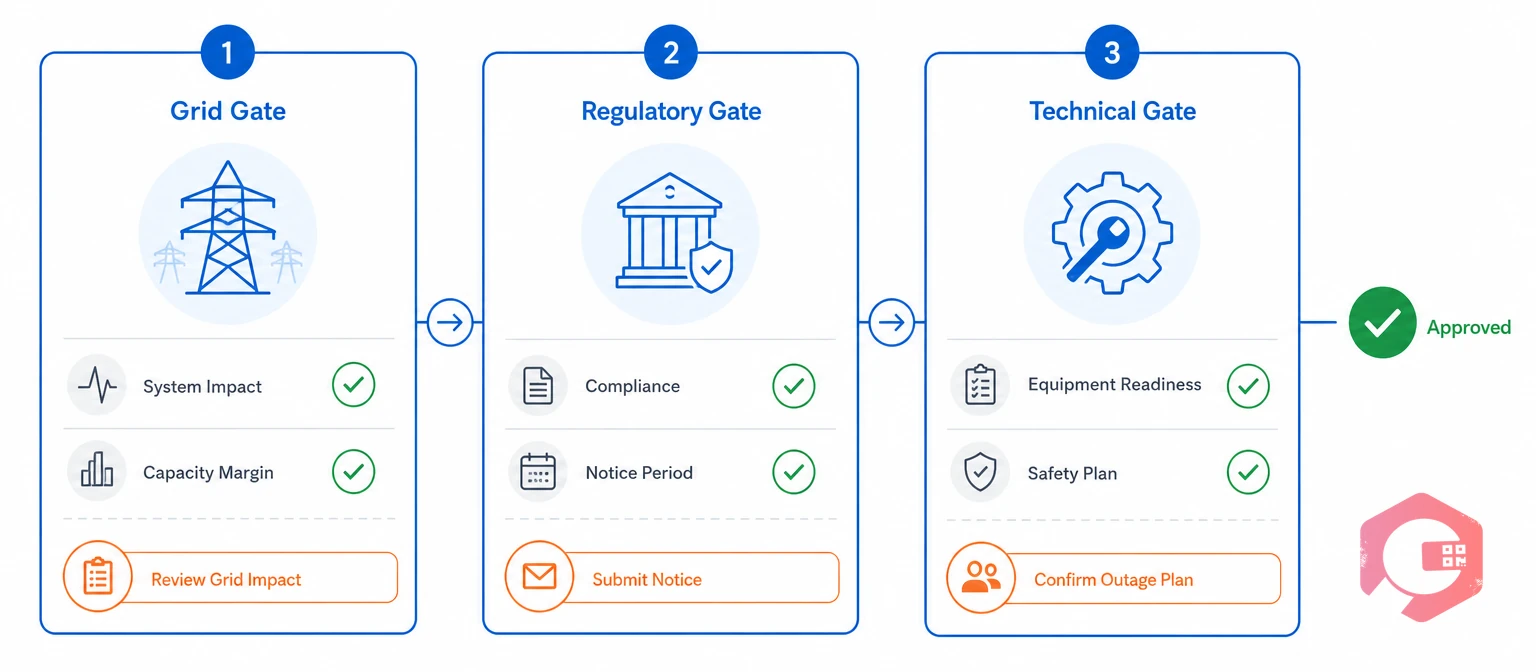
The 3-Gate Outage Approval Framework: every power plant outage has to clear three gates, in order, before work can start.
Most turnaround planning focuses entirely on the Technical Gate. The Grid and Regulatory Gates are what actually determine whether that technical plan gets to execute on schedule.
In North America, mandatory reliability standards govern how generator owners coordinate planned outages with the broader grid. These sit on top of the plant's own equipment inspection obligations, not in place of them. Missing a compliance-driven inspection deadline isn't just a maintenance gap. It's a regulatory finding, with its own reporting and remediation requirements.
Cryotos's document management keeps inspection records, compliance deadlines, and outage approval correspondence attached to the asset record. A compliance deadline never gets missed because the paperwork lived in a separate system from the turnaround plan.
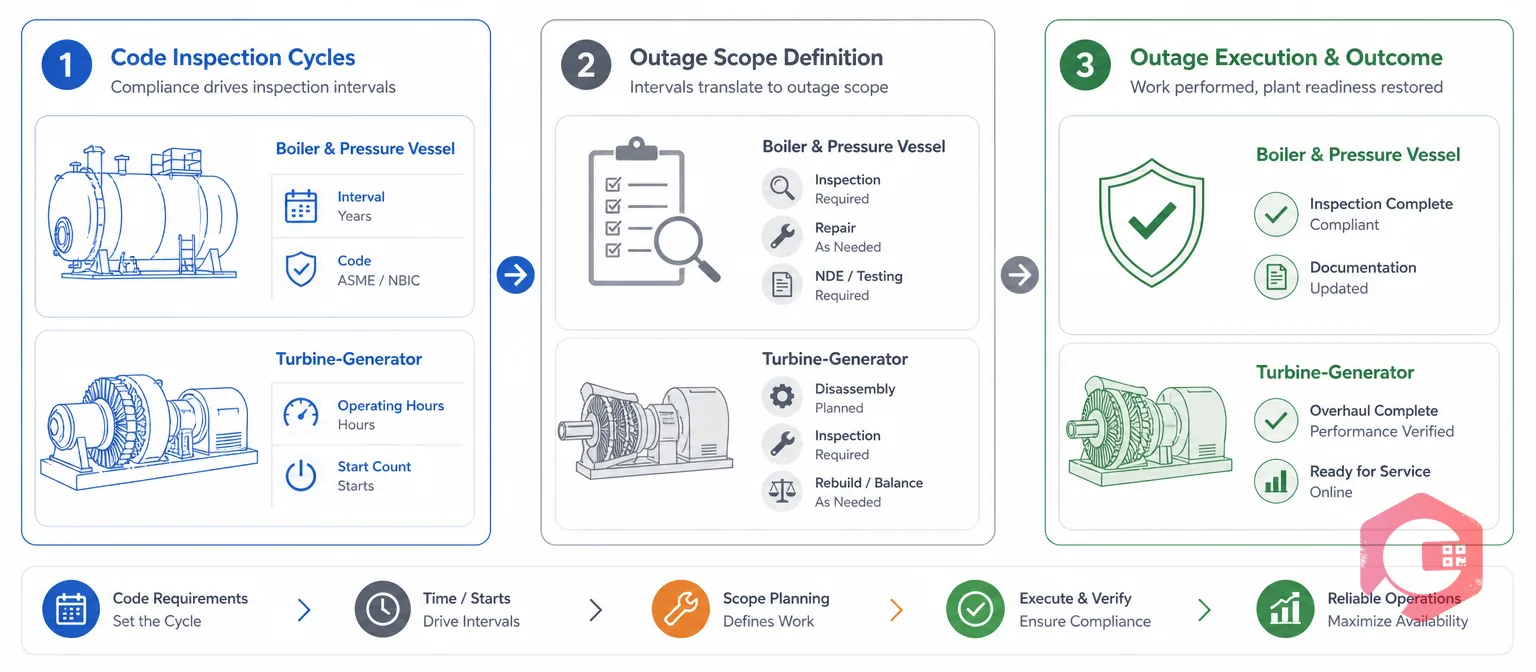
Much of what happens during a power plant outage isn't discretionary maintenance, it's code-mandated inspection. Boiler and pressure vessel inspections follow jurisdictional codes derived from the ASME Boiler and Pressure Vessel Code. Turbine-generator overhauls follow OEM-recommended intervals tied to operating hours and start counts.
Cryotos's preventive maintenance module schedules these inspection-driven tasks against their actual compliance intervals. The technical scope for an outage is built from real inspection due dates instead of an estimate assembled the week before the window opens.
Once a grid-approved window is confirmed, the technical work has a hard deadline that doesn't move. Contractors, specialized parts, and rental equipment all have to be staged and ready before the window opens. Securing the window itself was the hard part; running past it usually isn't an option, since a new grid approval can take weeks to arrange.
Cryotos's project and budget module structures the outage as a hierarchy of work packages and work orders, with milestones tied directly to the approved window. A contractor delay shows up as a schedule risk immediately, not as a surprise discovered on the last day of the outage.
Not every power plant outage goes through the full grid approval process in advance. The distinction between a forced and a planned outage changes how the maintenance team has to respond.
| Outage Type | Trigger | Grid Approval Process | Typical Duration |
|---|---|---|---|
| Forced Outage | Unplanned equipment failure | Reported after the fact, not pre-approved | Variable, driven by repair scope |
| Planned Outage | Scheduled maintenance or inspection | Requested and cleared weeks or months ahead | Fixed window, days to several weeks |
| Maintenance Outage | Shorter-notice, lower-urgency repair | Requested with limited lead time | Typically shorter than a full planned outage |
A forced outage still needs the same documented technical response as a planned one. It just skips the grid pre-approval step the planning process normally has weeks to work through.
Cryotos structures a power plant outage as a project with milestones tied to the approved grid window. Work orders scope from real inspection due dates instead of an estimate assembled at the last minute. Documentation keeps regulatory and grid-approval records attached to the asset instead of scattered across separate systems.
That structure matters because an outage plan built on three disconnected systems, one for grid approval correspondence, one for compliance paperwork, and one for the technical work itself, makes it hard to see the whole picture at once. A missed regulatory deadline or a grid approval delay can sit unnoticed in its own system while the technical team keeps planning around a window that may no longer be valid.
Facilities running power plant maintenance through Cryotos have reported up to a 30% reduction in unplanned downtime and 25% faster repair turnaround. Those outcomes matter directly when the outage window itself is the scarcest resource in the plan, not just the labor or the parts. See Cryotos's power plant maintenance solution page for more on how this fits a generation asset specifically.
A power plant's outage affects the reliability of the interconnected grid it feeds into, so the outage window has to be reviewed and cleared by an independent system operator or regional transmission organization before it can start, not just scheduled internally.
A planned outage is requested and cleared through the grid approval process weeks or months in advance. A forced outage happens due to an unplanned equipment failure and is reported after the fact, without the same advance grid coordination.
Much of the technical scope comes from code-mandated inspections, such as boiler and pressure vessel inspections under jurisdictional codes and turbine-generator overhauls tied to OEM-recommended intervals, rather than discretionary maintenance priorities alone.
It's a way of sequencing power plant outage approvals into three stages. The Grid Gate is where the system operator confirms the grid can absorb the unit's absence. The Regulatory Gate confirms compliance and inspection deadlines are satisfied. The Technical Gate is where the maintenance team confirms scope and readiness for the actual work.
Power plant shutdowns succeed when the grid approval, the regulatory clock, and the technical scope all run through one system instead of three. Schedule a free demo to see how Cryotos keeps your next planned outage on schedule from approval to execution.



Cryotos AI predicts failures, automates work orders, and simplifies maintenance—before problems slow you down.



