To select and inspect PPE for maintenance tasks, start with a task-level hazard assessment, match the PPE to the hazard and its rating, check fit and compatibility, and inspect each item before use and on a set schedule. PPE is the last line of defense, so it has to be the right item and in sound condition.
This guide explains how to choose PPE for each job, how to inspect it, and how a Computerized Maintenance Management System (CMMS) keeps inspections, expiry dates and stock under control.
Key Takeaways

Personal protective equipment (PPE) is equipment worn to reduce exposure to a hazard that other controls have not removed. It protects only the wearer, and it fails when it is the wrong item, damaged or not worn.
That is why safety guidance ranks PPE for maintenance work last, after elimination, substitution, engineering controls and administrative controls. In maintenance, lockout/tagout (LOTO) and permits set the conditions for the job. PPE then covers what remains, such as residual energy, sparks, chemicals, noise and falls.
OSHA’s general PPE standard (29 CFR 1910.132) requires employers to assess hazards, select PPE, train workers and keep PPE in reliable condition. A site hazard assessment is therefore the starting point for every PPE decision.
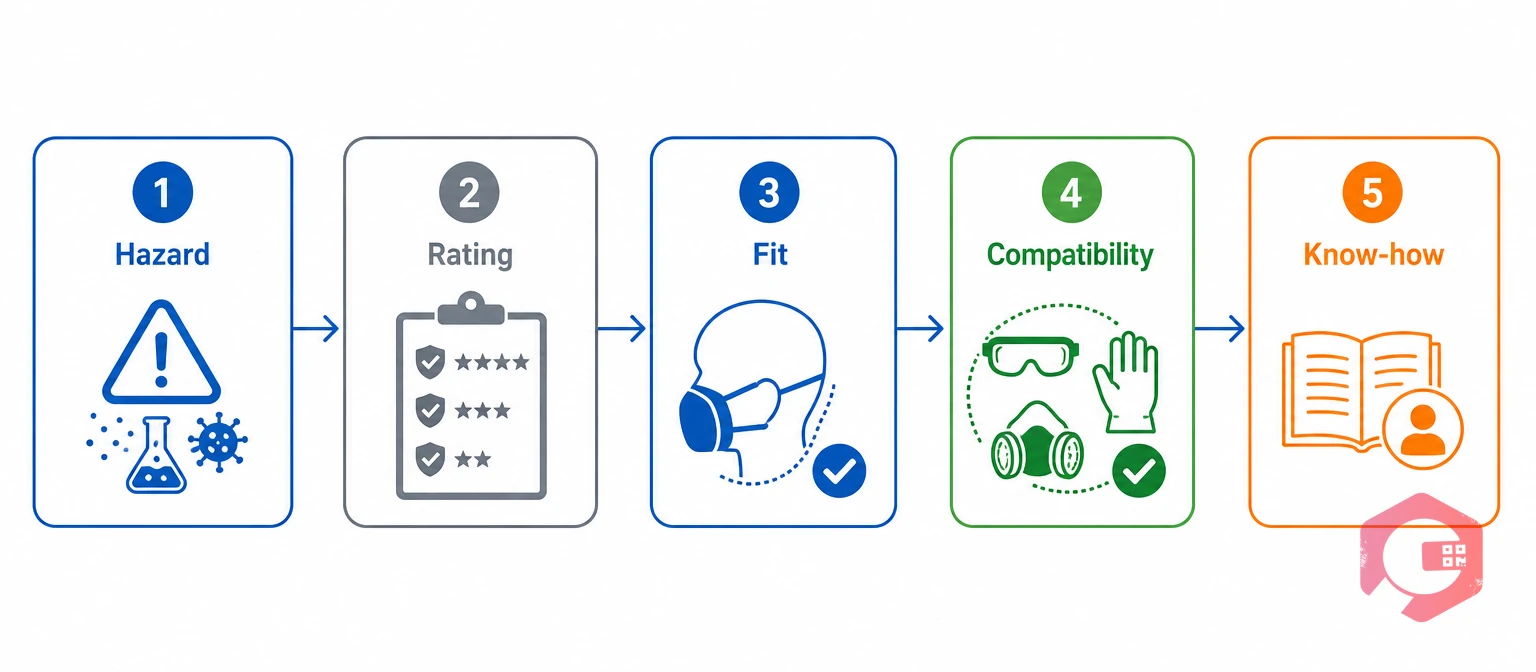
The Five-Check PPE Selection Method is a task-level routine that matches PPE to the hazards of a job. Use it to choose PPE for maintenance jobs each time the task, tool or location changes.
The Five-Check PPE Selection Method:
Skipping the compatibility check is a common mistake, because items chosen one by one can leave gaps when worn together.
Different maintenance tasks expose workers to different hazards, so the PPE changes with the job. The table lists common examples; the site hazard assessment decides the actual requirement.
| Maintenance task | Typical hazards | PPE categories to consider |
|---|---|---|
| Electrical isolation and testing | Shock, arc flash | Arc-rated clothing, insulating gloves, face shield |
| Hot work | Sparks, heat, UV light, fumes | Welding helmet, flame-resistant clothing, heat-resistant gloves |
| Confined space entry | Low oxygen, toxic gas | Gas detector, permitted respiratory protection, harness with retrieval line |
| Work at height | Falls, dropped objects | Full-body harness, lanyard, helmet with chin strap |
| Mechanical repair | Pinch points, sharp edges, oils | Cut-resistant gloves, safety glasses, safety footwear |
| Chemical and battery handling | Splashes, fumes, corrosion | Chemical goggles and gloves, respiratory protection per the SDS |
| Grinding and cutting | Flying particles, noise | Face shield with eye protection, hearing protection |
Use a safety compliance checklist to review your PPE rules, permits and inspections against the tasks your team performs.

PPE for maintenance work protects only when it is in sound condition, so a good program uses four types of inspection.
Criteria vary by manufacturer and standard, so always follow the manufacturer’s instructions. The table shows common examples.
| PPE item | What to check | Retire or remove when |
|---|---|---|
| Hard hat | Shell cracks, suspension, chin strap, date marking | Cracked, heavily impacted or past its service life |
| Safety glasses and face shield | Scratches, cracks, loose frames | Vision is impaired or the lens is damaged |
| Work gloves | Holes, cuts, worn palms, contamination | No longer protective |
| Insulating gloves | Visual damage, air test, test date | Damaged or past the test interval |
| Respirator | Seal check, valves, straps, cartridge date | Damaged parts or expired cartridges |
| Harness and lanyard | Webbing cuts, frays, burns, stitching, hardware, tags | Any damage, or after a fall arrest event |
| Gas detector | Bump test, calibration date, battery | Fails a test or is past its calibration date |
A complete record lets a safety manager answer an audit question in minutes instead of days. It also shows patterns by item type or supplier when an item fails, which helps with root cause work.
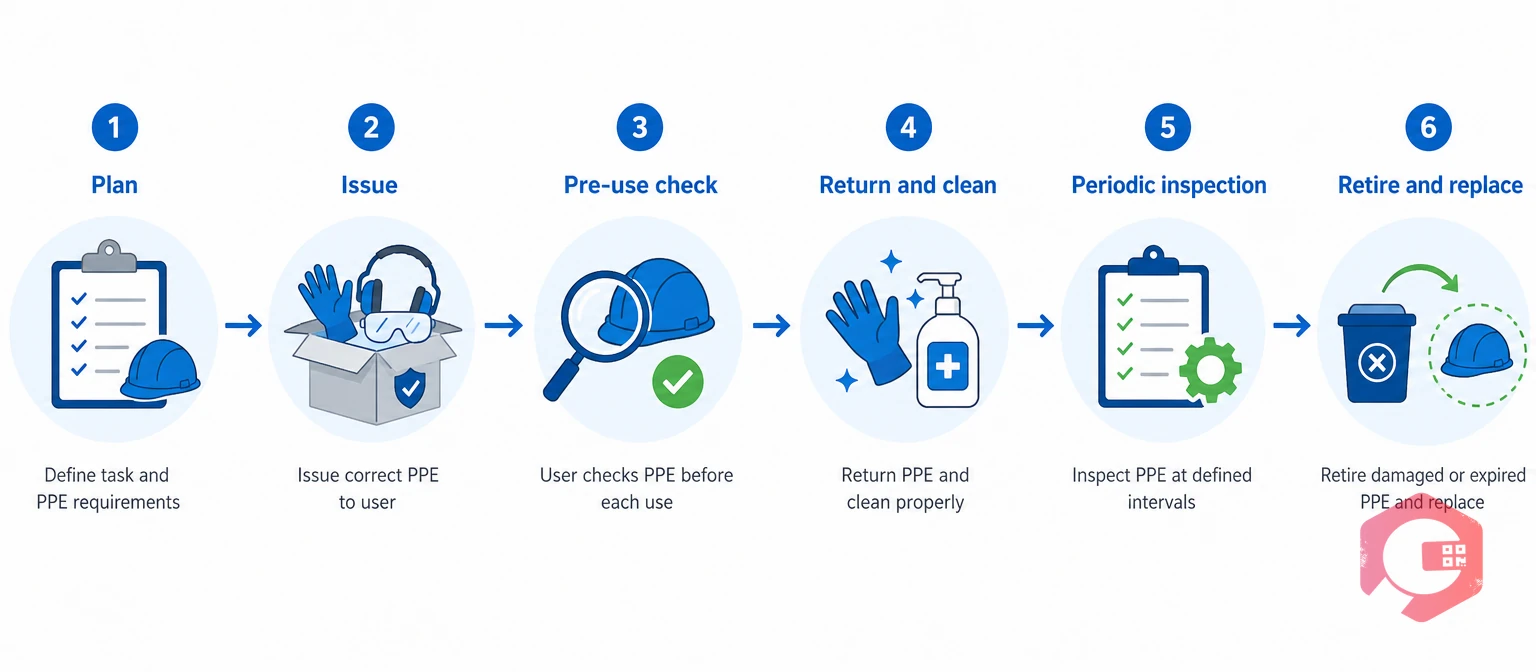
A reliable PPE workflow covers six stages, and each stage should leave a record.
High-risk jobs also need a permit to work that names the required PPE and is approved before work starts.
A real job shows how selection and inspection fit together. This example covers a confined space entry; the steps are illustrative, and each site sets its own rules.
Each step leaves a record, so the safety manager can show who used what, when it was checked and what was retired.
Most problems with PPE for maintenance teams come from weak routines, not from the equipment itself.
Teams that fix these five habits usually see fewer surprises at audit time.
Cryotos manages PPE for maintenance teams as part of daily work: items are tracked as assets and stock, inspections are scheduled and recorded, and high-risk jobs link to digital permits. Your safety team still decides which PPE a task requires, and Cryotos makes that decision visible and auditable.
Maintenance teams using Cryotos have reported up to 30% reduction in unplanned downtime and 25% faster repair turnaround.
Cryotos does not choose PPE or hold protection ratings. Confirm with Cryotos how failed items are flagged out of service and how issue records per worker are kept before you rely on them.
PPE for maintenance tasks is the gloves, eye and face protection, respirators, harnesses, footwear and clothing that reduce exposure to hazards during repair and inspection work. The right items depend on the task.
To choose PPE for maintenance jobs, assess the hazards of the task, pick items with the right rating and standard, and check fit and compatibility. Then confirm the wearer is trained on use and limits.
Wearers check PPE before each use, and a competent person inspects it at set intervals. The interval depends on the manufacturer, the standard and site policy. Higher-risk items such as harnesses and gas detectors usually need closer checks.
Replace PPE when it is damaged, fails an inspection, reaches its service life or passes its expiry date. Items involved in a serious incident are often retired.
No. PPE is the last line of defense. Elimination, substitution, engineering controls, lockout/tagout and permits come first.
A CMMS can schedule inspections, run mobile checklists, record results and signatures, and send reminders for expiry and calibration dates. It also tracks stock of consumable PPE.
PPE only protects when it is checked, recorded and replaced on time. Schedule a free demo to see how Cryotos schedules PPE inspections, tracks expiry dates and links permits to the work.



Cryotos AI predicts failures, automates work orders, and simplifies maintenance—before problems slow you down.