

Shutdown kitting differs from routine PM kitting in scope, timing, and risk. A routine PM kit is a small, repeatable set of parts pulled from stock a few days before a job. A shutdown kit is built for a one-off work package, months ahead, with long-lead items, contingency parts for discovery work, special tools, and full quality checks, then staged by location and sequence, so crews never wait for material.
Get shutdown kitting wrong and the whole outage pays for it. One missing gasket can idle a crew, hold a permit open, and push the critical path. This guide covers the 8 ways shutdown kits should be built differently from routine PM kits, plus a readiness method you can use on your next outage.
Key Takeaways
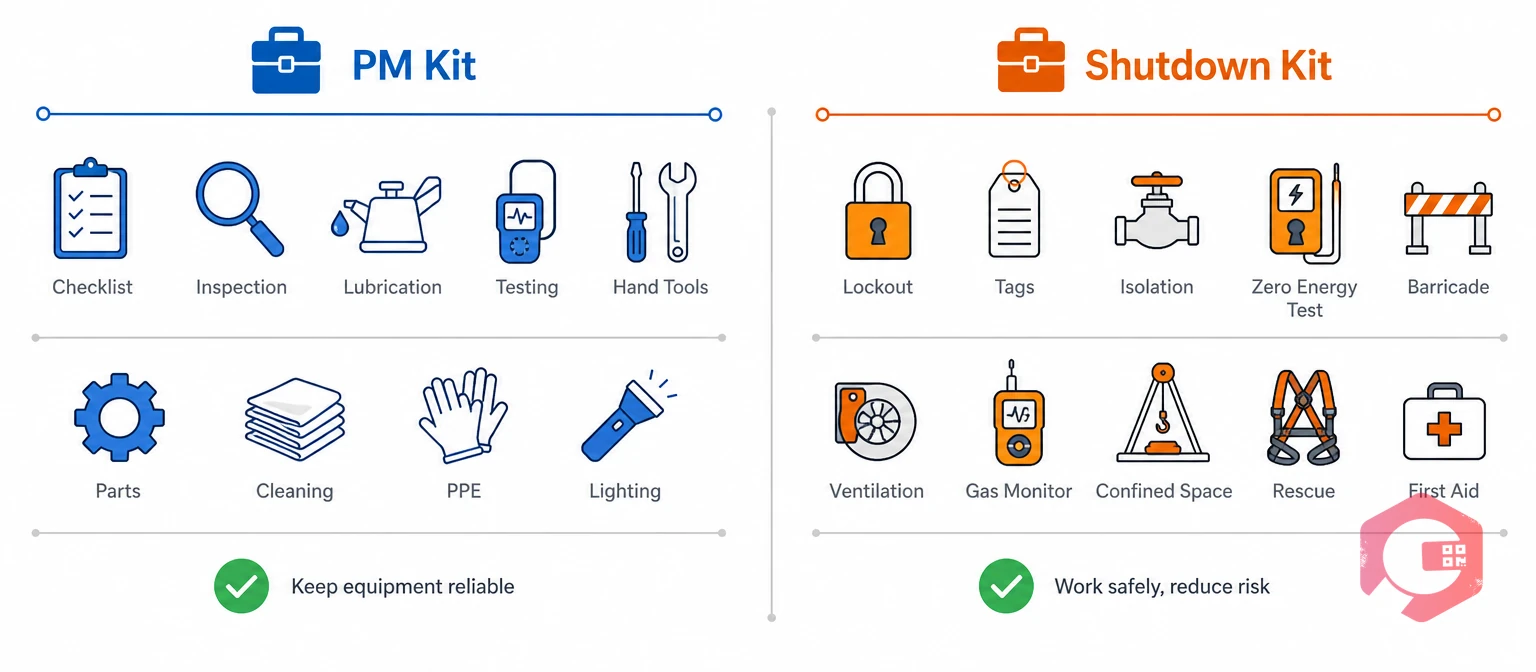
Both kinds of kit share one goal: the technician has everything needed before the job starts. The way you reach that goal changes once the work moves from a weekly PM route to a planned outage.
| Factor | Routine PM Kit | Shutdown Kit |
|---|---|---|
| Built around | A standard task list for one asset. | A one-off work package with its own scope and sequence. |
| Lead time | Days before the job. | Weeks to months before the window. |
| Parts source | Mostly stocked items. | Many purchased, fabricated, or long-lead items. |
| Uncertainty | Low; the job repeats. | High; inspections reveal new work. |
| Contents | Filters, belts, lubricants, small parts. | Parts, gaskets, studs, special tools, rentals, documents. |
| Quality checks | Basic pick check. | Receipt inspection, certificates, and material verification. |
| Staging | Storeroom shelf or pickup bin. | Laydown area by unit, location, and job order. |
| Cost of a missing item | A delayed PM. | An idle crew and a longer outage. |
Shutdown kitting is the process of gathering, checking, and staging every item a shutdown job needs before the outage starts. It sits inside the wider materials plan for a turnaround, sometimes called a turnaround in refining and process plants.
In process plants, it also supports compliance. OSHA's process safety management standard (29 CFR 1910.119) requires employers to assure that maintenance materials and spare parts are suitable for the process application. ISO 55000 asset management guidance takes the same view of planned work.
A routine PM kit follows the asset. The same pump gets the same seal kit and lubricant every quarter. A shutdown kit follows the work package, which is the full plan for one job during the outage.
A shutdown work package is the complete set of scope, drawings, procedures, permits, parts, and tools for one outage job. The kit is the physical half of that package, so it must match the scope line by line.
Most maintenance teams that struggle with shutdown kitting reuse PM kit lists. Those lists miss the one-off items, like spiral wound gaskets in a new rating or replacement studs, that only a work package review would catch.
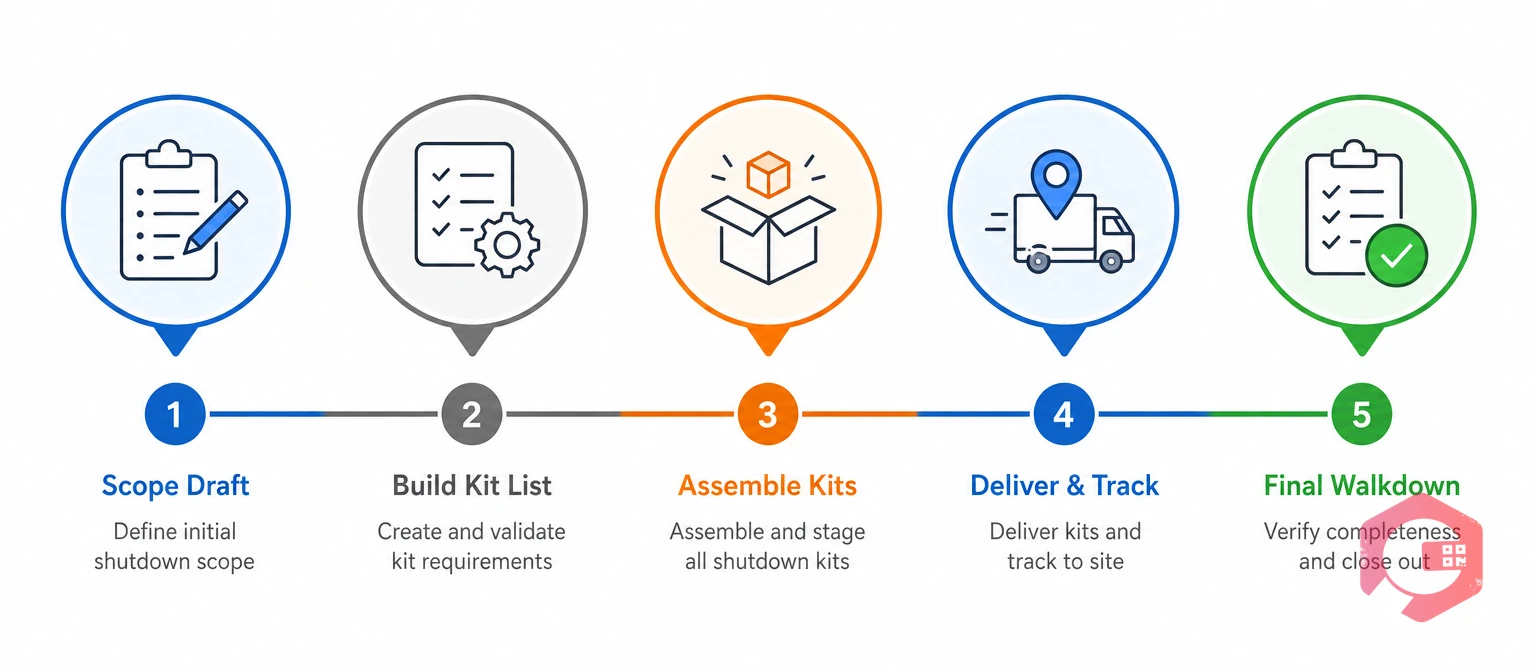
Routine PM kits are pulled a few days before the job. Shutdown kitting runs on a much longer clock, and the timeline is driven by the slowest item to arrive.
A long-lead item is any material whose purchase and delivery time is longer than the time left before it is needed. Long-lead items set the pace of shutdown kitting, so they belong on the outage schedule like any other critical task.
A practical rule: if a part cannot arrive before the planned kitting date, the job needs a decision now, not during the outage.
Adjust the timeline to your outage size and supplier lead times. A small annual stop may compress these steps, while a major turnaround may stretch them further.
Want to see what late or missing materials add to your maintenance spend? Run the numbers with the mean maintenance cost calculator.
Routine PMs rarely surprise anyone. Shutdowns often do. Once equipment is opened and inspected, crews find corrosion, cracked parts, or worn internals that nobody could see while the plant was running.
Contingency kits cost money, but idle crews cost more. The right balance depends on how critical the asset is and how long a part would take to source mid-outage.
A PM kit is mostly parts. A shutdown kit is everything a crew touches, from bolts and gaskets to torque tools and the paperwork that releases the job.
Take a shell-and-tube heat exchanger opened for cleaning and inspection. A routine PM on the same unit might only need a strainer screen. The shutdown kit looks very different.
A common mistake is to kit the main parts and leave consumables to the storeroom on the day. In a shutdown, the storeroom queue can cost more crew time than the repair itself.
Track tools as carefully as parts. A missing torque wrench stops a flange job just as surely as a missing gasket.
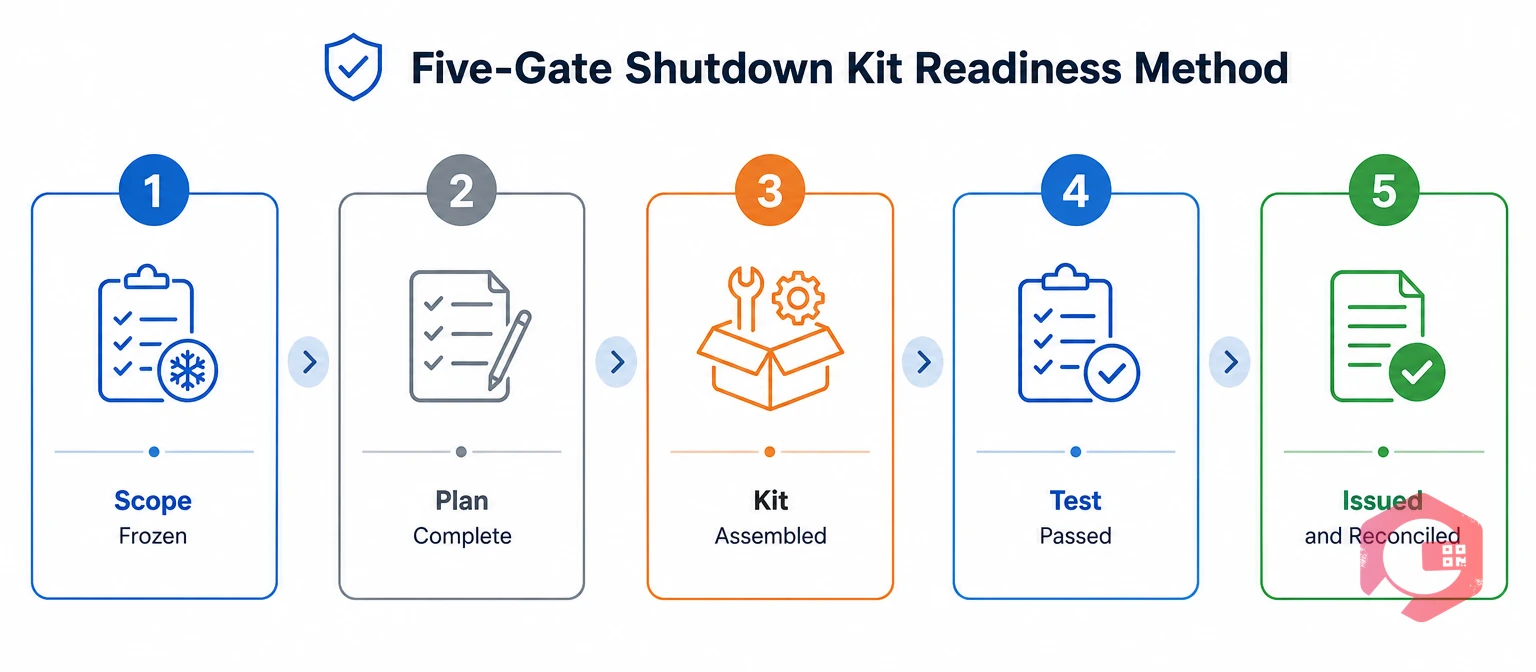
Routine PM kits get a quick pick check. Shutdown kits need a formal readiness process, because a wrong part found mid-outage costs far more than one found on the receiving dock.
The Five-Gate Shutdown Kit Readiness Method:
Wrong materials are a real risk in process plants. Positive material identification (PMI) uses handheld analyzers to confirm that alloy parts are the grade specified. Pair it with a check of material test certificates, so nothing goes into service on paperwork alone.
Report readiness by gate for every work package. A dashboard that shows how many kits sit at each gate tells planners exactly where the outage is at risk.
PM kits wait on a storeroom shelf until a technician picks them up. Shutdown kits must be close to the work and in the right order, because crews move fast and travel time adds up.
Good warehouse management makes this easier. When each staging cage is set up as a storage location, kits can be tracked from receiving dock to job site.
The goal is simple: a crew should walk from the permit desk to the job and find a complete kit waiting.
Routine PM kits are issued and forgotten. During a shutdown, kits change hour by hour as scope grows, parts get swapped, and crews borrow from each other.
Shutdown kitting does not end when the outage starts. Daily reconciliation is what keeps a clean kit plan from turning into a free-for-all by day three.
A routine PM kit is consumed and done. A shutdown leaves behind unused parts, opened contingency kits, and lessons that should shape the next outage.
Hold a short close-out review with planners, buyers, and the storeroom team within a few weeks of startup. Memories fade quickly, and the best fixes to next year's kits come from the people who handled this year's shortages.
Most facilities lose money here. Surplus parts sit in laydown areas, get damaged, or vanish from the books. A clear close-out step protects both the budget and the next outage's plan.
Routine PM kitting rarely needs its own metrics. Shutdown kitting does, because small misses add up across hundreds of jobs. Track a short set of measures before, during, and after the outage.
Review these numbers in your post-outage meeting. They show whether the next outage needs earlier ordering, better contingency planning, or tighter close-out.
Spreadsheets struggle to track hundreds of kits, thousands of line items, and daily changes. A Computerized Maintenance Management System gives shutdown kitting one place to plan, reserve, issue, and reconcile materials.
Maintenance teams using Cryotos have reported up to 30% reduction in unplanned downtime and 25% faster repair turnaround. For shutdowns, the same discipline shows up as fewer crews waiting for parts and fewer surprises at close-out.
Before the next outage, review your stores against our MRO inventory checklist to spot stocking gaps that could hit your shutdown kits.
A routine PM kit is a small, repeat set of stocked parts for a standard task, pulled a few days ahead. A shutdown kit is built for a one-off work package months ahead. It includes long-lead items, contingency parts, special tools, rentals, and documents, and it goes through formal inspection and staging.
Shutdown kitting is the process of gathering, checking, and staging all the parts, consumables, tools, and documents each outage job needs before the shutdown starts. Each kit matches one work package, so crews can start work without waiting for material.
Kitting planning should start as soon as the scope is firm, often months before the outage. Long-lead items set the pace, so order them first. Physical kit assembly usually happens in the final weeks, once most materials have arrived and passed inspection.
Routine PM lists cover standard, repeat tasks on an asset. Shutdown jobs often involve one-off repairs, different gasket ratings, replacement fasteners, special tools, and contingency parts that routine lists do not include.
A contingency kit holds the parts for repairs that past outages show are likely, such as worn internals, corroded fasteners, or damaged seals. Fully kit high-probability repairs and keep a sourced list for less likely ones, with return terms agreed with suppliers.
Planners usually own the bill of materials, while storeroom and materials coordinators handle receiving, inspection, kitting, and staging. Quality inspectors verify certificates and alloy grades. Clear ownership at each step keeps kits from falling between teams.
Tag each kit with its work package number and scan it at receipt, staging, issue, and return. Review shortages and substitutions every shift, and link usage to each job's work order, so the record stays accurate.
A shutdown runs on time when every crew finds a complete, verified kit waiting at the job site. Schedule a free demo to see how Cryotos helps you reserve, stage, issue, and reconcile shutdown kits alongside your routine PM work.


Cryotos AI predicts failures, automates work orders, and simplifies maintenance—before problems slow you down.



