

Space management and facility management get used as if they mean the same thing, but they answer two different questions. Space management asks: is our square footage allocated and used well? Facility management asks: is the building and everything inside it running safely and reliably? Most organizations need both. They just rarely sit in the same job description.
Confusing the two leads to real gaps. A team buys a room-booking tool expecting it to catch a failing chiller. Another team leans on a CMMS expecting it to flag which floor sits empty. This guide breaks down what each discipline covers, where they overlap, and how a platform like Cryotos handles the facility side while connecting to space data.
Key Takeaways
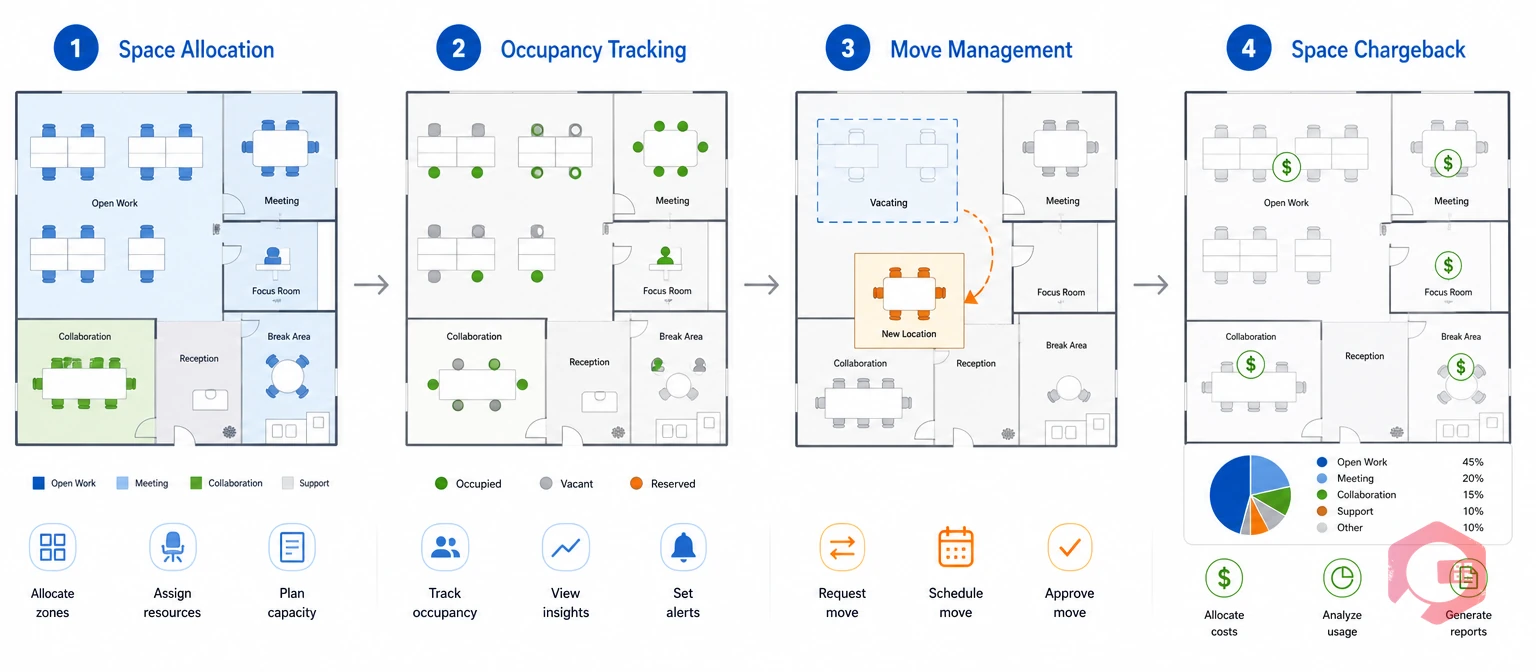
Space management is the practice of planning and allocating physical space to match real demand. It covers floor plans, desk and room assignments, occupancy data, and move planning. A workplace team running space management wants to know which floors sit under-used, which departments need more room, and whether a lease renewal makes financial sense.
Most people who own space management sit on real estate or workplace experience teams, not maintenance. Their measure of success is usually square feet per employee or occupancy percentage, not uptime or repair cost. A space team might report that a floor runs at 40% occupancy. They recommend merging two floors into one. That move saves rent. But it says nothing about whether the HVAC system on that floor can handle the added load. It also says nothing about fire exits, or whether the electrical panel supports more desks. Those are facility questions, not space questions. This is the gap that trips up teams who treat the two disciplines as one job.
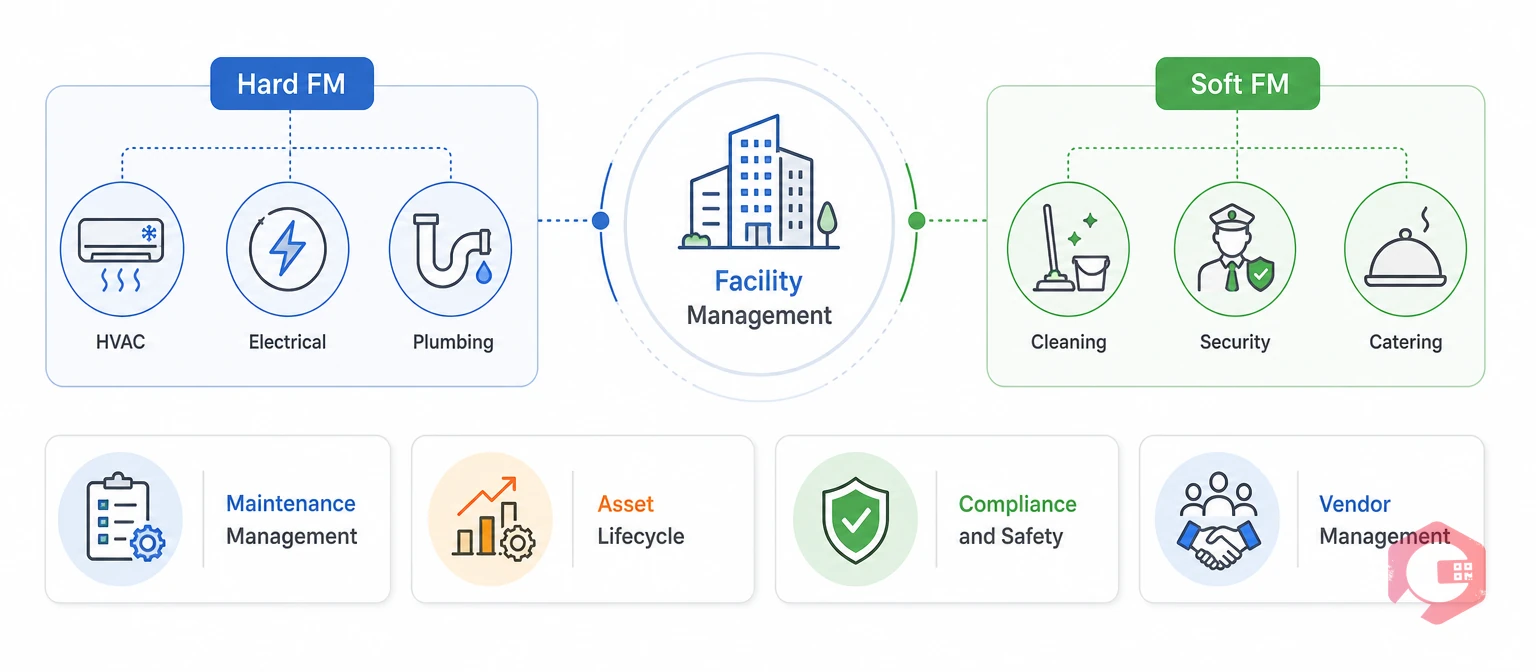
Facility management is the coordinated management of a building's systems and support services. The ISO 41011 standard defines it this way: facility management "integrates people, place, and process within the built environment." The goal is simple. Improve quality of life. Support the core business. The International Facility Management Association puts it in plainer terms. Facility management coordinates the physical workplace with the people and work of the organization.
Facility management splits into two broad categories. Hard FM covers physical infrastructure like HVAC, electrical, and plumbing systems. Soft FM covers occupant-facing services like cleaning, security, and catering. Maintenance teams that run facility management track uptime, repair cost, and compliance, not desk occupancy. Picture a building where the lights work, the elevators run on time, and the fire alarm gets tested every quarter. That is facility management doing its job well. Nobody notices it until something breaks.
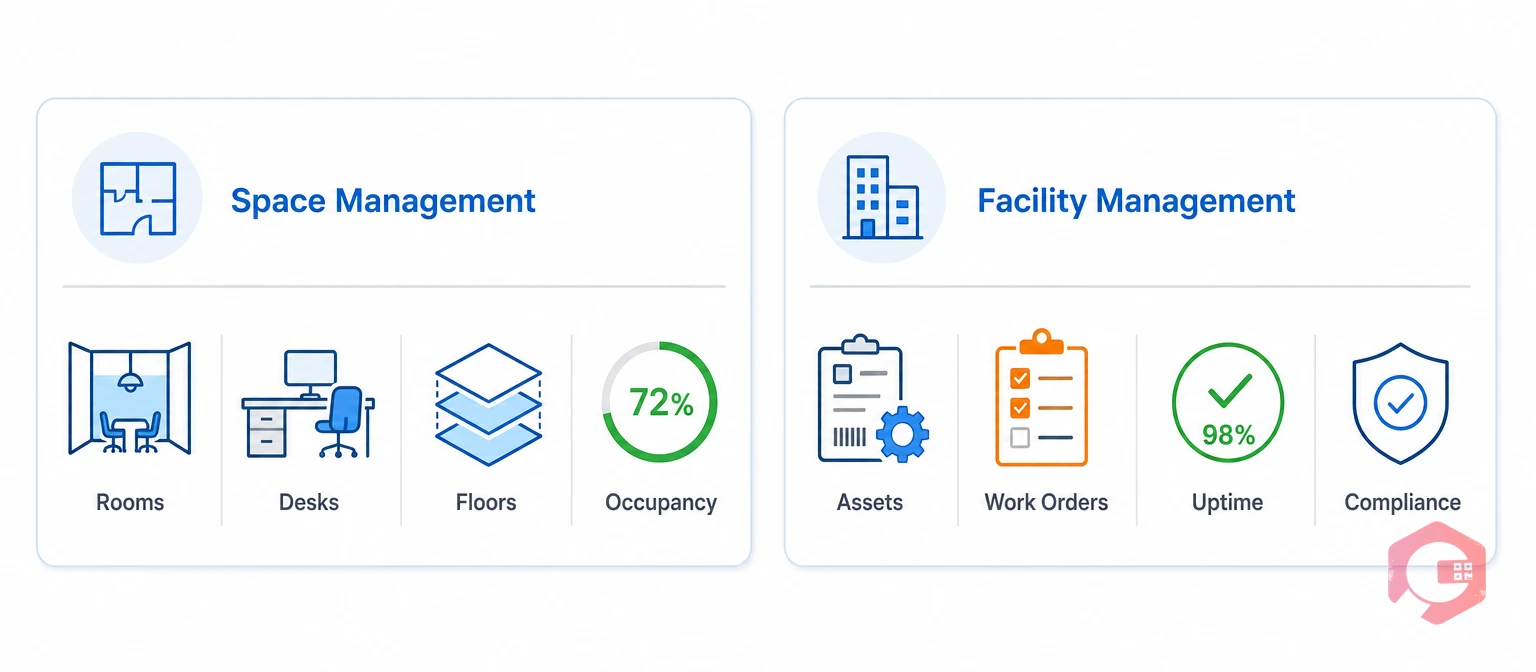
The clearest way to see the difference is side by side. Each discipline tracks a different unit, serves a different owner, and gets measured against different numbers.
Most facilities that run both well treat them as connected disciplines, not one bigger department. The tools differ, but the location data behind them should stay consistent.
See how a facility management software platform centralizes the maintenance side of this equation before you decide whether you need a separate space tool.
Both disciplines meet at the asset and location level. A meeting room is a space management concern and a facility management concern at the same time. It needs a booking system, and it needs a working HVAC unit. Per Wikipedia's overview of facility management, space allocation and workplace change sit inside the wider FM function alongside Hard FM and Soft FM services. That overlap is exactly why the two terms get blurred together.
Facility teams often need space context, such as which floor or zone an asset sits in, to plan efficient maintenance routes. Space teams need facility context, like asset condition or recent downtime, before they decide a space is fit for reallocation. Organizations that run both well sync this data, even when different teams own each function. Think of a hospital wing that adds two new exam rooms. The space team plans the layout. The facility team checks that the wiring, air handling, and fire suppression can support the new rooms before anyone moves furniture in. Skip either step and the project stalls, or worse, it opens later with a safety gap nobody caught.
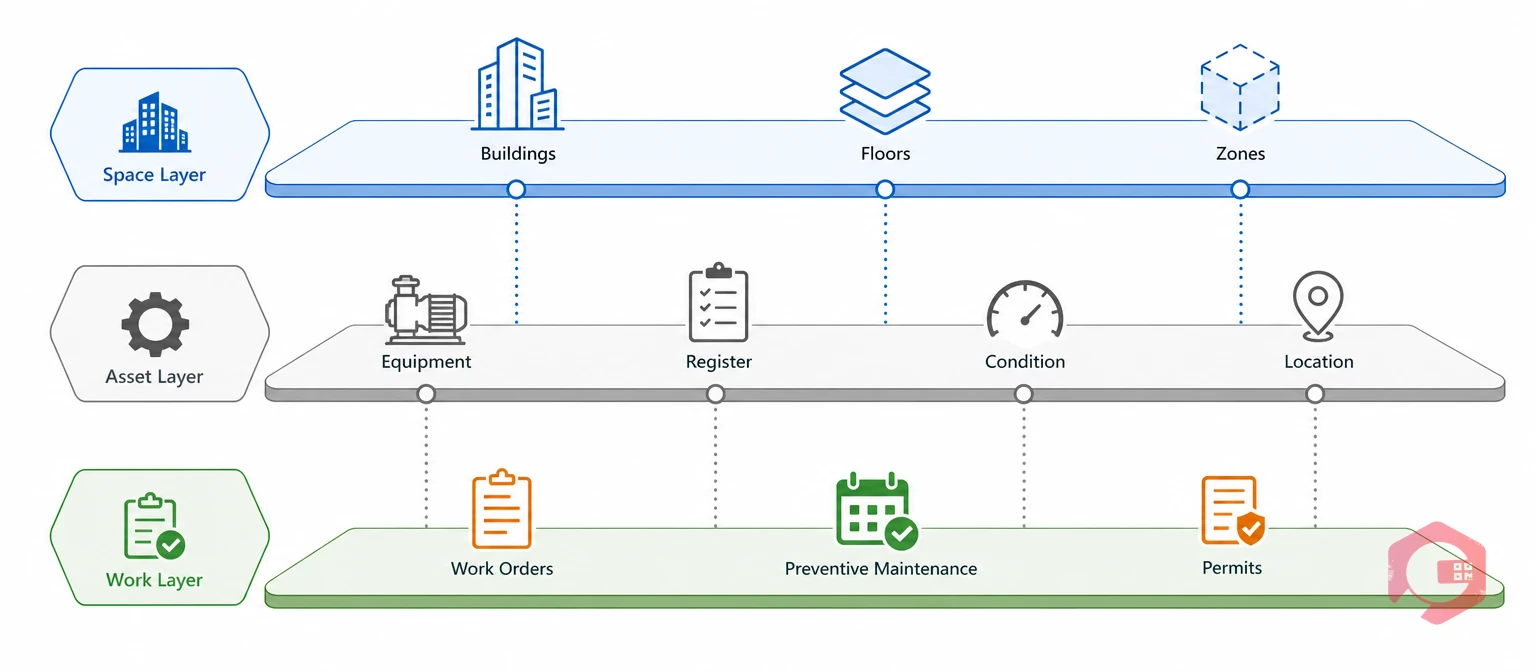
Cryotos is built as a Computerized Maintenance Management System (CMMS) and CAFM platform. Its core strength sits on the facility management side of this comparison, while its dedicated space management features give teams a structured way to manage space at the location level.
The Space-Asset-Work Stack:
Maintenance teams using Cryotos have reported up to 30% reduction in unplanned downtime and 25% faster repair turnaround. Most of that gain comes from work orders that carry full location and asset context. No more vague notes like "second floor, near the printer." A technician opens the work order and sees the exact room, the asset history, and what parts the job needs. That context lets a facility manager plan a maintenance route across a whole building. No separate spreadsheet for room numbers. No phone calls to confirm which floor.
Most organizations need facility management first. It is the non-negotiable layer that keeps a building safe and running. A leaking roof does not wait for budget season. Space management becomes a priority once you actively optimize real estate cost or manage hybrid work policies. It matters more as a company grows, adds locations, or shifts to a hybrid schedule.
Facilities that skip structured facility management tend to feel it first. Inspection gaps and reactive repairs pile up long before anyone notices space sitting empty. A facility inspection checklist is a practical starting point if your compliance tracking still runs on paper or memory. Start small. Pick one building. Track every work order and inspection for thirty days. Most teams find gaps they did not know existed, like a fire extinguisher that expired last spring or a filter that nobody has changed in a year.
Most facilities that struggle with this comparison make the same few mistakes. They are easy to avoid once you know what to look for.
Space management focuses on how square footage gets allocated and used. Facility management focuses on keeping the building and its systems safe and operational. They track different units, space versus assets, and usually sit with different teams.
Broadly, yes. Industry frameworks like ISO 41011 and IFMA's competency model list space planning as one function within the wider facility management discipline, even though many organizations run it as a separate specialty with its own tools.
Facility management typically runs on a CMMS or CAFM platform for maintenance, assets, and compliance. Space management often runs on an IWMS or a dedicated space-planning tool, though some CAFM platforms build in space management features to cover both needs in one system.
Cryotos is built primarily as a CMMS and CAFM platform, so its core strength is facility management: work orders, preventive maintenance, and asset tracking. It also includes space management features for location-level planning, which cover common needs without a separate standalone tool.
Getting space and facility data into one place saves the back-and-forth between teams working from the same building. Schedule a free demo to see how Cryotos connects facility maintenance with location-level space data in one platform.



Cryotos AI predicts failures, automates work orders, and simplifies maintenance—before problems slow you down.



