A facility maintenance plan is a written schedule of every inspection, service, and repair task a building needs over a year, with dates, owners, and costs. It turns scattered work into a month-by-month calendar, so HVAC, roofing, plumbing, life safety, and grounds work happens on time instead of after a failure. A good plan also spreads the workload evenly and keeps compliance dates from slipping.
This guide gives you a ready-to-use annual facility maintenance plan template, a detailed calendar for each month, and a frequency matrix for every major building system. It is written for facility managers and maintenance leads running offices, schools, hospitals, retail sites, and light industrial buildings.
Key Takeaways
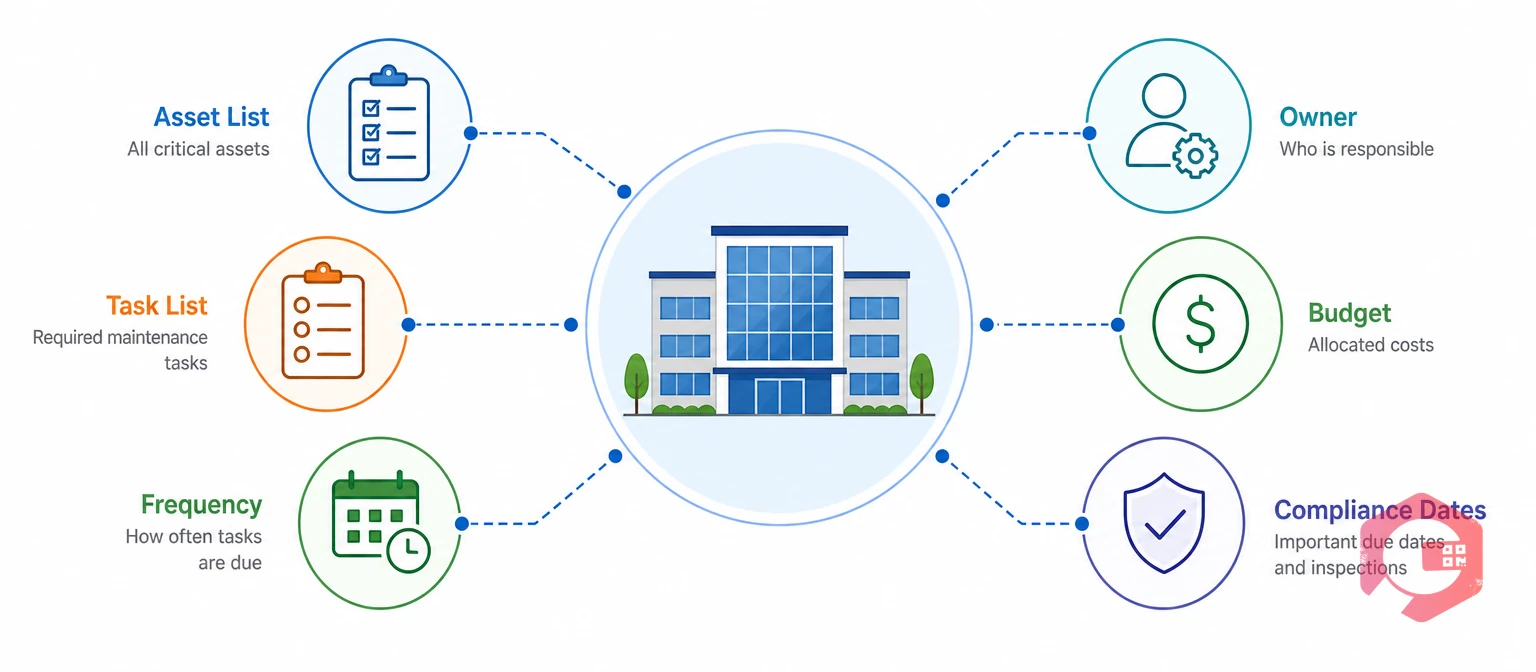
An annual facility maintenance plan is a 12-month calendar that assigns every planned building task to a month, a team, and a budget line. It sits at the center of facility management, linking day-to-day work to long-term asset care.
Most plans draw on three kinds of requirements. Manufacturer guidance sets service intervals for equipment. Codes and standards, such as NFPA 25 for sprinklers, NFPA 72 for fire alarms, and NFPA 110 for emergency generators, set inspection and test dates. Seasons drive the rest, from boiler start-up in fall to roof checks after winter.
A facility maintenance plan is the difference between knowing what is due next month and finding out when something breaks.
An annual plan prevents costly failures, protects compliance, and makes budgets predictable. Without one, maintenance teams spend most of their time reacting, and planned work keeps getting pushed back.
Most facilities find that a written plan also makes it easier to hand work between shifts, staff, and contractors, because everyone works from the same calendar.
You can build a working facility maintenance plan in a few weeks by listing assets, setting frequencies, and placing tasks on a calendar. Start simple and refine it each year.

Walk the building and record each system: HVAC, plumbing, electrical, life safety, building envelope, elevators, and grounds. Note make, model, age, and location for each major asset.
Pull service intervals from manufacturer manuals, code requirements, insurer conditions, and warranty terms. Where sources disagree, use the strictest interval.
The Rhythm, Season, Spike Planning Method:
Placing rhythm tasks first, then seasons, then spikes keeps any single month from overloading.
Decide which tasks your team handles and which go to licensed contractors, such as elevator, sprinkler, or backflow testing. Book contractor dates early for busy seasons.
Estimate labor, parts, and contractor costs for each task. Add the totals by month, so finance can see when the large bills will land.
Enter each task as a recurring job with a due date, owner, and checklist. Review completion each month and adjust frequencies at the end of the year.
Ready to automate the calendar? Cryotos preventive maintenance software turns every task in your facility maintenance plan into a recurring work order with reminders and checklists.
Use this annual facility maintenance plan template as a starting point. It assumes a Northern Hemisphere climate with cold winters and hot summers, so shift seasonal tasks if your site is in the Southern Hemisphere or a tropical region.
| Month | HVAC and Mechanical | Building Envelope | Life Safety | Plumbing and Water | Grounds and Other |
|---|---|---|---|---|---|
| January | Check boilers and heat pumps; change filters. | Inspect for ice dams and leaks. | Monthly extinguisher and emergency light checks. | Check for frozen pipe risk. | Snow and ice plan; review last year. |
| February | Change filters; check steam traps. | Check doors and weather seals. | Monthly checks; fire drill. | Water heater flush. | Order spring supplies; book contractors. |
| March | Plan cooling start-up; test controls. | Spring roof inspection. | Quarterly sprinkler inspection. | Inspect drains and sump pumps. | Parking lot and walkway survey. |
| April | Cooling tower start-up and cleaning. | Clean gutters and roof drains. | Monthly checks. | Backflow preventer test. | Landscaping and irrigation start-up. |
| May | Chiller and rooftop unit start-up. | Seal cracks; check windows. | Monthly checks. | Water treatment review. | Exterior lighting check. |
| June | Change filters; clean coils. | Check sealants and flashing. | Quarterly sprinkler inspection; fire drill. | Check restroom fixtures and valves. | Pavement repairs and line striping. |
| July | Monitor cooling loads; check belts. | Inspect after storms. | Monthly checks. | Check cooling tower water. | Pest control review. |
| August | Change filters; check refrigerant. | Check exterior paint and caulk. | Monthly checks. | Inspect water heaters. | Plan fall and winter work. |
| September | Heating system start-up and testing. | Fall roof inspection. | Quarterly sprinkler inspection. | Winterize irrigation. | Clean gutters. |
| October | Boiler service; change filters. | Check insulation and seals. | Annual fire alarm testing; fire drill. | Insulate exposed pipes. | Snow equipment check. |
| November | Check heat pumps and controls. | Check doors and windows. | Monthly checks; annual extinguisher service. | Check freeze protection. | Snow contractor ready. |
| December | Change filters; review energy data. | Watch for ice and leaks. | Quarterly sprinkler inspection; annual emergency light test. | Check drains before freeze. | Close out plan; draft next year. |
Treat the table as a framework, not a fixed rule. Your equipment, local codes, and contracts decide the final dates.
Start by copying the table into your planning tool. Then add your own assets under each column, and move tasks to fit your shutdown windows and busy seasons. Schools, for example, often move large jobs into summer break, while retail sites avoid the holiday season.
The calendar below expands each month of the template with the key tasks and why they fall where they do. Monthly life safety checks, such as extinguisher and emergency lighting checks, apply every month and are listed only where they change.
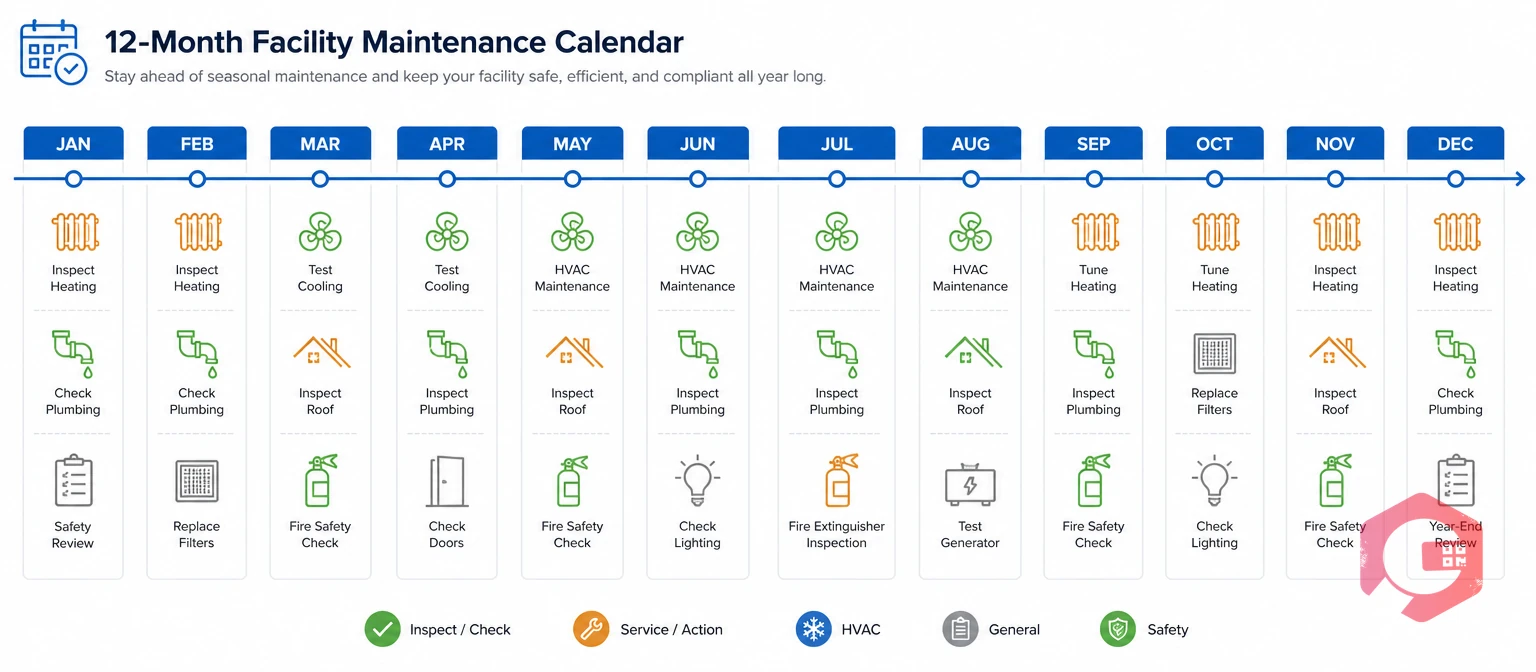
January is peak heating season, so the focus is on keeping heat running and pipes safe.
February is a good month to work indoors and lock in spring contractors before their calendars fill.
March is the transition month, when winter damage shows and cooling season is close.
April brings cooling systems and outdoor water back into service.
May is when chillers and rooftop units start working hard.
June is a good time for outdoor projects and a mid-year HVAC refresh.
July is peak cooling demand, so the focus is on keeping systems running.
August is the last good month for exterior finishes in many climates.
September prepares the building for cold weather.
October is a heavy month for life safety and heating work.
November locks in winter readiness.
December closes the year and sets up the next plan.
Following this calendar keeps every major system on a steady cycle and avoids the crunch of finding all annual work due at once.
A frequency matrix shows how often each building system needs attention. Use it to check that your facility maintenance plan covers every system at the right interval.
| System | Daily or Weekly | Monthly | Quarterly or Semi-Annual | Annual |
|---|---|---|---|---|
| HVAC | Check alarms and space temperatures. | Filter checks or changes (every 1 to 3 months). | Belt, coil, and drain pan checks; seasonal start-up. | Full service of boilers, chillers, and rooftop units. |
| Plumbing | Check for leaks in restrooms. | Inspect water heaters and pumps. | Exercise valves; clean drains. | Backflow test; water heater flush. |
| Electrical | Check lighting outages. | Generator exercise under load (NFPA 110). | Panel inspections. | Thermal scan of switchgear. |
| Fire and life safety | Check exits are clear. | Extinguisher and emergency light checks. | Sprinkler inspection (NFPA 25). | Fire alarm test (NFPA 72); extinguisher service (NFPA 10). |
| Building envelope | Check doors and locks. | Inspect windows and seals. | Roof inspection in spring and fall. | Facade and sealant survey. |
| Elevators | Check operation and alarms. | Contractor service visit. | Contractor safety checks. | Inspection required by local authority. |
| Grounds | Litter and safety walk. | Lighting and signage checks. | Gutter cleaning; landscaping. | Pavement survey and repairs. |
Intervals vary by equipment and jurisdiction, so confirm each one against manufacturer guidance and local code before you lock the plan.
A commercial building maintenance checklist breaks the plan into tasks a technician can tick off on site. Use these system checklists alongside your facility inspection checklist for walk-throughs.
Your HVAC system uses more energy than most other building systems, so small checks pay back fast.
Digital maintenance checklists let technicians record each item with photos, so you have proof of work for every commercial building maintenance checklist.
Most facility maintenance plans fail because they are written once and then left alone. Maintenance teams that successfully keep their plans on track avoid these mistakes:
A short review each quarter, and a full review in December, keeps the plan matched to how the building behaves in practice.
A Computerized Maintenance Management System turns a static facility maintenance plan into a live schedule that creates work, tracks completion, and keeps records. The calendar stops being a document and becomes the way work gets done.

The results show up in uptime and response times. Maintenance teams using Cryotos have reported up to 30% reduction in unplanned downtime and 25% faster repair turnaround. Much of that comes from planned work happening on time, so fewer systems fail in the first place.
Sites that manage schools, hospitals, or retail chains can also use dedicated facility maintenance software built around building systems rather than production machines.
A facility maintenance plan should include an asset list, a task list for each system, task frequencies, owners, budget lines, and compliance dates. It should cover HVAC, plumbing, electrical, life safety, the building envelope, elevators, and grounds.
Review the plan at least once a year, ideally in December, using the past year's work order history. Also update it after major renovations, new equipment, or changes to code requirements.
A facility maintenance plan covers the whole building over a year, including budgets, contractors, and compliance. A preventive maintenance schedule is the list of recurring tasks inside that plan, usually tied to specific assets.
Common code-driven tasks include fire sprinkler inspections, fire alarm testing, extinguisher service, emergency lighting tests, generator exercise, backflow testing, and elevator inspections. Exact rules depend on your location and insurer.
Shift the season tasks to match your local weather. In hot climates, cooling work spreads across most of the year, and heating start-up may be minor or skipped. Keep the monthly and annual compliance tasks in place.
Budgets vary by building age, size, and use, so start with your own cost history. Add up last year's labor, parts, and contractor bills by system, then add known one-off jobs such as a roof repair. Many teams also keep a small reserve for emergency repairs that the plan cannot predict.
Yes, a spreadsheet works for one small building. As the number of assets, sites, or contractors grows, software helps by creating work orders automatically and keeping compliance records in one place.
A clear facility maintenance plan keeps every building system on schedule, every inspection on time, and every budget predictable. Schedule a free demo to see how Cryotos turns your annual calendar into recurring work orders, checklists, and compliance reports across every site.



Cryotos AI predicts failures, automates work orders, and simplifies maintenance—before problems slow you down.