
Furniture manufacturing is a fast-paced industry where machines run continuously — cutting, shaping, polishing, assembling, and finishing products all day long. In this environment, even a small equipment issue can slow down the entire production line. Yet many manufacturers still rely on spreadsheets, paper logs, or verbal communication for maintenance. This leads to missed servicing, unexpected breakdowns, and team confusion. A Computerized Maintenance Management System (CMMS) brings the structure, visibility, and control that furniture manufacturers need to keep operations running smoothly.
Unlike many other industries, furniture manufacturing depends heavily on machine accuracy and consistency. Production relies on CNC machines, cutting and drilling equipment, sanding and polishing tools, and assembly line machinery. If these machines are not properly maintained, production slows down, materials get wasted, quality drops, and delivery timelines are missed.
Maintenance is not a backend activity here — it directly affects productivity and customer satisfaction. A CMMS helps manufacturers take a proactive, structured approach to keeping every machine in optimal condition.

Before adopting a CMMS, many furniture factories face a set of recurring problems that erode efficiency and inflate costs:
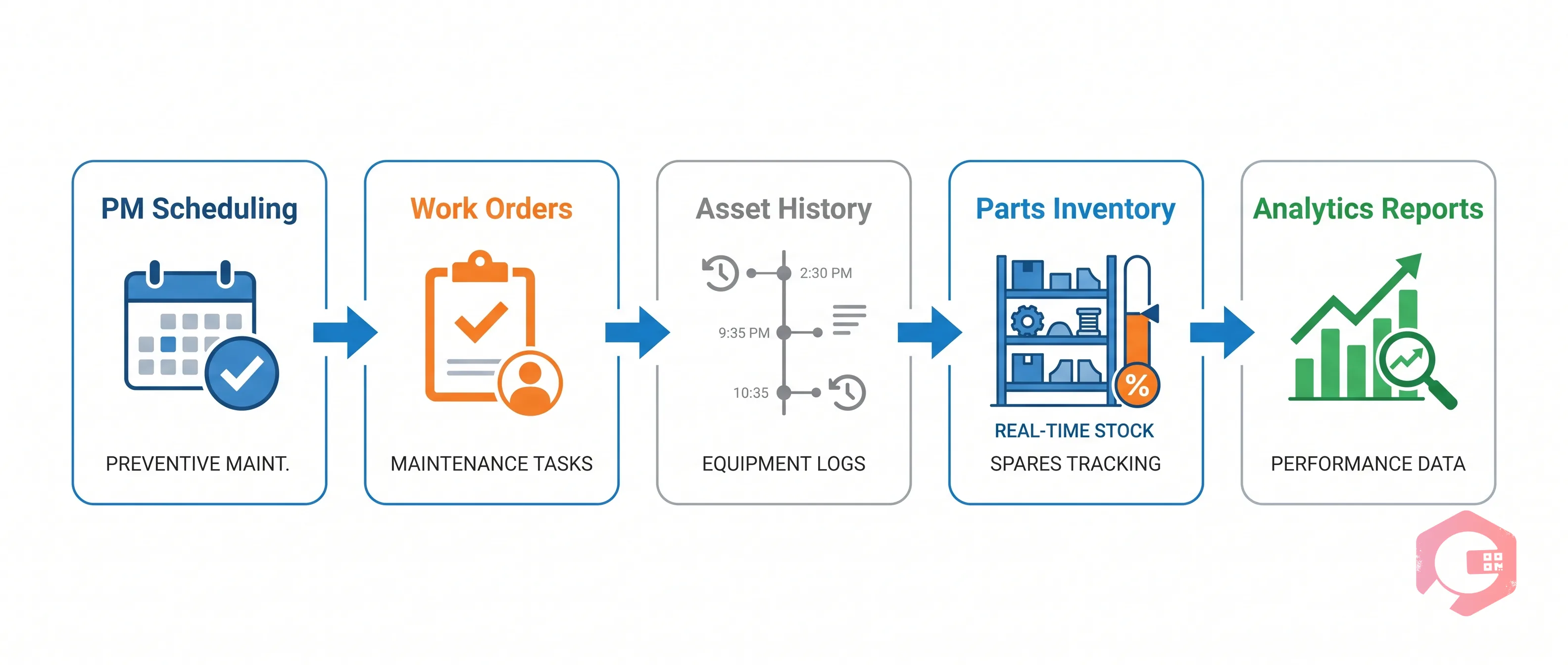
A CMMS moves furniture manufacturers from a reactive, fire-fighting approach to a planned, controlled maintenance system. Here is what that looks like in practice:
One of the most powerful advantages of a CMMS is its ability to manage assets from acquisition to disposal.
In furniture manufacturing, precision matters. Cutting tools, measuring equipment, and finishing machines must be properly calibrated to ensure accuracy. Without calibration, measurements go wrong, products fail quality standards, and rework and wastage increase.
With a CMMS, calibration schedules can be set in advance, alerts are triggered before due dates, and records are maintained for internal audits and compliance checks — keeping all equipment accurate and reliable.
In busy factories, there is often a gap between what is recorded in the system and what actually exists on the shop floor. This is where asset reconciliation becomes essential.
A CMMS helps by maintaining a complete record of all assets, enabling periodic audits, and tracking asset movement across locations. This reduces asset loss and misplacement, gives management confidence that everything is accounted for, and improves overall reporting accuracy.
Every machine has a lifecycle. At some point it becomes too expensive to maintain or no longer meets production needs. Without a system, asset disposal can become disorganized and undocumented.
With a CMMS, you can track asset condition over time, identify underperforming or ageing equipment, and maintain clear records of disposed assets. This avoids unnecessary maintenance costs, ensures proper compliance documentation, and supports better capital planning decisions.
One of the most practical benefits of a CMMS is how it connects spare parts management directly to maintenance work:
Work orders are the backbone of any maintenance operation. Without a structured system, tasks get delayed, technicians work without clear direction, and managers have no visibility into progress.
With a CMMS, tasks are clearly created and assigned, priority levels can be set, technicians can update status in real time, and managers can track progress at any point. This improves accountability and ensures nothing falls through the cracks.
While many CMMS tools exist, the real challenge for furniture manufacturers is usability on the shop floor. Cryotos CMMS is designed with manufacturing environments in mind.
It helps furniture manufacturers schedule maintenance easily, track asset lifecycles without complexity, manage calibration and audits effectively, perform asset reconciliation with full clarity, handle asset disposal with proper records, and enable technicians to update tasks directly from a mobile device. The focus is on making maintenance simple, organized, and practical for day-to-day shop floor use.

Once a structured system like Cryotos is in place, manufacturers consistently see measurable improvements:
Most importantly, operations become smoother and more predictable — giving leadership the confidence to focus on growth rather than fighting daily fires.
A CMMS (Computerized Maintenance Management System) is a software platform that centralizes maintenance operations — including work orders, asset tracking, preventive maintenance scheduling, and spare parts management. For furniture manufacturers, it reduces unplanned downtime, improves machine reliability, and gives maintenance teams a structured, data-driven way to work.
A CMMS tracks every stage of an asset's life — from onboarding and calibration through ongoing maintenance to eventual disposal. This gives manufacturers a clear picture of each machine's condition, maintenance history, and total cost of ownership, enabling better decisions around repair, upgrade, or replacement.
Yes. A CMMS links spare parts directly to work orders and tracks inventory in real time. This ensures the right parts are available when needed, prevents overstocking, and eliminates delays caused by missing components — directly reducing waste and maintenance costs.
Absolutely. Cryotos CMMS is designed to be practical and easy to use on the shop floor, making it suitable for manufacturers of all sizes. Whether you are managing a single facility or multiple production sites, the platform scales to fit your needs without unnecessary complexity.
In furniture manufacturing, maintenance is often overlooked until problems arise — but it plays a major role in ensuring smooth operations, consistent quality, and long-term profitability. A CMMS helps manufacturers take control of their maintenance process, from asset tracking and calibration to disposal and lifecycle monitoring. Instead of reacting to problems, you start preventing them.
If your team is ready to move from reactive to proactive maintenance, Cryotos CMMS can help you get there. Book a free demo today and see how it transforms maintenance in your facility.


Cryotos AI predicts failures, automates work orders, and simplifies maintenance—before problems slow you down.



