
The food and beverage work order management software operates as a digital system which enables users to create maintenance tasks and assign them while monitoring their progress until completion across food and beverage facilities. The F&B-specific systems provide users with specialized tools which enable them to meet food safety requirements through HACCP compliance and GMP documentation and allergen changeover protocols, and FDA audit preparation processes.
The stakes are high. Unplanned equipment downtime costs mid-size food and beverage plants for an estimated $20,000-$38,000 per hour in lost production. According to FDA data, a significant share of food safety recalls traces back to lapses in equipment maintenance records - the exact gap in a structured work order system close.
This guide provides everything required by food and beverage plant managers through five F&B work order types and compliance-ready workflow creation and software feature selection and ready-to-use work order template for immediate team implementation.
The complete work order management process establishes maintenance tasks through their creation and assignment and subsequent execution and final documentation. Every work order in food and beverage facilities has a dual function because it enables maintenance work to be completed while producing the necessary documentation which auditors and regulators require.
A standard work order in F&B captures the asset involved, the task description, the technician assigned, parts used, time to complete, sign-off signatures, and any photos or inspection results. The absence of a digital system results in information storage within filing cabinets and whiteboards and notebooks, which creates an unsearchable condition that affects the FDA inspection process.
General-purpose work order software tracks who did what and when. Food and beverage work order management adds a compliance layer that general systems simply don't have:
Most food and beverage plants generate work orders across five distinct categories. The primary understanding of these aspects will assist you in proper software configuration while ensuring that all critical elements receive proper attention.
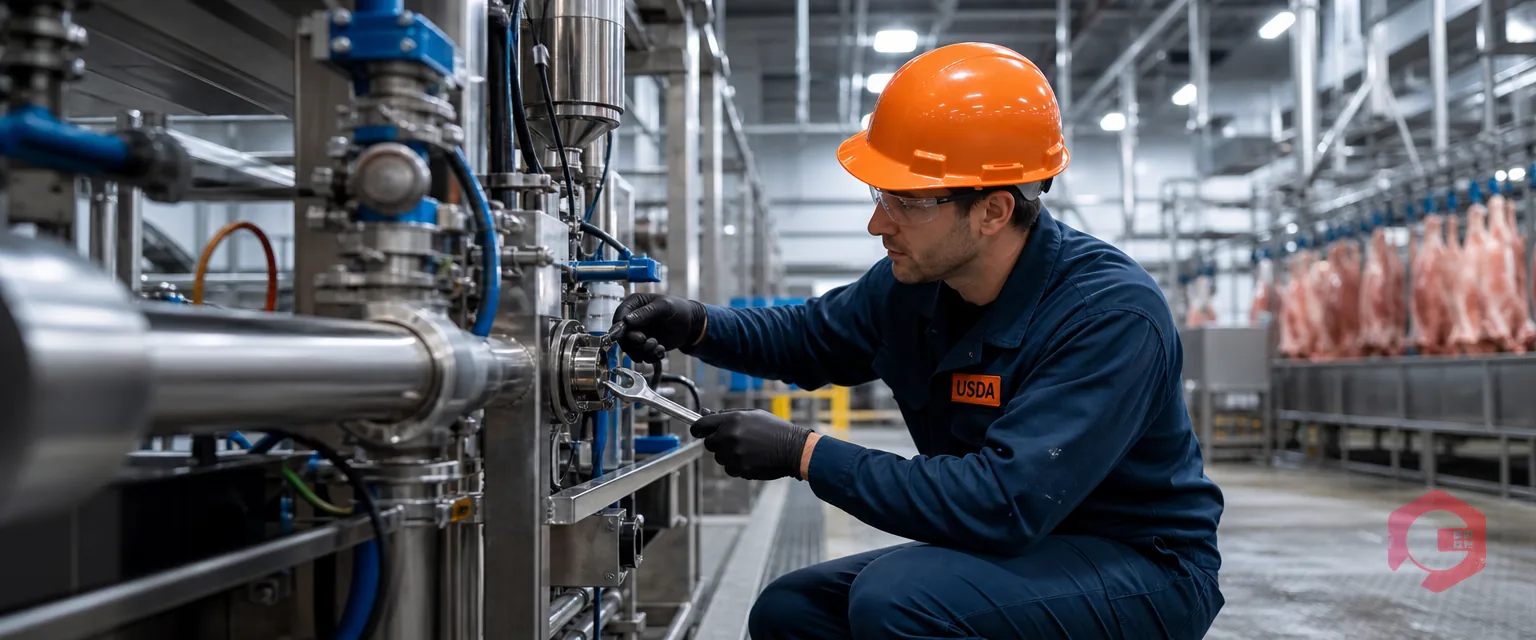
Food safety regulators don't just inspect your product - they inspect your maintenance records. During an FDA facility inspection or a GFSI/SQF third-party audit, maintenance documentation is one of the first things reviewed.
According to a Food Safety Magazine analysis, equipment maintenance failures - including lack of documented PM records - consistently appear in FDA 483 warning letters issued to food manufacturers. The connection between poor work order discipline and food safety risk is direct and well-established.
Every closed work order in a digital system becomes a searchable maintenance record. When your CMMS timestamps the work order creation, assignment, field updates, and closure - and attaches photos, checklists, and technician signatures - you've automatically built the audit trail regulators require.
In practice, imagine a batch of products linked to a potential contamination event. Your maintenance team can pull up every work order for the relevant production line within seconds - filtered by date range and asset. That's the difference between a contained investigation and a full plant shutdown while staff hunt through paperwork.
FSMA Section 204 became effective January 2026. It requires food businesses handling products on the FDA's Food Traceability List to keep detailed records - including equipment maintenance events that affect traceability of lot data. That requirement directly ties your work order history to your food safety plan.
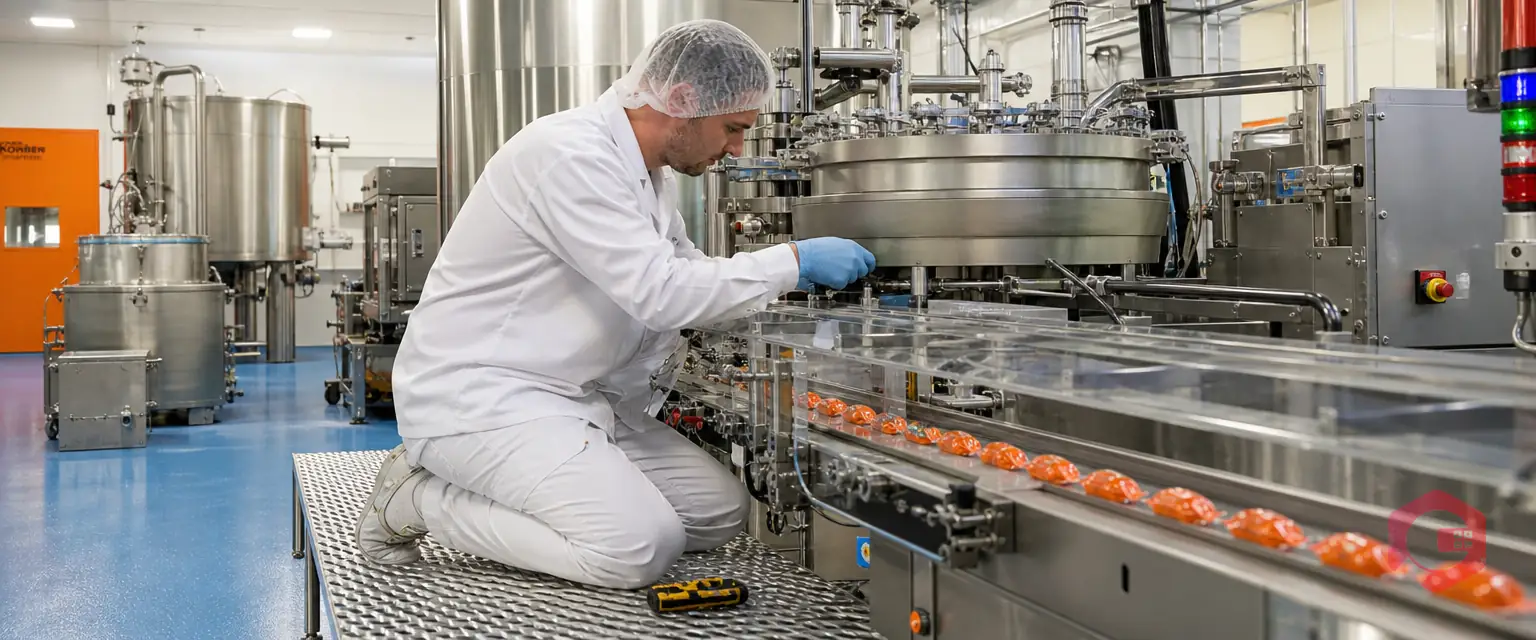
Under a HACCP system, critical control points (CCPs) like heat treatment, metal detection, and X-ray inspection are only reliable if the equipment is maintained to specification. Each preventive maintenance work order for a CCP piece of equipment is, in effect, proof that your HACCP plan is being followed. A gap in those records is a major non-conformance.
Not all CMMS or work order tools are built with food and beverage operations in mind. Here are the four non-negotiable features when evaluating software for an F&B facility.
Your software must support both time-based and usage-based preventive maintenance triggers. For food-grade equipment like fillers, homogenisers, and pasteurisers, usage-based scheduling is more accurate than calendar intervals alone because production volumes vary.
Look for a system that supports "Either/Or" scheduling - for example, "service the homogeniser every 500 hours OR every 90 days, whichever comes first." That single rule prevents both over-maintenance (wasted time and parts) and under-maintenance (missing the actual wear threshold).
Every food safety work order should have a mandatory supervisor sign-off step before the equipment is returned to service. The software should enforce this - not just make it optional. The audit trail should be tamper-evident: any edit to a closed work order should be logged with a timestamp and the user who made the change.
Maintenance technicians in food and beverage plants don't sit at desks. Your work order system needs a mobile app that works reliably on the plant floor - and critically, it should work offline. Cold storage areas, walk-in freezers, and facilities with poor Wi-Fi coverage can't rely on a browser-based system that fails when connectivity drops.
Food and beverage plants running SAP or Microsoft Dynamics 365 need their maintenance data connected to procurement, production scheduling, and finance. IoT integration adds a predictive layer - when sensors detect vibration levels outside normal range, the CMMS automatically generates a work order for inspection before the failure happens. McKinsey estimates that predictive maintenance enabled by IoT data can reduce equipment breakdowns by 30-50%.
Not all maintenance tasks in a food plant carry the same urgency. Without a clear prioritisation framework, technicians default to the loudest complaint or the most visible problem, and genuinely critical safety issues can get missed.
Here is the four-tier Work Order Priority Matrix for F&B operations:
Safety-Critical vs. Non-Critical Work Orders
| Priority Level | Definition | F&B Examples | Target Response |
|---|---|---|---|
| P1 - Safety Critical | Immediate food safety risk or personnel safety hazard | Metal detector failure, pasteuriser temperature deviation, ammonia refrigerant leak | Stop production immediately; resolve within 2 hours |
| P2 - Production Critical | Failure stopping or significantly slowing production | Filling machine breakdown, conveyor line stops, CIP system fault | Resolve within 4-8 hours; escalate if delayed |
| P3 - Compliance / Quality | Not affecting production now but creates audit risk | Expired calibration record, worn seals on food-contact equipment, HVAC filter overdue | Resolve within 24-48 hours |
| P4 - Routine | Planned or non-urgent tasks with no immediate impact | Office HVAC service, warehouse lighting replacement, exterior fence repair | Schedule within next maintenance window |
Food and beverage plants face seasonal production surges - harvest season for juice and canning facilities, pre-holiday ramps for bakeries and confectionery, and summer peaks for beverage plants. Front-load preventive maintenance before the peak season begins. During the peak itself, restrict new PMs to safety-critical work only and defer routine tasks until the season breaks.
Cryotos is a CMMS platform purpose-built for maintenance-intensive industries, including food and beverage manufacturing.
Cryotos's work order management module lets maintenance teams create work orders via voice command, text description, or photo analysis - useful when a technician on the plant floor spots a problem and needs to log it immediately. The mobile app works offline, which matters in cold storage areas and facilities with patchy connectivity.
supports configurable multi-step approval workflows for preventive maintenance and corrective work orders. You can enforce mandatory supervisor sign-off, require photographic evidence, and automatically generate Permit to Work / LOTO procedures - all without writing code. Every work order generates a tamper-evident audit log.
downtime management module Tracks every production stoppage against the causative work order, calculating MTTR, MTBF, and overall equipment availability in real-time. Customers report an average 30% reduction in downtime and 25% faster repair times after implementation.
What is work order management software for food and beverages?
Work order management software for food and beverage is a digital system that creates, assigns, tracks, and documents maintenance tasks in food and beverage production facilities. It includes food safety compliance features: HACCP documentation, sanitation records, allergen changeover checklists, mandatory approval of workflows, and audit-ready reporting.
How does a CMMS differ from standalone work order software?
Standalone work order software handles task creation and assignment. A CMMS does all of that plus asset lifecycle management, preventive maintenance scheduling, inventory and spare parts tracking, downtime analytics, and ERP integration. For most F&B facilities managing more than 50 assets, a CMMS delivers far more value.
What compliance standards does F&B work order software need to support?
The core standards are HACCP, FDA GMP (21 CFR Parts 110/117), FSMA Section 204 (effective 2026), and third-party certification standards like SQF, BRC, and FSSC 22000. ISO 55000 (asset management) is also relevant for larger operations.
How do I implement work order management in a food plant?
Start with an asset inventory. Define your work order types (corrective, preventive, sanitation, inspection, regulatory). Configure your CMMS to reflect your approval of workflows and compliance requirements before going live. Run a 30-day pilot on one production line before rolling out plant-wide.
Can work order software help prevent food safety recalls?
Directly, yes. Many recalls stem from equipment not maintained according to its HACCP critical limit. A properly configured CMMS with automated PM scheduling eliminates the 'we forgot' failure mode. According to the Grocery Manufacturers Association, the average cost of a food recall exceeds $10 million when accounting for production losses, logistics, and brand damage.
Ready to see Cryotos in action? If you're evaluating work order management software for your food or beverage facility, Cryotos offers food-safety-ready compliance workflows, a mobile-first technician experience, and deep downtime analytics. Book a demo with the Cryotos team to see how the platform maps to your specific production environment.

Cryotos AI predicts failures, automates work orders, and simplifies maintenance—before problems slow you down.



