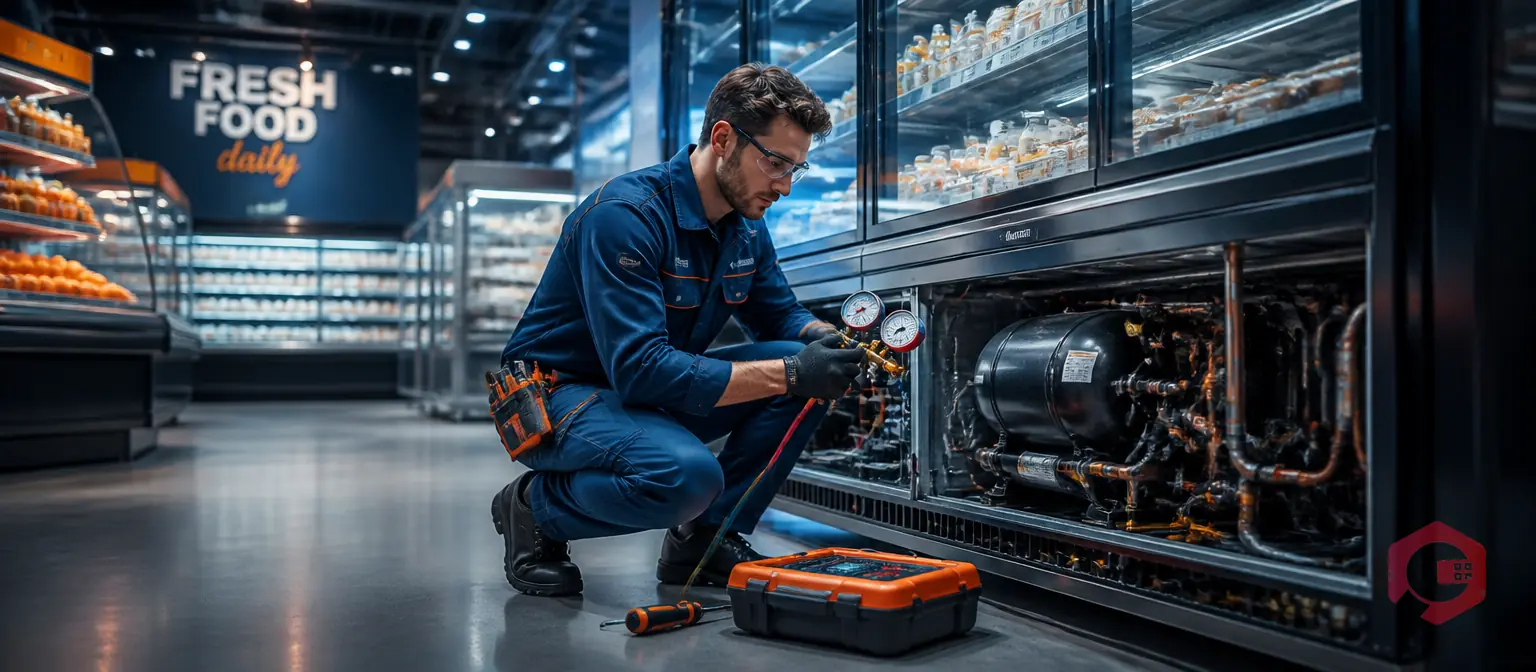
A mill conveyor stops mid-shift. The maintenance team responds, finds the fault, fixes it, and gets the line running again. Everyone moves on.
Two weeks later, the same conveyor stops again. Same fault. Same repair. The same lost production time.
Nobody noticed the pattern - because nobody had a system to show it to them.
This is the quiet cost of poor breakdown logging in food manufacturing. It is not that maintenance teams are failing to respond to failures. They respond every time. The problem is that responding is all they can do - because without structured breakdown data, there is no way to know whether a failure is a one-time event or the third time it has happened this month.
In a food processing plant where every unplanned stop has a direct cost - in lost output, spoiled raw material, and recovery time - the difference between a team that reacts and a team that prevents is almost always a data problem.
Most maintenance teams log breakdowns in some form. A technician fills in a paper job card. A supervisor notes the time in the register. Someone updates a shared spreadsheet at the end of the shift.
But logging that a breakdown happened is not the same as logging it in a way that is useful.
Useful breakdown logging captures four things:
What failed. Not "conveyor issue" - the specific component, its asset ID, its location on the line, and what it was doing when it failed.
Why it failed. The immediate cause (a seized bearing, a snapped belt, a blown fuse) and the root cause beneath it (inadequate lubrication, vibration from a misaligned shaft, overloading beyond rated capacity).
How long it took. Not just repair time - the full timeline from the moment production stopped to the moment it resumed. This includes diagnosis of time, parts sourcing time, and the restart cycle.
Whether it has happened before. Is this fault pattern appearing on this asset for the first time - or is it the fourth occurrence in six weeks?
Without all four elements, a breakdown log is just a record that something went wrong. It cannot tell you why it keeps going wrong. And it cannot help you stop it from going wrong again.
In a food manufacturing environment - with seasonal production pressures, hygiene requirements, and complex asset mix - breakdown logging tends to fall apart for three consistent reasons.
The pressure to restore production overrides the pressure to document. When a critical asset fails during peak season, every minute matters. The team's entire focus is on getting the line back up. Writing a structured breakdown report feels like it can wait. It usually does - and then it does not happen at all.
Paper-based systems make patterns invisible. Even when individual breakdowns are logged, the data lives in separate sheets, separate registers, or separate filing cabinets. Identifying that a specific pump has failed five times in the past three months requires someone to manually search across all those records. In practice, nobody does it. The pattern remains invisible until the pump fails catastrophically.
Root cause capture is inconsistent. Different technicians describe the same failure differently. One writes "bearing failure." Another writes "loud noise from motors." A third writes "conveyor stopped." Without a structured format that prompts specific information, the root cause of data that maintenance managers need to prevent recurrence simply does not exist in a usable form.
When a food plant shifts from paper-based or spreadsheet breakdown logging to a structured digital system, two things change immediately.
The first is speed. A technician arriving at a failed asset can pull up its complete breakdown history - every previous fault, every root cause recorded; every part replaced - instantly. Instead of starting from zero, they start with context. Diagnosis time shortens. The right repair is done for the first time.
The second is pattern visibility. A maintenance manager looking at a dashboard that shows all breakdown events by asset, by fault type, by frequency, and by location can identify recurring problems in seconds rather than hours. The conveyor that failed three times this month stands out. The pump that always causes problems at the start of a new season is visible. The decision to invest in preventive maintenance or a component upgrade is driven by data, not by gut feel.
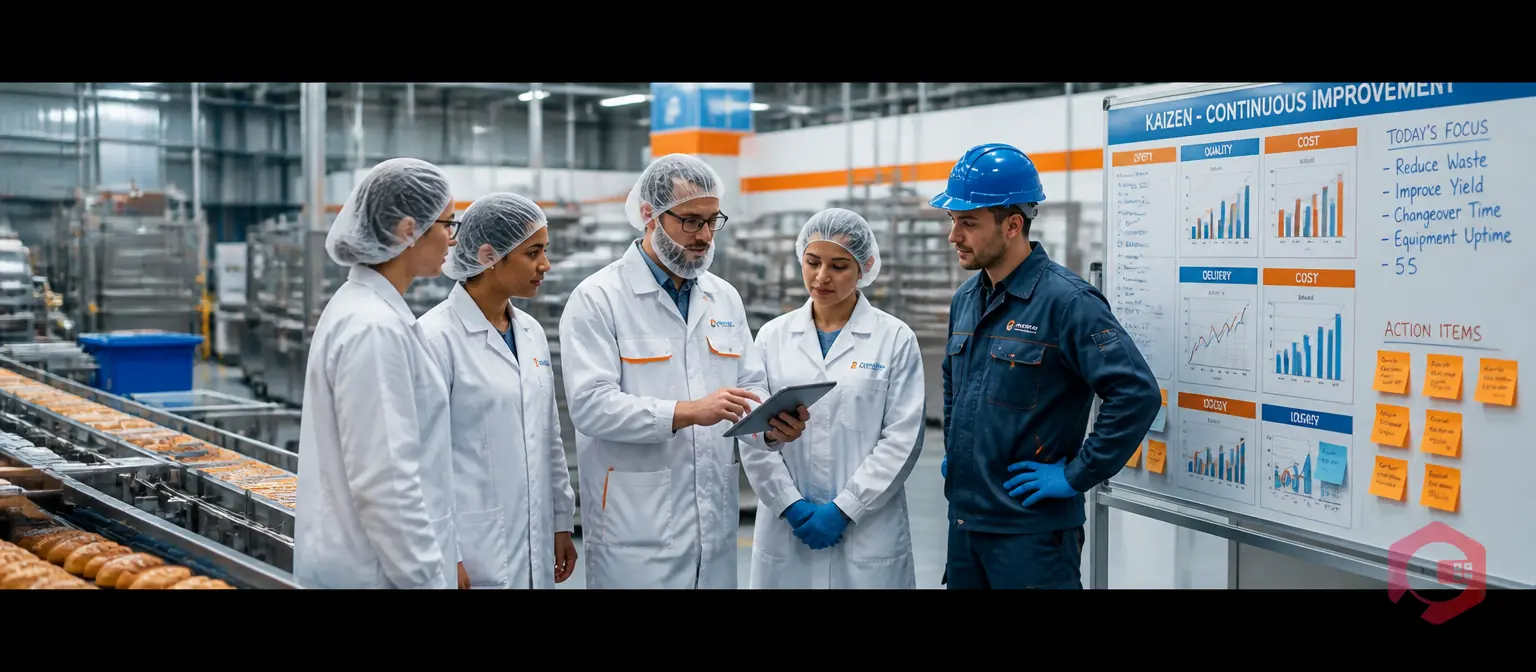
One of the most powerful tools in food plant maintenance is also one of the least consistently used: root cause analysis through the "Five Whys" methodology.
The reason it goes unused is almost always structural. When a technician closes a breakdown work order on a paper form, there is no prompt to ask why the failure happened. The job is done. The form is filed. The root cause analysis never occurs.
CMMS like Cryotos builds the Five Whys into the work order closure process. Before a breakdown work order can be closed, the system prompts the technician to record the root cause. It asks not just what failed but why it failed - and why that underlying condition existed in the first place.
Over time, this embedded root cause data becomes the foundation for a maintenance improvement programme that is genuinely data driven. The team is not guessing which assets to focus preventive maintenance on. They know - because the breakdown log tells them.
This is perhaps the most important shift that structured breakdown logging enables.
When the same asset fails repeatedly, the instinct in many maintenance teams is to ask who missed the maintenance, who responded too slowly, or who made the wrong repair. The focus lands on individual performance.
But recurring failures almost never trace back to one technician in one day. They trace back to a system that did not flag the pattern early enough. An asset that failed twice in two months should have triggered a review after the second occurrence. If the system cannot surface that connection, the review never happens.
A digital breakdown logging system connected to a CMMS automatically flags assets with recurring fault patterns. Maintenance managers see, in real time, which assets are trending toward chronic failure - not after the third or fourth incident, but after the second.
That shift - from noticing a problem to preventing it - is the operational difference between a reactive maintenance team and a reliable one.
Cryotos provides a dedicated downtime and breakdown management module built specifically for this challenge.
Every breakdown is logged with the asset ID, fault description, root cause, start time, resolution time, and the technician who completed the repair - all stored in a structured, searchable format. The system supports the Five Whys approach directly within the work order, prompting root cause capture before closure.
The BI dashboard then surfaces this data across every dimension that matters - breakdown frequency by asset, by department, by shift, by season. Patterns that would take hours to find in a spreadsheet are visible in seconds.
When a specific asset begins showing a recurring fault flags it automatically. The maintenance manager can convert the breakdown pattern into a targeted preventive maintenance schedule before the next failure occurs - not after.
For food processing plants running complex, interconnected production systems - from milling and clarification through evaporation, centrifugation, and power generation - this level of breakdown visibility is not a luxury. It is the only way to move from fighting fires to prevent them.
Every food plant logs breakdowns. Very few log them in a way that prevents the next one.
The difference is the structure. When breakdown data captures the right information, in a consistent format, linked to the asset it describes, and surfaced in a dashboard that shows patterns - it stops being a historical record and starts being a maintenance tool.
The team that fixed the conveyor three times in two weeks was not failing maintenance. They were operating without the information they needed to solve the actual problem.
With the right breakdown logging system, that problem shows after the first failure - not the fourth.
If you would like to see how Cryotos structures breakdown logging and root cause analysis for food processing operations, book a free product tour.


Cryotos AI predicts failures, automates work orders, and simplifies maintenance—before problems slow you down.