

ADA building regulations set the legal baseline for physical accessibility across commercial and public facilities in the United States. For facility managers, understanding these rules is not optional — the Americans with Disabilities Act carries civil penalties up to $75,000 for a first violation and $150,000 for subsequent violations, according to the U.S. Department of Justice ADA regulations. Beyond penalties, inaccessible facilities expose organizations to lawsuits, reputational damage, and barriers that prevent employees and visitors with disabilities from fully participating.
This guide covers what facility managers need to know about ADA requirements: which titles apply to your building, the key physical standards, how to handle existing structures, and how a structured compliance program — supported by the right technology — keeps your facility audit-ready.
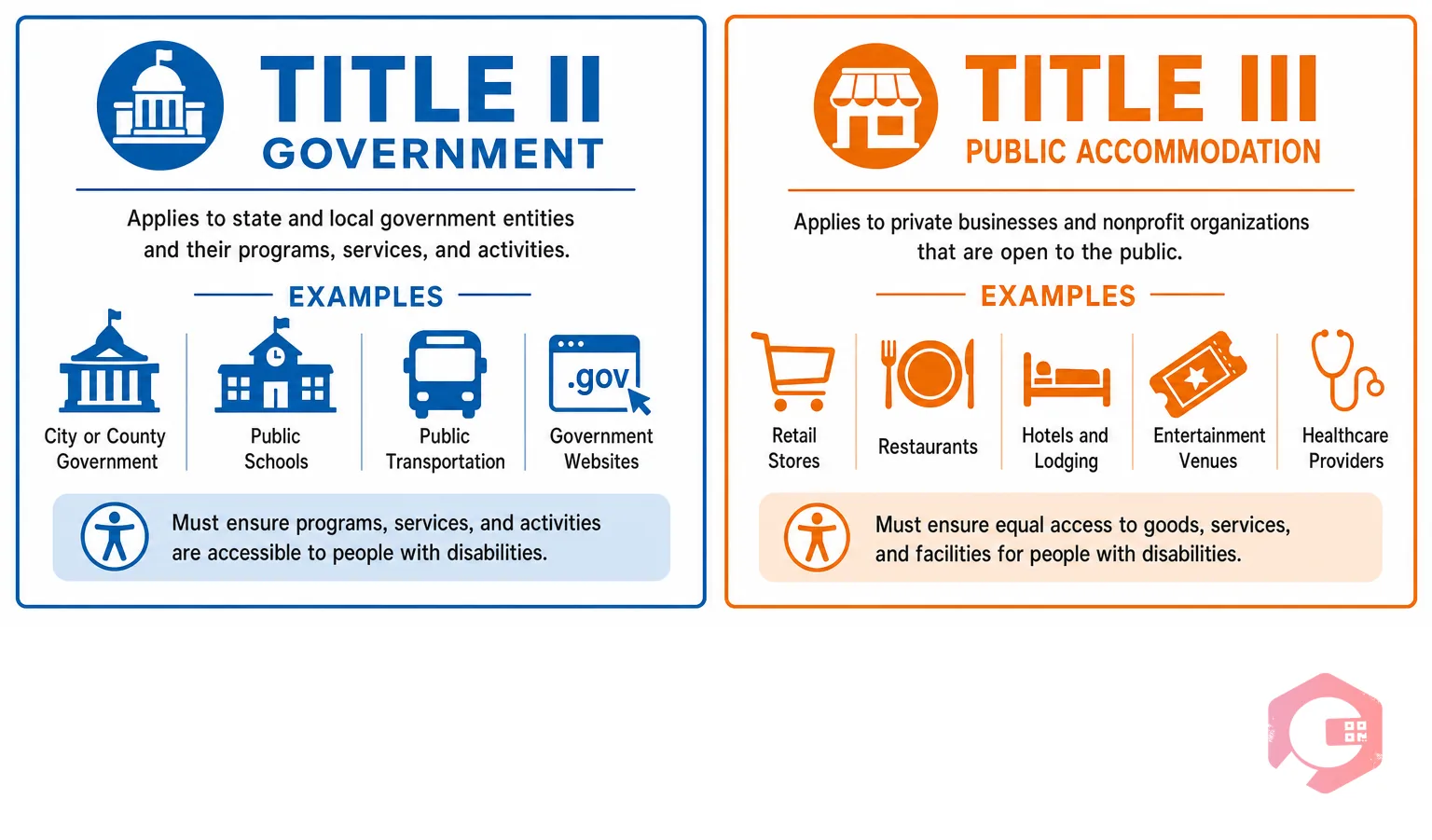
The Americans with Disabilities Act (ADA) is a federal civil rights law enacted in 1990 and significantly updated in 2010 through the 2010 ADA Standards for Accessible Design. It prohibits discrimination against people with disabilities in employment, public services, transportation, and access to places of public accommodation and commercial facilities.
For facility managers, the law translates into specific physical standards covering entrances, restrooms, parking, signage, seating, and routes throughout a building. Non-compliance is not just a code issue — it is a civil rights violation.
The two titles most relevant to facility managers are:
Both titles incorporate the 2010 ADA Standards as the technical benchmark. Facility managers should identify which title governs their buildings before developing their compliance program.
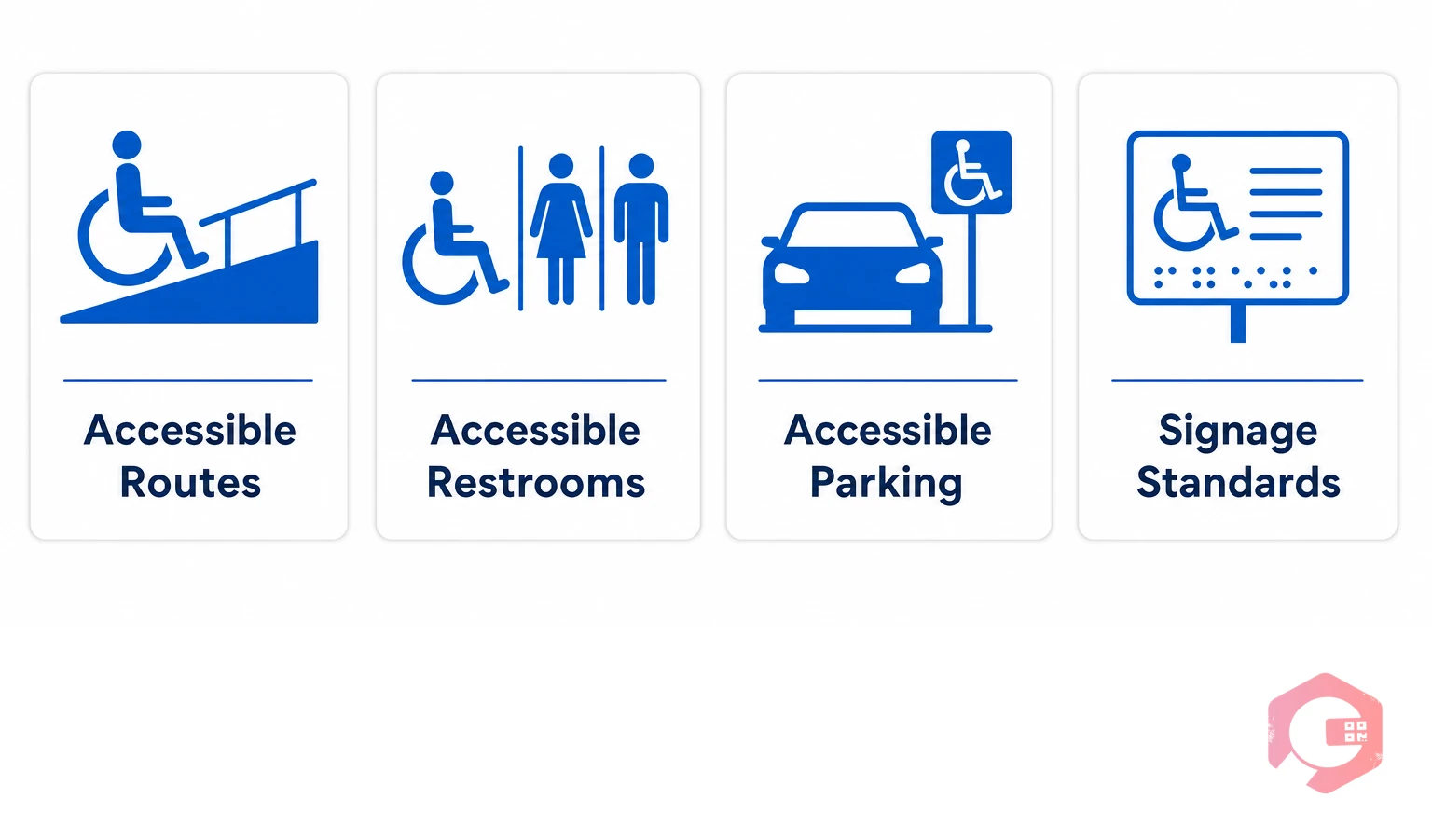
The ADA does not require perfection across every square foot of a building at once. It does require that specific elements meet measurable standards. Here are the areas most relevant to facility managers.
At least one accessible route must connect parking areas, public transportation stops, public streets, and all accessible spaces within a building. Key standards include a minimum 44-inch wide clear path, slopes no steeper than 1:20 on accessible routes, and no protruding objects above 27 inches from the floor that could be a hazard for visually impaired individuals.
Entrances present one of the most common compliance failures. At least 60% of all public entrances must be accessible. Doors must have hardware that can be operated with a closed fist (lever handles, push bars), and door opening force cannot exceed 5 lbs for interior doors.
Accessible restrooms must provide turning radius space (60 inches), compliant grab bars, accessible sinks (no greater than 34 inches high), and proper clearances on both sides of toilet compartments. These dimensions are precise and frequently cited during DOJ investigations.
For parking, the ratio is 1 accessible space per 25 total spaces, with at least one van-accessible space per 6 accessible spaces. Van spaces require an 8-foot access aisle and a minimum 98-inch vertical clearance.
Signage requirements cover both the physical format (Braille, raised characters, non-glare finish, specific mounting heights) and which spaces require permanent signage. Room identification signs must be mounted 60 inches above the floor measured to the centerline of the sign.
This distinction is where facility managers often get confused. New construction must meet the full 2010 ADA Standards from day one, with no exceptions. Alterations to existing buildings must also comply fully with ADA Standards in the altered area — and often trigger requirements for accessible routes connecting the altered area to key building features.
For existing buildings without alterations, the standard is different: facilities must remove barriers to access when doing so is “readily achievable.” This is a lower bar than full compliance, but it still requires action and documentation.
“Readily achievable” means accomplishable without much difficulty or expense. The DOJ evaluates this based on the nature and cost of the action, the overall financial resources of the facility, and the type of operation. A large hotel chain has a higher bar for what qualifies as readily achievable than a small independent restaurant.
Common examples of readily achievable barrier removal include installing grab bars in existing restrooms, repositioning shelves, adding ramps to curbs, widening a doorway by repositioning a door, and restriping parking spaces to create accessible spaces. When a barrier is truly not readily achievable to remove, the facility must provide an alternative method of access — such as making services available at the door or via home delivery.
Critically, “readily achievable” is not a permanent excuse. As a facility’s resources change, more barrier removal becomes required. According to a U.S. Department of Labor ADA overview, the intent is for facilities to make incremental progress, prioritizing the most impactful changes first: accessible entrances, accessible restrooms, accessible routes, and access to goods and services.
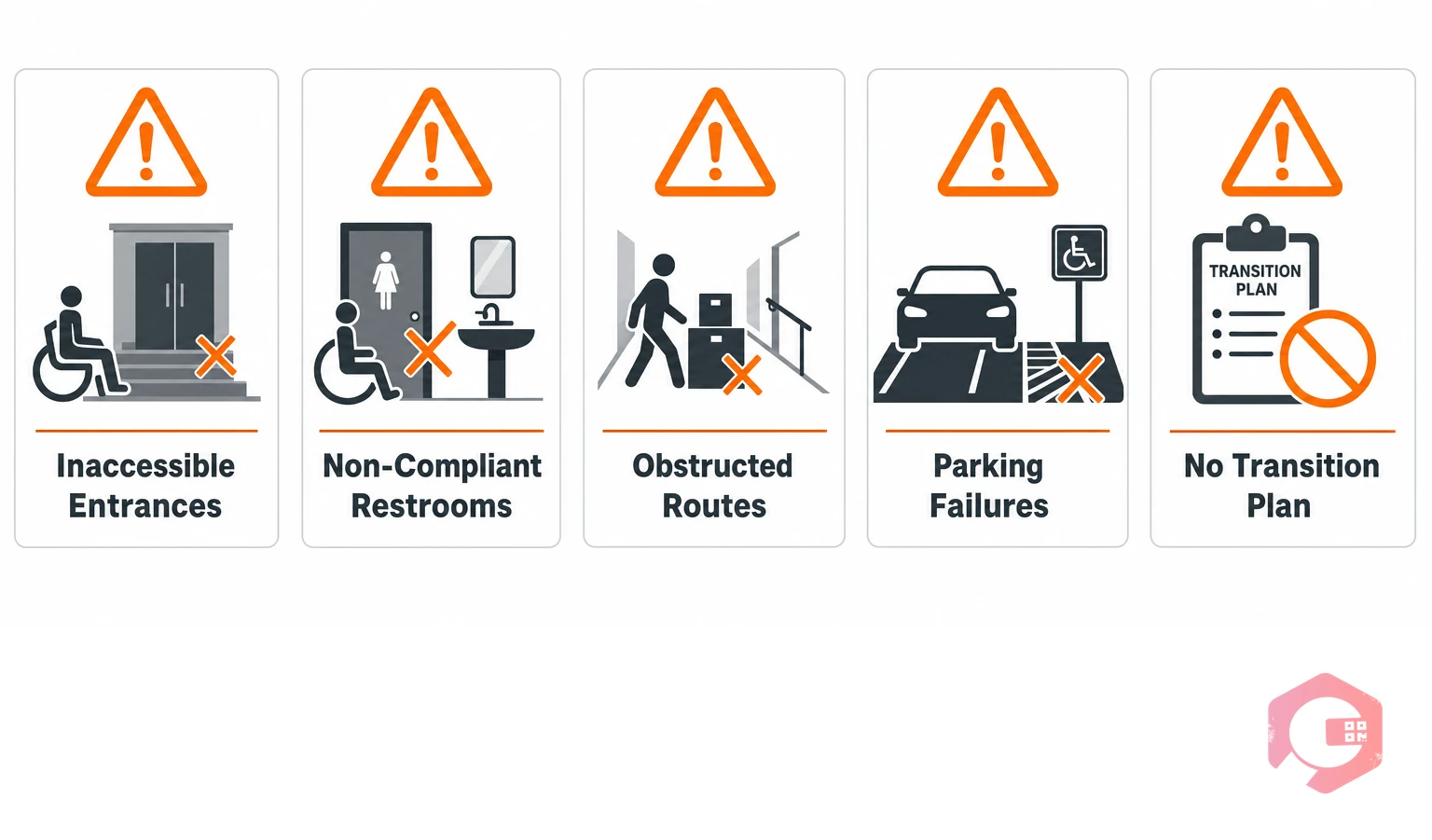
The DOJ and private plaintiffs file hundreds of ADA cases each year. The most frequent violations in facility settings are:
The most effective prevention is regular, documented inspection. A facility that conducts quarterly ADA walkthroughs, corrects deficiencies, and maintains records is in a dramatically better position than one that relies on memory or annual reviews.
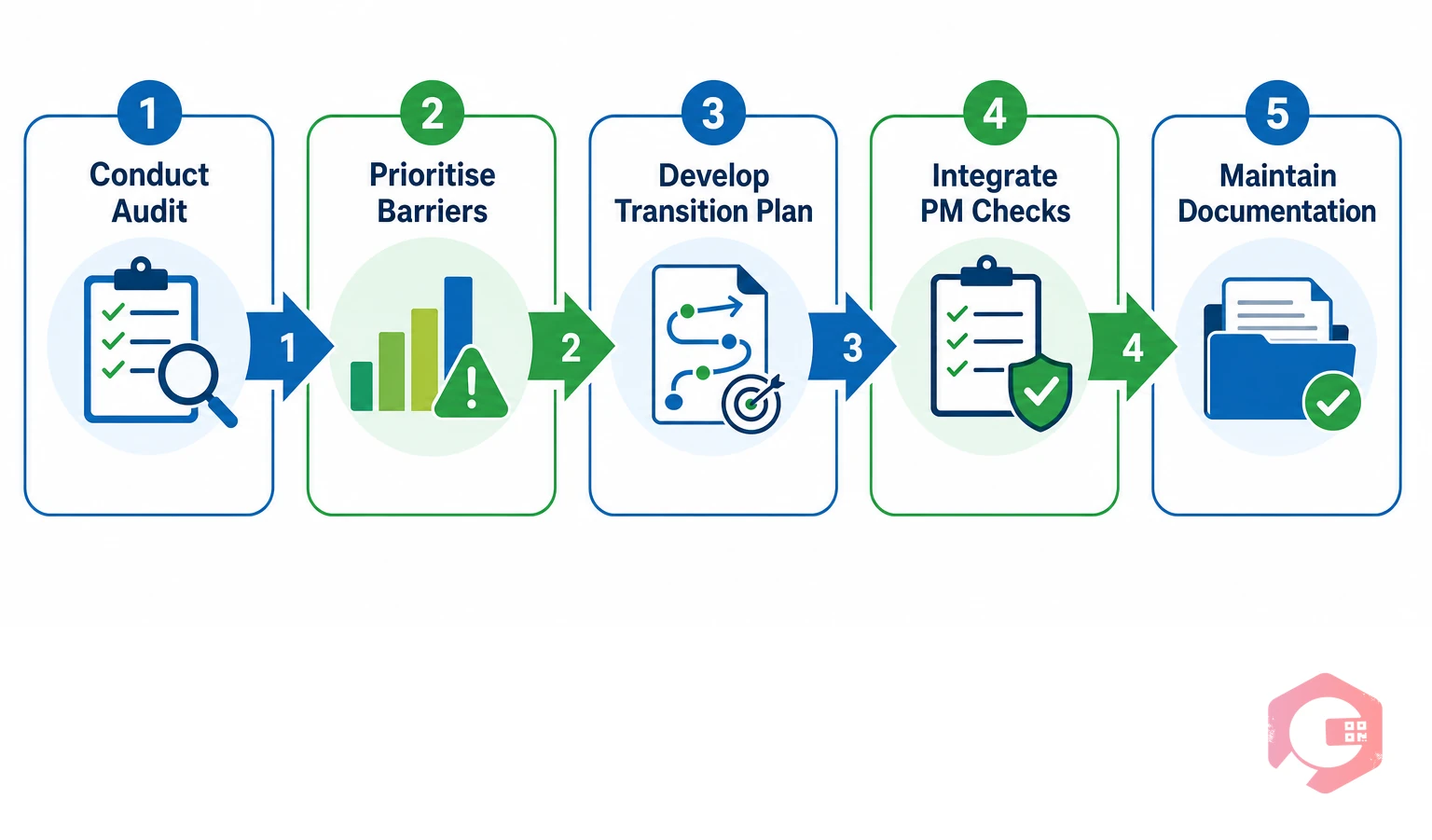
An ADA compliance program is not a one-time project — it is an ongoing operational function. Here is a practical framework:
Facility managers overseeing multiple buildings quickly find that manual tracking — spreadsheets, email chains, paper checklists — cannot maintain the consistency that ADA compliance demands. A CMMS (Computerized Maintenance Management System) closes this gap by embedding compliance activity directly into day-to-day maintenance operations.
Here is how CMMS software directly supports ADA compliance:
According to NFPA accessibility research, facilities with structured inspection programs identify accessibility deficiencies significantly earlier than those relying on reactive processes. The practical result is lower remediation costs and stronger legal standing if a complaint is filed.
Civil penalties under the ADA reach up to $75,000 for a first violation and $150,000 for any subsequent violation. These penalties apply when the DOJ brings an enforcement action. In addition, private plaintiffs can file lawsuits seeking injunctive relief (requiring the facility to fix the issue) and attorney’s fees, though they cannot recover compensatory damages in Title III cases without showing intentional discrimination.
No. The ADA applies to all buildings regardless of age. The standard differs — existing buildings without renovations are subject to the “readily achievable” barrier removal obligation rather than full compliance with new construction standards. However, exemption based on building age does not exist. When alterations are made to existing buildings, those altered areas must fully comply with 2010 ADA Standards.
A formal ADA audit should be conducted at minimum every two to three years, or whenever a major renovation or change in building use occurs. Informal walkthroughs of accessible elements — entrances, restrooms, parking, and key routes — should be conducted quarterly. The goal is to catch and correct drift between formal audits before it becomes a complaint.
An ADA transition plan is a written document required of state and local government entities that identifies physical barriers in their facilities, describes the methods they will use to make their programs accessible, sets a schedule for removing those barriers, and names the official responsible for implementation. The plan must be made available to the public on request. While not legally required of Title III entities, developing a transition plan is strong practice for any facility operator, as it demonstrates good-faith progress toward compliance.
ADA compliance is an ongoing operational responsibility, not a one-time project. Facility managers who embed accessibility inspections into their preventive maintenance cycles, maintain complete documentation, and use technology to track corrective work orders are far better positioned — legally and operationally — than those treating ADA as an annual checkbox. Cryotos CMMS gives facility teams the tools to schedule recurring ADA inspections, track deficiency corrections, and maintain the audit trail needed to demonstrate compliance — across one building or dozens. Explore how Cryotos helps facility managers stay compliant, or request a demo to see the platform in action.




Cryotos AI predicts failures, automates work orders, and simplifies maintenance—before problems slow you down.



