
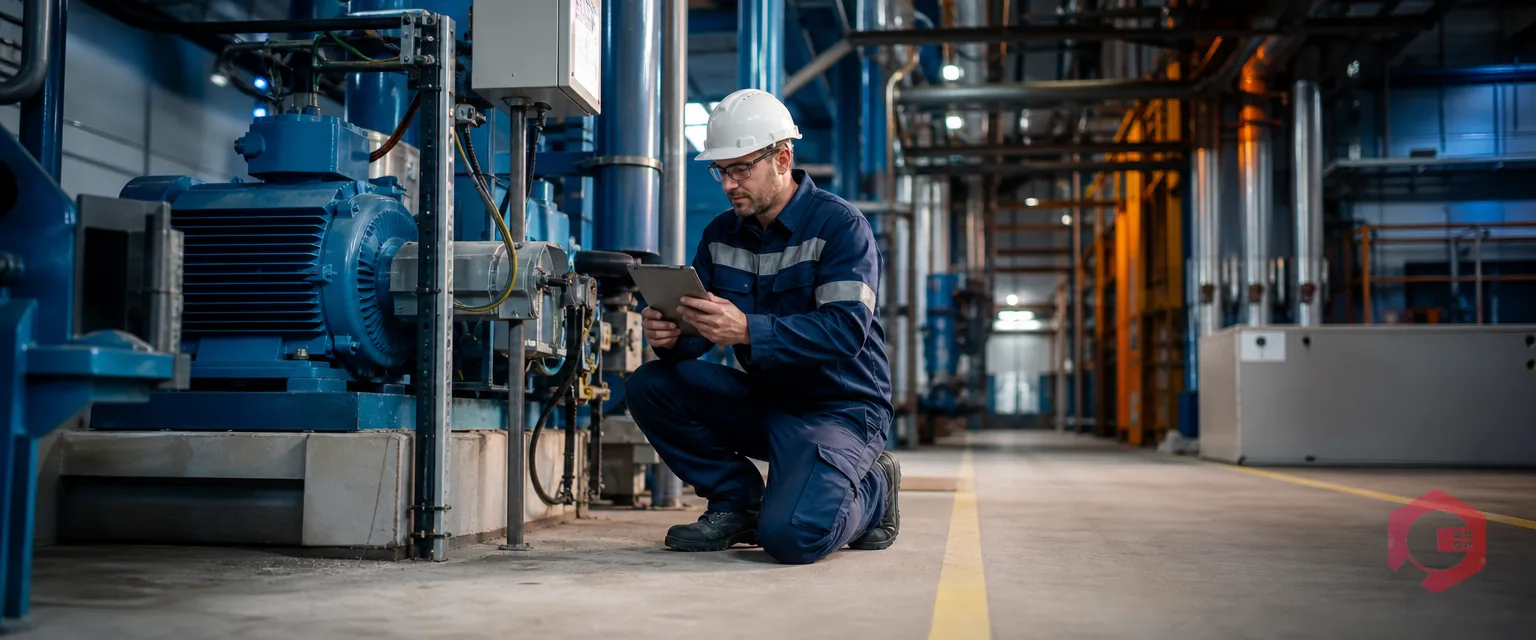
AI maintenance SOPs are step-by-step repair procedures that software drafts by mining a facility's closed work order history. A planner doesn't start from a blank page. The software groups similar past repairs and finds the steps behind the fastest, most durable fixes. It hands that draft to a supervisor for review. This guide covers how the mining process works, what to check before you trust a draft, and where this fits inside a CMMS today.
Key Takeaways
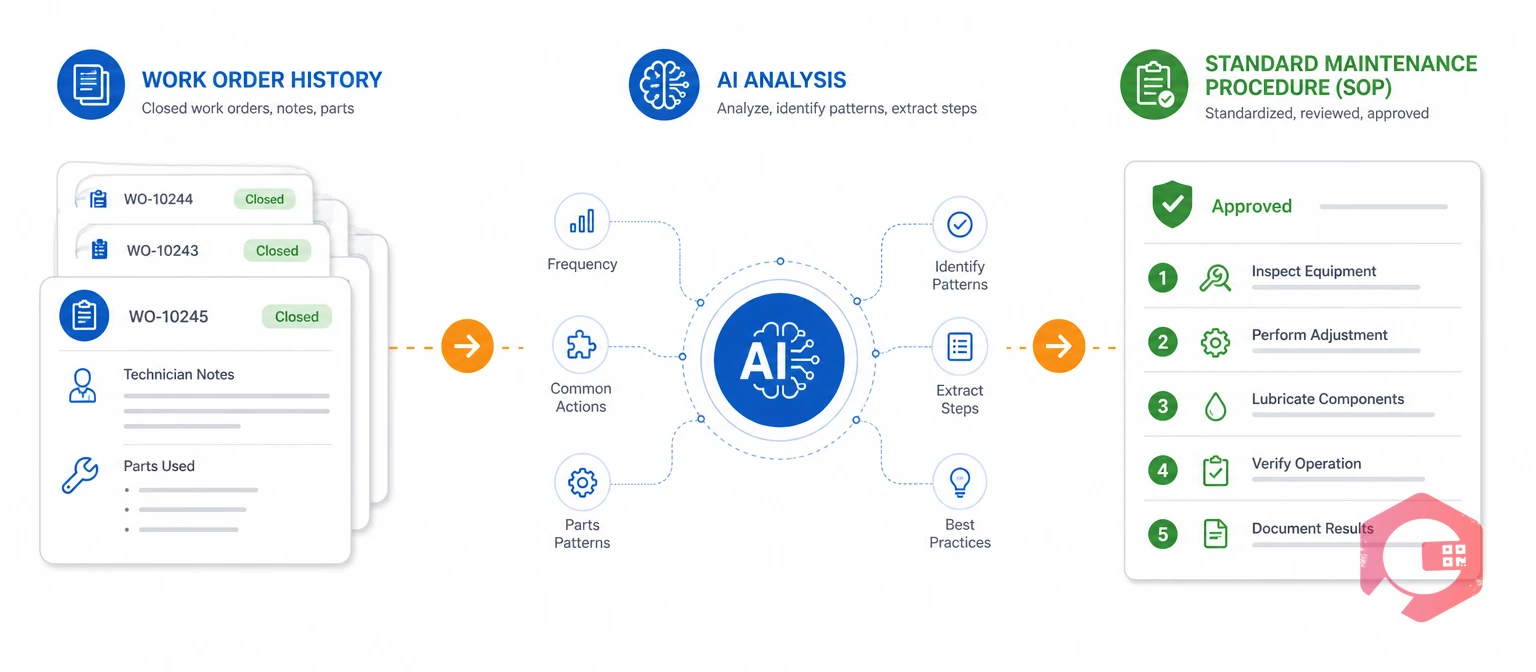
AI maintenance SOPs are standard operating procedures that software drafts by analyzing patterns across a facility's closed work orders. A technician or planner doesn't write them from memory. The software reads technician notes, parts used, labor hours, and fault codes from past repairs on the same asset or asset class.
A general standard operating procedure is usually written once by a person. This process works differently. It finds the steps behind the repairs that finished fastest and didn't come back. A planner reviews that draft, adds anything the data missed, and approves it as the working procedure.
This also differs from a generic AI chatbot writing a procedure from general knowledge. The output here comes from what technicians at that specific site actually did, on that specific equipment. That's why it tends to match real conditions better than a manual pulled from an OEM binder.
A knowledge base surfaces a past fix when a technician searches for one. AI maintenance SOPs go a step further. They combine many past fixes into one standard, repeatable procedure. A technician doesn't need to know what to search for in the first place.
The difference matters in practice. A knowledge base still asks the technician to compare a few similar past fixes and pick one. AI maintenance SOPs skip that step. They present one standard sequence, built from whichever repairs actually worked and stayed fixed the longest.
Most maintenance teams don't lack procedures because writing them is hard. They lack current ones because updating a procedure competes with every other task on a planner's desk, and it usually loses.
Tribal knowledge is the practical know-how that lives in an experienced technician's head instead of in any written document. When that technician retires or changes shifts, the knowledge doesn't transfer with a handoff meeting — it just leaves.
AI maintenance SOPs address this gap directly. The mining process treats every closed work order as a chance to check the published procedure against reality. A team doesn't need to schedule a manual review cycle. The software already compares new work orders against the standard as each one closes.
Established reliability practice backs this up. The ISO 55000 asset management standard treats current, documented maintenance procedures as a core requirement, not a nice-to-have. A stale SOP isn't just an inconvenience. It's a gap most audits will eventually catch.
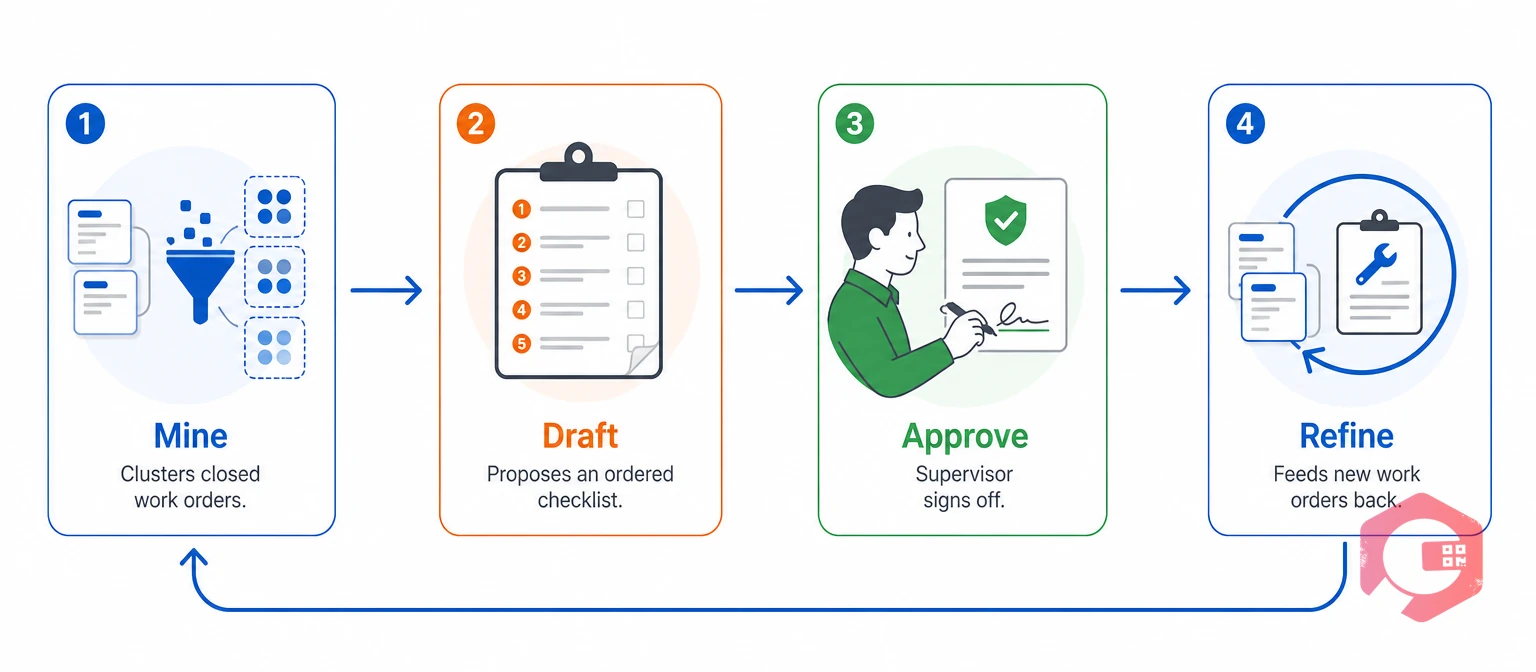
The mining process follows the same logic everywhere it runs. It breaks into four repeatable stages.
The Mine-Draft-Approve-Refine Loop:
Root cause analysis is the practice of tracing a failure back to its underlying cause instead of stopping at the symptom. A 5 Whys entry logged on a closed work order is exactly the kind of structured record this mining process needs. It tells the software why a fix worked, not just what the fix was.
Most facilities already generate this raw material every day without realizing it. The gap has never been the data. It's that no one has had a practical way to turn thousands of free-text notes into a usable procedure.
Cryotos's AI-powered knowledge base already runs the front half of this loop. It surfaces relevant prior fixes and troubleshooting guidance based on the asset and fault code. That's the same pattern-matching foundation a full SOP draft builds on.
An AI-drafted maintenance procedure is a starting point, not a finished standard. The mining process is good at finding what technicians did most often — it isn't good at knowing what they should have done differently.
A repair that shows up 40 times in the history might still be missing a safety gate nobody logged. The technicians who performed it already knew to do it without writing it down. A reliability engineer reading the draft catches that gap. The software doesn't know it's missing.
Maintenance teams that skip this step end up publishing whatever technicians happened to do most, including bad habits. The review step is what turns a statistical pattern into an actual standard.
This is why AI maintenance SOPs work best framed as drafts that accelerate authoring, not procedures that replace the person who signs off on them. The time saved comes from skipping the blank page, not from skipping the judgment call.
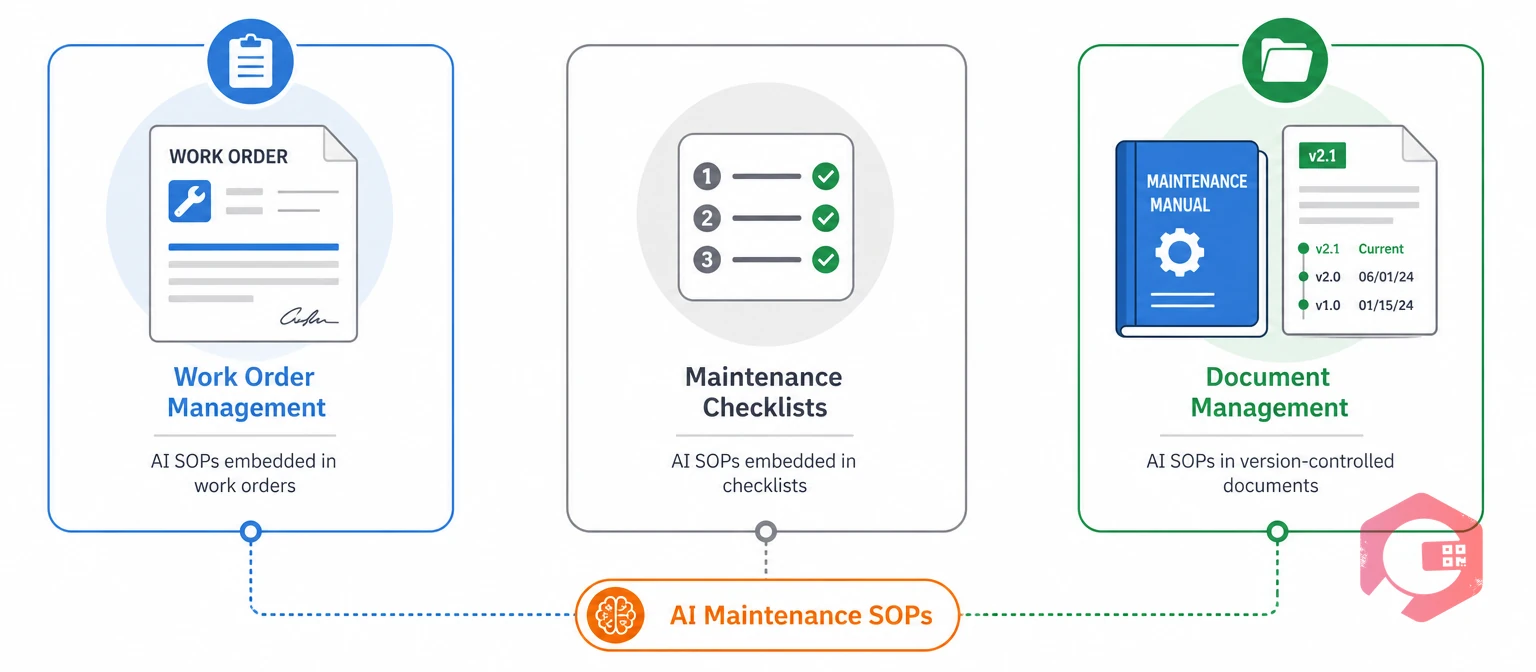
Every stage of the mining loop maps to a module most maintenance teams already use. That's why this fits naturally inside a Computerized Maintenance Management System instead of requiring a separate tool.
Maintenance teams using Cryotos have reported up to 30% reduction in unplanned downtime and 25% faster repair turnaround. Technicians spend less time rebuilding a procedure from memory and more time running one that's already documented.
Most facilities running a mature CMMS already have every input this process needs. It's sitting in their work order history. The missing piece has been a practical way to mine it, not new data to collect.
The quality of an AI-drafted SOP depends entirely on the quality of the work orders behind it. Thin or inconsistent records produce a thin, inconsistent draft. This is the practical reason many facilities need to shore up their logging habits before they try this, and it's usually a smaller lift than it first sounds.
Facilities running paper-based or partially digitized work orders should expect to spend time cleaning up historical records first. That cleanup work only happens once. Every SOP mined afterward benefits from it.
AI can produce a strong first draft by mining historical repair patterns, but it shouldn't publish a procedure unsupervised. A supervisor or reliability engineer needs to review the draft for safety gaps and outdated steps before it becomes the standard technicians follow.
Most teams see a reliable pattern emerge after 15 to 20 closed work orders on the same asset or a closely related asset class. Below that, the software has too few examples to separate a genuine pattern from a one-off repair.
No. It removes the blank-page problem of writing a procedure from scratch, but the judgment calls around safety, edge cases, and current specs still need a person who understands the equipment.
Consistent deviation is itself useful information. It usually means the published procedure missed something real, and it should trigger a review rather than a reminder to comply.
Yes. A knowledge base surfaces one past fix when someone searches for it. This process combines many past fixes into one standard procedure. Nobody needs to know what to search for.
Getting from stale, tribal-knowledge procedures to standardized ones starts with the work order history a facility already has. Schedule a free demo to see how Cryotos turns that history into procedures your team can actually rely on.


Cryotos AI predicts failures, automates work orders, and simplifies maintenance—before problems slow you down.



