
Generative AI for maintenance is the application of large language model (LLM) technology to maintenance operations — writing work orders, explaining fault codes, drafting procedures, and summarizing reports from text, voice, or photo input. Unlike predictive analytics or condition monitoring, which flag when something might fail, generative AI changes what happens next: it produces the written output a technician or planner needs to act. The generative AI category has moved fast from novelty to production tool, and maintenance teams have some of the clearest, most immediate use cases in operations — because maintenance is one of the highest-documentation jobs on the plant floor.
Key Takeaways
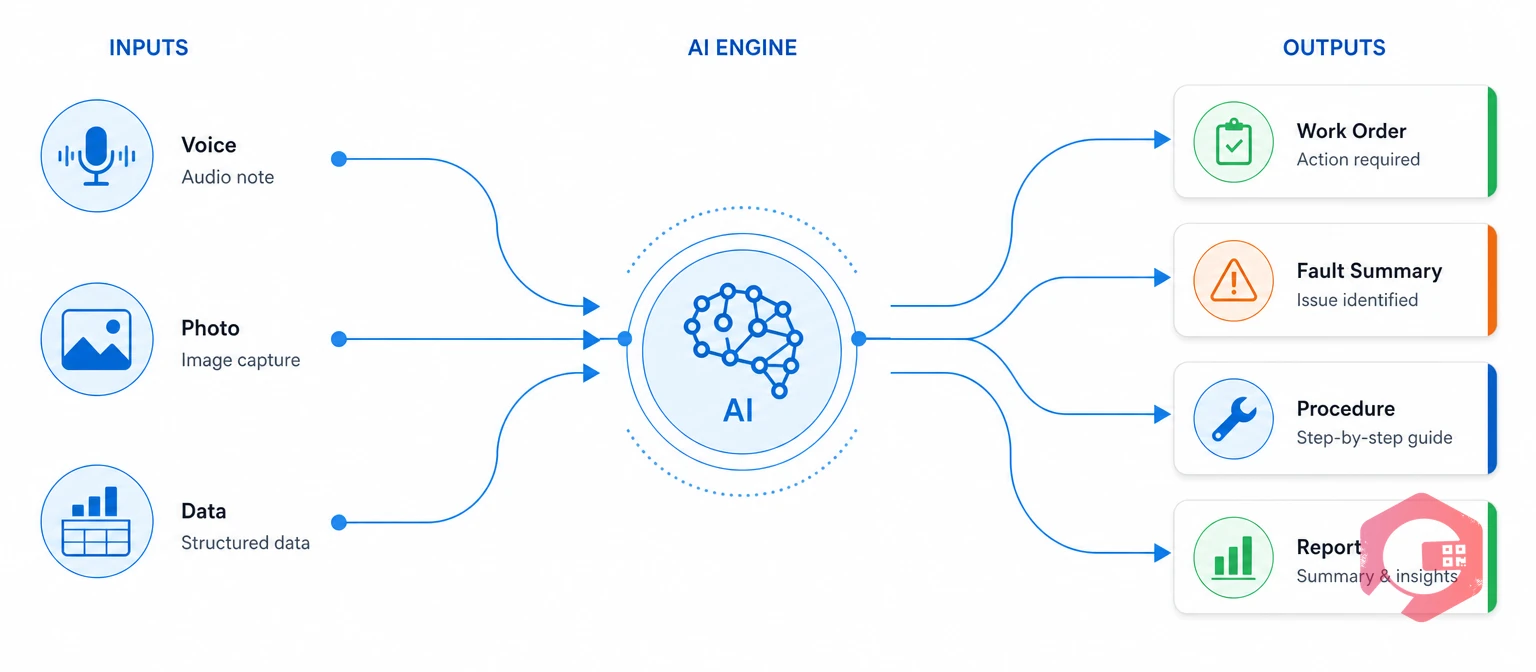
Generative AI in maintenance is a text-in, text-out capability that replaces the blank-page problem. A technician standing in front of a broken pump used to pull out a pad, recall the right asset code, and fill in a work order form by hand. With generative AI, they describe the problem out loud or take a photo, and the system drafts the work request — asset ID pre-filled from the scan, fault description written from the voice note, priority suggested from the asset's criticality rating.
That is a different value proposition than condition-based maintenance, which uses sensor data to catch failures before they happen. Generative AI works on top of what the technician already knows — it gets the paperwork done faster and more consistently, without changing the physical inspection or the repair itself.
The technology draws on large language models trained on broad technical and industrial text. These models understand maintenance language well enough to produce usable first drafts without domain-specific fine-tuning, which is why adoption is faster than earlier AI categories that required months of plant-specific training data.
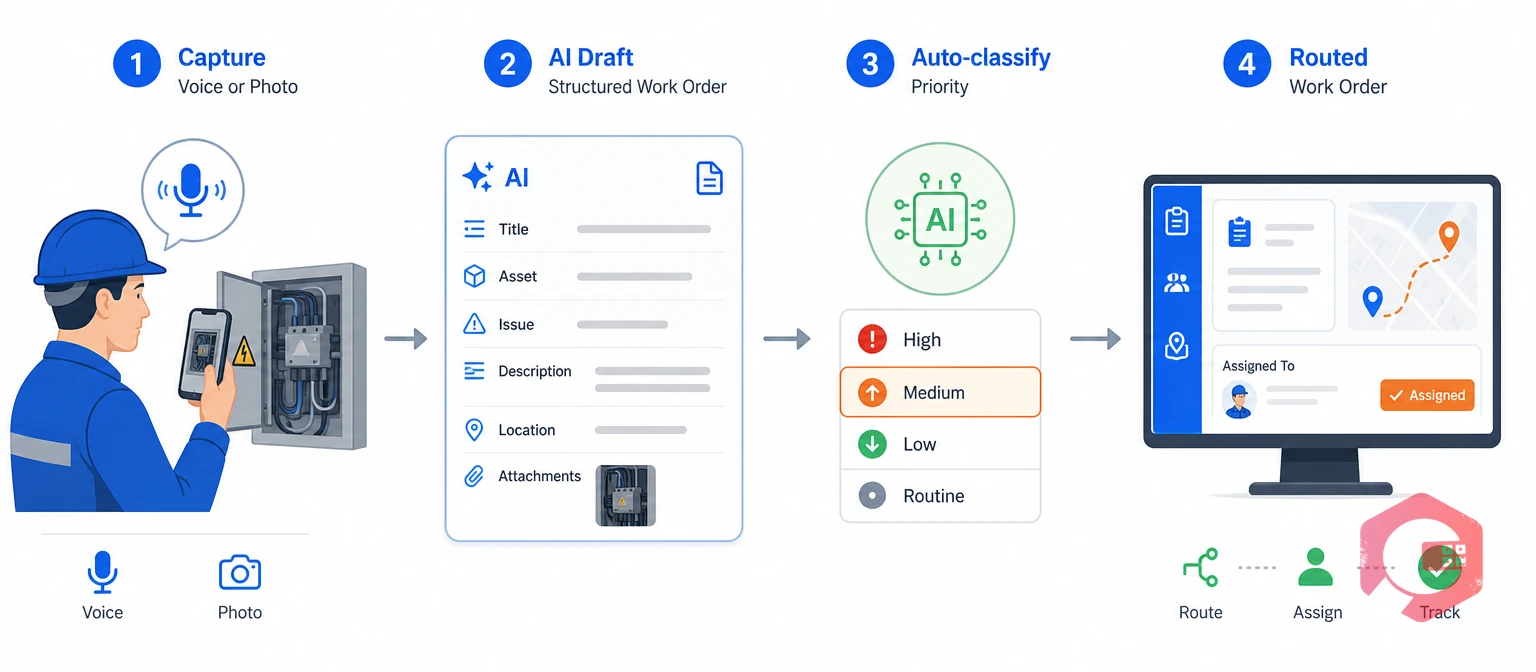
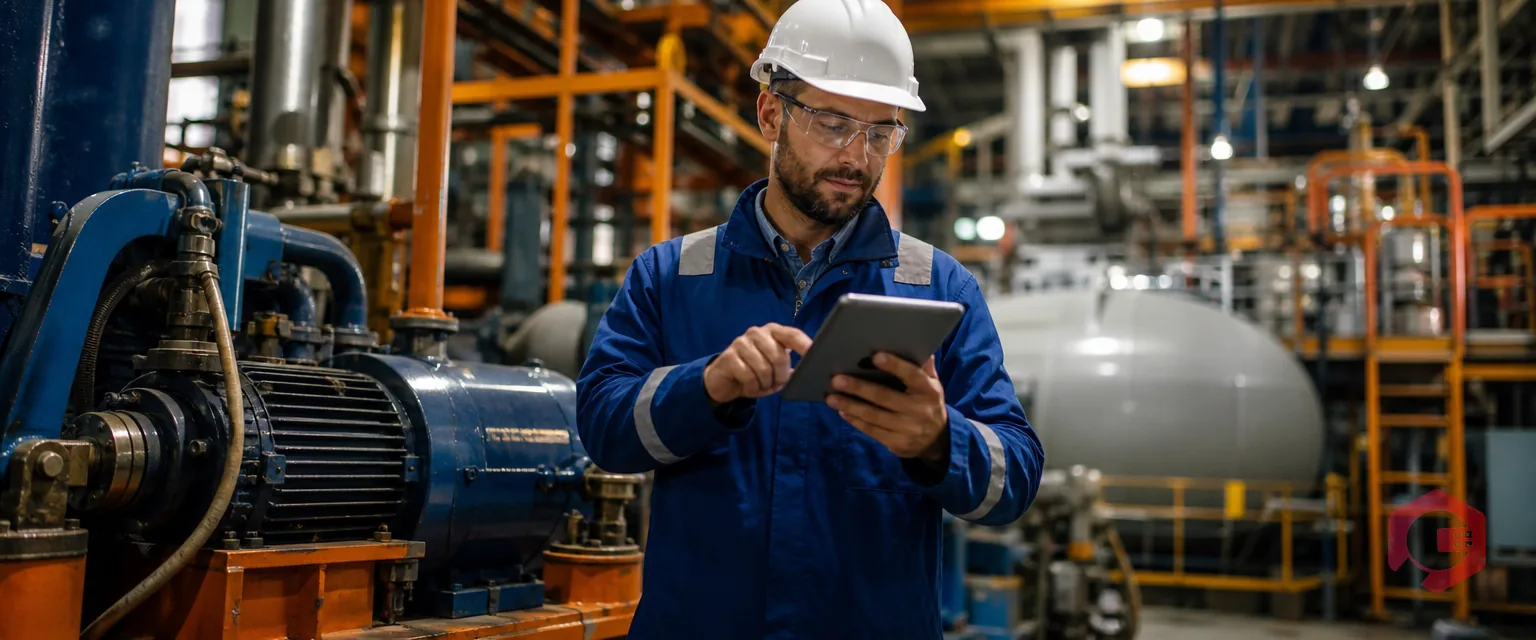
The single most practical generative AI application in maintenance is creating a work order from a voice description or a photo of the fault — not from a dropdown form. The difference matters in the field. A technician mid-task can describe a problem in ten seconds. Opening an app, finding the asset, selecting the fault type, and writing a description takes several minutes — and often gets skipped or abbreviated.
Generative AI converts that spoken description or image into a structured work order with the fault summarized, the urgency estimated, and the asset linked. The planner or system then routes it, assigns it, and tracks it — none of which the AI needs to own.
Cryotos supports AI-powered work order creation via voice and photo directly from the mobile app, with the output routed through existing assignment and approval workflows — so the AI draft becomes an actionable work order without anyone retyping it from scratch.
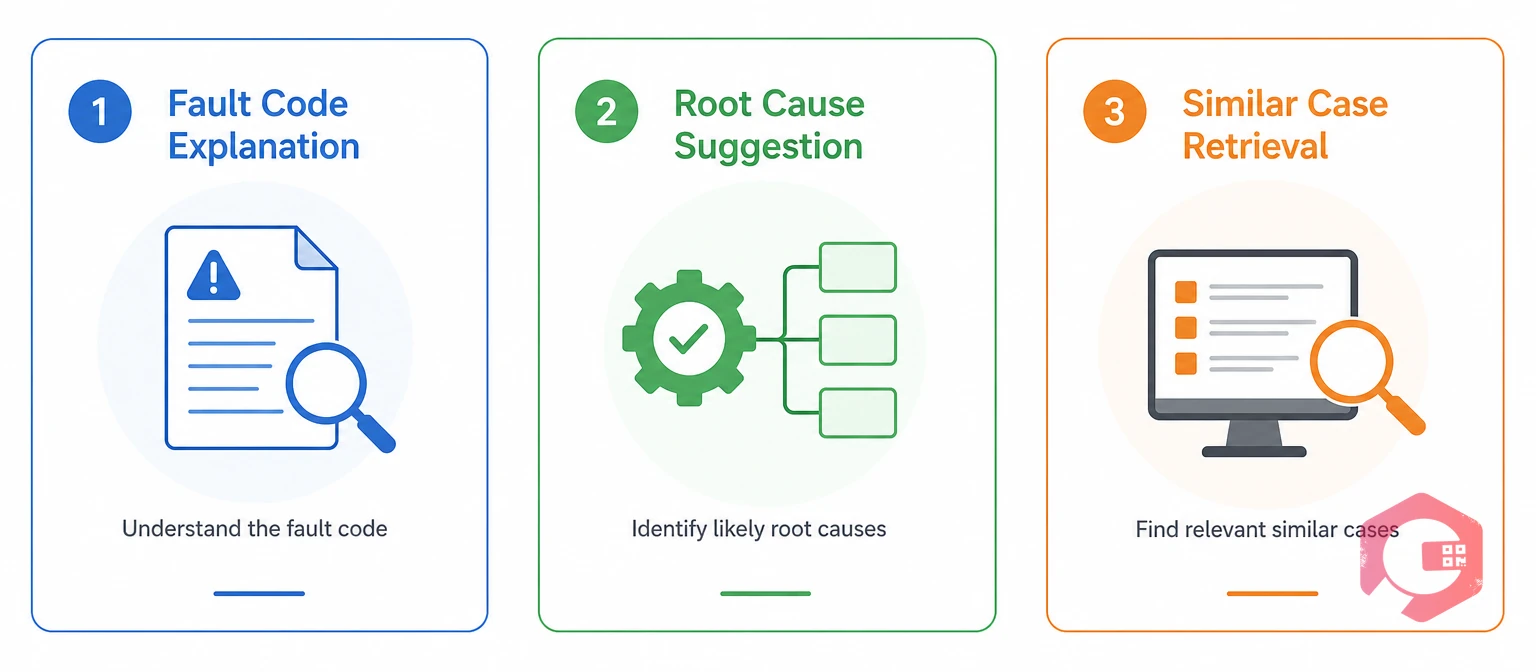
Fault diagnosis is where generative AI closes a knowledge gap that retirements keep widening. A senior technician who has serviced the same asset for fifteen years carries a mental library of symptoms, causes, and fixes. When that technician retires, that library leaves with them.
Generative AI can surface accumulated repair knowledge instantly, given a fault description and asset history. A technician entering "high motor temperature, vibration above baseline, fault code E47" gets back a ranked list of probable causes — motor overload, bearing wear, misalignment — with the first diagnostic steps for each. This is not a replacement for expertise; it is a structured starting point that cuts the time a less-experienced technician spends guessing.
Maintenance procedures go stale fast. An SOP written for the original equipment gets copied to the replacement model, with differences in clearances, torque specs, and access points left unchanged. A technician following an outdated procedure is at best inefficient and at worst at risk.
Generative AI can draft a new or revised procedure from an OEM manual, a past work order, and the asset's specification sheet — in minutes rather than days. A reliability engineer feeds in those three sources; the AI produces a numbered step-by-step procedure in the facility's standard format. The engineer reviews and approves; the procedure goes live in the preventive maintenance schedule attached to the asset.
The same approach works for one-off repairs. When a non-standard job comes in — an asset configuration the team hasn't serviced in years — AI generates a working procedure draft from similar equipment SOPs and the technician's initial notes, giving the team a starting document instead of a blank page under time pressure.
Most maintenance teams have useful information scattered across closed work orders, email threads, printed manuals, and individual technicians' memory. None of it is searchable in one place. A new technician troubleshooting a pump failure has no way to know that the same fault was solved six months ago — or what fixed it.
Generative AI turns a CMMS's completed work order history into a queryable knowledge base — one where a technician can ask a question in plain language and get an answer drawn from actual past repairs. Instead of keyword search through hundreds of records, the technician types "what causes intermittent pressure drop on the #2 hydraulic circuit?" and the AI surfaces the relevant closed work orders, the fix that worked, and the parts used.
According to the Society for Maintenance and Reliability Professionals (SMRP), knowledge capture and transfer is one of the top organizational risks facing maintenance teams as experienced technicians exit the workforce. A generative AI knowledge base directly addresses that risk by making institutional repair knowledge searchable and accessible to anyone on the team.
Cryotos's AI-powered knowledge base integrates with the asset register and work order history, making completed maintenance data accessible without manual indexing or a separate document management system.
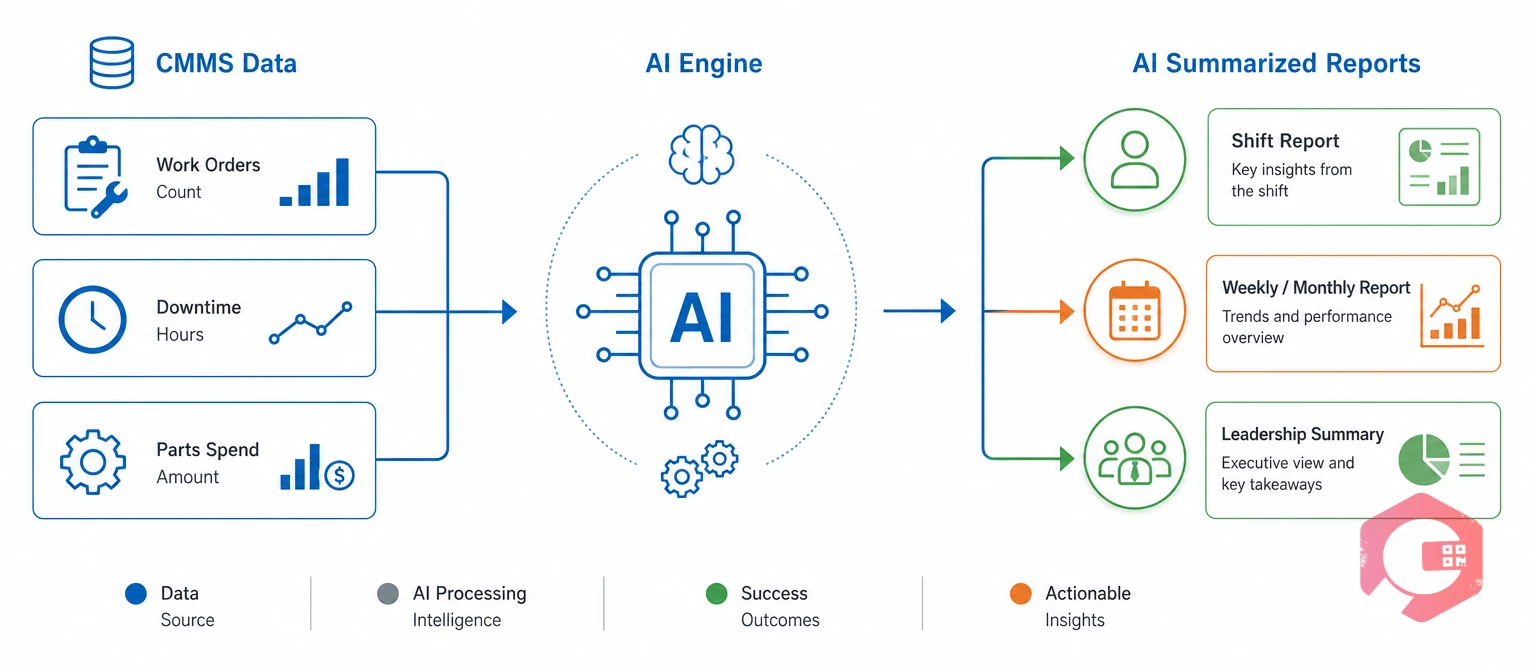
Maintenance managers spend real time turning raw CMMS data — work order counts, downtime hours, parts spend — into summaries that leadership can read and act on. Generative AI handles that translation automatically.
A week's worth of maintenance data feeds into a generative AI model; the output is a plain-language summary of what happened, what it cost, what the top failures were, and what the trend line shows. The manager reviews and sends it rather than writing it from scratch under pressure at the end of the week.
The hype around generative AI in maintenance often overstates what the technology delivers. A few things worth being direct about:
The fastest entry point is voice- and photo-based work order creation. It needs no separate AI platform, no process redesign, and no data migration — just a CMMS that supports the input method. Start there. Let technicians use it on a single shift. Measure how many work orders are created per hour compared to the previous method and whether completeness improves.
From there, the knowledge base and fault diagnosis use cases layer in naturally as your work order history deepens. The more past repairs the system holds, the more useful the AI's retrieval and suggestion outputs become. Generative AI in maintenance works best as a series of targeted additions to an existing workflow — each one solving a specific documentation or knowledge problem the team already recognizes as a daily friction point.
Generative AI for maintenance is the use of large language model technology to write, explain, and summarize maintenance content — work orders, fault diagnoses, procedures, and reports — from voice, photo, or structured data input. It speeds up documentation-heavy tasks without replacing the CMMS or the technician doing the physical work.
Predictive maintenance AI uses sensor data and statistical models to forecast when equipment will fail. Generative AI produces written output — it drafts a work order, explains a fault code, or summarizes a maintenance report. The two approaches are complementary: predictive AI identifies the problem; generative AI handles the paperwork and knowledge tasks that follow.
No. Generative AI adds to a CMMS rather than replacing it. The AI generates content — work order text, procedure drafts, report summaries. The CMMS routes, assigns, tracks, and stores that content. Most practical implementations connect a generative AI layer to an existing CMMS through the mobile interface or an integration, without migrating data or rearchitecting the core system.
Voice- and photo-based work order creation typically delivers the fastest visible return, because it reduces the time between spotting a fault and creating a structured record of it. Teams commonly see work order completeness improve within days of adoption, since the barrier to creating a well-formed work order drops significantly when technicians can speak or photograph rather than type.
Generative AI performs best when the CMMS holds clean, linked records — work orders tied to specific assets, fault codes filled in consistently, and repair history accessible by asset. Poor data quality limits the system's ability to surface relevant past repairs or suggest accurate fault diagnoses. Improving data entry discipline before or alongside a generative AI rollout delivers compounding returns over time.
Generative AI is already reducing the documentation burden on maintenance teams — one work order, one fault summary, one report at a time. Schedule a free demo to see how Cryotos applies AI-powered work order creation, voice input, and an intelligent knowledge base to real maintenance workflows.
Cryotos AI predicts failures, automates work orders, and simplifies maintenance—before problems slow you down.



