Maintenance teams prevent allergen cross-contact during an allergen changeover in three ways. They remove the places where residue hides. They control every tool and part that touches the line. And they do not release the line until a verified clean is recorded. Sanitation does the washing, but maintenance decides whether the equipment can be cleaned at all.
Worn gaskets, cracked welds and hollow rollers can hold milk powder or sesame through a full wash. This guide gives five practical steps, a named framework and a realistic plant scenario showing how Cryotos closes the gaps.
Key Takeaways

Allergen cross-contact is the unintended transfer of an allergen into food that is not meant to contain it. On a shared line, the most likely source is residue left on equipment from the previous product.
An allergen changeover is the cleaning, inspection and release process between allergen and allergen-free products. In the United States, the FDA recognizes nine major food allergens, with sesame added in 2023. Undeclared allergens remain one of the most common reasons for food recalls.
Most facilities focus their changeover effort on chemicals and wash steps. The equipment condition behind that wash is just as important.
The safest allergen changeover is the one you avoid. Run products without allergens first and products with allergens last, so residue flows from "free" to "contains" and not the other way.
Planners and maintenance should agree on this schedule each week. If a PM task needs the line open, put it inside a planned allergen changeover instead of creating a second shutdown. Good sequencing cuts the number of high-risk changeovers before any cleaning starts.
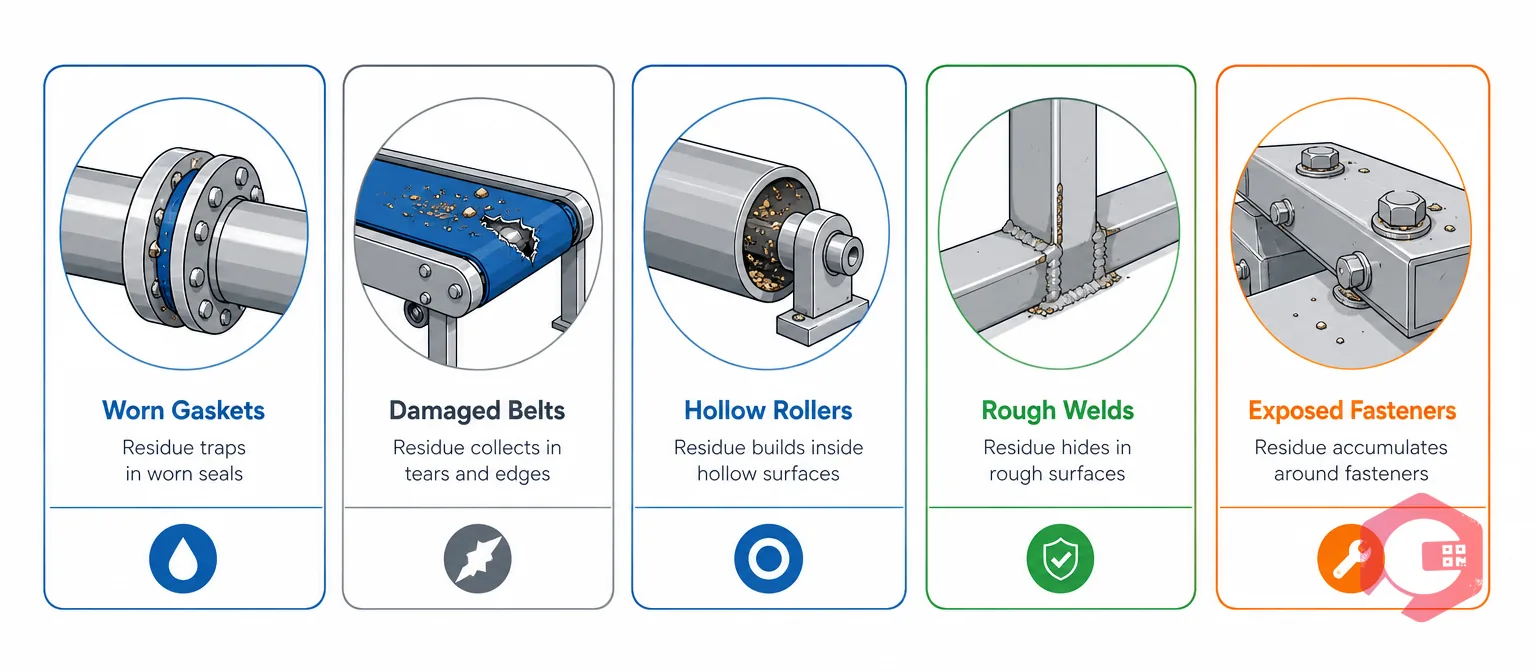
A harborage point is any spot on equipment where food residue can collect and escape normal cleaning. Maintenance teams are usually the first to see them, because they open the machine.
Turn each finding into a planned fix and a recurring inspection. Digital maintenance checklists let you add "inspect gaskets for cracks" as a required step on every changeover.
Preparing for an allergen audit? Use the free regulatory compliance checklist to review your records first.
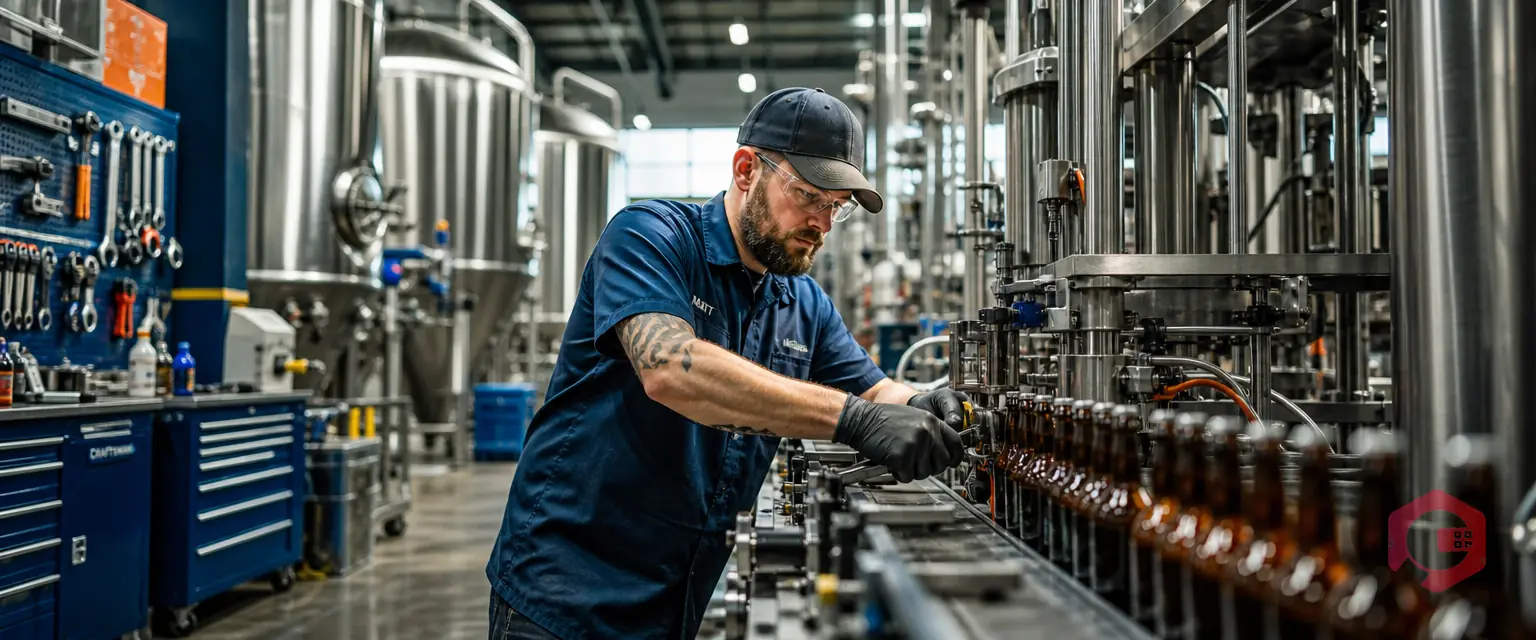
Maintenance can carry allergens from one line to another as easily as it can remove them. A wrench used on a peanut line and then on a nut-free line is a real cross-contact route.
With digital work orders, a repair raised during a changeover can require a sanitation sign-off before it closes. A common mistake is fixing a fault after the clean and restarting without a second check.
Validation proves your cleaning method works. Verification proves you followed it this time. You need both, and they use different tests.
| Aspect | Validation | Verification |
|---|---|---|
| Question answered | Can this method remove the allergen? | Was the method done properly today? |
| How often | Once, then after changes to product, equipment or method | Every allergen changeover |
| Typical tests | Specific allergen tests such as ELISA on swabs, rinses and first product | Visual inspection, allergen-specific swabs or protein swabs |
| Who leads | Food safety or QA team | Sanitation, maintenance and QA on the line |
Laboratory methods such as ELISA detect specific allergen proteins. ATP swabs only show general hygiene, so they cannot confirm an allergen is gone.
Release the line only after every item is recorded against the changeover.

Auditors judge an allergen program by its records. Paper sheets get lost, and swab results kept in a separate spreadsheet are hard to link to the right line and shift.
A Computerized Maintenance Management System links each changeover to the asset, the checklist, the signer and the time. That makes trends easy to spot. For example, you may see one filler that fails swabs more often than the rest.
The SEAL Allergen Changeover Framework:
If any of the four parts is missing, the changeover cannot be proven safe.
The scenario below is a composite based on problems that food manufacturers commonly report. It is not a single named customer, and the details are illustrative.
A mid-size bakery ran sesame and dairy products on two shared lines. Its allergen changeover process lived on paper, and audit findings kept repeating.
Every changeover now had a clear owner and a time stamp. The cracked gasket type was added to a regular inspection, so the same problem was caught early on the second line. Audit preparation moved from hunting for paper to running a report.
Cryotos does not perform allergen testing. It records the results from your test kits or lab, so the evidence sits with the maintenance history. Maintenance teams using Cryotos have reported up to 30% reduction in unplanned downtime and 25% faster repair turnaround, and fewer surprise breakdowns mean fewer rushed repairs during a changeover. See how a food and beverage CMMS supports these routines.
Cross-contact means an allergen protein moves into a food where it does not belong. Cross-contamination usually refers to microbes. Cooking can kill bacteria, but it does not remove allergen proteins, so allergen control depends on cleaning and separation.
Validate it when you first set it up, then again after any change to the product, equipment, cleaning chemicals or method. Many plants also review validation each year as part of their food safety plan. Routine verification still happens at every changeover.
No. ATP swabs measure general organic residue and show hygiene levels. To confirm allergen removal, use allergen-specific tests, such as lateral flow swabs or laboratory ELISA testing.
Treat the repaired area as dirty again. Clean it, inspect it and swab it before the line restarts, and record the re-check on the same work order, so the release stays traceable.
It is shared work. Production plans the sequence, sanitation cleans, maintenance keeps equipment cleanable and controls tools and parts, and QA verifies and releases the line. Write each role into the procedure so nothing is left to assumption.
A CMMS keeps checklists, sign-offs, swab results and PM history linked to each asset and date. Auditors can see that each changeover was done and checked, instead of relying on loose paper forms.
Every allergen changeover is only as safe as the record that proves it. Schedule a free demo to see how Cryotos links changeover checklists, sign-offs and maintenance history for your food lines.

Cryotos AI predicts failures, automates work orders, and simplifies maintenance—before problems slow you down.