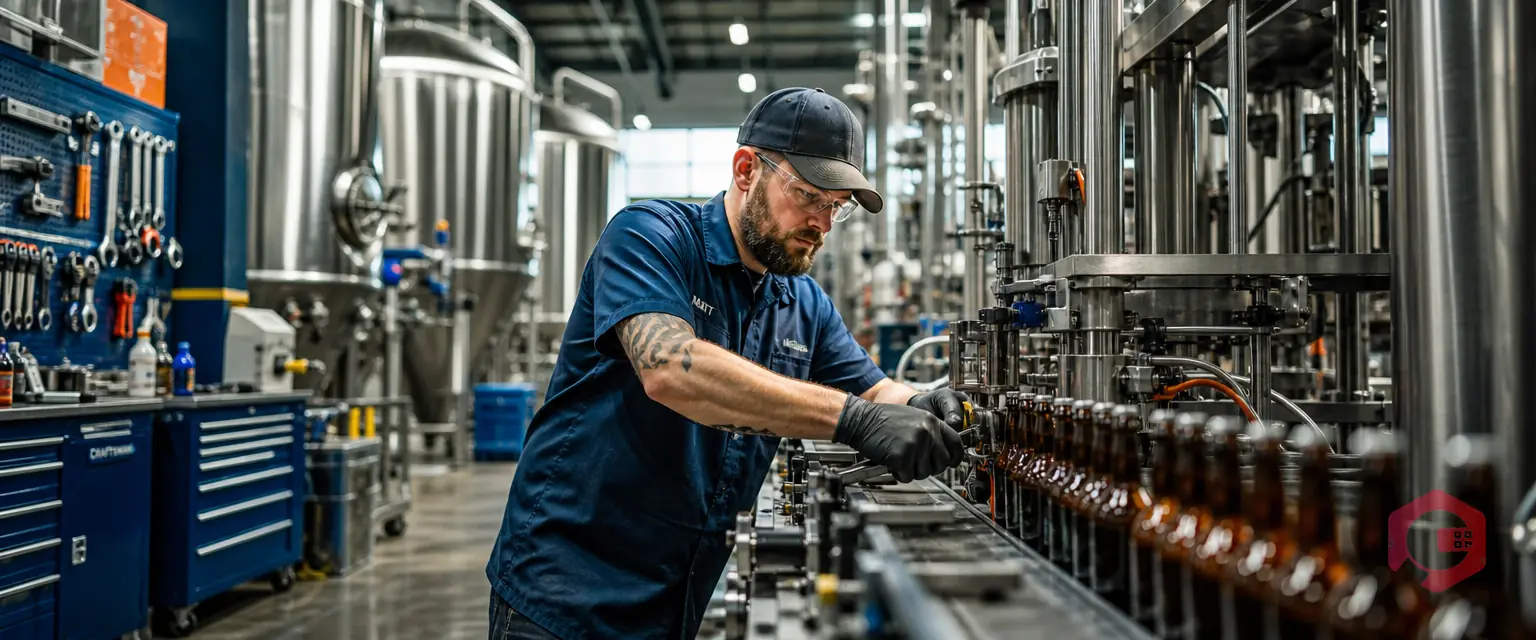
Brewery maintenance on a packaging line works when it is planned around production instead of squeezed in after a failure. Breweries use a Computerized Maintenance Management System to schedule preventive tasks by run hours, log every stoppage by cause, and keep spares ready. The result is fewer surprise stops on the filler, seamer, labeler, and conveyors.
Most craft and regional breweries start with a whiteboard, a spreadsheet, and a senior technician who remembers every quirk. That works until volume grows, shifts multiply, or that technician takes leave. This guide shows where packaging lines lose time, how to plan around the brewing calendar, and how one illustrative scenario plays out with Cryotos.
Key Takeaways
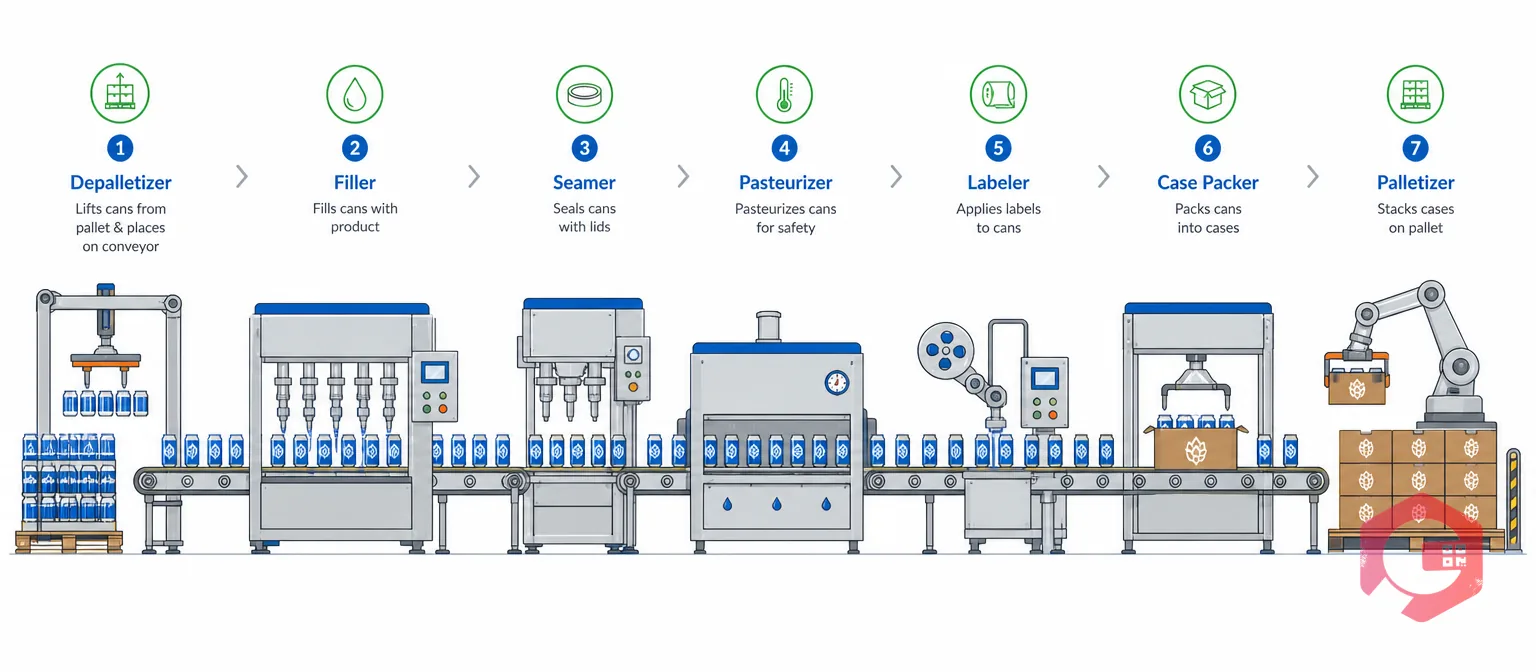
Brewery maintenance is the planned and reactive care of every machine that brews, packages, and ships beer. The packaging hall puts that care to the test, because speeds are high and tolerances are tight.
A typical line moves cans or bottles through several machines in sequence:
Most maintenance teams in food and beverage borrow from total productive maintenance (TPM). Operators handle basic cleaning and checks, and technicians handle deeper work.
Overall equipment effectiveness is a score that multiplies availability, performance, and quality. Many plants cite 85% as a world-class target for OEE, though the right goal depends on your product mix. Every stop on the line lowers the score, so planned care of these machines protects it.
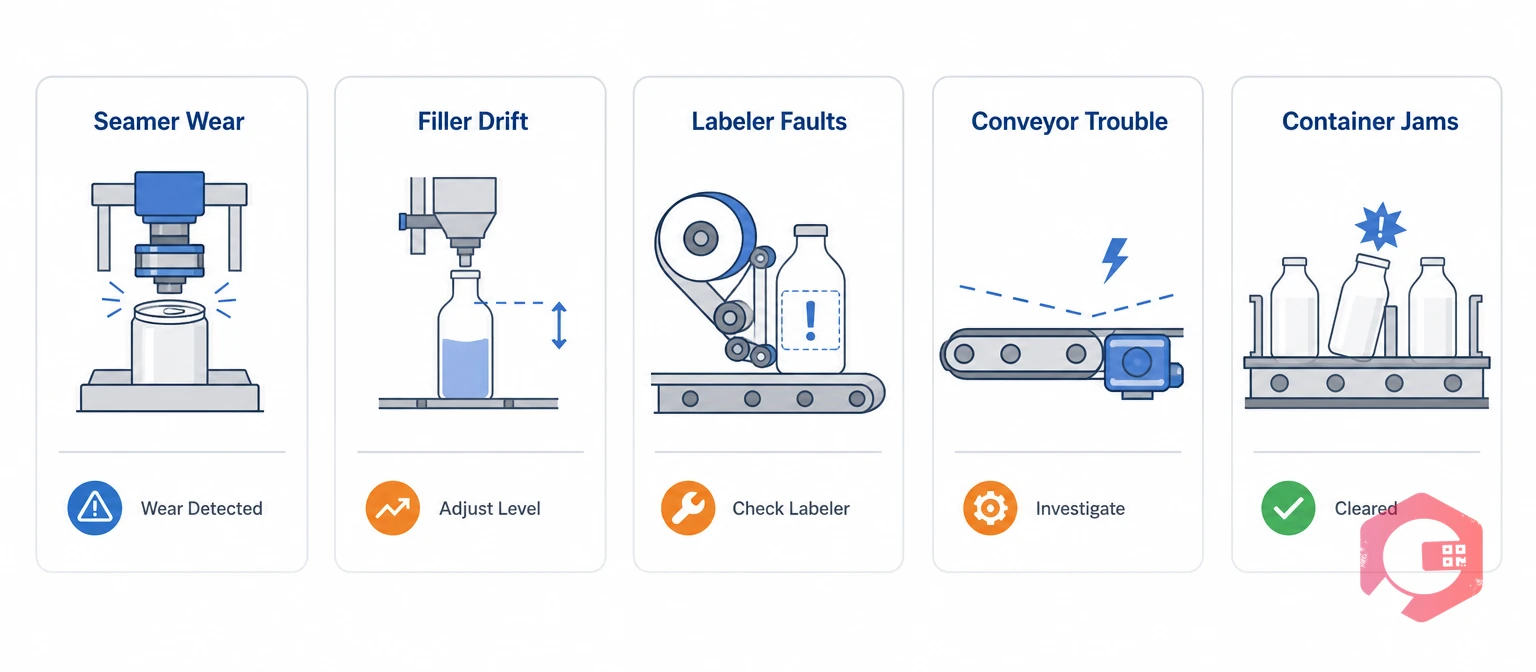
Weak brewery maintenance shows up on packaging lines as small, repeat faults on a few machines, plus waiting for parts and information. Each stop is short, but they add up across shifts and weeks.
Many stops are not purely mechanical. Three causes show up again and again:
Maintenance teams that log each stop with a reason code usually find that a handful of causes repeat. That pattern is the starting point for planning.
Want to see what these stops cost? Use the unplanned downtime calculator to estimate the yearly cost of packaging line stoppages.
A brewery maintenance schedule for the packaging line lists each machine, its typical failure, the early warning sign, and the task that prevents it. Use the table below as a starting point, then replace the triggers with the intervals in your equipment manuals.
| Machine | Typical failure | Early warning sign | Preventive task | Suggested trigger |
|---|---|---|---|---|
| Seamer | Faulty seams from worn rolls and chucks | Seam measurements drifting toward limits | Measure seams, inspect and replace worn parts | Checks each shift; parts by run hours |
| Filler | Valve and seal leaks, fill-level swings | Foam, drips, or level drift | Inspect and replace valves and seals | Weekly inspection; seals by run hours |
| Labeler | Glue and sensor faults, skewed labels | Wrinkles or missed detections | Clean glue system, check sensors and alignment | Daily cleaning; weekly check |
| Conveyors | Chain stretch, bearing and gearmotor failure | Noise, heat, or rising motor load | Lubricate, inspect chains and bearings | Weekly lubrication; monthly inspection |
| Tunnel pasteurizer (if used) | Blocked spray nozzles, temperature drift | Uneven heating or alarm trends | Clean nozzles, calibrate temperature sensors | Weekly cleaning; calibration per plan |
| Case packer and palletizer | Sensor and pneumatic faults | Missed picks or slow cycles | Check sensors, air lines, and grippers | Weekly check |
These intervals are illustrative starting points, not manufacturer values. Review them against your own stop history after the first month, and adjust.
With preventive maintenance software, each task can trigger by calendar date or by hours run, so wear parts change by actual use. A schedule only protects the line when it generates the work on its own.
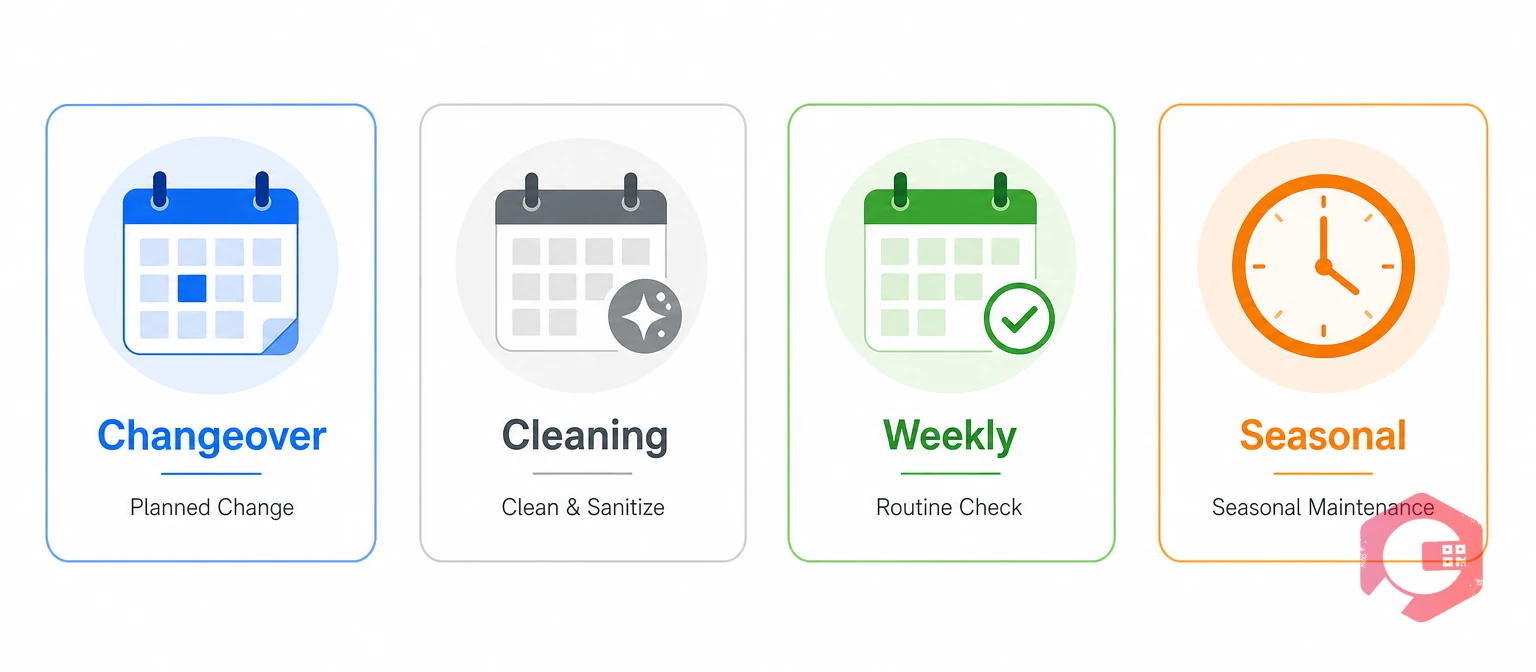
Brewery maintenance planning works when each task is matched to a pause that already exists in the brewing and packaging calendar. A maintenance window is a planned pause in production when equipment can be serviced without extra lost output.
The Four-Window Maintenance Planning Framework:
Start with the task list from your schedule. Give each task a window, a duration, and a parts list. Most breweries already have all four windows; the gap is that nobody assigns tasks to them.
Planned windows also make safe work easier. OSHA lockout/tagout rules cover servicing and maintenance on machines. Following them takes time that rushed repairs rarely allow.
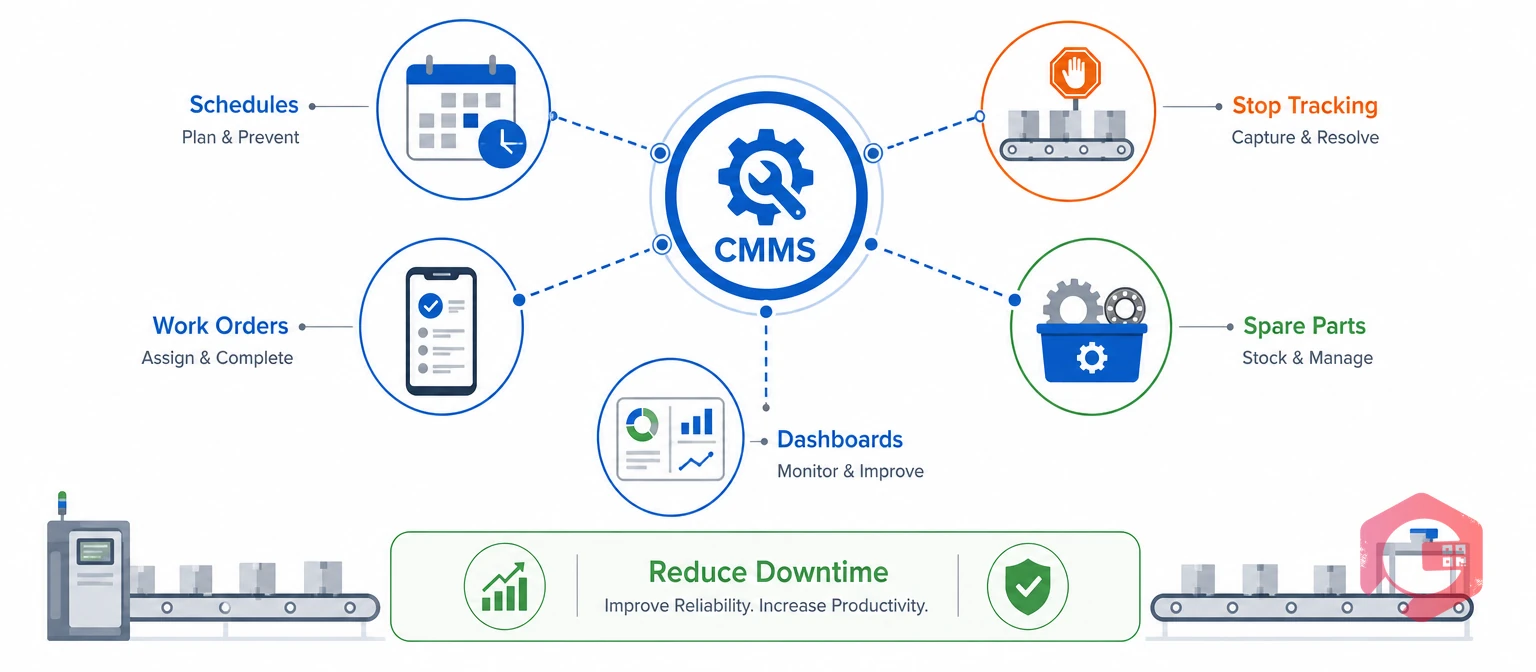
A CMMS reduces packaging line downtime by putting schedules, stop data, and spare parts into one system that every shift can see. Maintenance teams using Cryotos have reported up to 30% reduction in unplanned downtime and 25% faster repair turnaround.
Where the line has sensors or PLC data, Cryotos can also use IoT readings to open work when a value crosses its limit. Cryotos food and beverage maintenance software brings these features together for fast-moving, sanitation-heavy plants.
Fewer surprises come from one record that planners, technicians, and operators all share.
The major challenge in this scenario is the lack of a shared record, and Cryotos solves it by turning every stop, schedule, and part into one connected history. This scenario is an illustrative composite based on patterns maintenance teams commonly report. It is not a named customer or a measured result.
A regional craft brewery runs a canning line across two shifts. Stops are frequent but short, so nobody tracks them. Brewery maintenance runs on a whiteboard and one senior technician’s memory.
The problem is not one bad machine. Without a shared record, every stop is treated as new.
In a scenario like this, the biggest change is visibility. The team plans from data instead of memory, and the right task, part, and history reach the right person at the right time.
It is the planned and reactive care of brewing, cellar, and packaging equipment. It matters most on packaging lines because speeds are high, and one small fault can stop every machine on the line.
A CMMS improves brewery maintenance by generating preventive work on time, logging every stop by reason, and keeping spares and history in one place. Teams then fix repeat causes instead of repeating the same repair.
Follow the equipment maker’s manual first, then add checks each shift and wear-part changes by run hours. Review the intervals against your own stop history and shorten them for any machine that keeps failing.
Yes. Smaller breweries can start with the packaging line’s critical machines and add other assets later. The first goal is simple: record every stop, schedule the top preventive tasks, and track spare parts.
Track downtime by machine and reason, preventive task completion, and repeat failures. These three measures show where planned work is missing and which machines deserve attention first.
Packaging lines run better when maintenance is planned around the brewing calendar. Schedule a free demo to see how Cryotos helps breweries plan preventive work, track every stoppage, and keep packaging lines running.



Cryotos AI predicts failures, automates work orders, and simplifies maintenance—before problems slow you down.