
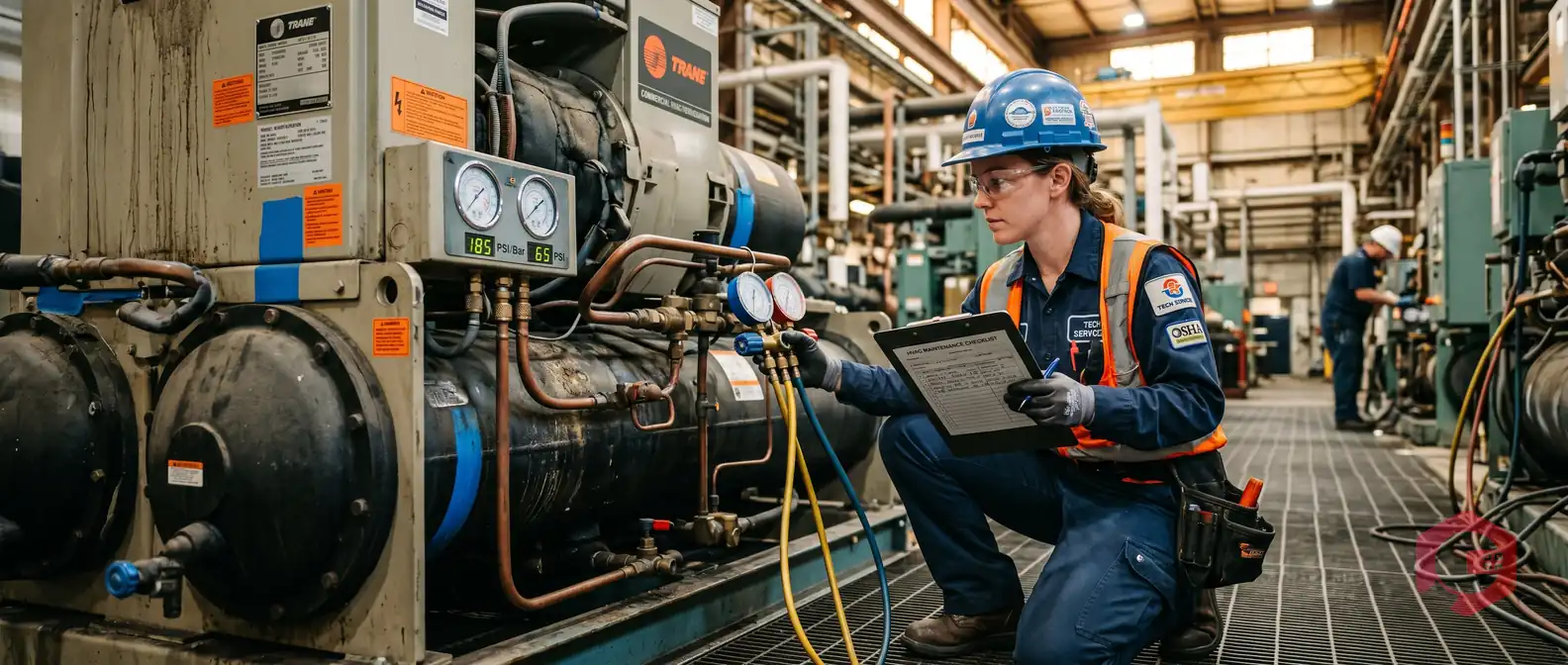
Appliance equipment lifespan refers to the total productive life of an appliance asset — from commissioning to end-of-life — before replacement becomes more cost-effective than continued maintenance. In appliance manufacturing and facility management, the average industrial appliance lasts between 10 and 20 years, but research from the U.S. Department of Energy shows that poor maintenance practices can cut that lifespan by 30 to 40%. A Computerized Maintenance Management System (CMMS) changes that equation entirely — giving maintenance teams the tools to track, schedule, and optimize every maintenance touchpoint that keeps appliance assets running longer.
If your facility is losing appliances to early failure, unexpected breakdowns, or warranty gaps, the problem usually isn't the equipment — it's the maintenance process behind it. Here's how CMMS helps you get more productive years from every asset on your floor.
Appliance equipment lifespan is the duration an asset performs at or above its designed efficiency threshold before major capital replacement is required. In facility and manufacturing contexts, this spans everything from commercial refrigeration units and HVAC systems to industrial washing machines, compressors, and dryer banks.
Understanding baseline lifespans helps maintenance teams set realistic replacement schedules and identify assets that are underperforming relative to their category. The following benchmarks reflect well-maintained equipment under standard operating conditions:
When appliances fail before their expected end-of-life, the financial impact extends far beyond the replacement cost. A McKinsey study on maintenance and capital productivity found that unplanned equipment failures cost manufacturers up to 15% of their annual production value. For an appliance manufacturing plant running 50 major assets, even a 5-year reduction in average lifespan can represent millions in unbudgeted capital expenditure.
Beyond capital cost, premature replacement carries hidden costs: production downtime during replacement, technician overtime, procurement lead times for new equipment, and lost warranty coverage on assets that could have been maintained into compliance.

Most facilities don't lose appliances to catastrophic failures — they lose them to a slow accumulation of small, preventable problems. These six factors consistently appear in root cause analyses of early appliance retirement:
When maintenance teams respond only to breakdowns, minor issues compound into major failures. A compressor that needed a bearing replacement at year 5 becomes a complete motor failure by year 7. Plant Engineering research shows that every $1 of deferred maintenance generates $4 in future repair or replacement costs. Reactive maintenance shortens appliance lifespan faster than any other factor.
When the right part isn't available at the right time, maintenance teams improvise — using non-OEM parts, delaying repairs, or running equipment at reduced capacity while awaiting stock. Each of these scenarios accelerates wear. Facilities without real-time inventory visibility routinely operate with critical spare parts at zero stock, discovered only at the moment of failure.
Time-based maintenance schedules are a starting point, not a complete strategy. An appliance running 3 shifts a day degrades twice as fast as one running a single shift — yet most facilities apply the same quarterly PM schedule to both. Without usage data (runtime hours, cycle counts, load metrics), PM intervals are guesses rather than calibrated decisions.
Industrial appliances often come with 3–5 year manufacturer warranties that cover component failures at zero cost to the facility. When warranty records aren't tracked systematically, teams pay out-of-pocket for repairs that should have been covered — or miss the window for warranty-eligible replacements entirely.
Without standardized maintenance checklists and digital records, the quality of maintenance work varies by technician. An experienced tech might catch early signs of belt wear; a newer team member following only a verbal handover might not. Inconsistency creates gaps that accumulate into lifespan reduction over time.
Facilities without structured asset lifecycle data can't anticipate when appliances will approach end-of-life. Capital budgeting for replacements happens reactively — triggered by failure rather than planned around a forecast. This creates budget spikes, emergency procurement premiums, and production disruptions that could have been avoided with 12–18 months of lead time.

A well-configured asset management system attacks every one of those six lifespan killers systematically. Here's how CMMS translates into real, measurable lifespan extension for appliance assets:
CMMS replaces paper-based and calendar-reminder Preventive Maintenance systems with automated scheduling that triggers maintenance tasks based on time intervals, runtime hours, cycle counts, or sensor thresholds. Cryotos CMMS supports both static PMs (fixed intervals) and dynamic PMs (usage-based), so a refrigeration compressor running 18 hours a day gets serviced more frequently than one running 8 hours — automatically, without manual recalculation.
Pre-built maintenance templates, customizable checklists, and drag-and-drop rescheduling ensure that no PM task falls through the cracks, even during peak production periods. Automated alerts reach technicians via mobile, email, or WhatsApp — eliminating the "I didn't know it was due" failure mode entirely.
Through IoT integration with SCADA systems, PLCs, and edge sensors, Cryotos CMMS ingests real-time appliance performance data — temperature, vibration, pressure, energy consumption — and triggers alerts when readings drift outside acceptable thresholds. This transforms maintenance from a calendar exercise into a condition-based practice: you service the appliance when it needs it, not just when the schedule says so.
For appliance manufacturers, this means catching bearing wear before it becomes motor failure, identifying refrigerant leaks before compressor damage occurs, and detecting electrical anomalies before they cause catastrophic burnout. Reliable Plant research shows that condition-based maintenance can extend equipment lifespan by 25–40% compared to time-based PM alone.
Every appliance in Cryotos is registered with its full specification history — including manufacturer warranty terms, service contract details, and compliance certification deadlines. The system automatically flags warranty expiry windows, ensuring that teams claim warranty-eligible repairs before the window closes. For a facility managing 100+ appliance assets, this systematic warranty tracking routinely saves tens of thousands in repair costs annually.
Cryotos links spare parts inventory directly to asset maintenance records. When a PM task is scheduled, the system checks stock availability for required parts before the work order is dispatched. Critical stock notifications alert procurement teams when consumables — filters, belts, lubricants, seals — drop below minimum thresholds. This eliminates the "parts not available" delay that forces teams to run appliances beyond their safe maintenance window.
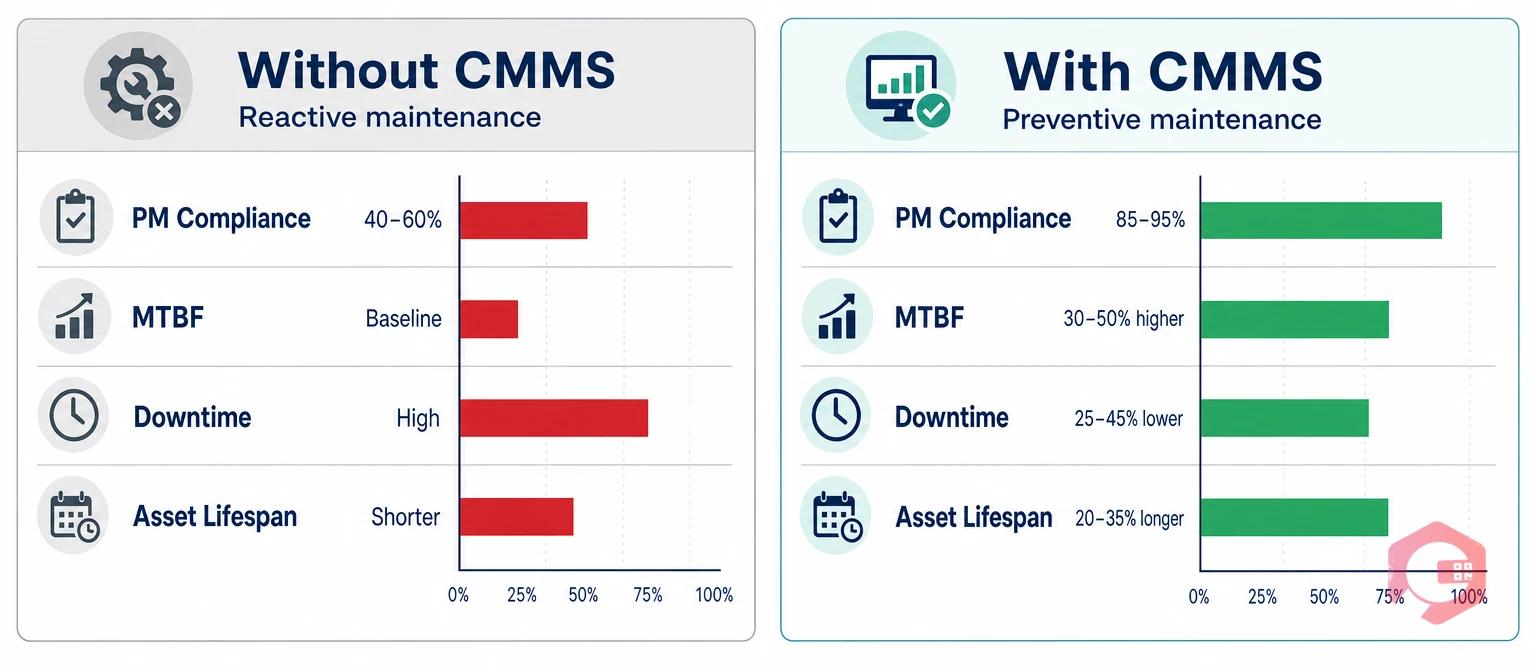
The lifespan impact of structured CMMS adoption is well documented across industries. Facilities that implement CMMS and maintain consistent PM compliance consistently outperform reactive-maintenance operations on every asset longevity metric:
Cryotos customers in appliance manufacturing and facility management report a 30% reduction in unplanned downtime and 25% faster mean time to repair (MTTR) within the first year of deployment — directly translating to longer productive asset life and lower total cost of ownership.

Getting more from every appliance asset starts with a structured program built on accurate data, automated scheduling, and continuous improvement. Here's how to structure it using Cryotos:
Register every appliance in Cryotos with its manufacturer specifications, installation date, warranty terms, and historical maintenance records. Use QR code labels for instant field access — a technician scans the asset and sees its full history, pending tasks, and spare parts list in seconds.
Use Cryotos's preventive maintenance software to create category-specific PM templates: HVAC servicing checklists, refrigeration unit inspection protocols, motor lubrication schedules. Set intervals based on manufacturer recommendations and adjust dynamically as runtime data accumulates. This is the fastest route from reactive to preventive — you're not building schedules from scratch, you're applying proven templates to your specific asset inventory.
Where appliances support sensor integration, connect them to Cryotos via SCADA or edge device APIs. Configure threshold alerts for key health indicators. The system automatically creates a work order when a reading crosses the threshold — no human monitoring required. This is where appliance lifespan extension shifts from incremental to transformational.
Use Cryotos's downtime tracking and BI dashboard to monitor MTBF, MTTR, PM compliance rates, and asset availability across your appliance fleet. Set quarterly reviews to identify assets trending toward early failure and adjust PM intervals before problems escalate. The goal is a continuous improvement loop where your maintenance program gets smarter with every data point.
Appliances are capital-intensive assets — the difference between a 12-year asset life and an 18-year asset life, multiplied across a facility's full inventory, is a fundamental business advantage. Cryotos CMMS gives maintenance teams the visibility, automation, and intelligence to consistently land on the better side of that number. Start your free trial today and see how much productive life your appliances still have to give.
Industrial appliance lifespan varies by category and maintenance quality. Commercial HVAC systems last 15–20 years with proper PM; industrial refrigeration units can last 15–25 years. Compressors and motors well-maintained with lubrication and vibration monitoring often exceed 20 years. Reactive-only maintenance typically cuts these lifespans by 30–40%.
CMMS extends appliance lifespan by automating preventive maintenance scheduling, enabling condition-based maintenance through IoT integration, tracking warranty and compliance deadlines, and optimizing spare parts availability. Together, these capabilities eliminate the deferred maintenance and data gaps that cause premature appliance failure. Studies show CMMS-managed assets achieve 20–35% longer lifespan versus reactively maintained equivalents.
Service frequency should be based on manufacturer recommendations, actual usage data, and operating environment conditions — not arbitrary calendar intervals. A compressor running 3 shifts in a hot environment needs more frequent servicing than one running a single shift in a temperature-controlled space. CMMS systems like Cryotos calculate dynamic PM intervals based on runtime hours and sensor data, ensuring appliances are serviced exactly when needed.
Yes. Modern CMMS platforms store full warranty details for every registered asset and automatically alert teams before warranty windows close. This ensures that covered repairs are claimed before expiry and that replacement planning begins with enough lead time to avoid emergency procurement. Cryotos also supports end-of-life tracking with automated notifications when assets approach their projected replacement date.



Cryotos AI predicts failures, automates work orders, and simplifies maintenance—before problems slow you down.



