

CMMS for the steel industry is a Computerized Maintenance Management System specifically configured to manage the complex, high-temperature, and safety-critical maintenance operations found in steel plants, steel mills, and integrated steel manufacturing facilities. Unlike generic maintenance software, a steel-industry CMMS must handle blast furnace monitoring, rolling mill asset tracking, reheating furnace scheduling, and compliance with stringent safety regulations — all within a single digital platform.
According to a McKinsey report on digital transformation in metals, steel manufacturers that adopt predictive maintenance and digital asset management tools reduce unplanned downtime by up to 30% and cut maintenance costs by 15–25%. With downtime in a large steel plant costing upward of $100,000 per hour, the case for a dedicated CMMS has never been stronger.
Key capabilities a CMMS delivers to steel plants include:

Steel manufacturing is one of the most maintenance-intensive industries in the world. Assets operate under extreme conditions — temperatures exceeding 1,600°C in blast furnaces, continuous mechanical stress in rolling mills, and corrosive environments throughout the plant. These conditions make maintenance planning both critical and uniquely complex.
A typical integrated steel plant runs hundreds of interdependent assets, including blast furnaces, basic oxygen furnaces (BOF), electric arc furnaces (EAF), ladle metallurgy furnaces, continuous casting machines, hot rolling mills, cold rolling mills, and reheating furnaces. The failure of any single critical asset can halt the entire production chain.
For example, a reheating furnace failure doesn't just affect that single unit — it immediately starves the rolling mill of hot slabs, cascading into a complete line shutdown. This interdependency means that maintenance teams must prioritize asset criticality carefully, focusing their preventive efforts on equipment with the highest production impact. Without a CMMS to map these dependencies and automate scheduling, maintenance managers are left making decisions based on memory or outdated spreadsheets — a recipe for costly surprises.
Steel plants operate under some of the most demanding safety regulations in manufacturing. Workers face hazards including molten metal splashes, toxic fume exposure, oxygen-deficient atmospheres in confined spaces, high-voltage electrical systems, and the constant risk of burns and crush injuries from heavy equipment. Regulatory bodies such as OSHA in the United States and equivalent agencies worldwide mandate strict permit-to-work (PTW) systems, Lockout/Tagout (LOTO) procedures, and documented inspection trails.
According to the OSHA Steel Industry Standards, non-compliance can result in fines exceeding $15,000 per violation. Beyond penalties, a compliance failure in a steel plant can be fatal. A CMMS ensures safety checklists, PTW approvals, and LOTO certificates are enforced digitally before any maintenance task begins.
Unplanned downtime in steel manufacturing is extraordinarily expensive. Industry benchmarks place the average cost of a blast furnace outage at $100,000–$200,000 per hour when lost production, idle labor, raw material waste, and emergency repair premiums are combined. A rolling mill shutdown can disrupt delivery schedules for weeks, damaging customer relationships and triggering contractual penalties.
The root cause of most unplanned downtime in steel plants is predictable: deferred maintenance, missed inspections, and the absence of real-time asset health data. A well-implemented CMMS addresses all three by automating maintenance schedules, alerting teams to developing faults, and providing a live view of asset health across the entire facility.
Effective maintenance in steel plants combines multiple strategies, each suited to different asset types and operating conditions. A CMMS makes it possible to run all three simultaneously with minimal manual effort.
Preventive maintenance (PM) in steel plants means scheduling inspections, lubrication, and part replacements on a regular basis — before failures occur. PM is the backbone of steel plant maintenance, particularly for high-wear components such as:
A CMMS allows maintenance teams to configure both time-based PM (e.g., every 30 days) and usage-based PM (e.g., after every 50,000 tonnes rolled), ensuring that the right maintenance happens at the right time, not just on a generic calendar schedule.
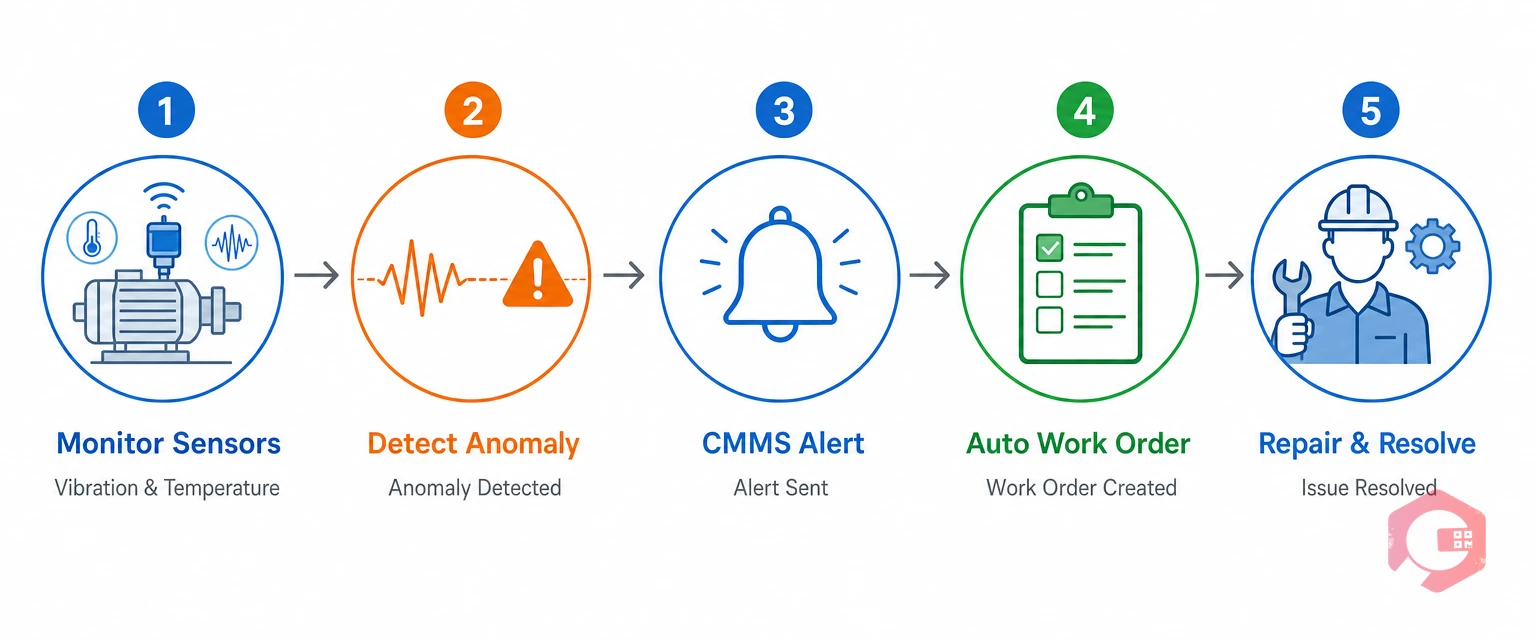
Steel plants are increasingly deploying IoT sensors to monitor equipment health in real time. Vibration sensors on rotating equipment such as motors, pumps, and gearboxes can detect imbalance and bearing wear months before a failure occurs. Thermal cameras identify hot spots on electrical panels and refractories. Acoustic sensors pick up early signs of compressed air leaks and structural cracking.
When this sensor data feeds directly into a CMMS, the system can automatically generate a work order the moment a parameter exceeds a pre-set threshold — before any human has noticed the anomaly. According to Reliable Plant, predictive maintenance programs typically deliver a 10:1 return on investment, with facilities reducing maintenance costs by 25–30% and eliminating up to 75% of unplanned breakdowns.
A modern CMMS does far more than schedule maintenance tasks. For steel plants, it becomes the operational nervous system connecting technicians on the floor to managers in the control room, spare parts in the warehouse, and safety systems throughout the facility.
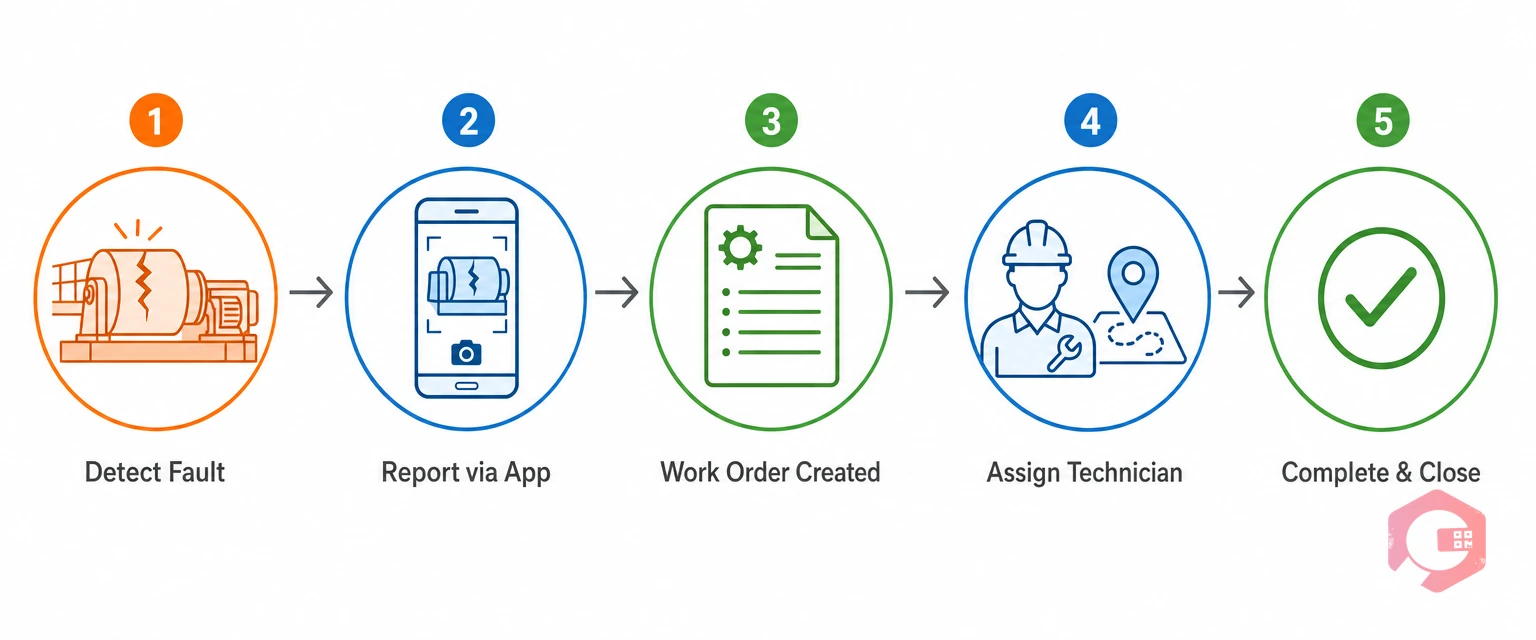
Steel plant maintenance teams handle hundreds of work orders every week — from urgent blast furnace repairs to routine conveyor belt inspections. Without a structured system, work orders get lost, duplicated, or deprioritized based on who shouts loudest rather than what is most critical.
A CMMS automates the entire work order lifecycle: a technician spots a problem, reports it via mobile app (including photos and voice notes), the system creates a work order with the relevant asset history, assigns it based on technician skills and location, and tracks it through to completion. Cryotos CMMS additionally uses Generative AI to analyze uploaded photos of faults and automatically draft detailed work order descriptions — cutting the time from fault detection to work order creation from hours to minutes.
Steel plants contain thousands of individual assets spread across large, often dangerous areas. Tracking where each asset is, what condition it is in, and what maintenance history it carries is a monumental task without digital tools. A CMMS provides a centralized asset registry where every piece of equipment has a digital profile containing its specifications, maintenance history, warranty status, and current condition.
QR code and NFC scanning via the CMMS mobile app means that a technician can walk up to any asset in the plant, scan its tag, and instantly see what maintenance has been done, what is due, and what parts are needed — without contacting anyone or searching through paper records. Over time, this asset history becomes the foundation for accurate capital planning decisions: when to repair versus replace a high-cost asset like a gearbox or a crane hoist.
Overall Equipment Effectiveness (OEE) is the key performance metric for steel plant productivity. It combines three factors — Availability, Performance, and Quality — into a single score that tells you how efficiently your plant is running compared to its theoretical maximum. World-class steel plants target OEE scores of 85% or above; many reactive-maintenance-dependent plants operate in the 50–60% range.
A CMMS captures real-time downtime data by department, asset, and failure code. This data automatically calculates MTTR (Mean Time to Repair), MTBF (Mean Time Between Failures), and Breakdown Hours (BDH) — the key inputs for improving OEE. When a blast furnace goes down at 2 AM, the CMMS timestamps the event, records the root cause, tracks the repair duration, and logs the parts used — giving management a complete picture for analysis and continuous improvement.
Spare parts management is a persistent headache in steel plants. Critical components such as refractory materials, electrode graphite, roller bearings, seals, and hydraulic hoses must be stocked in sufficient quantities to respond to breakdowns — but overstocking ties up capital and warehouses space. Running out of a critical spare during a furnace outage can extend a planned 4-hour repair into a 48-hour crisis.
A CMMS solves this through intelligent inventory management: setting minimum stock thresholds for critical parts, automatically triggering purchase requests when stock falls below that level, and linking parts consumption directly to work orders so that inventory records stay accurate in real time. Cryotos Inventory Management maps your entire warehouse structure — aisles, racks, shelves, bins — and uses QR code scanning for fast, accurate part retrieval.
Safety in steel plants is non-negotiable. The combination of molten metal, high-voltage systems, toxic gases, and heavy machinery creates an environment where maintenance errors can be fatal. A CMMS plays a central role in ensuring that every maintenance task is completed safely and in compliance with applicable regulations.
Digital Permit to Work (PTW) systems embedded in a CMMS enforce mandatory safety checks before any high-risk task begins. A hot-work permit for welding near a furnace, for example, cannot be approved in the system until the area has been confirmed free of flammable gases, a fire watch has been assigned, and all relevant personnel have confirmed their credentials. Similarly, LOTO procedures are enforced digitally: the system prevents a work order from being closed until the technician confirms that all energy sources have been re-energized safely.
For steel plants operating across multiple countries or subject to ISO 45001 (Occupational Health and Safety Management Systems), a CMMS provides the audit trail needed to demonstrate compliance during inspections. Every work order, safety check, and approval is timestamped and stored in the cloud — accessible in seconds rather than hours.
According to ISO 45001, organizations must establish, implement, and maintain documented processes for hazard identification and risk assessment. A CMMS makes this a built-in part of daily operations rather than a separate compliance burden.

Cryotos CMMS is built to handle the scale, complexity, and safety demands of heavy industry — including integrated steel plants, mini-mills, and downstream steel processing facilities. Here is how Cryotos specifically addresses the unique needs of steel manufacturers:
Steel plants using Cryotos CMMS have reported a 30% reduction in downtime and 25% faster repair times — directly translating to higher OEE scores and lower maintenance cost per tonne of steel produced.

The business case for CMMS adoption in steel manufacturing is compelling. Here is a summary of the tangible benefits that steel plants consistently realize after implementing a structured, digital maintenance management system:
CMMS for the steel industry is a Computerized Maintenance Management System specifically configured to support the maintenance needs of steel plants and mills. It manages work orders, preventive maintenance schedules, spare parts inventory, downtime tracking, and safety compliance — all within a single digital platform tailored to the high-temperature, high-criticality environment of steel manufacturing.
A CMMS reduces downtime in steel plants by automating preventive maintenance schedules so that equipment is serviced before failures occur, integrating with IoT sensors to detect early warning signs, and enabling faster response when breakdowns do happen through mobile work order management, pre-kitted spare parts, and real-time technician coordination. Steel plants that implement a CMMS typically reduce unplanned downtime by 30–50% within the first year.
Yes. A modern CMMS like Cryotos can handle the full range of blast furnace maintenance tasks, including tuyere inspection scheduling, cooling stave monitoring, refractory lining assessment cycles, and hot-blast stove valve maintenance. The system supports both time-based and usage-based PM triggers, and can integrate with process control systems to monitor key blast furnace parameters in real time.
Absolutely. While large integrated steel plants benefit enormously from CMMS, mini-mills and downstream steel processors also see significant returns. Cloud-based CMMS solutions like Cryotos scale easily, with no need for expensive on-premises servers. Small plants benefit from the same core features — PM scheduling, work order management, spare parts tracking — without the complexity overhead of an enterprise ERP system.
A CMMS supports safety compliance in steel plants through digital Permit to Work (PTW) workflows, Lockout/Tagout (LOTO) enforcement, mandatory safety checklists embedded in work orders, and complete audit trails for every maintenance activity. This ensures that no high-risk task — hot work, confined space entry, electrical isolation — can be initiated or closed without the required safety authorizations and documentation, satisfying OSHA, ISO 45001, and other applicable standards.
Steel manufacturers face some of the most demanding maintenance challenges in the industrial world — extreme heat, heavy loads, complex asset interdependencies, and uncompromising safety requirements. A CMMS specifically configured for the steel industry transforms maintenance from a reactive, costly burden into a proactive, data-driven competitive advantage. Whether you operate a large integrated steel plant, an electric arc furnace mini-mill, or a downstream processing facility, the right CMMS delivers measurable improvements in OEE, safety compliance, and maintenance cost per tonne.
Cryotos CMMS is built for exactly these conditions — combining mobile-first ease of use with the depth of functionality that steel plant maintenance teams require. From AI-powered work order management to real-time downtime tracking and predictive maintenance integration, Cryotos gives steel manufacturers everything they need to keep their plants running at peak efficiency. Contact Cryotos today for a free demo tailored to your steel plant's specific maintenance challenges.

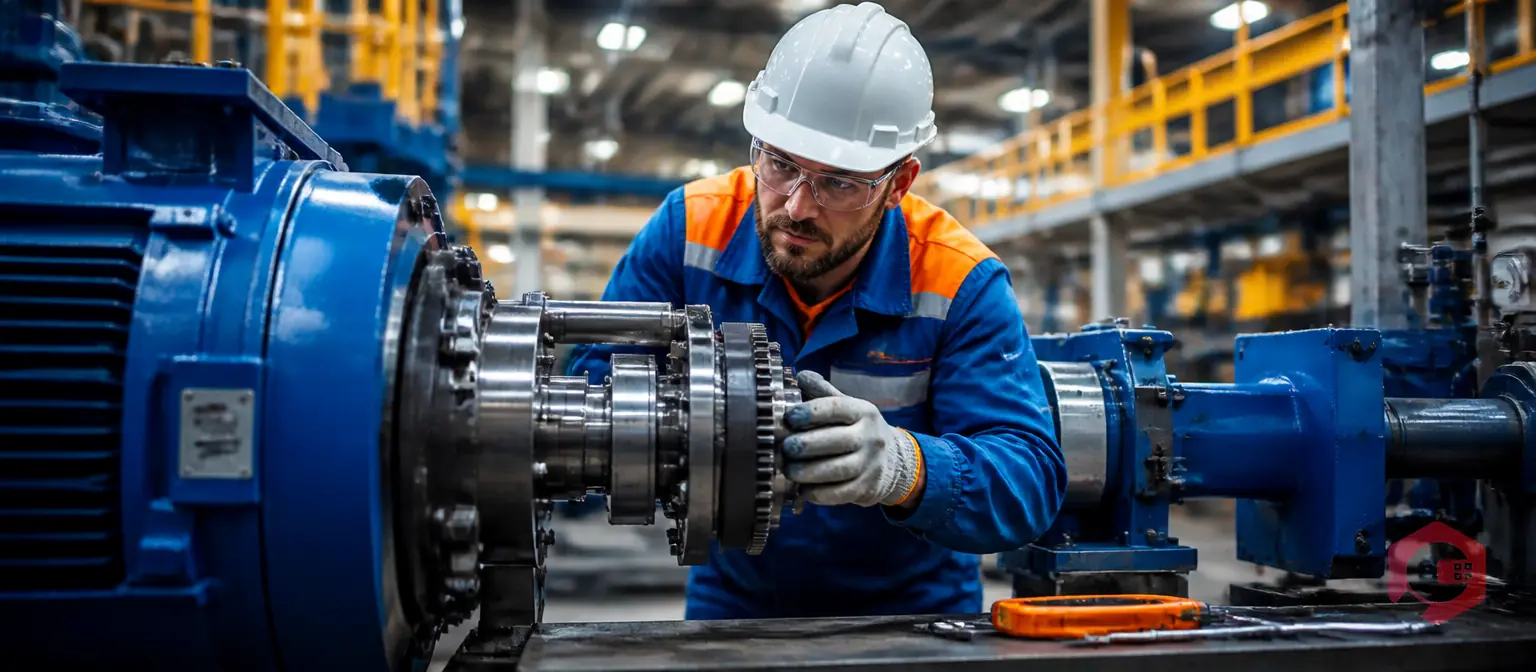


Cryotos AI predicts failures, automates work orders, and simplifies maintenance—before problems slow you down.



