CMMS for Steel Industry: How to Reduce Downtime and Maximize Equipment Life

Article Written by:

Muthu Karuppaiah

Created On:

April 30, 2026

CMMS for steel industry operations helps blast furnace, rolling mill, and continuous caster maintenance teams prevent breakdowns, manage safety compliance, and extend equipment life.

CMMS for Steel Industry: How to Reduce Downtime and Maximize Equipment Life

CMMS for steel industry operations is a Computerized Maintenance Management System purpose-built to handle the extreme demands of steelmaking — from blast furnaces and ladles to rolling mills and continuous casters. Steel plants run equipment at temperatures exceeding 1,600°C, under enormous mechanical stress, and often around the clock. A single unplanned breakdown on a critical production line can cost a facility tens of thousands of dollars per hour in lost output, scrap, and emergency labor. A CMMS gives maintenance teams the digital infrastructure to prevent those breakdowns before they happen.

Steel manufacturers that adopt structured CMMS programs report significant reductions in unplanned downtime and meaningful extensions in equipment lifespan. The reason is straightforward: the steel industry has too many assets, too many failure modes, and too much at stake to manage maintenance on paper or memory alone.

Unique Maintenance Challenges in the Steel Industry

Steel manufacturing presents maintenance challenges that few other industries can match in scale and severity. The equipment operates in extreme conditions — high heat, heavy vibration, corrosive materials, and continuous loading cycles — that accelerate wear at rates that would destroy less rugged industrial machinery in weeks.

The blast furnace is perhaps the starkest example. It operates continuously, often for years at a stretch, because shutting it down and restarting it is expensive and technically complex. That means maintenance must happen around the plant, not to it. Refractory linings, cooling staves, tuyeres, and charging equipment all require meticulous monitoring and timed intervention without halting the main production flow. This demands precision scheduling that paper-based systems simply cannot deliver.

Rolling mills present a different set of problems. Mill rolls wear predictably but must be changed on exact schedules — too early and you waste useful roll life, too late and surface quality degrades and breakouts become more likely. The same logic applies to bearings in rolling stands, hydraulic systems on slab pushers, and the entire family of equipment that moves hot metal through the facility. Every asset has its own wear curve, its own inspection interval, and its own failure mode, and tracking all of them simultaneously across a large integrated steel plant requires a centralized digital system.

Finally, there is the workforce challenge. Steelmaking plants run multiple shifts, and maintenance knowledge is often concentrated in experienced technicians who have built up years of intuition about how specific equipment behaves. When those technicians retire or transfer, that knowledge leaves with them unless it has been captured in a structured system. A CMMS provides the institutional memory that keeps maintenance quality consistent regardless of who is on shift.

Four common steel plant maintenance pain points — equipment complexity, safety compliance, unplanned downtime, spare parts shortage | Cryotos

What a CMMS Does for Steel Plants

A CMMS is the operational backbone of a modern steel plant's maintenance function. At its most basic, it replaces paper work orders, whiteboard schedules, and spreadsheets with a centralized digital platform that all maintenance stakeholders — planners, technicians, supervisors, and engineers — can access in real time.

For steel plants specifically, the most important functions are work order management, preventive maintenance scheduling, asset lifecycle tracking, spare parts inventory control, and safety compliance documentation. Each of these functions addresses a real pain point that steel maintenance teams face daily.

Work order management ensures that when a problem is reported — a vibrating bearing, an unusual temperature reading on a cooling circuit, a hydraulic leak on a slab caster — it is captured immediately, assigned to the right technician, prioritized correctly against other work, and tracked through to completion. Without this, work falls through the cracks, especially during shift changes when verbal handoffs miss details.

Preventive maintenance scheduling automates the creation and assignment of routine maintenance tasks based on time, usage, or condition. A CMMS can be configured to generate a work order for lubrication of rolling mill bearings every 500 operating hours, for refractory inspection every 90 days, or for hydraulic oil sampling every month. The system handles the scheduling automatically, so planners can focus on execution rather than calendar management.

Asset lifecycle tracking maintains a complete history of every significant asset in the plant — every work order completed, every part replaced, every inspection passed or failed. This history is essential for two reasons: it allows maintenance engineers to identify patterns (a bearing that keeps failing every six weeks probably has an underlying alignment or lubrication problem), and it provides the evidence base for making repair-versus-replace decisions on aging equipment.

Key Equipment Types CMMS Manages in Steel Facilities

Steel plants contain hundreds of distinct asset categories, but a handful of equipment types drive the majority of maintenance workload and downtime risk. A well-configured CMMS should have specific maintenance plans, inspection templates, and failure mode records for each of these critical asset families.

Blast furnaces and associated equipment — hot blast stoves, casthouse equipment, slag granulation systems — require continuous monitoring and precisely timed maintenance windows. Refractory lining campaigns are planned years in advance, but the equipment supporting the blast furnace needs constant attention in between. Electric arc furnaces present similar demands, with electrode systems, roof assemblies, and tilting mechanisms all requiring scheduled inspection and maintenance.

Rolling mills — hot strip mills, cold rolling mills, plate mills, and rod and bar mills — are perhaps the most maintenance-intensive assets in the plant. Rolls, bearings, roll chocks, hydraulic systems, and loopers all wear at high rates and require frequent replacement and adjustment. The mill's production schedule is tightly coupled to roll change schedules, so maintenance planning here directly affects output capacity.

Continuous casting machines, which transform liquid steel into solid semi-finished product, are especially demanding. Mold oscillation systems, segment rolls, cooling water systems, and straightening sections all need regular inspection and servicing. A breakout in a continuous caster — where liquid steel escapes the solidifying shell — is a major safety incident and production loss that good maintenance practices can prevent.

Beyond the primary production equipment, steel plants rely heavily on utilities and support systems: compressed air networks, overhead cranes, dust collection systems, cooling towers, and electrical equipment. These are often overlooked in maintenance planning but cause significant disruption when they fail. A CMMS ensures they receive the same disciplined attention as the production assets.
Preventive Maintenance Scheduling for Steel

Preventive maintenance is the cornerstone of reliable steel plant operation. The goal is to perform maintenance tasks at the right time — frequent enough to prevent failure, infrequent enough to avoid unnecessary disruption and parts consumption — on every asset in the facility.

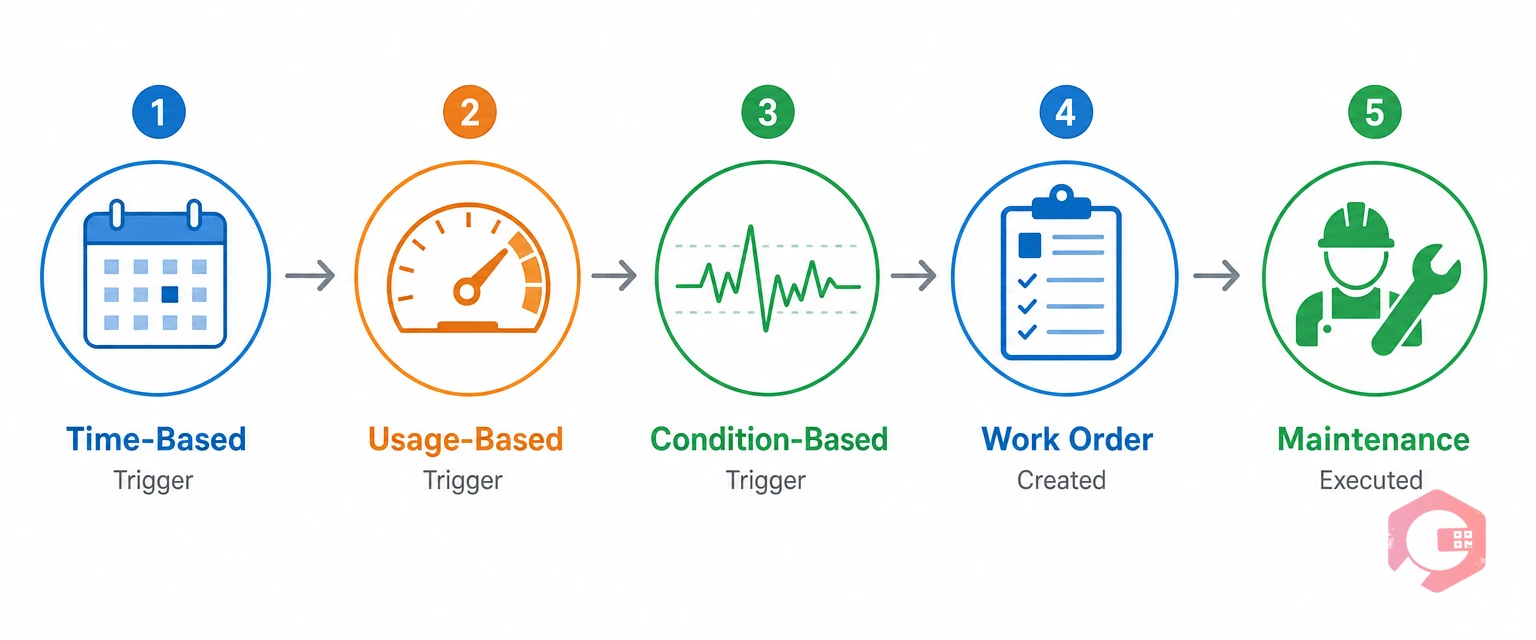
A CMMS enables two types of preventive maintenance triggers that are both essential in steel environments. Time-based triggers generate work orders on fixed calendar intervals — every week, every month, every quarter. These are appropriate for tasks that don't depend on how hard the equipment has worked, such as visual inspections of structural components or periodic lubrication of lightly loaded equipment. Usage-based triggers generate work orders based on operating metrics — hours of operation, tonnes of steel produced, number of heats, or cycles completed. These are more appropriate for high-utilization equipment like rolling mill rolls and furnace equipment where wear rate is directly linked to throughput.

The most advanced CMMS platforms also support condition-based triggers, where a work order is generated automatically when a sensor reading exceeds a defined threshold. For steel plants that have invested in vibration monitoring, temperature sensing, or oil analysis equipment, this capability allows maintenance to be scheduled precisely when the equipment needs it — not too early, not too late.

Getting the most out of preventive maintenance in a steel plant requires building detailed job plans for each recurring task. A job plan specifies the tools required, the parts that should be staged before the job starts, the safety procedures that must be followed, the step-by-step checklist the technician should complete, and the estimated labor time. When technicians arrive at a job with everything they need and clear instructions, maintenance quality is consistent and completion times are predictable. A CMMS stores these job plans and attaches them automatically to each work order.

Steel plant work order workflow — detect, report, auto-create, assign, complete | Cryotos

Safety Compliance and LOTO Management

Steel manufacturing is one of the most hazardous industrial environments in the world. Working around molten metal, high-pressure hydraulics, high-voltage electrical systems, extreme heat, and heavy moving equipment creates risks that demand rigorous safety management. A CMMS plays a critical role in ensuring that safety procedures are not just documented but actually followed on every maintenance job.

Lockout/Tagout (LOTO) is perhaps the most important safety procedure in any steel plant maintenance operation. Before any maintenance work begins on powered equipment, all energy sources must be isolated, locked, and verified. This process protects technicians from unexpected energization during repairs. A CMMS can integrate LOTO procedures directly into work orders, making it impossible for a technician to mark a job complete without confirming that all LOTO steps were followed. Digital signatures and timestamps create an auditable record of compliance.

Permit-to-Work (PTW) systems are the broader framework within which LOTO sits. For high-risk work in steel plants — confined space entry in vessels, hot work near flammable materials, work at height on furnace structures — a formal PTW process ensures that the right people have assessed the risks, the right controls are in place, and the right level of supervision is available before work begins. A CMMS can host the entire PTW workflow digitally, routing permits through the required approval chain and maintaining a complete record of every permit issued.

Beyond LOTO and PTW, CMMS supports safety compliance through structured inspection checklists, automated reminders for periodic safety inspections (such as crane inspections required by OSHA and similar regulatory bodies), and real-time tracking of which safety-critical equipment is currently out of service. This visibility is essential for large steel plants where dozens of maintenance jobs may be in progress simultaneously.

Spare Parts and MRO Inventory for Steel Plants

Spare parts management is a strategic challenge in steel plants. The right parts need to be available when equipment fails, but the cost of carrying excessive inventory is substantial. A large integrated steel plant may have tens of thousands of distinct spare parts in its storerooms, with some critical items costing hundreds of thousands of dollars each.

A CMMS connects maintenance work orders directly to inventory management, creating visibility into which parts are being consumed, at what rate, and on which assets. This data makes it possible to set minimum stock levels intelligently — based on actual consumption history and lead times — rather than guessing. When a work order is created for a planned maintenance job, the CMMS can check whether the required parts are in stock before the job is scheduled, preventing the frustrating situation where a maintenance job must be delayed because a part is missing.

For steel plants, the most critical inventory items are often those with long lead times: specialty bearings, refractory materials, hydraulic cylinders, and electrical components from OEM suppliers. A CMMS provides alerts when stock of these items falls below minimum levels, triggering procurement in time to replenish before a shortage occurs. It also provides the usage data procurement teams need to negotiate better supply agreements with key vendors.

Warehouse management within a CMMS can extend to physical location tracking, making it faster for technicians to locate parts in large, multi-section storerooms. QR code scanning allows inventory movements to be recorded instantly and accurately, reducing the discrepancies between what the system says is in stock and what is physically on the shelf.

IoT and Sensor Integration in Steelmaking

The steel industry has been an early adopter of industrial IoT, driven by the high cost of equipment failures and the availability of robust sensors capable of operating in extreme environments. A modern CMMS serves as the platform that collects sensor data, interprets it against defined thresholds, and converts anomalies into actionable maintenance work orders.

Vibration monitoring is widely used on rotating equipment throughout steel plants — pumps, fans, rolling mill drives, and motors. Vibration sensors continuously measure the amplitude and frequency characteristics of rotating components. When these readings deviate from the established baseline, the CMMS generates an alert and can automatically create a work order for inspection or bearing replacement. This catches developing bearing failures weeks before they reach the point of catastrophic failure, turning what would have been an emergency breakdown into a planned maintenance intervention.

Temperature monitoring is equally important in environments where heat is both the raw material and a potential failure mode. CMMS integration with thermal sensors on cooling systems, electrical switchgear, and refractory lining allows maintenance teams to detect anomalies early. A rising temperature trend in a cooling water circuit can signal blocked passages or pump degradation; a hot spot in an electrical panel can signal impending insulation failure. Catching these signals early prevents much larger failures downstream.

Oil analysis is another powerful condition monitoring technique well-suited to steel plant equipment. By periodically sampling hydraulic and lubricating oils and analyzing them for metal particles, chemical degradation, and contamination, maintenance teams can detect internal wear in gearboxes, hydraulic systems, and other oil-wetted components long before the wear becomes visible or audible. CMMS integration with oil analysis programs allows results to be automatically associated with the relevant asset and triggers follow-up work orders when results are outside acceptable limits.

Predictive maintenance lifecycle in steel plants — monitor, detect, alert, repair | Cryotos

How Cryotos CMMS Supports Steel Industry Maintenance

Cryotos is built to handle the complexity that steel plant maintenance demands. The platform supports the full range of maintenance management functions — from work order creation and preventive maintenance scheduling to inventory management, safety compliance, and real-time analytics — within a single, integrated system that works on both desktop and mobile devices.

For steel plant technicians working in demanding field conditions, the Cryotos mobile CMMS app is particularly valuable. Technicians can access work orders, complete inspection checklists, record parts used, and close jobs from the plant floor without returning to an office. The app supports offline operation, which matters in areas of the plant where wireless coverage is limited. QR code scanning on equipment assets gives technicians instant access to the full maintenance history, manuals, and safety procedures for any piece of equipment they are working on.

The preventive maintenance scheduling module in Cryotos supports both time-based and usage-based triggers, allowing steel plants to configure maintenance intervals that match the actual operating patterns of each asset class. The calendar interface provides a visual overview of scheduled maintenance load, making it easy for planners to balance workload across shifts and avoid scheduling conflicts with production plans.

Workflow automation in Cryotos handles the complex approval chains that safety-critical maintenance in steel plants requires. PTW requests can be routed automatically through the required approval levels — area supervisor, safety officer, maintenance manager — with each approver receiving a notification and being able to approve or comment digitally from any device. The complete approval history is preserved as an auditable record.

The BI dashboard gives maintenance managers and plant leaders real-time visibility into key performance indicators: overall equipment effectiveness, mean time between failures, mean time to repair, planned versus unplanned maintenance ratios, and work order backlog trends. These metrics allow management to see at a glance whether the maintenance program is delivering the reliability and cost performance the business needs, and to identify specific areas where improvement is required.

For steel plants that want to connect IoT sensor data to their maintenance workflows, Cryotos supports integration with SCADA systems, PLC data streams, and IoT platforms through its meter reading and threshold alert capabilities. When a monitored parameter crosses a defined threshold, Cryotos can automatically generate a work order, assign it to the appropriate crew, and notify the relevant supervisors — closing the loop from sensor alert to maintenance action with minimal manual intervention.

If your steel plant is still managing maintenance through spreadsheets, paper work orders, or disconnected systems, the productivity and reliability improvements available through a structured CMMS program are substantial. Contact the Cryotos team to learn how the platform can be configured to match the specific equipment, workflows, and safety requirements of your facility.

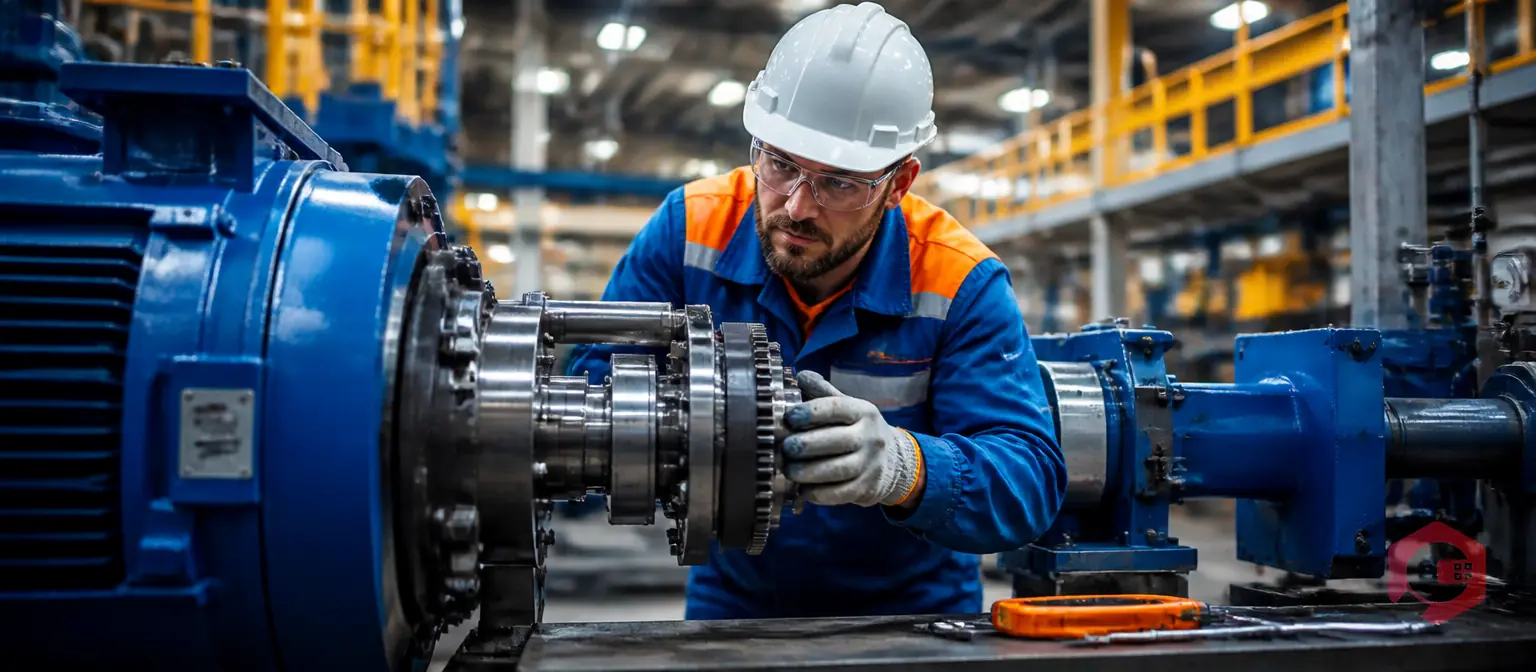
Steel plant technician using Cryotos CMMS mobile app with IoT sensors and wall dashboard — CMMS for steel industry | Cryotos

Frequently Asked Questions

What is CMMS software and why do steel plants need it?

CMMS software is a Computerized Maintenance Management System that centralizes all maintenance data — work orders, asset history, preventive maintenance schedules, spare parts inventory, and compliance records — in a single digital platform. Steel plants need CMMS because they operate extremely complex, high-value equipment in harsh conditions where unplanned failures are very expensive. A CMMS gives maintenance teams the tools to prevent failures rather than just react to them.

How does CMMS reduce downtime in steel manufacturing?

CMMS reduces downtime by enabling proactive maintenance instead of reactive repair. By scheduling preventive maintenance before equipment fails, tracking condition monitoring data that signals developing problems, and ensuring spare parts are available when needed, a CMMS eliminates most of the unplanned breakdowns that cause the most expensive downtime in steel plants. Plants using structured CMMS programs typically see unplanned downtime fall by 25–40% within the first year of implementation.

Can CMMS manage safety compliance in steel plants?

Yes. A CMMS can integrate safety procedures — including Lockout/Tagout checklists, Permit-to-Work workflows, confined space entry records, and crane inspection schedules — directly into work orders and maintenance processes. This ensures that safety requirements are followed consistently on every job and creates a digital audit trail that supports regulatory inspections and internal safety audits.

How does CMMS help with spare parts management for steel plants?

CMMS connects maintenance work orders to inventory, tracking which parts are consumed, at what rate, and on which assets. This allows steel plants to set minimum stock levels based on actual consumption history and lead times, receive automatic low-stock alerts for critical parts, and ensure that parts are staged before planned maintenance jobs begin. The result is fewer jobs delayed by missing parts and lower overall inventory carrying costs.

Is Cryotos CMMS suitable for integrated steel plants with multiple production units?

Yes. Cryotos is designed to scale across complex, multi-department facilities. The platform supports asset hierarchies that reflect the structure of an integrated steel plant — from site level down to individual equipment — and provides role-based access so that area maintenance teams see and manage their own assets while plant managers have visibility across the entire facility. Multiple plants can be managed from a single Cryotos instance.

Want to Try Cryotos CMMS Today? Lets Connect!
Thank you! Your submission has been received!
Oops! Something went wrong while submitting the form.
Related Post

CMMS for Steel Industry: How to Reduce Downtime and Maximize Equipment Life

Calendar
Duration:
9 min read
calendar today
Published on
April 30, 2026
Featured Image

CMMS for steel industry operations is a Computerized Maintenance Management System purpose-built to handle the extreme demands of steelmaking — from blast furnaces and ladles to rolling mills and continuous casters. Steel plants run equipment at temperatures exceeding 1,600°C, under enormous mechanical stress, and often around the clock. A single unplanned breakdown on a critical production line can cost a facility tens of thousands of dollars per hour in lost output, scrap, and emergency labor. A CMMS gives maintenance teams the digital infrastructure to prevent those breakdowns before they happen.

Steel manufacturers that adopt structured CMMS programs report significant reductions in unplanned downtime and meaningful extensions in equipment lifespan. The reason is straightforward: the steel industry has too many assets, too many failure modes, and too much at stake to manage maintenance on paper or memory alone.

Unique Maintenance Challenges in the Steel Industry

Steel manufacturing presents maintenance challenges that few other industries can match in scale and severity. The equipment operates in extreme conditions — high heat, heavy vibration, corrosive materials, and continuous loading cycles — that accelerate wear at rates that would destroy less rugged industrial machinery in weeks.

The blast furnace is perhaps the starkest example. It operates continuously, often for years at a stretch, because shutting it down and restarting it is expensive and technically complex. That means maintenance must happen around the plant, not to it. Refractory linings, cooling staves, tuyeres, and charging equipment all require meticulous monitoring and timed intervention without halting the main production flow. This demands precision scheduling that paper-based systems simply cannot deliver.

Rolling mills present a different set of problems. Mill rolls wear predictably but must be changed on exact schedules — too early and you waste useful roll life, too late and surface quality degrades and breakouts become more likely. The same logic applies to bearings in rolling stands, hydraulic systems on slab pushers, and the entire family of equipment that moves hot metal through the facility. Every asset has its own wear curve, its own inspection interval, and its own failure mode, and tracking all of them simultaneously across a large integrated steel plant requires a centralized digital system.

Finally, there is the workforce challenge. Steelmaking plants run multiple shifts, and maintenance knowledge is often concentrated in experienced technicians who have built up years of intuition about how specific equipment behaves. When those technicians retire or transfer, that knowledge leaves with them unless it has been captured in a structured system. A CMMS provides the institutional memory that keeps maintenance quality consistent regardless of who is on shift.

Four common steel plant maintenance pain points — equipment complexity, safety compliance, unplanned downtime, spare parts shortage | Cryotos

What a CMMS Does for Steel Plants

A CMMS is the operational backbone of a modern steel plant's maintenance function. At its most basic, it replaces paper work orders, whiteboard schedules, and spreadsheets with a centralized digital platform that all maintenance stakeholders — planners, technicians, supervisors, and engineers — can access in real time.

For steel plants specifically, the most important functions are work order management, preventive maintenance scheduling, asset lifecycle tracking, spare parts inventory control, and safety compliance documentation. Each of these functions addresses a real pain point that steel maintenance teams face daily.

Work order management ensures that when a problem is reported — a vibrating bearing, an unusual temperature reading on a cooling circuit, a hydraulic leak on a slab caster — it is captured immediately, assigned to the right technician, prioritized correctly against other work, and tracked through to completion. Without this, work falls through the cracks, especially during shift changes when verbal handoffs miss details.

Preventive maintenance scheduling automates the creation and assignment of routine maintenance tasks based on time, usage, or condition. A CMMS can be configured to generate a work order for lubrication of rolling mill bearings every 500 operating hours, for refractory inspection every 90 days, or for hydraulic oil sampling every month. The system handles the scheduling automatically, so planners can focus on execution rather than calendar management.

Asset lifecycle tracking maintains a complete history of every significant asset in the plant — every work order completed, every part replaced, every inspection passed or failed. This history is essential for two reasons: it allows maintenance engineers to identify patterns (a bearing that keeps failing every six weeks probably has an underlying alignment or lubrication problem), and it provides the evidence base for making repair-versus-replace decisions on aging equipment.

Key Equipment Types CMMS Manages in Steel Facilities

Steel plants contain hundreds of distinct asset categories, but a handful of equipment types drive the majority of maintenance workload and downtime risk. A well-configured CMMS should have specific maintenance plans, inspection templates, and failure mode records for each of these critical asset families.

Blast furnaces and associated equipment — hot blast stoves, casthouse equipment, slag granulation systems — require continuous monitoring and precisely timed maintenance windows. Refractory lining campaigns are planned years in advance, but the equipment supporting the blast furnace needs constant attention in between. Electric arc furnaces present similar demands, with electrode systems, roof assemblies, and tilting mechanisms all requiring scheduled inspection and maintenance.

Rolling mills — hot strip mills, cold rolling mills, plate mills, and rod and bar mills — are perhaps the most maintenance-intensive assets in the plant. Rolls, bearings, roll chocks, hydraulic systems, and loopers all wear at high rates and require frequent replacement and adjustment. The mill's production schedule is tightly coupled to roll change schedules, so maintenance planning here directly affects output capacity.

Continuous casting machines, which transform liquid steel into solid semi-finished product, are especially demanding. Mold oscillation systems, segment rolls, cooling water systems, and straightening sections all need regular inspection and servicing. A breakout in a continuous caster — where liquid steel escapes the solidifying shell — is a major safety incident and production loss that good maintenance practices can prevent.

Beyond the primary production equipment, steel plants rely heavily on utilities and support systems: compressed air networks, overhead cranes, dust collection systems, cooling towers, and electrical equipment. These are often overlooked in maintenance planning but cause significant disruption when they fail. A CMMS ensures they receive the same disciplined attention as the production assets.

Preventive Maintenance Scheduling for Steel

Preventive maintenance is the cornerstone of reliable steel plant operation. The goal is to perform maintenance tasks at the right time — frequent enough to prevent failure, infrequent enough to avoid unnecessary disruption and parts consumption — on every asset in the facility.

A CMMS enables two types of preventive maintenance triggers that are both essential in steel environments. Time-based triggers generate work orders on fixed calendar intervals — every week, every month, every quarter. These are appropriate for tasks that don't depend on how hard the equipment has worked, such as visual inspections of structural components or periodic lubrication of lightly loaded equipment. Usage-based triggers generate work orders based on operating metrics — hours of operation, tonnes of steel produced, number of heats, or cycles completed. These are more appropriate for high-utilization equipment like rolling mill rolls and furnace equipment where wear rate is directly linked to throughput.

The most advanced CMMS platforms also support condition-based triggers, where a work order is generated automatically when a sensor reading exceeds a defined threshold. For steel plants that have invested in vibration monitoring, temperature sensing, or oil analysis equipment, this capability allows maintenance to be scheduled precisely when the equipment needs it — not too early, not too late.

Getting the most out of preventive maintenance in a steel plant requires building detailed job plans for each recurring task. A job plan specifies the tools required, the parts that should be staged before the job starts, the safety procedures that must be followed, the step-by-step checklist the technician should complete, and the estimated labor time. When technicians arrive at a job with everything they need and clear instructions, maintenance quality is consistent and completion times are predictable. A CMMS stores these job plans and attaches them automatically to each work order.

Steel plant work order workflow — detect, report, auto-create, assign, complete | Cryotos

Safety Compliance and LOTO Management

Steel manufacturing is one of the most hazardous industrial environments in the world. Working around molten metal, high-pressure hydraulics, high-voltage electrical systems, extreme heat, and heavy moving equipment creates risks that demand rigorous safety management. A CMMS plays a critical role in ensuring that safety procedures are not just documented but actually followed on every maintenance job.

Lockout/Tagout (LOTO) is perhaps the most important safety procedure in any steel plant maintenance operation. Before any maintenance work begins on powered equipment, all energy sources must be isolated, locked, and verified. This process protects technicians from unexpected energization during repairs. A CMMS can integrate LOTO procedures directly into work orders, making it impossible for a technician to mark a job complete without confirming that all LOTO steps were followed. Digital signatures and timestamps create an auditable record of compliance.

Permit-to-Work (PTW) systems are the broader framework within which LOTO sits. For high-risk work in steel plants — confined space entry in vessels, hot work near flammable materials, work at height on furnace structures — a formal PTW process ensures that the right people have assessed the risks, the right controls are in place, and the right level of supervision is available before work begins. A CMMS can host the entire PTW workflow digitally, routing permits through the required approval chain and maintaining a complete record of every permit issued.

Beyond LOTO and PTW, CMMS supports safety compliance through structured inspection checklists, automated reminders for periodic safety inspections (such as crane inspections required by OSHA and similar regulatory bodies), and real-time tracking of which safety-critical equipment is currently out of service. This visibility is essential for large steel plants where dozens of maintenance jobs may be in progress simultaneously.

Spare Parts and MRO Inventory for Steel Plants

Spare parts management is a strategic challenge in steel plants. The right parts need to be available when equipment fails, but the cost of carrying excessive inventory is substantial. A large integrated steel plant may have tens of thousands of distinct spare parts in its storerooms, with some critical items costing hundreds of thousands of dollars each.

A CMMS connects maintenance work orders directly to inventory management, creating visibility into which parts are being consumed, at what rate, and on which assets. This data makes it possible to set minimum stock levels intelligently — based on actual consumption history and lead times — rather than guessing. When a work order is created for a planned maintenance job, the CMMS can check whether the required parts are in stock before the job is scheduled, preventing the frustrating situation where a maintenance job must be delayed because a part is missing.

For steel plants, the most critical inventory items are often those with long lead times: specialty bearings, refractory materials, hydraulic cylinders, and electrical components from OEM suppliers. A CMMS provides alerts when stock of these items falls below minimum levels, triggering procurement in time to replenish before a shortage occurs. It also provides the usage data procurement teams need to negotiate better supply agreements with key vendors.

Warehouse management within a CMMS can extend to physical location tracking, making it faster for technicians to locate parts in large, multi-section storerooms. QR code scanning allows inventory movements to be recorded instantly and accurately, reducing the discrepancies between what the system says is in stock and what is physically on the shelf.

IoT and Sensor Integration in Steelmaking

The steel industry has been an early adopter of industrial IoT, driven by the high cost of equipment failures and the availability of robust sensors capable of operating in extreme environments. A modern CMMS serves as the platform that collects sensor data, interprets it against defined thresholds, and converts anomalies into actionable maintenance work orders.

Vibration monitoring is widely used on rotating equipment throughout steel plants — pumps, fans, rolling mill drives, and motors. Vibration sensors continuously measure the amplitude and frequency characteristics of rotating components. When these readings deviate from the established baseline, the CMMS generates an alert and can automatically create a work order for inspection or bearing replacement. This catches developing bearing failures weeks before they reach the point of catastrophic failure, turning what would have been an emergency breakdown into a planned maintenance intervention.

Temperature monitoring is equally important in environments where heat is both the raw material and a potential failure mode. CMMS integration with thermal sensors on cooling systems, electrical switchgear, and refractory lining allows maintenance teams to detect anomalies early. A rising temperature trend in a cooling water circuit can signal blocked passages or pump degradation; a hot spot in an electrical panel can signal impending insulation failure. Catching these signals early prevents much larger failures downstream.

Oil analysis is another powerful condition monitoring technique well-suited to steel plant equipment. By periodically sampling hydraulic and lubricating oils and analyzing them for metal particles, chemical degradation, and contamination, maintenance teams can detect internal wear in gearboxes, hydraulic systems, and other oil-wetted components long before the wear becomes visible or audible. CMMS integration with oil analysis programs allows results to be automatically associated with the relevant asset and triggers follow-up work orders when results are outside acceptable limits.

Predictive maintenance lifecycle in steel plants — monitor, detect, alert, repair | Cryotos

How Cryotos CMMS Supports Steel Industry Maintenance

Cryotos is built to handle the complexity that steel plant maintenance demands. The platform supports the full range of maintenance management functions — from work order creation and preventive maintenance scheduling to inventory management, safety compliance, and real-time analytics — within a single, integrated system that works on both desktop and mobile devices.

For steel plant technicians working in demanding field conditions, the Cryotos mobile CMMS app is particularly valuable. Technicians can access work orders, complete inspection checklists, record parts used, and close jobs from the plant floor without returning to an office. The app supports offline operation, which matters in areas of the plant where wireless coverage is limited. QR code scanning on equipment assets gives technicians instant access to the full maintenance history, manuals, and safety procedures for any piece of equipment they are working on.

The preventive maintenance scheduling module in Cryotos supports both time-based and usage-based triggers, allowing steel plants to configure maintenance intervals that match the actual operating patterns of each asset class. The calendar interface provides a visual overview of scheduled maintenance load, making it easy for planners to balance workload across shifts and avoid scheduling conflicts with production plans.

Workflow automation in Cryotos handles the complex approval chains that safety-critical maintenance in steel plants requires. PTW requests can be routed automatically through the required approval levels — area supervisor, safety officer, maintenance manager — with each approver receiving a notification and being able to approve or comment digitally from any device. The complete approval history is preserved as an auditable record.

The BI dashboard gives maintenance managers and plant leaders real-time visibility into key performance indicators: overall equipment effectiveness, mean time between failures, mean time to repair, planned versus unplanned maintenance ratios, and work order backlog trends. These metrics allow management to see at a glance whether the maintenance program is delivering the reliability and cost performance the business needs, and to identify specific areas where improvement is required.

For steel plants that want to connect IoT sensor data to their maintenance workflows, Cryotos supports integration with SCADA systems, PLC data streams, and IoT platforms through its meter reading and threshold alert capabilities. When a monitored parameter crosses a defined threshold, Cryotos can automatically generate a work order, assign it to the appropriate crew, and notify the relevant supervisors — closing the loop from sensor alert to maintenance action with minimal manual intervention.

If your steel plant is still managing maintenance through spreadsheets, paper work orders, or disconnected systems, the productivity and reliability improvements available through a structured CMMS program are substantial. Contact the Cryotos team to learn how the platform can be configured to match the specific equipment, workflows, and safety requirements of your facility.

Steel plant technician using Cryotos CMMS mobile app with IoT sensors and wall dashboard — CMMS for steel industry | Cryotos

Frequently Asked Questions

What is CMMS software and why do steel plants need it?

CMMS software is a Computerized Maintenance Management System that centralizes all maintenance data — work orders, asset history, preventive maintenance schedules, spare parts inventory, and compliance records — in a single digital platform. Steel plants need CMMS because they operate extremely complex, high-value equipment in harsh conditions where unplanned failures are very expensive. A CMMS gives maintenance teams the tools to prevent failures rather than just react to them.

How does CMMS reduce downtime in steel manufacturing?

CMMS reduces downtime by enabling proactive maintenance instead of reactive repair. By scheduling preventive maintenance before equipment fails, tracking condition monitoring data that signals developing problems, and ensuring spare parts are available when needed, a CMMS eliminates most of the unplanned breakdowns that cause the most expensive downtime in steel plants. Plants using structured CMMS programs typically see unplanned downtime fall by 25–40% within the first year of implementation.

Can CMMS manage safety compliance in steel plants?

Yes. A CMMS can integrate safety procedures — including Lockout/Tagout checklists, Permit-to-Work workflows, confined space entry records, and crane inspection schedules — directly into work orders and maintenance processes. This ensures that safety requirements are followed consistently on every job and creates a digital audit trail that supports regulatory inspections and internal safety audits.

How does CMMS help with spare parts management for steel plants?

CMMS connects maintenance work orders to inventory, tracking which parts are consumed, at what rate, and on which assets. This allows steel plants to set minimum stock levels based on actual consumption history and lead times, receive automatic low-stock alerts for critical parts, and ensure that parts are staged before planned maintenance jobs begin. The result is fewer jobs delayed by missing parts and lower overall inventory carrying costs.

Is Cryotos CMMS suitable for integrated steel plants with multiple production units?

Yes. Cryotos is designed to scale across complex, multi-department facilities. The platform supports asset hierarchies that reflect the structure of an integrated steel plant — from site level down to individual equipment — and provides role-based access so that area maintenance teams see and manage their own assets while plant managers have visibility across the entire facility. Multiple plants can be managed from a single Cryotos instance.

Want to Try Cryotos CMMS Today?

Get Free Demo

Let AI Take Control of Your Maintenance

Cryotos AI predicts failures, automates work orders, and simplifies maintenance—before problems slow you down.

Try AI-Powered CMMS
🡢