
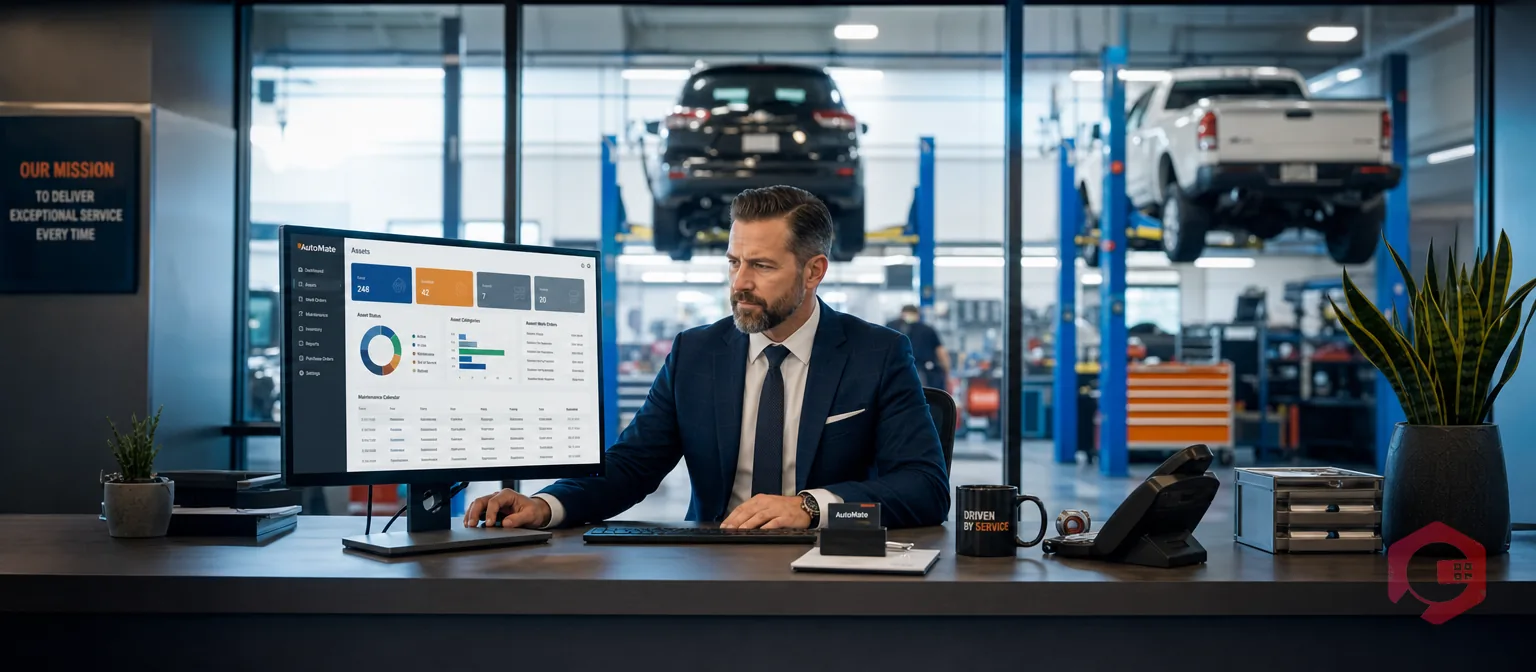
An automotive CMMS (Computerized Maintenance Management System) is software that gives workshops, dealerships, and service centres a single system of record for every tool, piece of equipment, and vehicle they operate — replacing the whiteboards and spreadsheets most shops rely on today.
Workshops using automotive CMMS software report up to 30% less equipment downtime and 25% faster repair turnaround. This guide explains why workshop asset management breaks down, what it costs, and exactly how to fix it — including a hands-on checklist you can use today.
Key things an automotive CMMS manages:
Bay 4 is backed up. A BMW needs a diagnostic scan, and the only scanner that reads newer European models is missing — borrowed, set down, forgotten. A technician is walking laps while the customer's noon pickup deadline ticks closer.
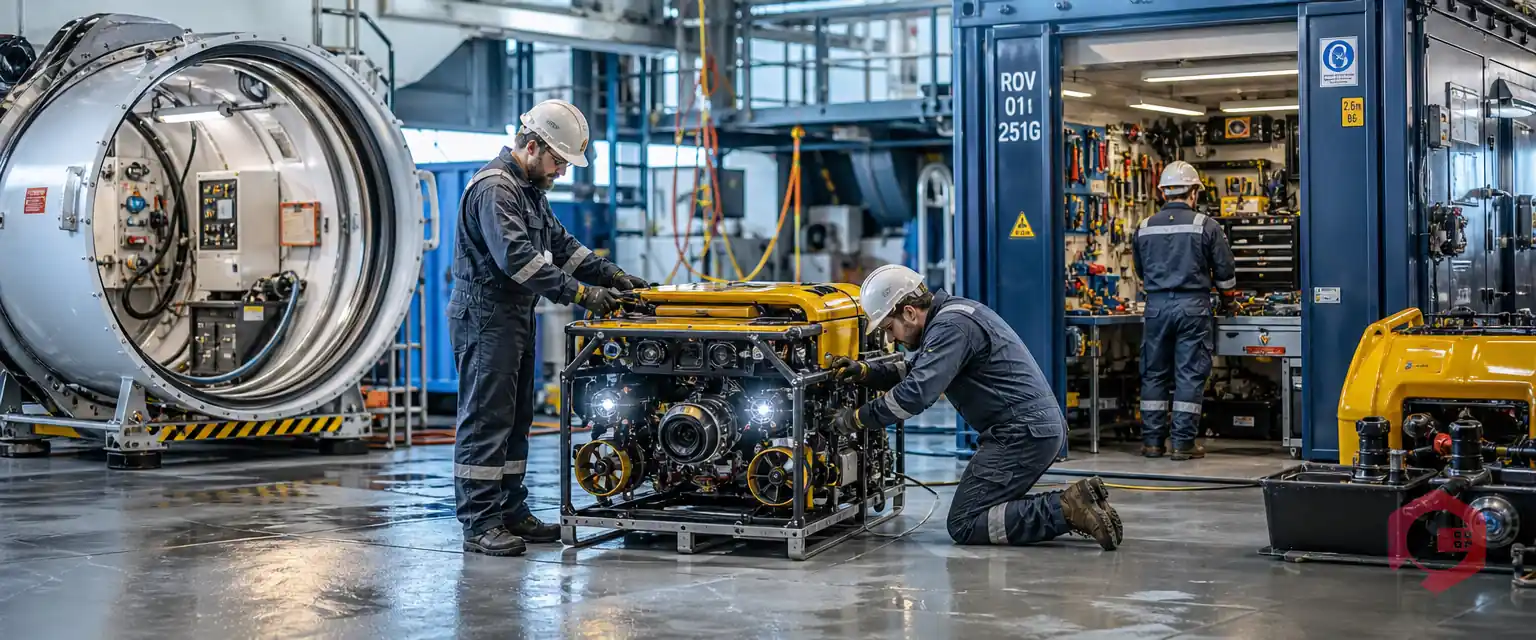
Workshops depend on dozens of assets that constantly move: hydraulic lifts, alignment machines, ADAS calibration rigs, diagnostic scanners, loaner vehicles, specialty tools, and EV charging gear. In most shops, the "system" tracking all of it is a whiteboard and someone's memory. According to the Plant Engineering Maintenance Survey, poor equipment tracking costs an average of $260,000 per hour in unplanned downtime. Invisible assets become invisible losses.

If three or more of these sound familiar, a CMMS will make an immediate difference.
Audit your workshop against these six questions. Every "No" is a gap a CMMS closes directly: Can you locate every scanner instantly? Are lift inspections triggered automatically? Does every loaner have its service record in one place? Can any technician log a fault in under 60 seconds? Can you pull any asset's full inspection history in under two minutes? Do you have data on which assets cost the most to maintain?
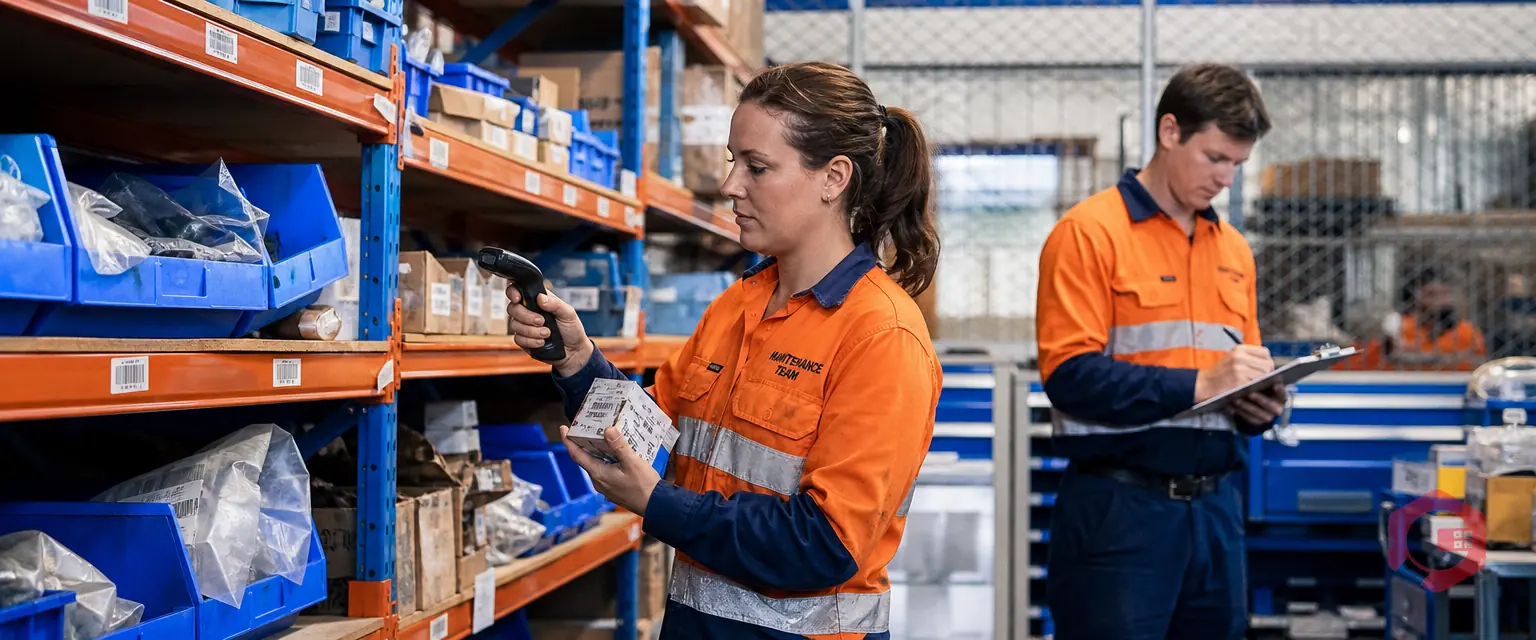
Lost technician time (15 minutes daily tool-searching per person equals 30+ unbillable hours a month across a six-person team), reactive repairs that turn small issues into expensive failures, compliance exposure from courtesy cars without current documents, and bad purchasing decisions without failure data.

Cryotos CMMS is built for the way workshops actually operate. Full asset profiles give every asset a record covering make, model, location, warranty, and full maintenance history. QR code fault logging means a technician spots a fault, scans the code, logs a note, and a work order is raised automatically in under a minute. Automated maintenance scheduling generates work orders, assigns them, and alerts on anything overdue. The mobile app is built for someone in work boots, not someone at a desk.
Every courtesy vehicle gets its own record: customer assignment, return date, last service, and upcoming compliance checks. Automated alerts handle overdue returns, service intervals approaching, registration renewals due, and allocation errors.
Cryotos stores a complete, timestamped file for every asset — inspection records with inspector name and outcome, full service history, fault-to-resolution logs, certificates attached directly to the asset profile, and digital technician sign-offs.
The built-in BI dashboard turns everyday logging into actionable numbers: MTTR, MTBF, asset availability %, maintenance cost per asset, and overdue task rate.
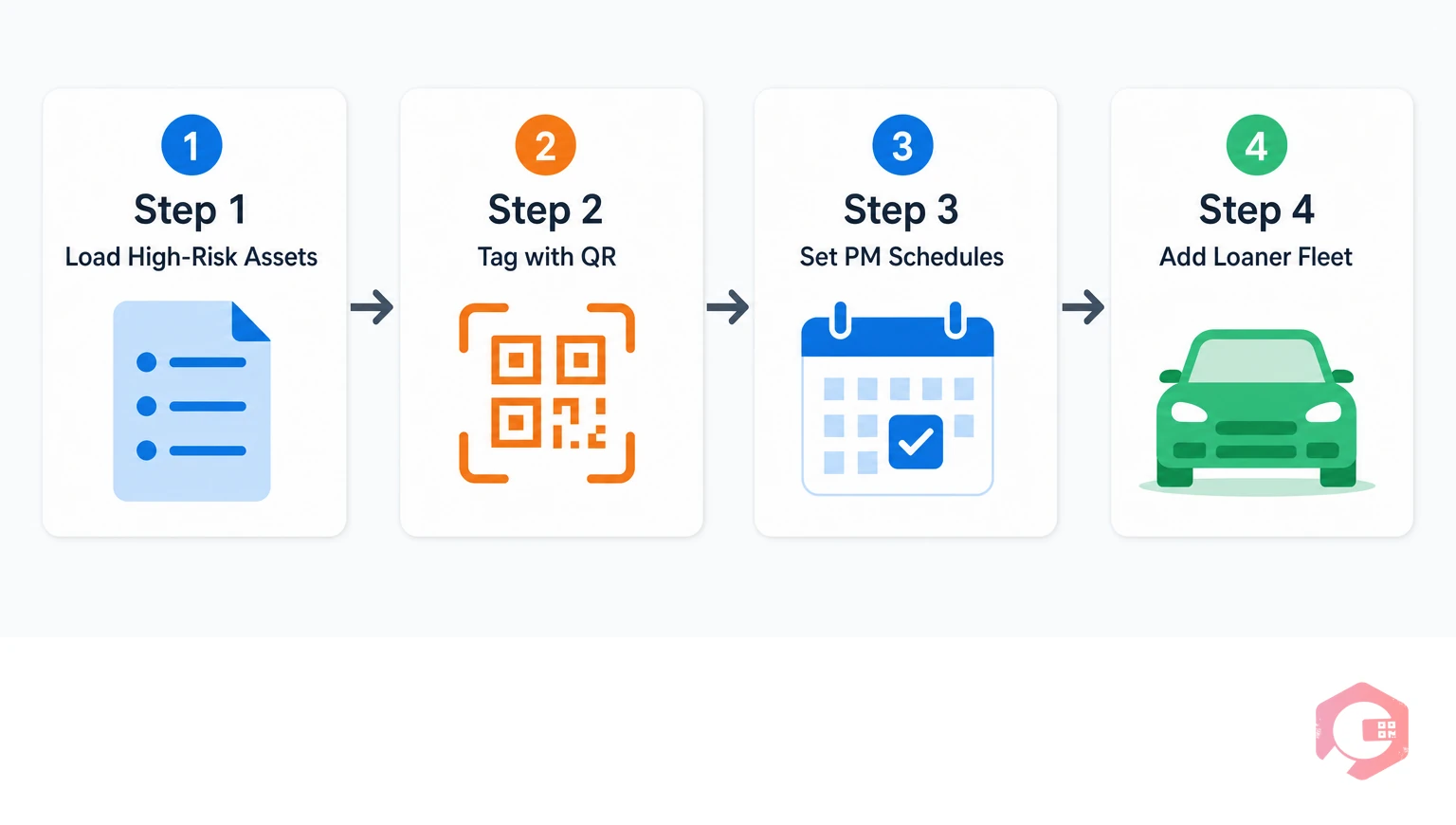
Load your highest-risk assets first. Tag tools with QR codes — technicians can start logging faults from day one. Set up preventive maintenance schedules. Add your loaner fleet and switch on alerts. Most workshops are live within a few days. Book a free demo with Cryotos and see it running in an environment that actually looks like yours.
An automotive CMMS centralises equipment, tools, vehicles, and maintenance schedules in one system. Most workshops recover the cost within the first quarter through recaptured billable hours alone.
Yes. Vehicles, power tools, diagnostic gear, and safety equipment all get the same profile, tracking, and alert setup.
Cryotos auto-generates lift inspection work orders on schedule, assigns them automatically, and stores the full audit trail.
Cryotos works at any scale. A four-bay garage gets the same core functionality as a twelve-site dealer group.
Most workshops aren't losing ground on big things. They're losing it on the small ones — tools nobody can find, the lift that missed its service, the loaner that fell off the radar. Book a free demo with Cryotos and see it running in an environment that actually looks like yours.


Cryotos AI predicts failures, automates work orders, and simplifies maintenance—before problems slow you down.



