

BDO (Breakdown Occurrence), BDH (Breakdown Hours), and Availability Percentage are the three downtime KPIs that give maintenance managers a complete picture of equipment reliability. BDO tells you how often your assets fail. BDH tells you how much production time those failures consume. Availability Percentage combines both into a single score that shows how much of your planned operating time your equipment is actually running.
According to a Plant Engineering analysis of unplanned downtime costs, industrial manufacturers lose an estimated $50 billion per year to unexpected equipment failures. Yet most maintenance teams track only one or two of these metrics — missing the diagnostic value that comes from reading them as a trio.

BDO — Breakdown Occurrence is the total count of unplanned equipment failures within a defined period. Every time a machine stops due to an unexpected fault, a breakdown event is logged. It is one of the most direct leading indicators of maintenance programme health. A rising BDO over consecutive months signals that your current preventive maintenance intervals are too long, that equipment is aging faster than your schedules account for, or that root causes are not being addressed.
BDH — Breakdown Hours is the total hours of production or operational time lost to unplanned equipment failures in a given period. BDH is the metric that translates directly into revenue impact. The formula: BDH = Sum of all time elapsed between breakdown start and equipment restoration to service. The clock starts when the breakdown is logged — not when the technician arrives.
Availability Percentage is the proportion of planned operating time during which an asset is actually running. Formula: Availability % = ((Planned Operating Time − BDH) ÷ Planned Operating Time) × 100. Industry benchmarks: world-class manufacturing targets 90–95% on critical production assets; average industrial facilities operate at 70–85%.
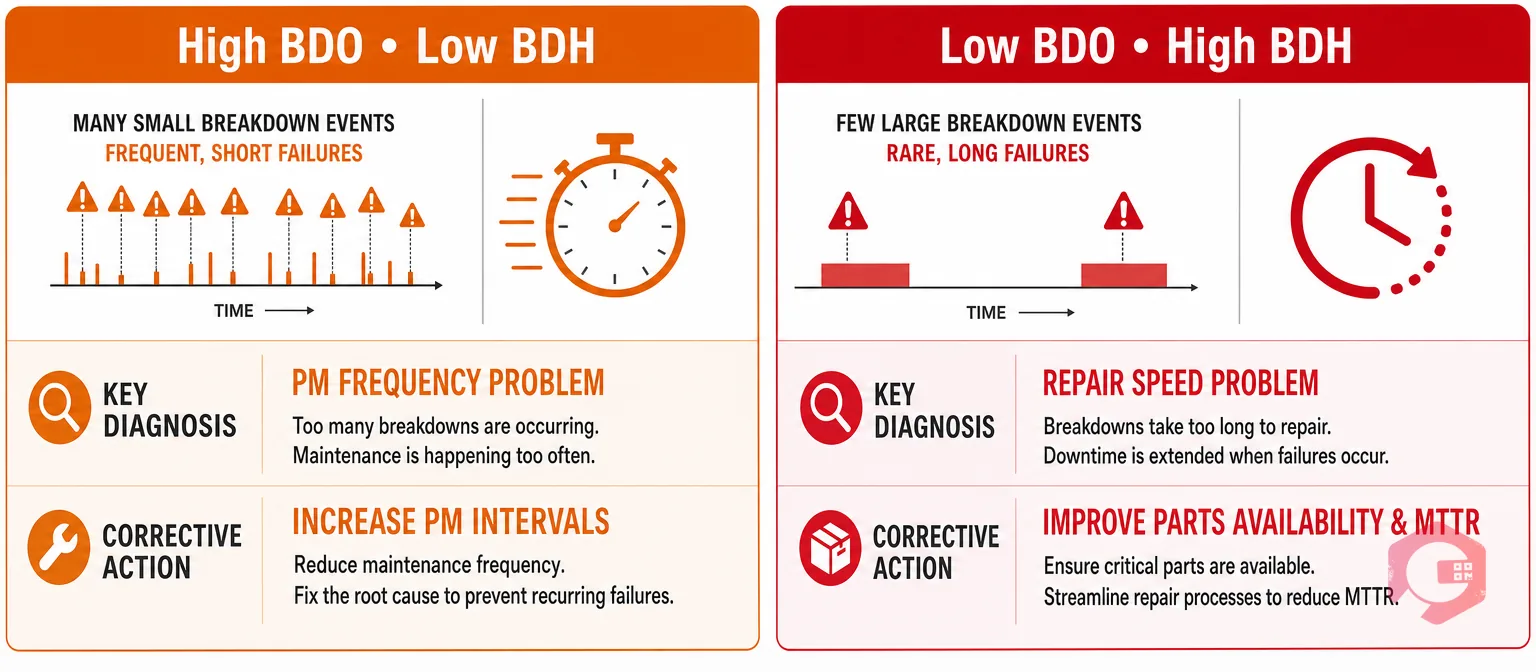
The real diagnostic power of these three KPIs lies in reading them together. Consider two machines both reporting 88% availability: Machine A has BDO of 24 and BDH of 86 hours (many short breakdowns) — a PM frequency problem. Machine B has BDO of 4 and BDH of 90 hours (few but very long breakdowns) — a repair speed problem. Same availability, completely different corrective actions. If you only looked at Availability, you would treat both machines the same way — and fix neither effectively.
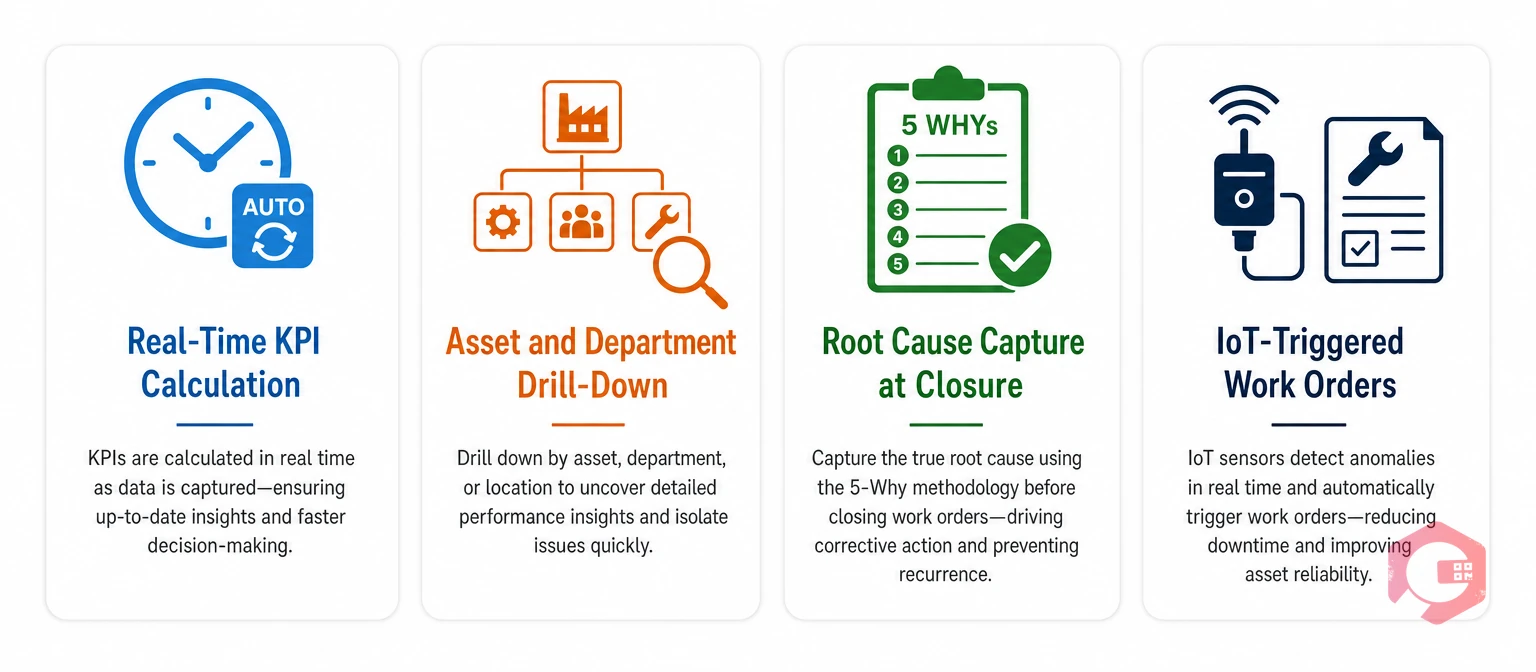
Cryotos includes a dedicated downtime tracking module that captures BDO, BDH, MTTR, MTBF, and Availability Percentage automatically — without requiring maintenance managers to build manual reports or pull data from separate spreadsheets. The module calculates each metric in real time from work order timestamps. Key capabilities include: real-time KPI calculation from timestamps, asset and department drill-down in the BI Dashboard, mandatory root cause capture at work order closure, and IoT-triggered work orders when sensor thresholds are breached.
BDO counts the number of times equipment fails unexpectedly. BDH measures the total time lost to those failures. High BDO with low BDH means frequent but short breakdowns — a PM frequency problem. Low BDO with high BDH means rare but severe breakdowns — a parts availability or repair speed problem.
Availability Percentage measures only the time dimension — what share of planned operating time the machine is actually running. OEE multiplies Availability by Performance and Quality. Availability is one of three OEE components and usually the most directly controllable through maintenance management.
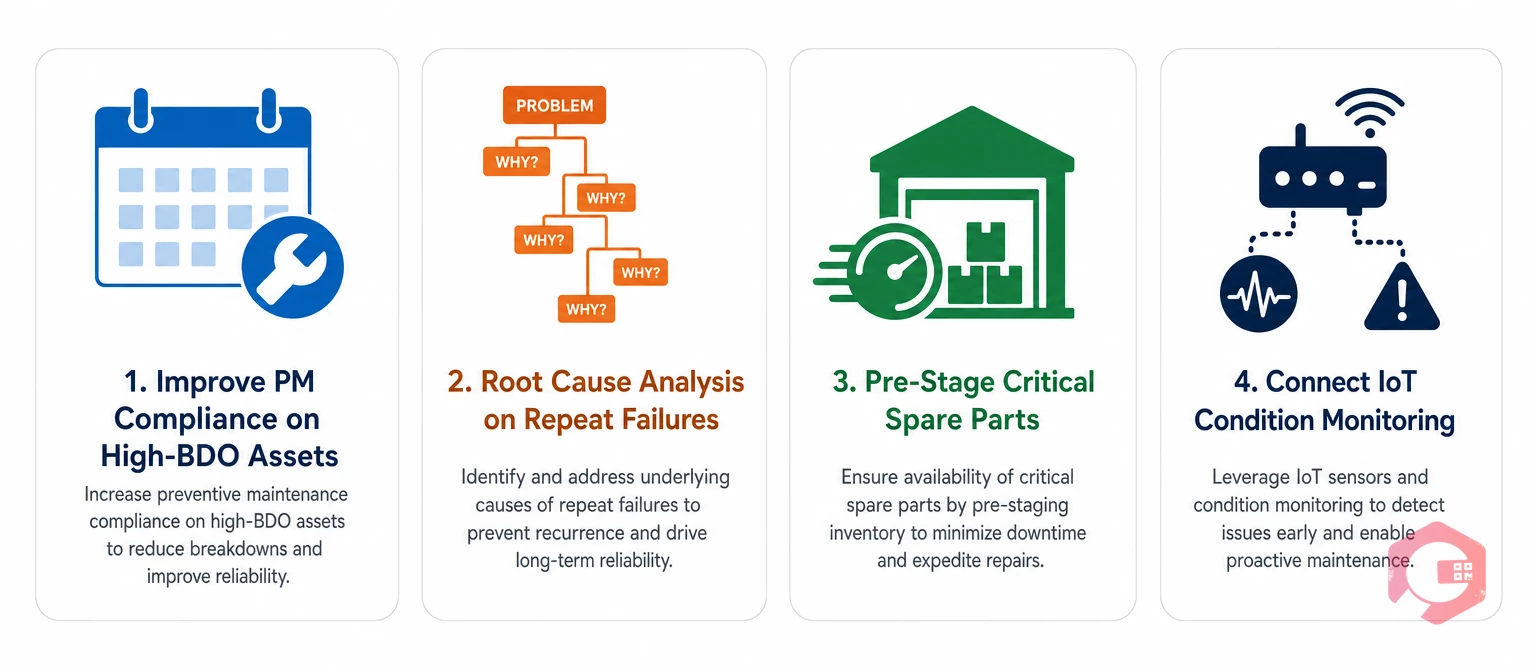
BDH can be reduced independently of BDO by improving your MTTR — through pre-staged critical spare parts, technician access to asset history on mobile devices, and automated work order dispatch as soon as a breakdown is logged. You can cut BDH by 30–40% on high-impact assets before touching PM schedules at all.
Yes. A modern CMMS like Cryotos calculates all three from work order timestamps — no manual input required. When a breakdown work order is created, the system starts counting. When it closes, it captures BDH, increments BDO, and recalculates Availability Percentage at the asset, department, and facility level in real time.


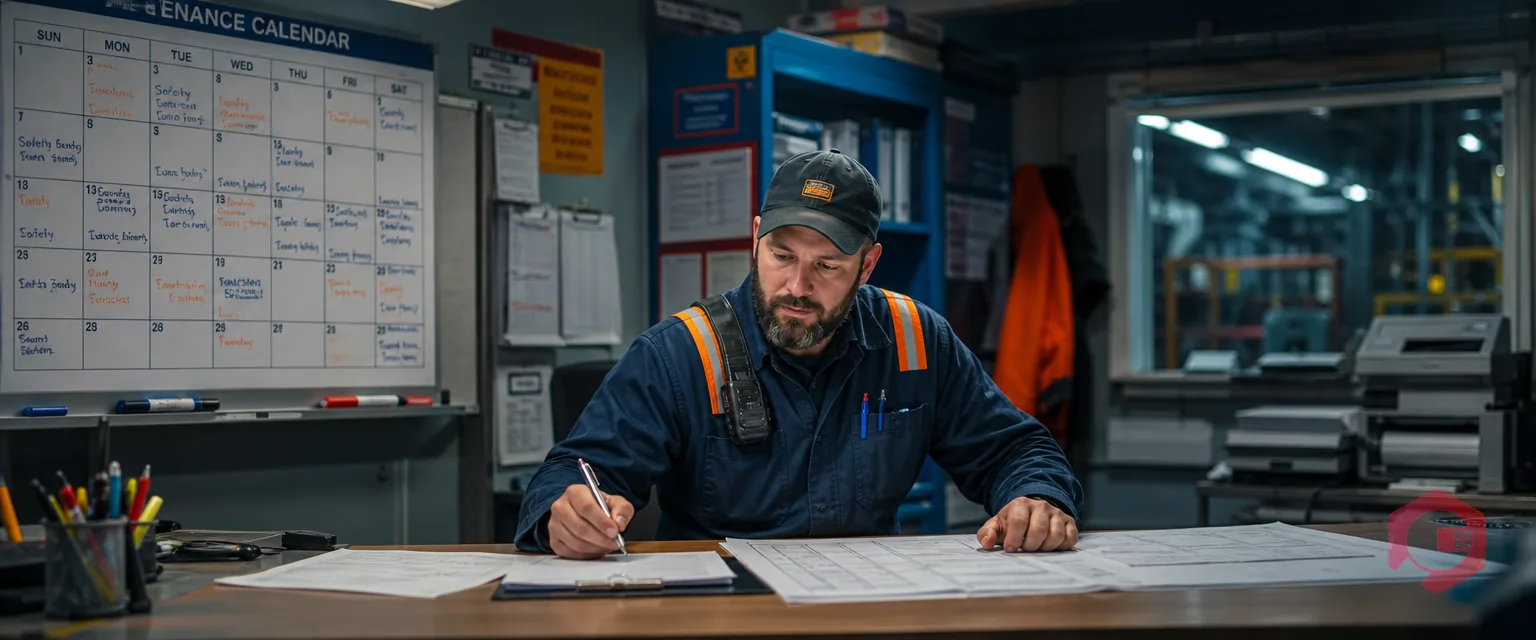

Cryotos AI predicts failures, automates work orders, and simplifies maintenance—before problems slow you down.



