

Ghost inventory is stock your system says you have that isn't really there. Or it's stock sitting on a shelf that no system is tracking at all. It shows up almost every time a CMMS and an ERP system trade inventory data without a clean, verified handoff. Work orders close in the CMMS showing parts used. The ERP's stock ledger never gets that update, or gets it late, or posts it against the wrong part. Nobody notices until a cycle count comes up short, a purchase order duplicates stock you already had, or a technician is told a part is available when it isn't.
Key Takeaways
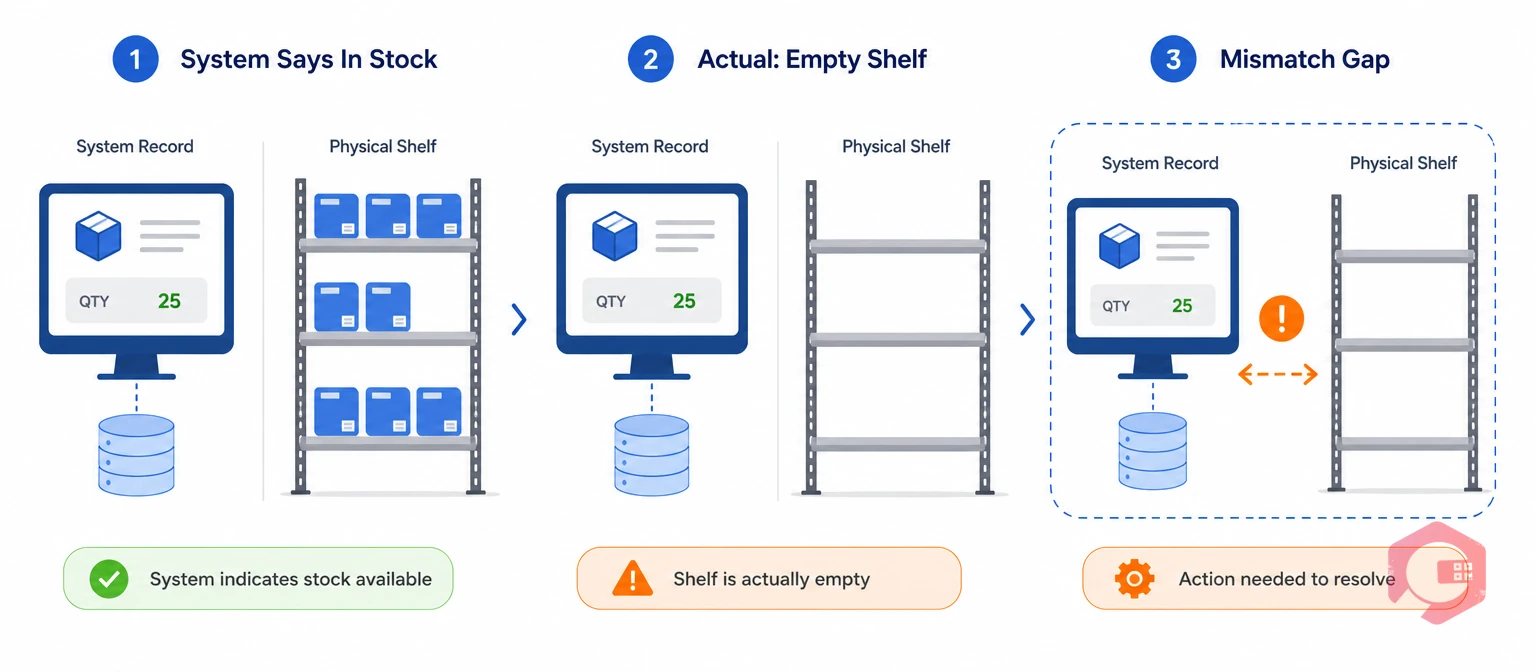
Ghost inventory is stock your records show, but your shelves don't have — or stock on the shelf that no record shows. It's different from theft or damage. It's a records problem, not a shrinkage problem.
The Computerized Maintenance Management System and the ERP describe the same physical world from two different angles. One tracks maintenance work. The other tracks money and purchasing. When the two aren't synced, both records look correct on their own. Neither one matches what's actually on the shelf.
ISO's asset management standards, most recently updated through the ISO 55000 series, treat asset and consumption data as a core management responsibility, not an IT afterthought. Ghost inventory happens when that responsibility falls into the gap between two systems instead of being owned by either one.
A counting error is a one-time mistake. A physical stock-take usually fixes it. Ghost inventory is different: it keeps coming back because the process that caused it, a broken handoff between two systems, never stopped running.
A CMMS-ERP handoff is the automatic exchange of parts data, stock levels, and work order records between a maintenance system and an enterprise resource planning system. When that exchange is late or incomplete, ghost inventory is the predictable result. It isn't a random glitch.
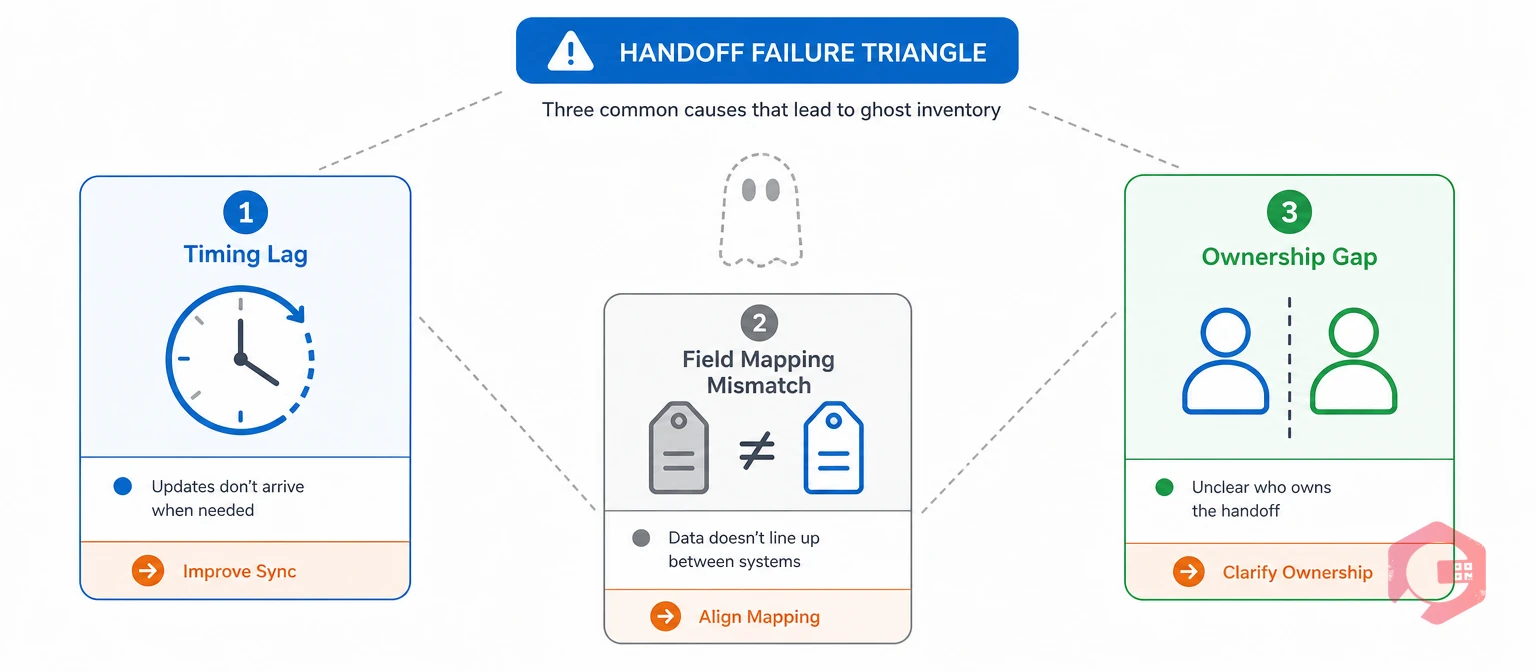
The Handoff Failure Triangle:
Most CMMS platforms update stock the moment a work order closes. Many ERP integrations still run on scheduled batch syncs — hourly, nightly, or even weekly in older setups.
Between syncs, one system is right, and the other is stale. Every part used in that window becomes ghost inventory until the next sync runs. If that sync fails silently, the gap never closes on its own.
Picture a plant running a nightly batch sync. A technician closes eleven work orders on a Tuesday afternoon and uses forty-three parts. The ERP won't see any of it until the 2 a.m. job runs. If that job fails over a holiday weekend, the gap can stretch to three days before anyone notices the numbers have drifted.
A part might be "FLTR-2200" in the CMMS and "40021-A" in the ERP. A lookup table links the two, but it was accurate the day someone built it and never updated since. New parts get added on one side and forgotten on the other.
Maintenance work doesn't stop for this. The work order closes, and the technician moves on, while the update meant for the ERP bounces, posts to a discontinued part number, or lands in a generic "miscellaneous" bucket nobody ever reviews.
Ghost inventory is stock that costs money twice: once to carry on the books, and again when you buy a replacement you didn't actually need. None of these costs show up as one clean line item, which is why the problem often runs for years unnoticed.
Maintenance teams using inventory management software that ties parts use directly to work order closure have reported up to 30% reduction in unplanned downtime and 25% faster repair turnaround. Most of that gain comes from technicians no longer discovering stockouts mid-job — not from buying more stock.
Most facilities pay this cost quietly through excess safety stock, ordering extra "just in case" the system is wrong. That over-ordering is a symptom of ghost inventory, not a fix for it. The true cost of maintenance only becomes clear once the handoff itself is fixed and the two ledgers agree again.
If you want to see what ghost inventory is actually costing your operation, run your current stock gaps through the maintenance cost calculator before deciding how big a fix you need.
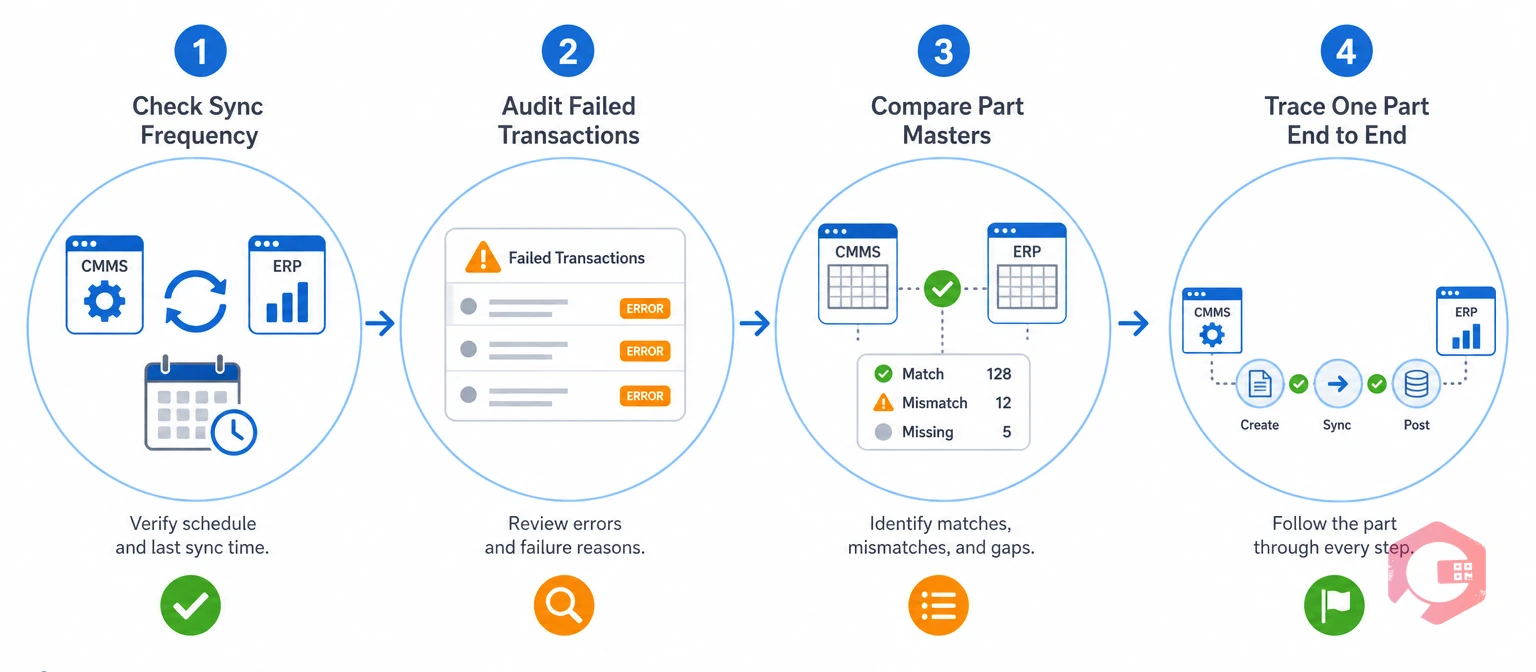
Diagnosing a broken CMMS-ERP handoff starts with comparing timestamps, not stock counts. If a part shows different quantities in each system at the same moment, the handoff — not the storeroom — is the first place to look.
Pull a sample of twenty recently closed work orders. Check whether every parts line shows up in the ERP within your expected sync window. A gap in even two or three of the twenty confirms the handoff, not the storeroom, is the real source.
A clean CMMS-ERP integration books parts use in real time, keeps one shared part list, and gives one team clear ownership of reconciliation. Each fix closes a different point of the Handoff Failure Triangle.
Real-time ERP integration closes the timing gap. Every parts transaction posts the moment a work order closes, instead of waiting for a batch window where gaps can build up. Mobile-enabled work order closure makes this the easy path for technicians, not an extra admin step.
Automating a bad mapping just makes the bad mapping run faster. Reconcile part numbers, units, and location codes into one governed master data record before you turn on real-time sync — not after.
Give one role, usually a maintenance planner or inventory controller, clear responsibility for reviewing sync exceptions every week. A spare parts inventory system that surfaces exceptions on its own turns this into a 15-minute review instead of a quarterly fire drill.
Cycle counting still matters. It should confirm the handoff works, not make up for one that doesn't. Facilities that get this right usually fold cycle counts into their standard MRO inventory checklist, rather than treating them as a separate recovery project.
Ghost inventory in a CMMS is stock the system shows as available when it physically isn't, or physical stock that no system tracks at all. It usually comes from parts being used or received without a matching transaction reaching every connected system.
It happens when the integration between the two systems is incomplete, delayed, or mismatched — not because integration itself is the problem. A well-built real-time handoff with a shared part master actually prevents ghost inventory rather than creating it.
Fast-moving, high-value parts should get counted monthly, with a full facility count at least twice a year. Teams with a reliable real-time handoff can count less often, because the system data stays trustworthy between counts.
Real-time integration removes the timing-lag cause of ghost inventory, but not field mapping errors or gaps like unrecorded local purchases. It clears the biggest single cause, but the part master still needs ongoing upkeep.
Shrinkage is physical loss — theft, damage, or spoilage that reduces the stock you actually have. Ghost inventory is a records mismatch: the physical stock and the system stock disagree, even though nothing was actually lost.
A broken CMMS-ERP handoff quietly creates ghost inventory long before anyone traces it back to the data exchange itself. Schedule a free demo to see how Cryotos closes that handoff gap with real-time parts tracking and one shared inventory record.




Cryotos AI predicts failures, automates work orders, and simplifies maintenance—before problems slow you down.



