

Telecom infrastructure maintenance is the planned inspection and repair of towers, power systems, radios, and fiber. A CMMS improves its efficiency by turning scattered site records into scheduled, tracked, mobile work.
A Computerized Maintenance Management System (CMMS) schedules work by calendar and usage, links alarms to work orders, and gives crews offline checklists. This guide shows where the efficiency gains in telecom infrastructure maintenance come from. It also shows how to roll them out.
Key Takeaways
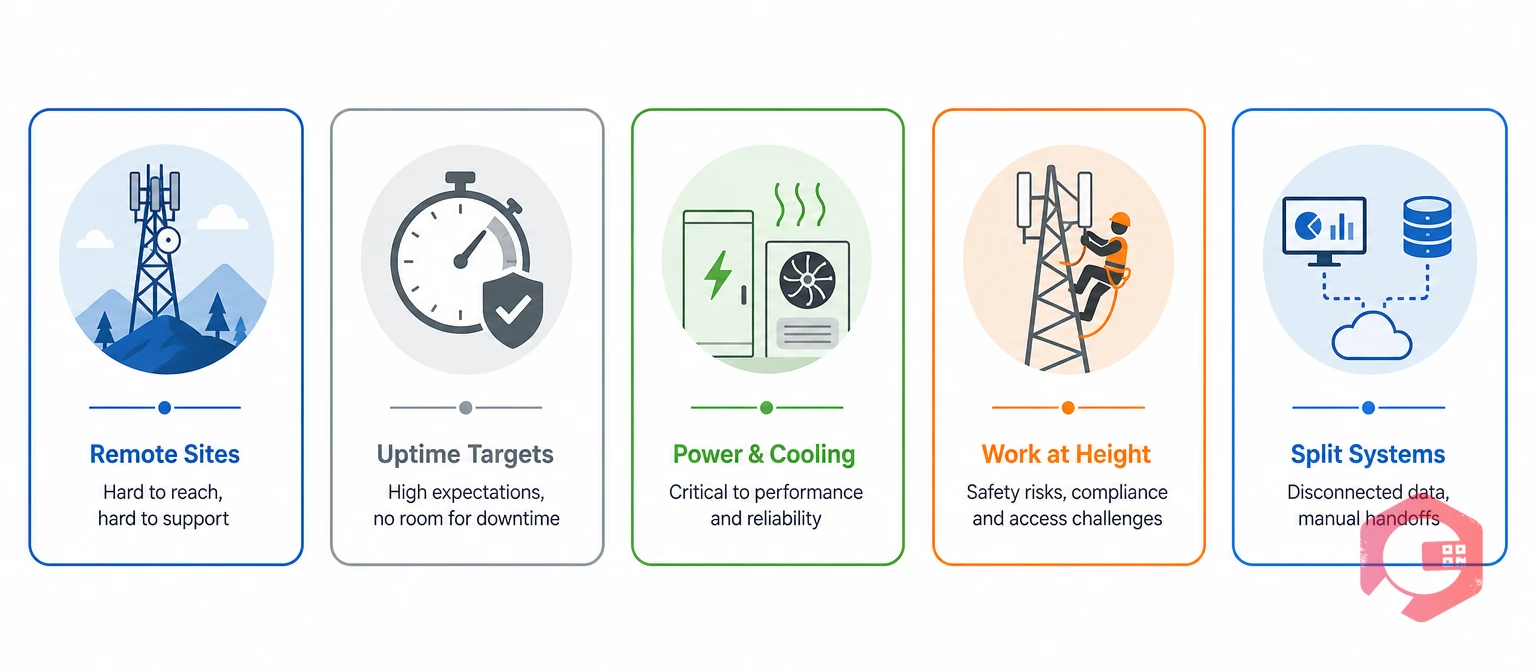
A cell site is a location where antennas and radio equipment connect devices to the network. Operators and tower companies may run thousands of sites, often in places that take hours to reach.
Standards add to the load of telecom infrastructure maintenance. OSHA communication tower guidance covers climbing safety, and NFPA 110 covers standby power such as site generators.
Power and cooling problems turn up often, but every layer needs a plan. The table lists the main asset layers and their maintenance focus.
| Asset layer | Common issues | Maintenance focus |
|---|---|---|
| Towers and rooftop sites | Corrosion, loose hardware, lighting faults, ground faults | Structural checks, lighting tests, grounding tests |
| Shelters and cabinets | Cooling failure, water ingress, theft, door alarms | HVAC and filter service, seal and security checks |
| Power systems | Battery capacity loss, generator start failure, fuel shortage | Battery tests, generator run tests, fuel planning |
| Radio and transmission | Hardware faults, alignment drift, connector damage | Configuration control, alignment checks, spares |
| Fiber and outside plant | Cuts, water in enclosures, degraded splices | Route patrols, OTDR tests, enclosure checks |
| Central offices and data rooms | UPS and cooling faults, dust | Environmental monitoring, UPS and cooling service |
Rank sites and assets by service impact. A battery bank at a hub site deserves more attention than one at a low-traffic site.
Measure restoration first: use the Cryotos MTTR calculator to set a baseline before you change your process.
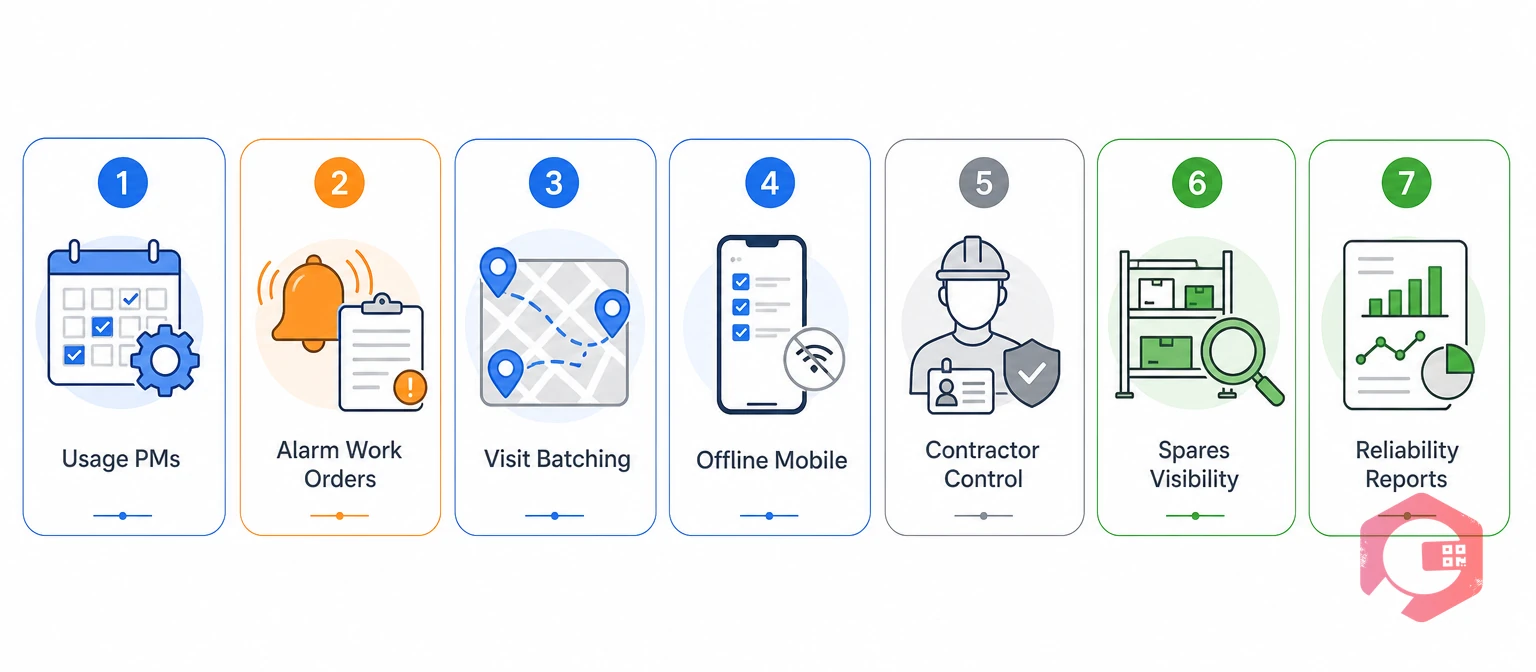
Seven changes drive most of the gain.
A truck roll is a dispatch of a technician and vehicle to a site. Each roll that batching or remote diagnosis avoids saves driving time, labor, and risk.
Estimate value with your own numbers: multiply avoided truck rolls by the cost per roll, then add avoided outage hours times the cost per hour.
A remote generator fails to start during a grid outage. The record shows an overdue run test, the last battery test, and a spare starter battery in the nearest van. The crew leaves with the right part and fixes the fault in one visit.
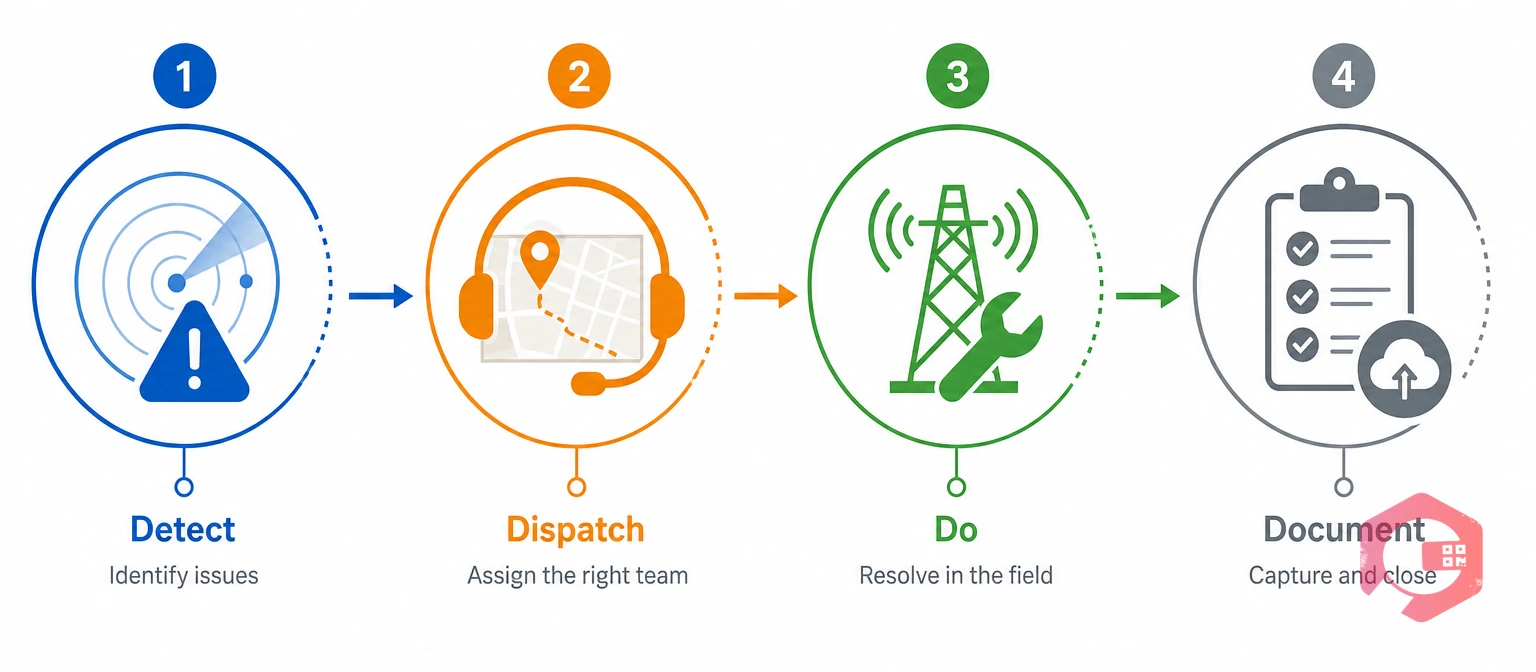
Faster restoration depends on how quickly an alarm becomes a job with the right context. Most maintenance teams lose time between the alert and the dispatch.
The Alarm-to-Action Framework:
With IoT meter reading from SCADA or edge devices, a threshold breach on a generator or battery can open a work order automatically.
A practical telecom site maintenance schedule mixes remote monitoring with periodic visits and annual testing, and OEM manuals and customer contracts set the final intervals.
| Cadence | Key tasks | What it catches | Who does it |
|---|---|---|---|
| Continuous | Review alarms for power, temperature, door, and fuel | Faults before they become outages | Network operations or remote team |
| Monthly or quarterly | Inspect shelter, HVAC filters, and security; check battery condition; run the generator; check fuel | Cooling, power, and security problems | Field technician |
| Annually | Test battery capacity, service generators, inspect tower and lighting, check grounding | Hidden wear and compliance gaps | Technician or contractor |
| Every few years | Assess tower structure, replace batteries, overhaul HVAC and generators | End-of-life equipment | Contractor |
Tie generator service to run hours so the schedule follows real wear, not the calendar alone.
Climbing, electrical work, and confined spaces such as manholes need documented controls before work starts.
Auditors and customers ask for proof. Link each permit to its job with permit-to-work software so the safety record and repair record stay together.
Pick a few numbers and track them from the first month. Compare each one with your baseline.
A falling emergency share and a rising first-time fix rate are the clearest signs that the program works.
Cryotos gives telecom teams one record, one schedule, and one history for every site and asset.
Maintenance teams using Cryotos have reported up to 30% reduction in unplanned downtime and 25% faster repair turnaround. Most teams start with their most critical sites, then expand.
Cryotos is not a network monitoring tool. It manages the work that network alerts trigger.
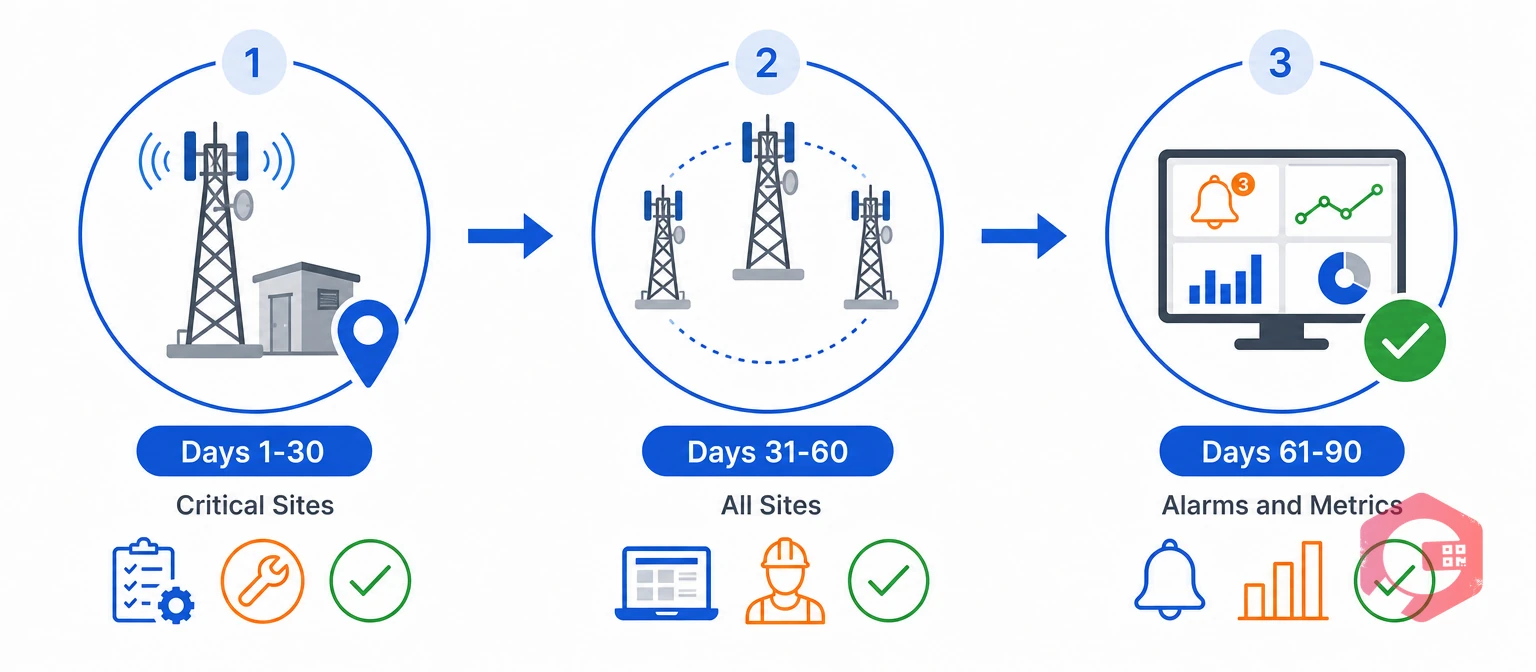
A phased rollout keeps the first step small enough to finish.
It batches open tasks by site, schedules service by usage, and links alarms to jobs with full context. Crews then fix more per visit, and mobile photos help teams diagnose before dispatch.
It should track sites, equipment, PM schedules, work orders, spares, contractors, permits, and reliability metrics such as MTTR and availability.
No. Network tools watch performance and raise alarms, while a CMMS manages the maintenance work those alarms trigger. The two work best together.
Yes, if the app has offline mode. Crews complete checklists and photos on site, and the data syncs when signal returns.
Most teams start with critical sites in about 30 days, then add the rest in phases. Timing varies with data quality and the number of sites.
Efficient networks start with crews who know what to fix and why. Schedule a free demo to see how Cryotos turns telecom infrastructure maintenance into tracked, auditable work.


Cryotos AI predicts failures, automates work orders, and simplifies maintenance—before problems slow you down.



