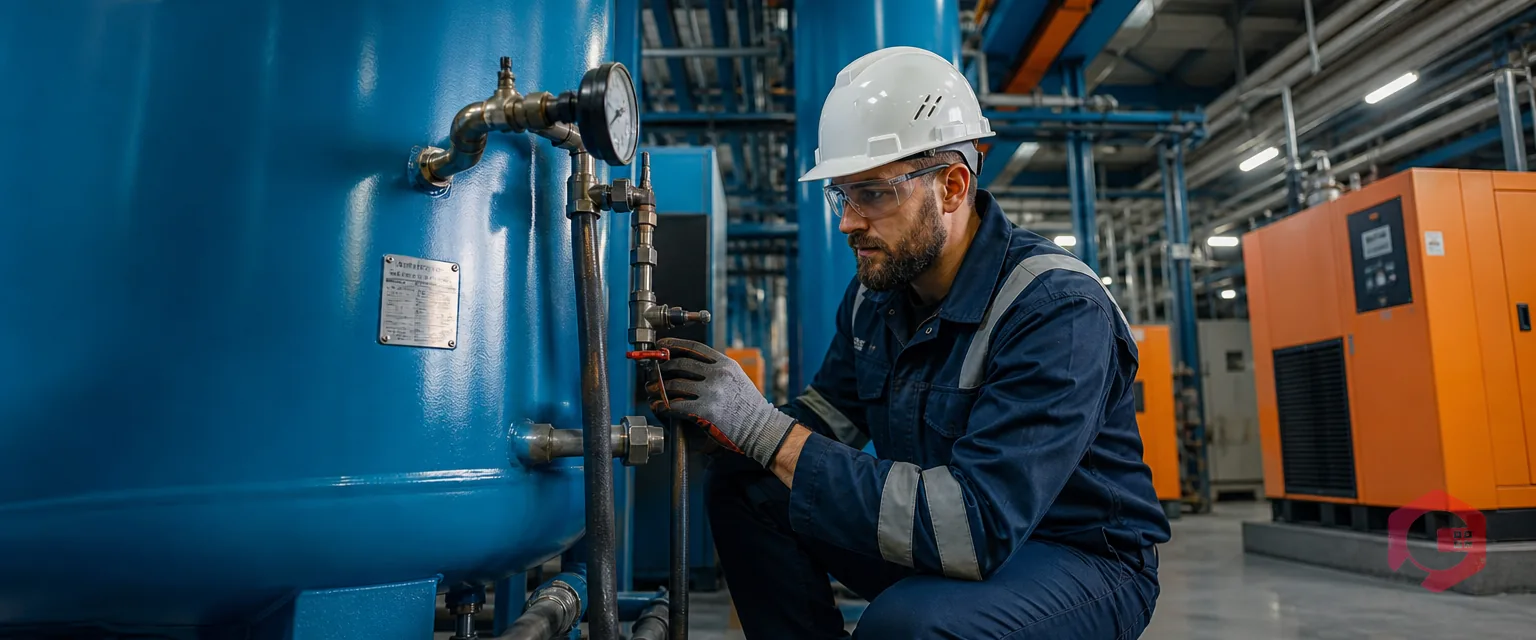
Compressed air safety for maintenance teams starts with one idea: compressed air is stored energy, so every hose, fitting, receiver and tool needs inspection and a safe way of working. A hose that fails, or a line opened before it is bled, can release that energy in an instant. Most controls are simple and cheap. The gaps are usually in follow-through.
This guide covers the main hazards and gives an inspection matrix. It also covers risk controls, safe work practices and a four-gate framework, and shows what a maintenance system can and cannot do.
Key Takeaways

Compressed air is often treated as harmless because it is just air.
Compressed air safety is the inspections, controls and work practices that stop stored air pressure from hurting people. It matters most for maintenance teams, because they open lines, change hoses and tools, work on receivers and clean with blow-guns.
The main hazards are unexpected release of stored pressure, hose whip and fitting failure, air forced into skin or eyes, flying debris, noise, and failure of receivers and relief valves. Plant air must never be used for breathing unless it comes from a designed breathing air system.
In the US, OSHA's rule on cleaning with compressed air limits that use to reduced pressure with effective guarding and protective equipment. The OSHA air receiver rule covers receivers and their safety devices. See also this overview of compressed air.
This guide covers plant air systems and pneumatic tools. Compressor PM, leak surveys and noise control have their own guides. Limits, intervals and pressure vessel inspection duties come from your procedures and local rules, so this guide gives no numbers.
Use the matrix on each round. The rhythms are examples only. Your procedures, OEM manuals, insurer and local rules set the real ones.
| Area | What to Inspect | Sign of Trouble | Suggested Rhythm |
|---|---|---|---|
| Hoses and couplings | Cuts, bulges, kinks, worn covers, loose fittings; rating matches the line. | Visible damage; leaks at fittings. | Before each use; formal check on a schedule. |
| Hose restraints | Whip checks or restraints fitted and intact. | Missing or damaged restraints. | Weekly walk. |
| Blow guns and nozzles | Safety nozzle fitted; no modified tips; trigger works. | Open pipe used as a blow-off. | Before each use. |
| Regulators and gauges | Set pressure labeled; gauges readable. | Wrong or unlabeled setting. | Monthly. |
| Air receivers | Drain working; shell and welds; nameplate; clear relief path. | Water in drain; corrosion; leaks. | Daily drain check; inspection per code. |
| Relief valves | Not blocked; test records current; no isolation valve upstream. | Stuck or leaking valve; no test record. | Tested per schedule. |
| Piping and supports | Supports, corrosion, leaks, labeling. | Vibration; hissing; damage. | Monthly. |
| Compressor | Guards, hot surface protection, shutdown functions, drains. | Missing guard; high temperature trips. | Daily and per PM. |
| Isolation and bleed points | Isolation valves identified; bleed point works; lock points marked. | Unlabeled valves; no bleed. | Per lockout procedure review. |
A relief valve is a safety device that opens to release air when pressure goes above its set limit. It protects the receiver, but only if it is not blocked and has been tested.
Build your round sheets from the safety compliance checklist.

Controls work best in order. Start at the top of the list and use PPE as the last layer.
Zero-energy verification is a check that a line is at zero pressure before work begins. It is the most important habit on this list.
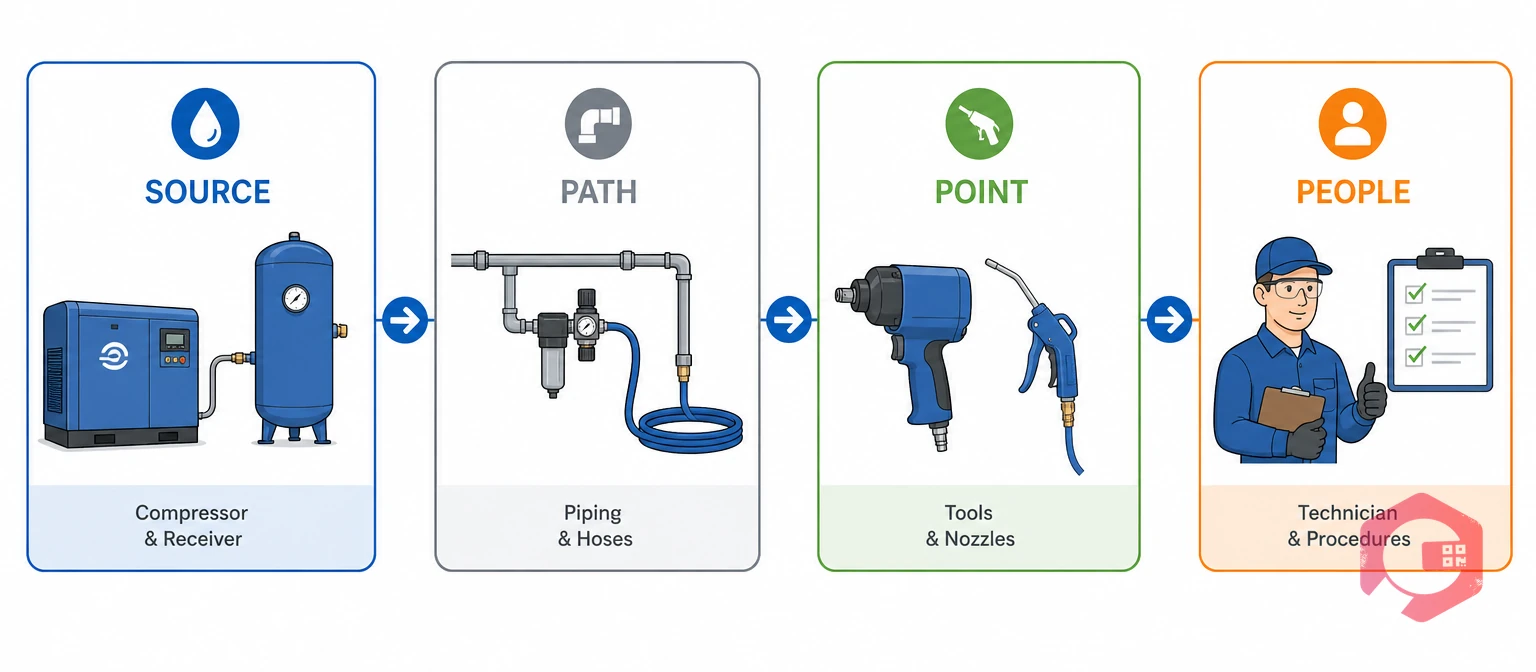
The SOURCE-PATH-POINT-PEOPLE framework follows the air from the compressor to the person. Check each gate in order.
The SOURCE-PATH-POINT-PEOPLE Framework:
Here is an illustrative example. A technician finds a hose with a worn cover and a loose coupler at the point of use. The hose is red-tagged and removed, and a work order replaces it with a hose rated for the line. The PATH check then covers the other hoses on that line.
Many failures here are quiet. The controls exist, but follow-through has slipped. Many maintenance teams recognize at least two of these.
A Computerized Maintenance Management System supports compressed air safety by scheduling inspections, holding signed checklists and tracking defects to closure. It does not replace pressure vessel inspectors or training. Cryotos is a maintenance platform, not a leak detector or an inspection engineering tool.
Maintenance teams using Cryotos have reported up to 30% reduction in unplanned downtime and 25% faster repair turnaround. Planned replacement of worn hoses can also mean fewer rushed fixes on live lines.
Pressure vessel inspections, remaining-life checks, training records and leak detection follow your local rules and specialist tools. Ask any software vendor how its records connect to them.
The main ones are unexpected release of stored pressure, hose whip, air forced into skin or eyes, flying debris, noise, and failure of receivers or relief valves. Inspection, isolation and safe work practices control most of them.
No. Air forced against the skin can cause serious injury. Use a brush, vacuum or wash instead. If air ever enters the skin or eyes, get urgent medical help.
Lock out the compressor and source, bleed the line, and read a gauge at zero pressure before you open anything. Use your lockout procedure and permit system, and check for any other air source feeding the same line.
Check hoses and tools before every use, and add a formal check on a schedule. Drain receivers as your procedure says, and inspect receivers and test relief valves as local rules and your insurer require. Set your rhythm from your own risk assessment.
Both share it. Operators and technicians check hoses and tools before use, and maintenance inspects and repairs the system. Name an owner for each gate and each inspection.
Yes, for the maintenance side: schedules, signed checklists, permits, reminders and defect tracking. It does not replace pressure vessel inspectors, training or leak detectors.
Compressed air safety only works when inspections happen and defects get fixed. Schedule a free demo to see how Cryotos schedules hose and receiver checks, supports isolation permits and tracks defects in one place.


Cryotos AI predicts failures, automates work orders, and simplifies maintenance—before problems slow you down.