

Conveyor belt troubleshooting means matching a symptom — mistracking, slippage, a seized roller, unusual noise — to its real cause. Then you fix that cause instead of guessing. Most belt conveyor failures come from one of eight recurring problems. Each one has a predictable cause and a standard fix.
This guide covers conveyor belt troubleshooting for the most common problems, what causes each one, and the standard fix. It ends with a diagnostic method for issues that don't fit a single category.
Key Takeaways
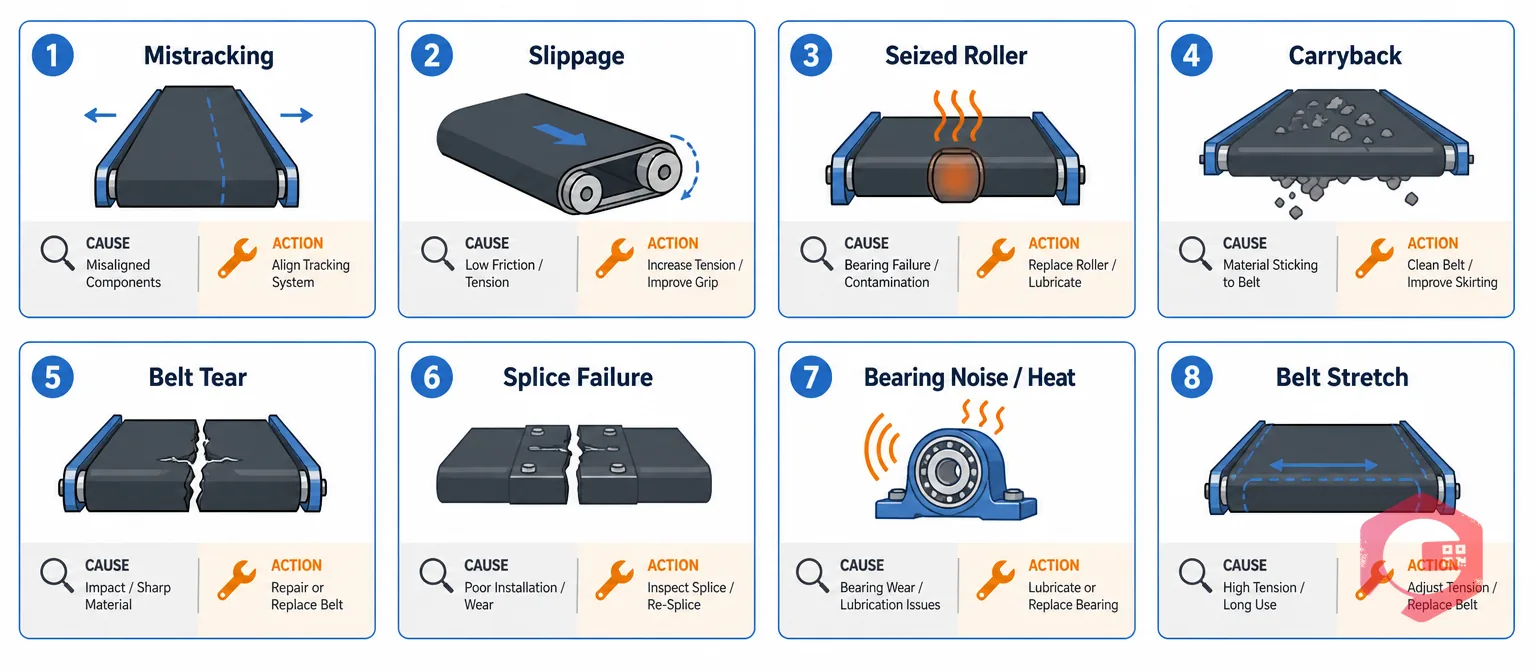
A belt conveyor system moves material using a loop of belting stretched between two or more pulleys, supported along the way by rollers. Match your symptom to a row below, then jump to that section for the full breakdown.
| Symptom | Likely Cause | Quick Fix | Prevention |
|---|---|---|---|
| Belt drifts to one side | Misaligned idlers or uneven tension | Adjust tracking guides and re-tension | Weekly tracking check |
| Belt slips at drive pulley | Low tension or worn pulley lagging | Re-tension; replace lagging | Quarterly lagging inspection |
| Roller won't spin freely | Seized bearing from contamination | Replace roller | Sealed bearings; scheduled replacement |
| Material builds up on return side | Worn or missing belt cleaner | Adjust or replace cleaner blade | Weekly cleaner inspection |
| Visible cut or gouge in belt | Tramp material or sharp product edge | Patch or vulcanize repair | Metal detection; edge guarding |
| Slapping noise at a fixed point | Splice separation or misalignment | Re-splice the joint | Semi-annual splice inspection |
| Unusual noise, heat, or vibration | Bearing wear or misalignment | Inspect and replace bearing | Vibration monitoring |
| Belt sags between idlers | Normal stretch; take-up not adjusted | Adjust take-up tension | Periodic tension checks |
Every conveyor in service should meet OSHA's conveyor safety standard. It requires lockout and tagout before any repair work begins.
Belt mistracking is a belt drifting away from center. It's the most common conveyor problem. Left uncorrected, it damages the belt edge and can pull the belt off the structure entirely.
To fix mistracking, watch the belt's full length while it runs. Find the point where drift first starts. Adjust the guide there — not just where the drift looks worst.
Belt slippage is a loss of grip between the belt and the drive pulley. You'll notice slower throughput, a burning-rubber smell, or a shiny, glazed pulley face.
Re-tensioning solves most cases. If slippage comes back quickly, worn lagging is the more likely cause and needs replacing.
Most facilities avoid this problem with a preventive maintenance schedule that checks tension on a fixed interval.
A seized roller is a roller whose bearing has failed and no longer spins freely. The belt then drags across it. You'll see a flat spot on the belt cover and feel a hot spot directly above the roller.
Spin every roller by hand during a weekly check. This catches a seizing bearing before it damages the belt. Anything that resists, wobbles, or makes noise gets tagged for replacement right away.
Carryback is material that sticks to the belt past the discharge point. It rides the return side back underneath the conveyor and falls off along the way. Carryback under a roller adds friction, builds heat, and speeds up mistracking.
A weekly check of cleaner contact and skirting condition prevents most spillage-related downtime.
Sharp material, tramp metal, or a jam can cut or puncture the cover. This exposes the belt's internal layers. A small cut left unrepaired grows into a full-width tear once it's back under tension.
Repair work only starts once the drive is locked out. OSHA's power-transmission standard requires belts and fasteners to be inspected regularly and kept in good repair.
A splice is the joint where the two ends of a belt meet. It's the weakest point on any conveyor belt. A failing splice makes a rhythmic slapping sound at the same spot in every belt cycle.
Log every splice repair against the belt in an asset tracking record. This shows whether a splice keeps failing at the same joint — a sign it needs redoing properly, not patching again.
Unusual noise, heat, or vibration is almost always a bearing or alignment problem showing up early. A squeal points to a dry bearing. A rhythmic thump often means a damaged roller shell. A hot pulley or motor signals bearing wear or misalignment.
Condition monitoring often catches a failing bearing weeks before it causes a stoppage. That turns an emergency repair into a scheduled one.
All belting stretches over its service life, more so on long or high-tension runs. A belt sagging between idlers, or one that's run out of take-up travel, has stretched past what current tensioning can fix.
Once take-up travel runs out, the practical fix is cutting out a section of belt and re-splicing it, rather than replacing the whole belt.
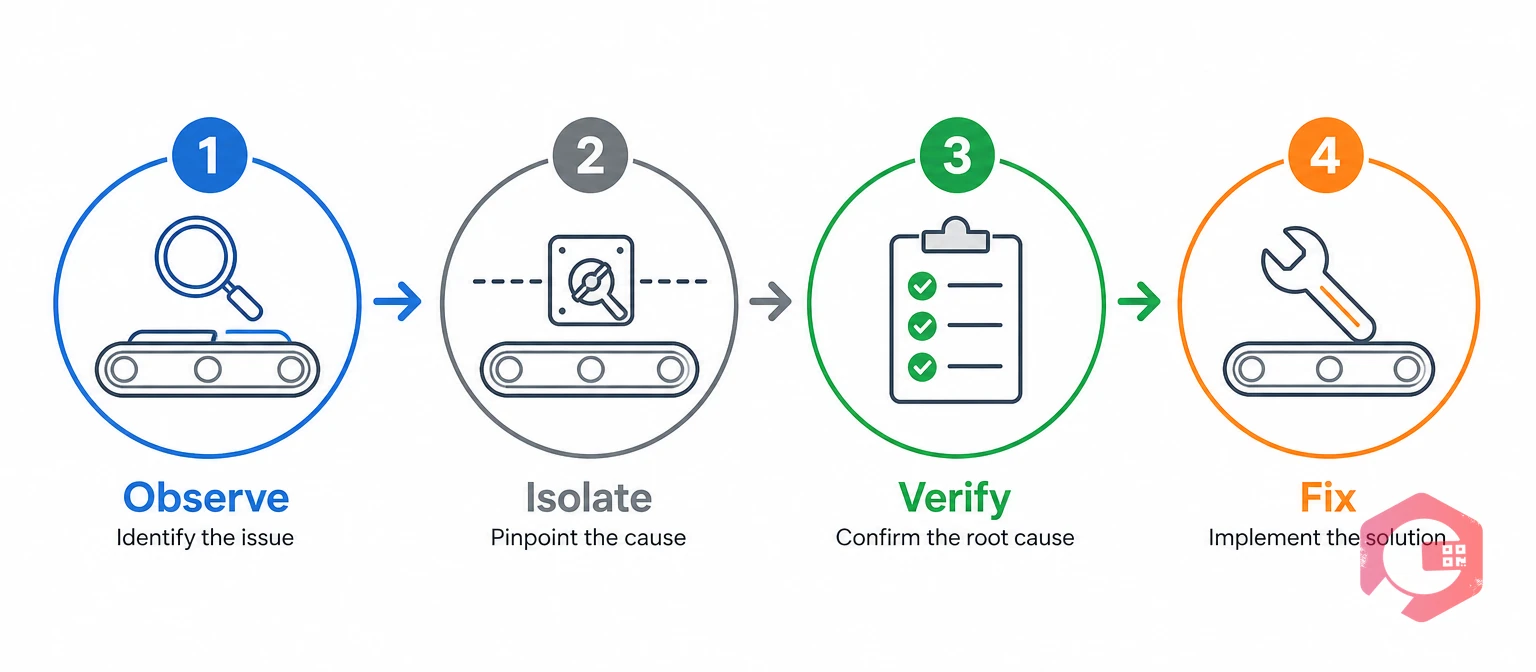
Most conveyor problems fit one of the categories above. But a symptom that doesn't match cleanly still needs a structured approach. Teams that troubleshoot well use the same four steps every time.
The Observe-Isolate-Verify-Fix Method:
These four steps work for any conveyor belt troubleshooting situation, not just the eight problems above. The method mirrors formal 5 Whys root cause analysis: stop at the real cause, not the first plausible one.
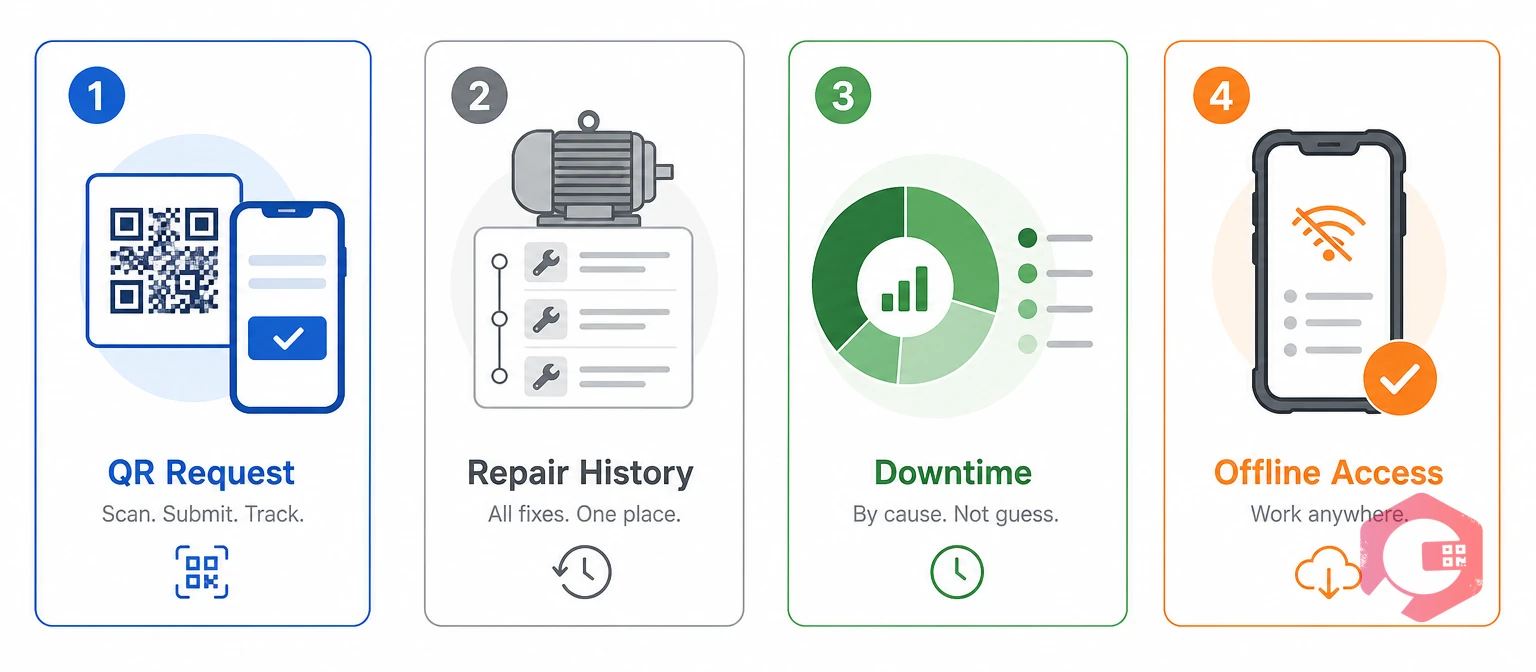
Knowing the cause of each problem only helps if inspections happen and fixes get logged. A Computerized Maintenance Management System turns conveyor belt troubleshooting into a repeatable workflow, instead of something that depends on one technician's memory.
Maintenance teams using Cryotos report up to a 30% reduction in unplanned downtime and 25% faster repair turnaround once conveyor troubleshooting moves from memory into a tracked system.
The most common problems are mistracking, slippage at the drive pulley, seized rollers, spillage and carryback, tears or punctures, splice failure, and belt stretching. Mistracking and slippage cause most unplanned conveyor work orders.
This kind of conveyor belt troubleshooting starts with watching the belt's full length while it runs. Find exactly where it first drifts — that spot, not where the drift looks worst, is usually where the misaligned guide is. Check tension evenly on both sides, and confirm loading is centered, before you adjust the tracking guides.
A typical belt conveyor has the belt, the drive pulley, the tail pulley, carrying and return idlers, the take-up assembly, the drive unit, and the supporting frame. Cleaners and skirting are common additions, but they aren't part of the core seven.
Slippage is usually caused by low tension, worn pulley lagging, oil on the pulley face, or overloading beyond the drive's rated capacity. Re-tensioning fixes most cases. Slippage that keeps coming back points to worn lagging.
Most facilities run a daily visual check for tracking and spillage, a weekly technician inspection covering tension and rollers, and a quarterly or semi-annual check covering splices and fasteners. Faster or more critical belts need more frequent checks.
A small tear that hasn't reached the belt's internal layers can usually be patched with a vulcanized or cold-bonded repair. Full replacement makes more sense when tears keep recurring on the same belt, or when the belt has already used up its take-up travel from stretching.
Most conveyor belt problems follow a predictable pattern once you know what to look for, but catching them early still depends on inspections that happen and fixes that get tracked. Schedule a free demo to see how Cryotos turns conveyor belt troubleshooting into a tracked, repeatable process instead of guesswork.
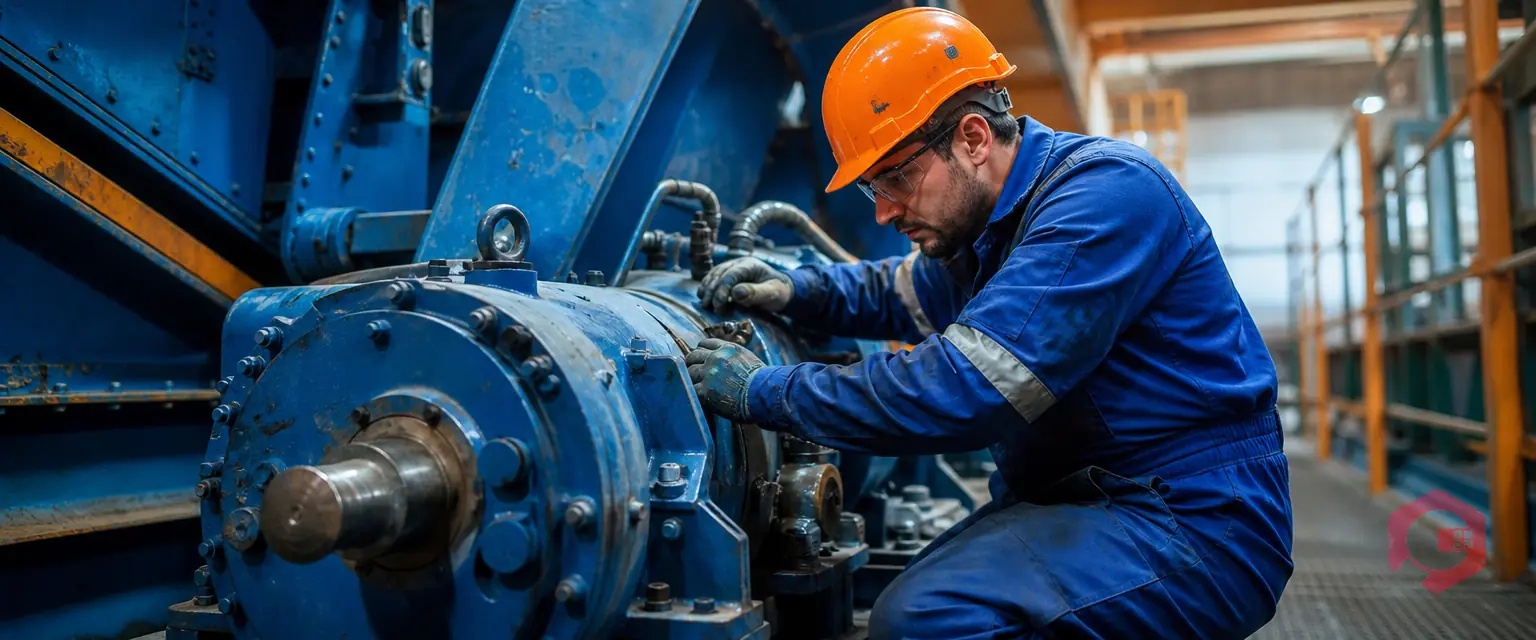


Cryotos AI predicts failures, automates work orders, and simplifies maintenance—before problems slow you down.



