

Digital twin technology creates a live virtual replica of a physical asset — a machine, a production line, a building system, or an entire facility — that mirrors real-world conditions in real time. Every sensor reading, operating parameter, maintenance record, and performance metric feeds the digital model, so the virtual version reflects exactly what the physical asset is doing at any given moment.
For maintenance and operations teams, that changes everything. Instead of waiting for a fault to occur and then diagnosing it, you can observe the virtual model, spot deviations from normal behavior before they become failures, run simulated stress tests without touching the physical asset, and optimize maintenance schedules based on actual asset condition rather than fixed calendar intervals.
Digital twins are no longer confined to aerospace and automotive manufacturing. They are now being deployed in commercial facilities, food processing plants, utilities, and industrial maintenance operations of all sizes — often built directly on top of existing CMMS and IoT sensor infrastructure. This guide explains how implementation actually works, what the data architecture looks like, where the value accumulates fastest, and how to sequence a rollout that delivers results without requiring a complete infrastructure overhaul.
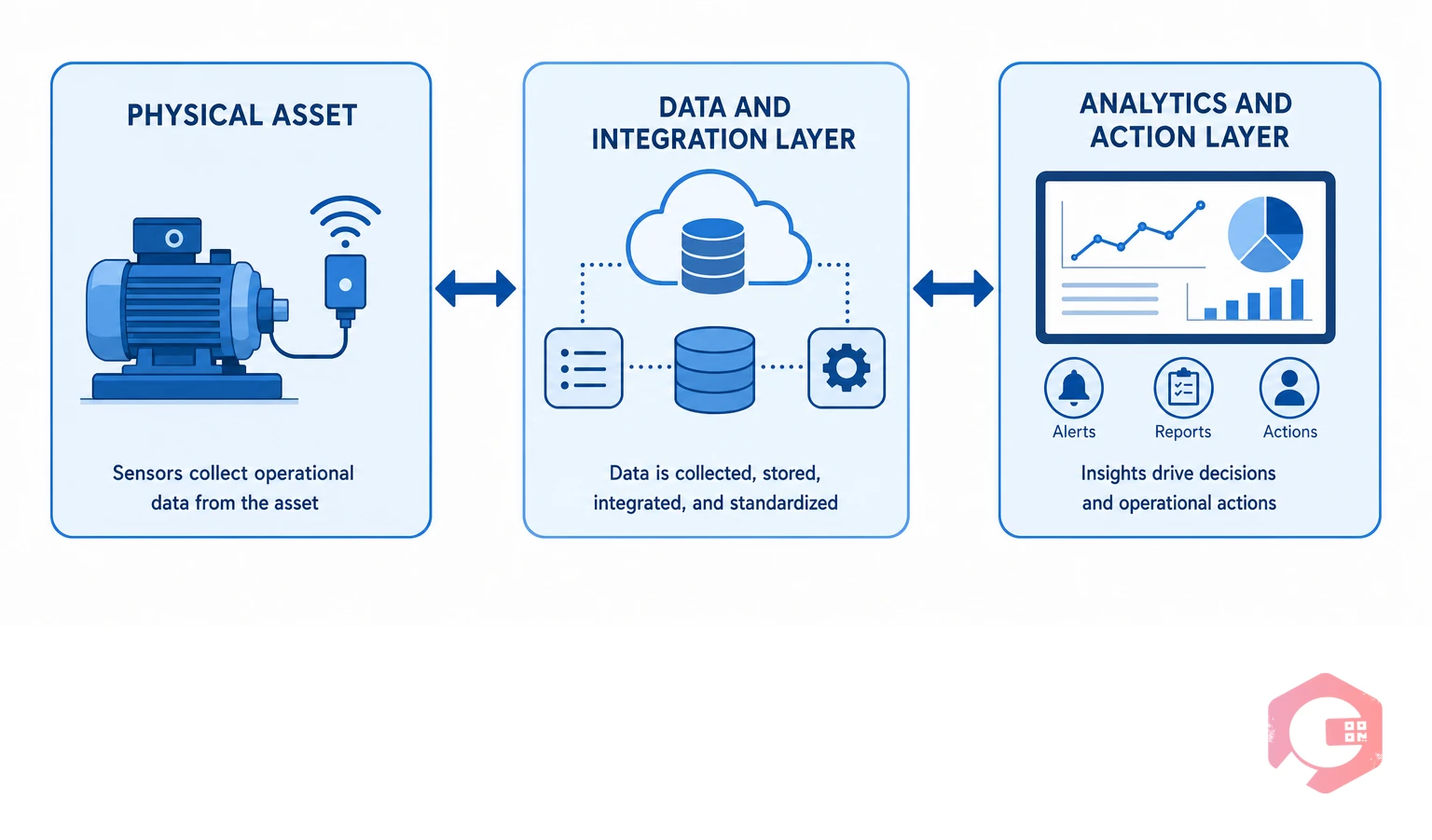
The term digital twin is used loosely enough that it is worth being precise about what a working implementation requires. There are three core components, and all three must be present for the system to deliver its core value.
The physical asset with instrumented sensors. The twin is only as accurate as the data feeding it. Vibration sensors, temperature probes, pressure transducers, current monitors, and runtime counters on the physical asset provide the live data stream. In some implementations, existing building management systems or SCADA platforms provide this feed. In others, edge sensors are installed specifically for the twin project. Without instrumentation, there is no twin — only a static model.
The data model and integration layer. Sensor data needs to reach the digital twin platform in a structured, normalized format. This integration layer handles protocol translation (OPC-UA, MQTT, Modbus, and BACnet are all common in industrial environments), data quality filtering, and timestamp synchronization. The model itself encodes not just the asset's current state but its relationships — how the asset connects to adjacent systems, what its normal operating envelope looks like, and what threshold conditions indicate degraded performance.
The analytics and action layer. Raw sensor data without analysis is just noise. The analytics layer applies the logic that makes the twin useful. It includes anomaly detection algorithms that flag behavioral deviations, predictive failure models trained on historical fault data, simulation engines for testing operating scenarios, and CMMS integrations that translate a detected anomaly into an actionable work order. This layer is where the return on the digital twin investment is actually realized.
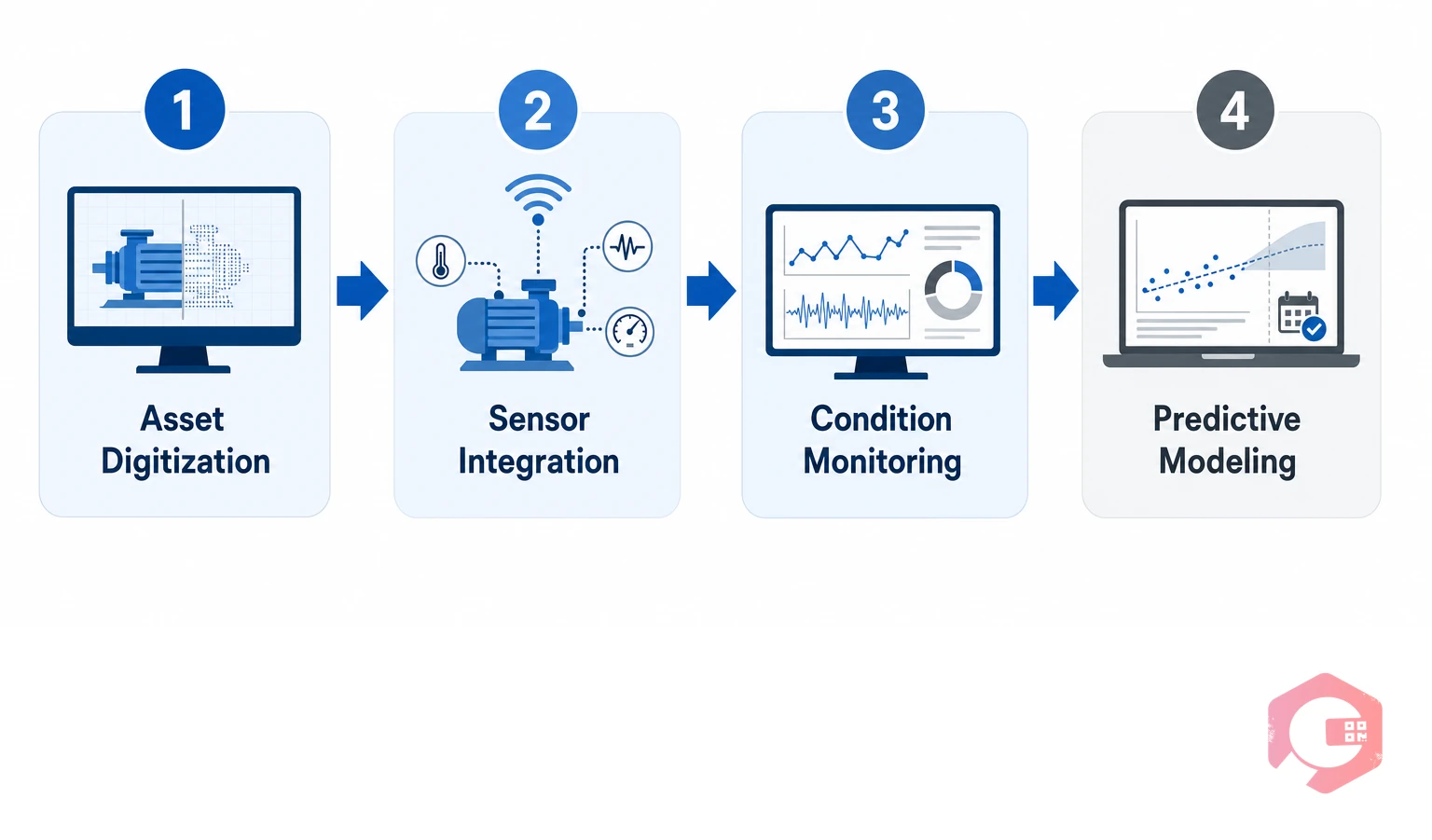
Implementation is not a single event — it is a capability that is built up in stages, with each stage delivering its own value before the next is added:
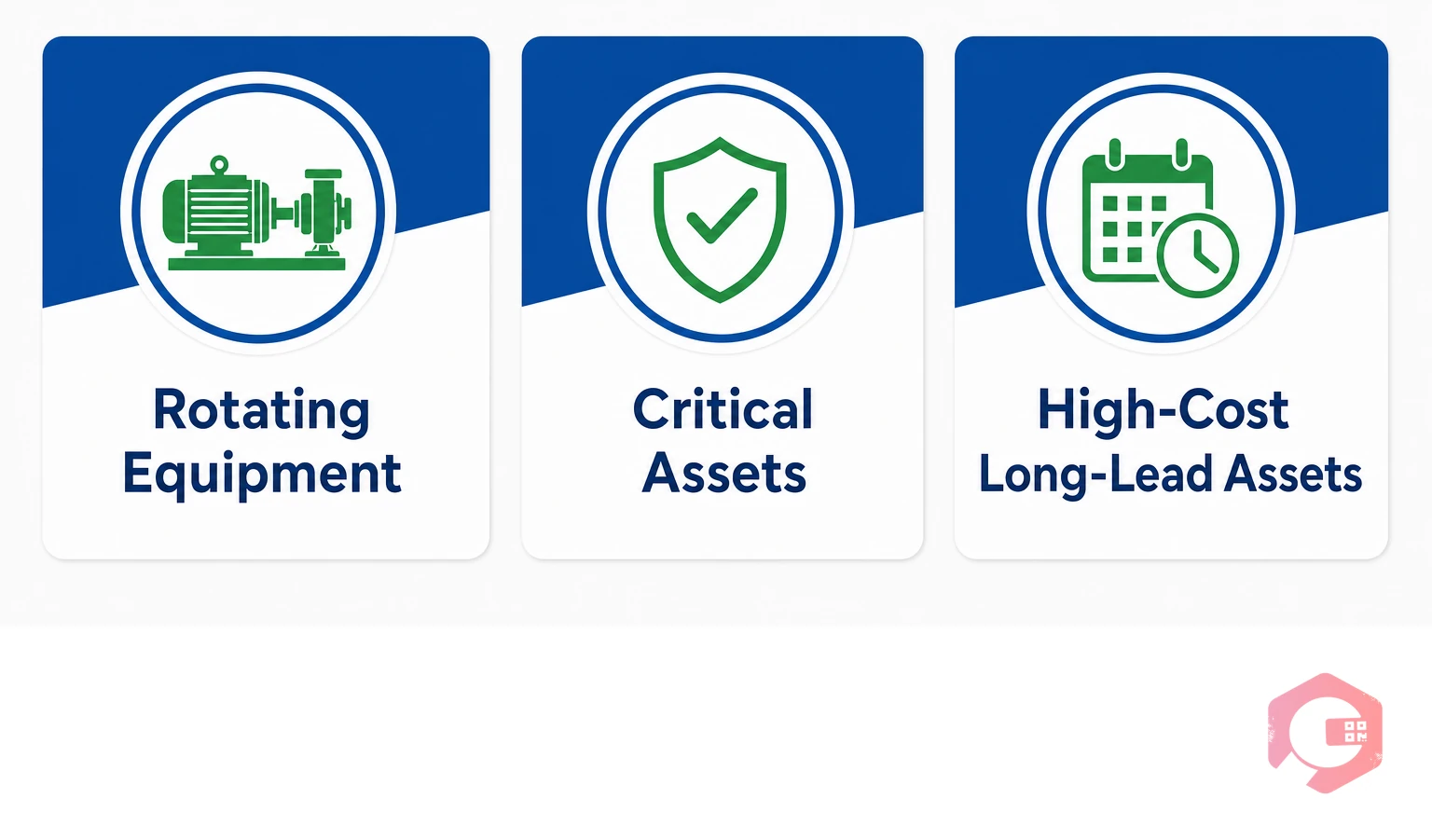
Not every asset in a facility warrants a full digital twin implementation at Stage 4. Prioritizing by asset criticality and failure consequence ensures the investment lands where the return is highest:
A digital twin that generates alerts without connecting to a maintenance execution system produces information that falls through the cracks. The operational value of a digital twin is realized only when detected anomalies automatically become work orders that reach the right technician with the right context.
The integration architecture between a digital twin platform and a CMMS like Cryotos works through the shared asset identifier established during Stage 1. When the digital twin's analytics layer detects an anomaly on a specific asset, it calls the CMMS API with the asset ID, the detected condition, the sensor readings that triggered the alert, and a suggested work order priority. Cryotos creates the work order, assigns it based on the maintenance team's current workload and skill routing rules, and attaches the sensor data as context for the responding technician.
The technician arrives at the asset having already seen the anomaly trend — not just "the system flagged this" but "bearing temperature has been climbing 2°C per week for the past three weeks and is now 11°C above baseline." That context changes the inspection. The technician knows what to look for before they open the access panel. Cryotos's asset management module stores the full history of every digital-twin-triggered work order against the asset record, so the pattern of anomaly detections builds into a documented condition history that informs future maintenance planning.
After the work order is completed, the findings feed back into the digital twin model — whether the detected anomaly corresponded to an actual developing fault, what was found, what was replaced, and what the post-maintenance sensor readings look like. This feedback loop is what makes predictive models more accurate over time. The twin learns from every maintenance event.
One of the most tangible operational improvements from digital twin deployment is the recalibration of PM schedules from calendar-based to condition-based intervals.
Most preventive maintenance schedules in use today were set at commissioning based on manufacturer recommendations, then adjusted informally based on field experience. They do not account for actual asset condition, actual duty cycles, actual environmental conditions, or the accumulated wear state of the specific asset in question. A compressor running in a hot, dusty environment with high duty cycles degrades faster than an identical compressor in a climate-controlled room with intermittent use — but a calendar-based PM schedule treats them identically.
Digital twin data changes this. When real-time condition data and historical degradation rates are both available in the CMMS, PM intervals can be set based on measured wear progression rather than elapsed time. An asset degrading faster than baseline triggers its PM earlier. An asset running in stable condition within normal parameters can safely have its PM interval extended, freeing up technician time for higher-priority work.
Cryotos supports dynamic PM scheduling through meter-based and condition-triggered work order creation. When the digital twin feeds a runtime counter or a condition score into the CMMS asset record, Cryotos can automatically generate a PM work order when that counter crosses a threshold — independent of the calendar. This is condition-based maintenance in practice, not just in theory.
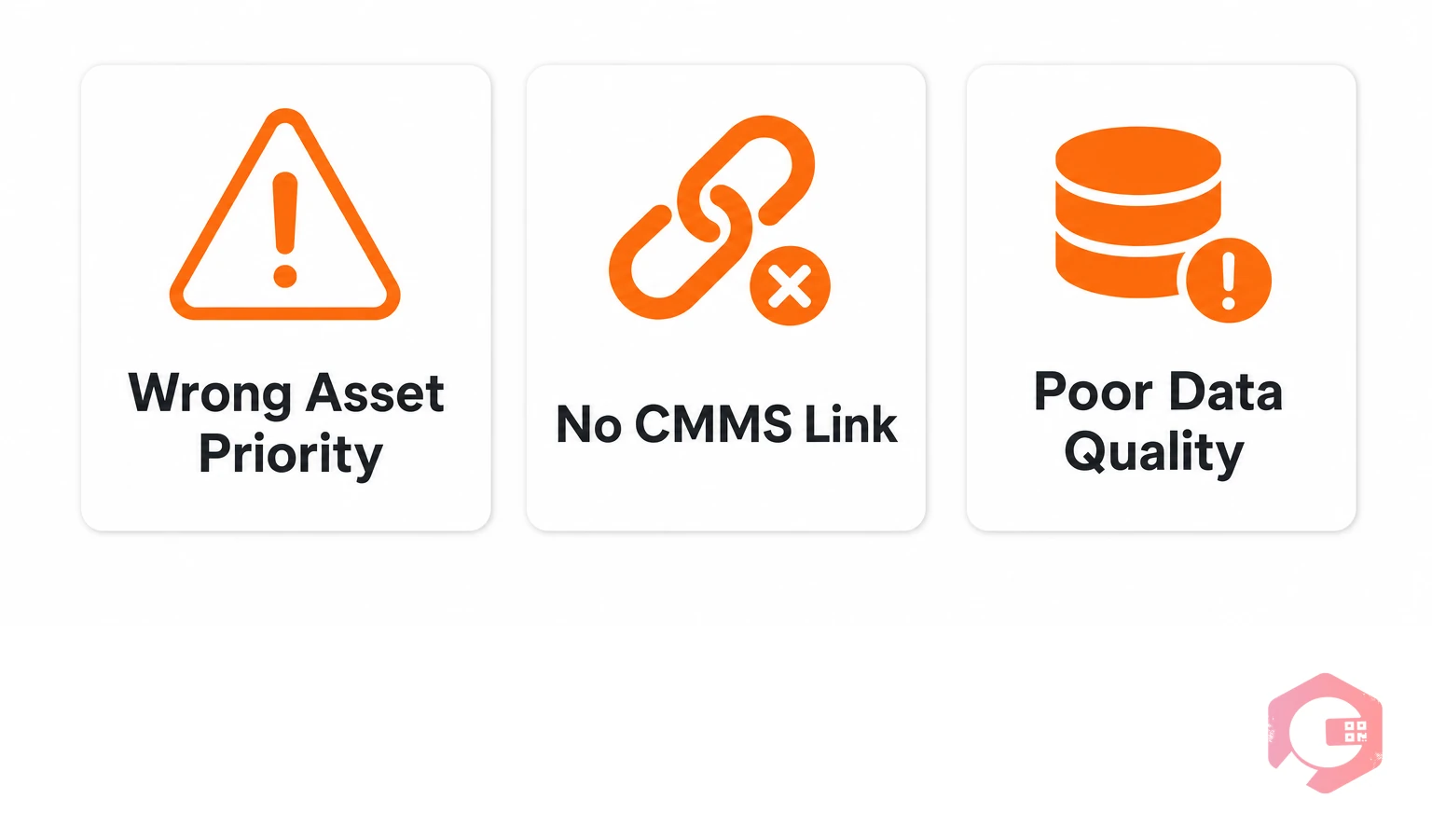
The majority of digital twin projects that fail to deliver their expected return run into one of three problems:
Cryotos is built on the asset-centric data model that digital twin integration requires. The asset register in Cryotos stores the full specification, location hierarchy, maintenance history, and real-time status of every asset — the same data structure that digital twin platforms need to associate sensor streams with physical assets and maintenance records.
The platform's IoT and sensor integration capability accepts real-time data feeds from connected assets, enabling meter-based and condition-triggered work order creation without manual intervention. The work order management system handles the downstream execution — assigning anomaly-triggered tasks to the right technicians, tracking time to response, and capturing findings that feed back into asset condition records.
The BI Dashboard aggregates condition data, PM compliance rates, MTTR, and first-time fix rates across the asset register, giving maintenance managers a facility-level view of asset health that mirrors what a digital twin provides at the individual asset level. For facilities implementing digital twins incrementally — starting with their highest-criticality assets before expanding — Cryotos provides the maintenance execution layer that makes the twin's output operational from day one.
If your maintenance operation is still responding to failures that sensor data could have predicted weeks earlier, digital twin implementation is no longer a future-state initiative — the technology is available, the integration patterns are proven, and the ROI case is well-documented across every major industrial sector. Book a demo to see how Cryotos structures asset data and IoT integration for facilities moving toward condition-based and predictive maintenance.
No. Most digital twin implementations are built on top of existing infrastructure — existing sensors, existing SCADA or BMS systems, and existing CMMS platforms. The integration layer connects these systems rather than replacing them. The most common starting point is exporting the existing asset register into a CMMS, connecting available sensor data streams to the corresponding asset records, and establishing baseline operating profiles before adding anomaly detection.
A useful starting point is three to five sensor channels per asset: typically vibration, temperature, current draw, and runtime hours for rotating equipment. More channels improve model accuracy over time, but waiting for full sensor instrumentation before starting delays value realization. Anomaly detection on a single well-characterized parameter — bearing temperature, for example — provides actionable early warning even before a full multi-parameter model is available.
For condition monitoring on rotating equipment, facilities typically see measurable impact within three to six months — primarily through avoided emergency repairs on assets where developing faults were detected early. Predictive model accuracy improves over 12 to 18 months as fault event data accumulates. PM optimization benefits typically become visible in the first annual maintenance budget cycle after implementation.
A CMMS with IoT integration records sensor readings against asset records and can trigger work orders based on threshold conditions. A digital twin adds a simulation and modeling layer on top of that data — the ability to model the asset's behavior, predict future states based on current trends, and run what-if scenarios. In practice, the boundary between the two is blurring as CMMS platforms add predictive analytics and digital twin platforms add maintenance execution integration.


Cryotos AI predicts failures, automates work orders, and simplifies maintenance—before problems slow you down.



