Electric arc furnace maintenance is the planned inspection, repair, and replacement work that keeps an EAF melting steel safely and on schedule. It covers the graphite electrodes, refractory lining, water-cooled panels, furnace transformer, hydraulics, and off-gas system. Because an EAF runs on huge currents, molten metal, and cooling water at the same time, good maintenance protects both uptime and lives.
A single unplanned stop on a melt shop can idle the caster, the rolling mill, and every crew downstream. This guide explains how an electric arc furnace works, which components fail most often, and what to check per heat, per shift, and per campaign. It is written for maintenance managers, reliability engineers, and melt shop supervisors.
Key Takeaways

An electric arc furnace is a furnace that melts scrap steel or direct reduced iron using an electric arc. The arc forms between graphite electrodes and the metal charge. Most new steelmaking capacity in many regions now uses this route, because it recycles scrap and avoids the blast furnace.
The electric arc furnace works in repeating cycles called heats. A crane charges scrap into the shell, the roof swings closed, and the electrodes lower until an arc forms. The arc and chemical energy from oxygen and carbon injection melt the charge. The furnace then tilts to tap liquid steel into a ladle, and the cycle starts again.
Each of these systems wears differently. That is why electric arc furnace maintenance needs separate plans for electrodes, refractory, water cooling, power, and mechanics.
Electric arc furnace maintenance is different from most plant maintenance because heat, electricity, molten metal, and water all meet in one vessel. A small fault in any one of them can quickly damage the others or injure people.
These conditions also raise the stakes for safety rules. Work on a de-energized furnace still needs full energy isolation under OSHA 29 CFR 1910.147, the lockout standard, and water leak alarms must stop the process, not just log an event.
The result is a maintenance program that mixes fast per-heat checks, planned shift tasks, and larger campaign shutdowns.
The fastest way to plan electric arc furnace maintenance is to map each system to its common failure modes and the checks that catch them early. Use this matrix as the base for your task lists and spare parts plan.
| System | Key Components | Common Failure Modes | Early Warning Checks |
|---|---|---|---|
| Graphite electrodes | Columns, joints, nipples, holders. | Joint loosening, breakage, tip spalling, side oxidation. | Joint torque, arc stability data, visual check at each addition. |
| Refractory lining | Hearth, slag line, banks, tap hole. | Erosion at the slag line, hot spots, tap hole wear. | Shell thermography, laser scans, gunning records. |
| Water-cooled panels and roof | Panels, roof, delta, hoses. | Cracks, leaks, blocked circuits, hose bursts. | Flow and temperature differences, off-gas moisture readings. |
| Furnace transformer | Windings, oil, tap changer, cooling. | Overheating, oil breakdown, tap changer wear. | Oil analysis, winding temperature, cooler checks. |
| Secondary circuit | Flexible cables, bus tubes, clamps. | Hot joints, cable wear, water-cooled cable leaks. | Infrared scans, cable inspections, cooling flow. |
| Hydraulics and mechanics | Electrode arms, masts, tilt and roof cylinders. | Leaks, slow response, seal failure, fluid contamination. | Pressure trends, fluid analysis, response time checks. |
| Off-gas system | Elbow, ducts, baghouse, fans. | Duct leaks, buildup, bag failure, fan vibration. | Draft pressure, differential pressure, vibration readings. |
Every row in the matrix should become a set of scheduled tasks with an owner and a frequency. Most melt shops find that electrodes, water cooling, and hydraulics cause the largest share of short delays, while refractory and transformer faults cause the longest.
Want these tasks to schedule themselves? Cryotos preventive maintenance software can trigger electric arc furnace maintenance by heat count, power-on hours, or calendar date.
Graphite electrode maintenance focuses on keeping columns tight, straight, and correctly regulated, so they carry current without breaking. Electrodes are one of the largest consumable costs on an EAF, and a broken column can stop a heat and force a fishing job in the bath.
Graphite electrodes are machined graphite columns that carry current into the furnace and slowly burn away as the arc runs. New sections screw onto the top of each column using threaded nipples, so the joint is as important as the graphite itself.
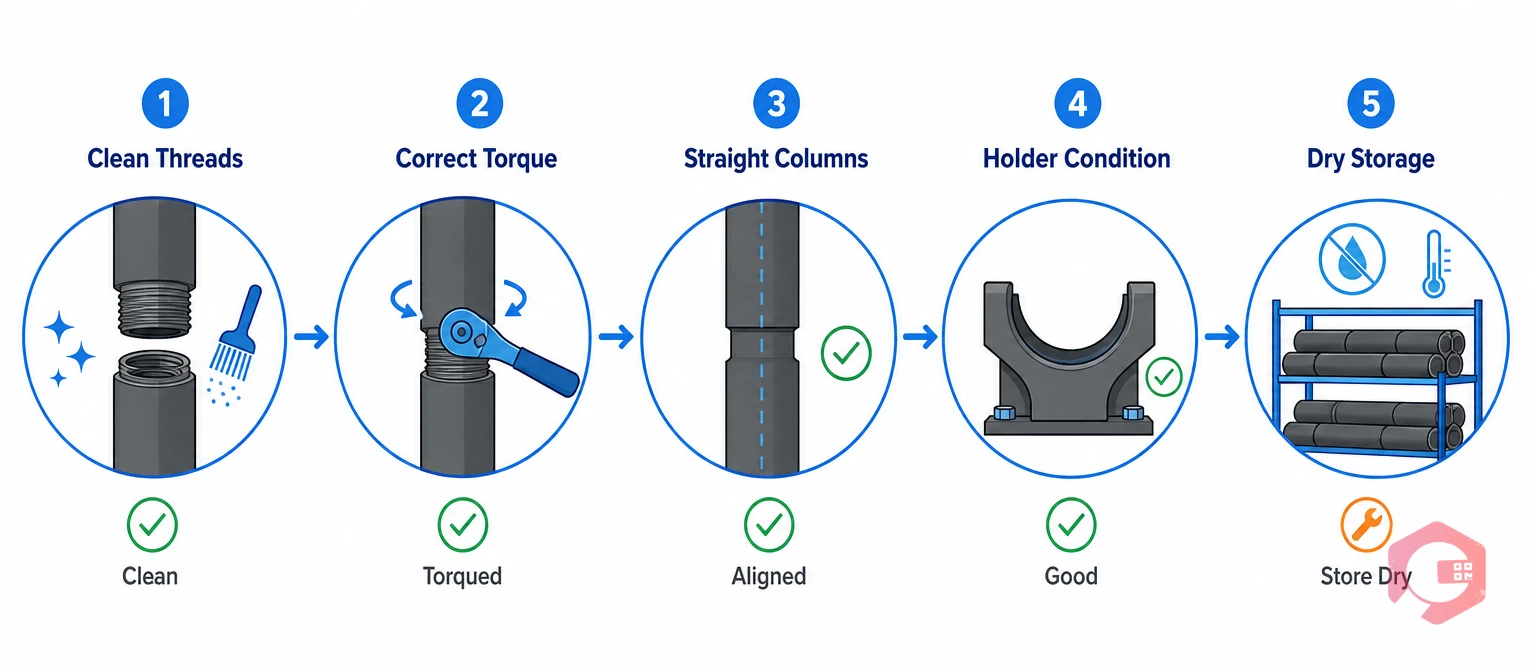
Many plants use water spray cooling on the column above the roof to reduce side oxidation. Keep the spray rings clean and check their flow, because a blocked ring raises consumption quickly.
Measure electrode consumption in kilograms per tonne of liquid steel, split into tip loss, side loss, and breakage. In modern furnaces it is often around 1 to 2 kg per tonne, depending on practice, so a sudden rise is a strong signal. Log every breakage with the heat number and cause, so patterns show up in your records.
Steady electrode consumption is one of the clearest signs that electric arc furnace maintenance on joints, regulation, and cooling is working.
Refractory maintenance keeps the furnace lining thick enough to hold molten steel between relines. Most lining wear happens at the slag line and the banks, where heat, slag, and arc flare hit hardest.
The refractory lining in most electric arc furnaces uses magnesia-carbon bricks in the walls and a rammed or brick hearth. Water-cooled panels protect the upper walls, so the refractory mostly lines the lower shell and hearth.
Refractory gunning is a repair method that sprays a refractory mix onto worn lining between heats. It rebuilds thin areas quickly without a full shutdown.
Plan full or partial relines around a target campaign life measured in heats. Track the actual heat count at each reline, so you can tell whether practice changes are helping.
Good refractory practice also depends on good slag control. A foamy slag of the right chemistry shields the walls from the arc, so melt shop practice and maintenance need to work together.
Refractory is a classic area where operations and electric arc furnace maintenance share ownership, so agree on who inspects, who guns, and who records.
Water-cooled panels and the roof let modern furnaces run high power without melting the upper shell. They are also the most serious safety risk in electric arc furnace maintenance, because a leak can put water into contact with liquid steel.
Every melt shop needs a written water leak response. If a leak is suspected, the usual rule is to stop power, isolate the circuit, and never tilt the furnace until the risk of water under the bath has been assessed.
Water cooling is the system where a few minutes of checking can prevent the most dangerous event an EAF can have.
The furnace transformer and the high-current circuit deliver the power that melts steel, so their failures cause some of the longest outages on an EAF. A transformer failure can take weeks or months to fix if no spare is on hand.
Power quality also matters. Arc furnaces create flicker and harmonics on the supply, so many plants use static VAR compensators or filters. These systems need their own checks on capacitors, reactors, and cooling, because a trip can limit furnace power.
Transformer health trends should be reviewed by both maintenance and the plant electrical engineer. Small changes in oil gases often appear months before a failure.
Because the transformer is often a single point of failure, many plants treat it as their highest-criticality asset in electric arc furnace maintenance planning.
Hydraulics move the electrodes, swing the roof, and tilt the furnace. Slow or leaking hydraulics cause regulation problems, delays between heats, and fire risk near hot surfaces.
Hydraulic leaks near the furnace are a fire risk, so treat any new leak as urgent, not cosmetic.
Well-maintained hydraulics keep electrode regulation stable, which improves energy use, electrode life, and safety at the same time.
The off-gas system removes hot gas, fumes, and dust from the furnace, and its condition affects both emissions and melting. A blocked or leaking duct lowers draft, which pushes fume into the shop and can overheat the roof.
Buildup in the water-cooled elbow and the first duct sections is a common cause of lost draft. Many plants inspect these areas at every planned stop and clean them on a set heat count. A drop in draft pressure at the same fan speed is often the first sign that buildup is growing.
Off-gas maintenance protects both the furnace and the plant's environmental permit, so link these tasks to the records you keep for emissions compliance.
An electric arc furnace maintenance schedule works best when it follows the furnace's own rhythm of heats, shifts, and campaigns. The schedule below is a starting point to adapt to your furnace design and supplier guidance.
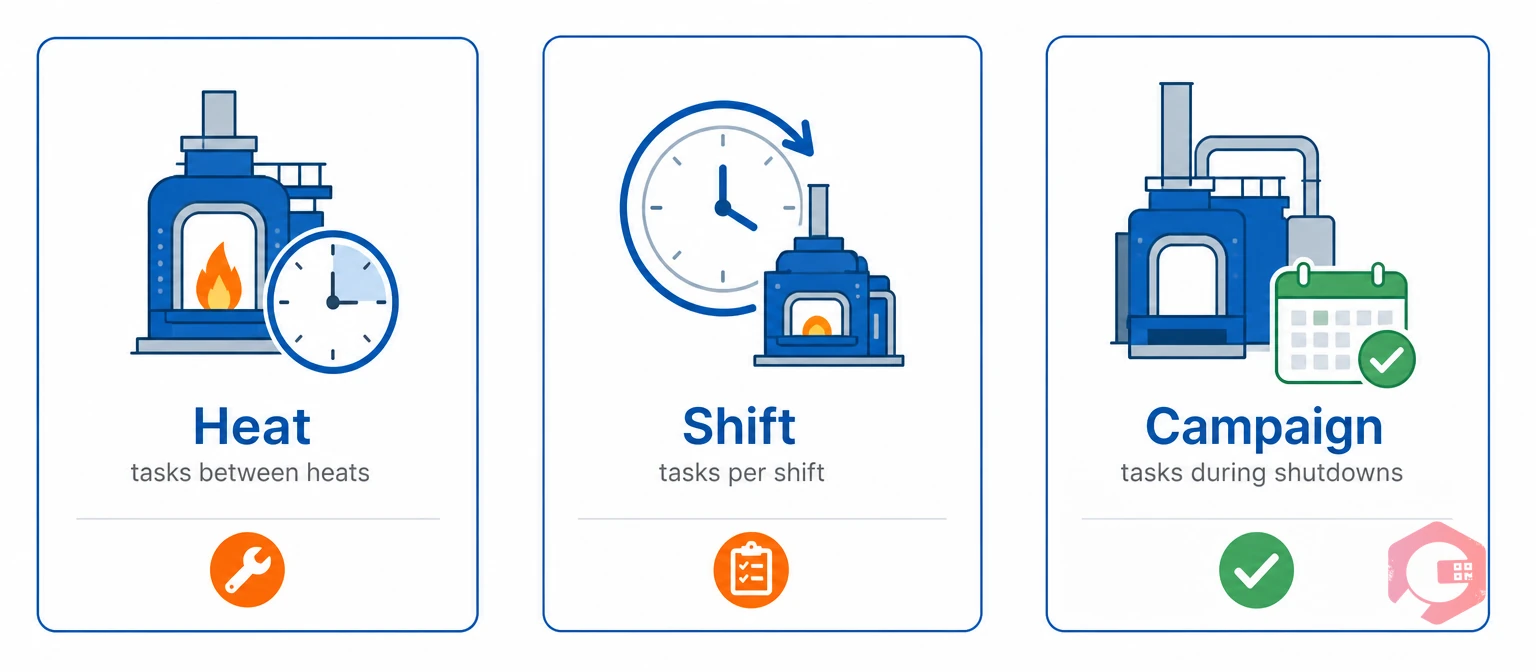
The Heat, Shift, Campaign Maintenance Method:
Most melt shops assign each task to one of these three buckets, so nothing waits for a shutdown that could be done between heats.
| Frequency | Electrodes | Refractory | Water Cooling | Electrical | Hydraulics and Mechanics |
|---|---|---|---|---|---|
| Every heat | Check column length and joint condition. | Inspect slag line and gun worn spots. | Watch for steam or water after tap. | Monitor arc stability and alarms. | Check tilt and roof movement. |
| Every shift or day | Record consumption and breakages. | Log gunning material used. | Review flow and temperature trends. | Check transformer temperatures. | Read pressures; check for leaks. |
| Weekly | Inspect holders and spray rings. | Thermal scan of the shell. | Inspect hoses and connections. | Infrared scan of the secondary circuit. | Fluid sample and filter checks. |
| Monthly | Calibrate torque tools. | Review lining wear data. | Check water quality. | Transformer oil sample. | Inspect mast guides and cylinders. |
| Per campaign or shutdown | Overhaul joining station and holders. | Partial or full reline; tap hole repair. | Pressure test and replace panels. | Tap changer service; cable replacement. | Replace seals; check tilt rails and pivots. |
Adjust each interval using your own failure history and supplier guidance. The goal is to catch each failure mode at the earliest practical frequency.
A campaign shutdown is the planned stop where the largest electric arc furnace maintenance jobs happen, such as relines, panel changes, and transformer service. Good planning decides how long the furnace is down and whether it restarts cleanly.
Well-planned campaign shutdowns are where electric arc furnace maintenance has the biggest effect on the next months of production.
Critical spares decide how long an EAF stays down after a failure. If a part has a long lead time and no backup, a single failure can stop the melt shop for weeks.
Review critical spares each year against failure history and supplier lead times. A spare that is never used may still be the cheapest insurance in the plant.
Linking each spare to its asset in your maintenance system shows at a glance what electric arc furnace maintenance can fix from stock and what needs an order.
Condition monitoring lets maintenance teams find EAF problems before they cause a stop. Many of the signals already exist in the furnace control system, so the first step is often to collect and review them.
Start with the signals linked to your most costly failures, set alert limits, and turn every alert into a work order. Over time, these trends let you move tasks from fixed intervals to condition-based timing.
Condition monitoring does not replace routine checks, but it tells your team where electric arc furnace maintenance effort will pay back the most.
Building a structured EAF program takes a few months, but each step pays back quickly. Work through these seven steps in order, starting with the highest-risk systems.
A clear program makes electric arc furnace maintenance predictable for planners, operators, and managers alike.
Clear ownership is the simplest way to stop EAF checks from falling between teams. Melt shops run fast, and a check that belongs to everyone usually gets done by no one.
Write these roles into each task, so the work order already names the team that owns it. When a melt crew member spots a problem, the handover should take minutes, not a phone call at the end of the shift.
Shared ownership works best when every team logs findings in one place. Then electric arc furnace maintenance decisions can be based on the full picture rather than on whoever shouts loudest in the morning meeting.
EAF maintenance is high-risk work, so safety controls must be written, trained, and enforced every time. Maintenance teams that successfully avoid serious incidents treat these rules as non-negotiable:
Every one of these rules should be built into the work order, so the technician sees the controls before starting the job.
The right KPIs show whether electric arc furnace maintenance is protecting production or only reacting to it. Track a small set of measures every week and review trends every month.
Split every delay by cause and system, not only by total minutes. A melt shop that loses ten minutes a heat to slow roof swings has a different problem from one that loses a full shift to a panel leak each month. Both show up as lost time, but they need different fixes, and only clear delay codes reveal which one you have.
When these KPIs improve together, the furnace is running more heats, using fewer consumables, and creating fewer safety risks.
Most EAF problems come from a few repeat habits rather than rare events. Watch for these mistakes in your own program:
Fixing these habits usually costs little and gives quick returns in fewer delays and safer work.
A Computerized Maintenance Management System supports electric arc furnace maintenance by scheduling tasks on heat counts, capturing readings, and linking every failure to the right component. It turns a fast-moving melt shop into a clear record.

The payoff is fewer surprise stops. Maintenance teams using Cryotos have reported up to 30% reduction in unplanned downtime and 25% faster repair turnaround. On a melt shop, every hour saved means more heats and more steel shipped.
For a broader view of plant-wide practice, see how Cryotos supports manufacturing maintenance, including the autonomous maintenance checks that melt crews can own.
The most important areas are graphite electrodes, refractory lining, water-cooled panels, the furnace transformer, hydraulics, and the off-gas system. Water-cooled panels deserve special attention, because a leak near molten steel is a major safety risk.
Reline timing depends on furnace design, practice, and refractory quality. Most plants plan relines by heat count rather than by date, and they use gunning and shell thermography to extend each campaign safely.
The most common causes are loose joints, scrap falling against the column, unstable electrode regulation, and side oxidation that thins the graphite. Correct joint torque and clean threads prevent many breakages.
Plants compare inlet and outlet water flow on each circuit, watch temperature rise across panels, and in some cases measure moisture or hydrogen in the off-gas. Visual checks after tapping also help catch leaks early.
Regular oil sampling, temperature trending, cooling system checks, and on-load tap changer service are the core tasks. Infrared scans of the high-current connections help find hot joints before they fail.
Yes. Many tasks, such as tap hole sleeve changes, joint tool calibration, and panel inspections, match furnace wear better when they trigger on heat count or power-on hours. A CMMS can track these counters automatically.
Water reaching molten steel is the most serious risk, because it can cause a steam explosion. That is why leak detection, fast response rules, and careful panel maintenance sit at the center of every EAF safety program.
Keep joints clean and correctly torqued, maintain stable electrode regulation, and keep column spray cooling working. Logging every breakage with its cause also helps the team remove the habits that waste graphite.
It depends on the scope. A short stop for panel and tap hole work may take a single shift, while a full reline with transformer service can take several days. Good planning and staged materials shorten every type of stop.
Melt crews usually handle quick between-heat checks such as gunning and electrode additions. Maintenance owns planned shift and campaign work, and both teams should share one record of every issue found.
Strong electric arc furnace maintenance keeps your melt shop safe, your electrodes intact, and your heats on schedule. Schedule a free demo to see how Cryotos schedules EAF tasks by heat count and links every delay, reading, and repair to the right furnace component.


Cryotos AI predicts failures, automates work orders, and simplifies maintenance—before problems slow you down.