An electrical preventive maintenance checklist is a scheduled list of inspections, tests, and service tasks for electrical equipment. Under the 2023 edition of NFPA 70B, that list belongs inside a written electrical maintenance program.
This guide turns the standard into a working checklist, with tasks by equipment type, starting intervals, and the records auditors ask for. It also covers the main challenge facility teams face, proving the work was done, and how Cryotos solves it.
Key Takeaways

Electrical preventive maintenance is planned inspection, testing, and servicing that finds faults before equipment fails. An electrical preventive maintenance checklist turns that idea into repeatable steps. Each line names the gear, the task, the interval, and the evidence to record.
Electrical gear often fails slowly. Loose connections, dust, moisture, and worn insulation build heat and resistance over months, so scheduled checks catch most problems early. The standard behind most programs is NFPA 70B, which covers electrical equipment maintenance.
A strong checklist is specific enough that two technicians would run the same inspection the same way.
The 2023 edition is titled Standard for Electrical Equipment Maintenance. It replaced the earlier Recommended Practice with mandatory language. Wherever it is adopted, a written program is now the baseline.
NFPA 70B is a consensus standard, not an OSHA regulation. It becomes enforceable when a jurisdiction, insurer, or contract adopts it, so confirm which edition applies to your site.
Maintenance teams often mix up the two standards. They answer different questions.
| Topic | NFPA 70B | NFPA 70E |
|---|---|---|
| Main purpose. | Keeps electrical equipment in safe, reliable condition. | Protects workers from shock and arc flash. |
| Core question. | What maintenance does this equipment need, and how often? | How do we do electrical work safely? |
| Typical content. | Inspection and test tasks, intervals, condition ratings, records. | Risk assessment, approach boundaries, PPE, work permits. |
| Main users. | Maintenance and reliability teams. | Electricians and safety officers. |
NFPA 70E expects electrical equipment to be maintained, and NFPA 70B describes how. Use both together: 70B keeps the equipment healthy, and 70E keeps the person doing the work safe.
Cryotos also provides an asset and equipment inspections checklist that pairs with the tasks below.
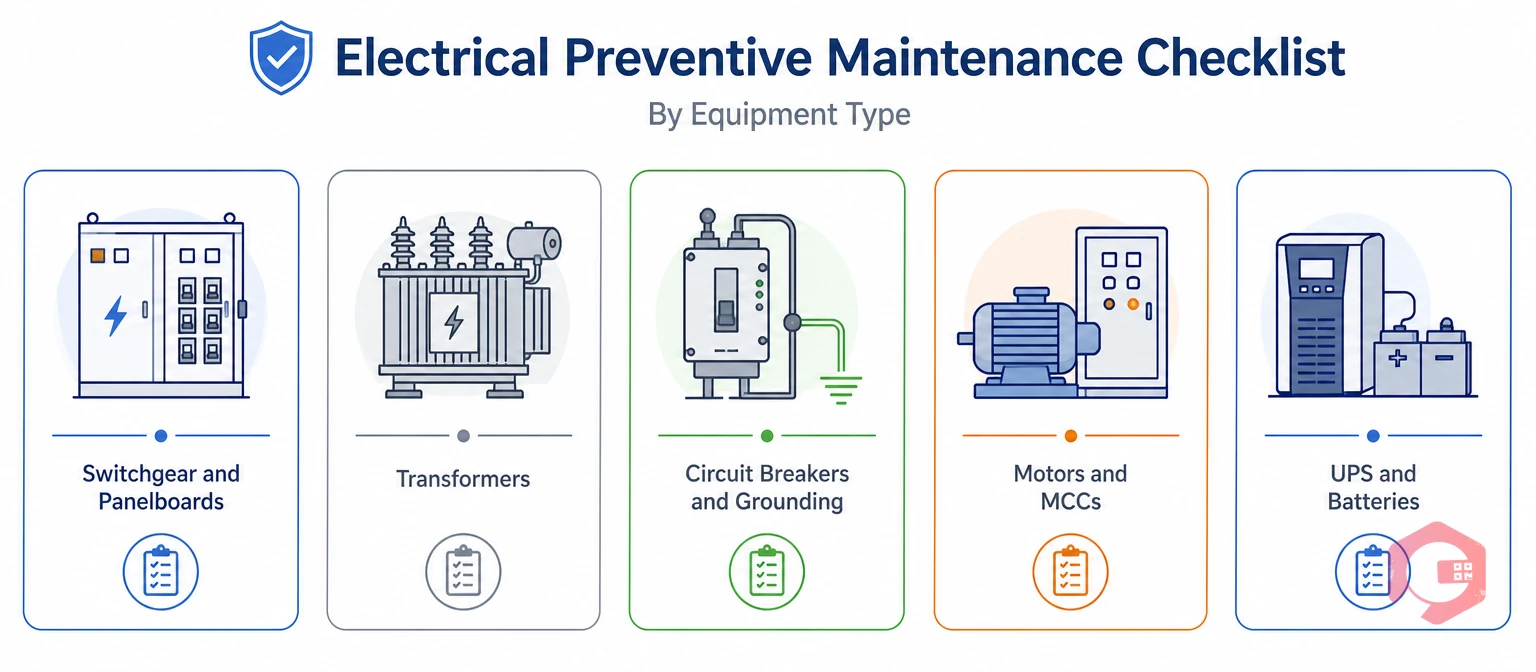
An electrical preventive maintenance checklist works well when grouped by equipment type, because each type fails differently. Run any task that needs energized access under your NFPA 70E work rules, and use lockout/tagout for de-energized work.
Infrared thermography is a non-contact test that uses a thermal camera to find hot spots on energized equipment. It is often the highest-value task on this list.
Group tasks by equipment type, and each technician knows exactly what to inspect and what to record. Cryotos maintenance checklists can load this list from Excel and add pass/fail fields, photos, and a condition-rating question.
Most facilities run a layered schedule. Visual checks are frequent, thermography is yearly, and deeper tests wait for planned outages. The 2023 edition ties maximum intervals to equipment condition. Treat these intervals as starting points, and confirm them against the standard and the manufacturer's instructions.
| Task | Applies to | Typical starting interval | Record to keep |
|---|---|---|---|
| Visual inspection. | Switchgear, panelboards, transformers. | Monthly to quarterly. | Date, inspector, findings. |
| Infrared thermography. | Switchgear, MCCs, panelboards, connections. | Annually; more often for critical or poor-condition equipment. | Thermal images, temperature rise, repair status. |
| Torque and cleaning. | Bolted connections, enclosures. | Planned outages, often every 1 to 3 years. | Torque values, parts replaced. |
| Breaker and trip tests. | Breakers, protective relays. | Every 1 to 3 years, per manufacturer. | Test results, settings. |
| Insulation resistance. | Cables, motors, transformers. | Every 1 to 3 years, trended. | Readings, test voltage, temperature. |
| Battery and UPS checks. | UPS, emergency power. | Monthly checks, annual capacity test. | Voltage readings, test results. |
Shorten any interval when gear is critical, heavily loaded, dirty, damp, or already showing wear. Cryotos preventive maintenance software can run each task on its own calendar or meter trigger.
For most facilities, the hardest part of running an electrical preventive maintenance checklist is not knowing what to inspect. It is proving, quickly and completely, that each inspection happened. It is also proving that every finding was fixed.
Picture a site with a switchgear lineup, several panelboards, two transformers, and a motor control center. The checklist lives in a spreadsheet, the thermography report arrives as a yearly PDF, and test results sit in a contractor email. Maintenance teams in this position often hit four problems:
This scenario is a composite of patterns common to facility teams, not a single customer account.
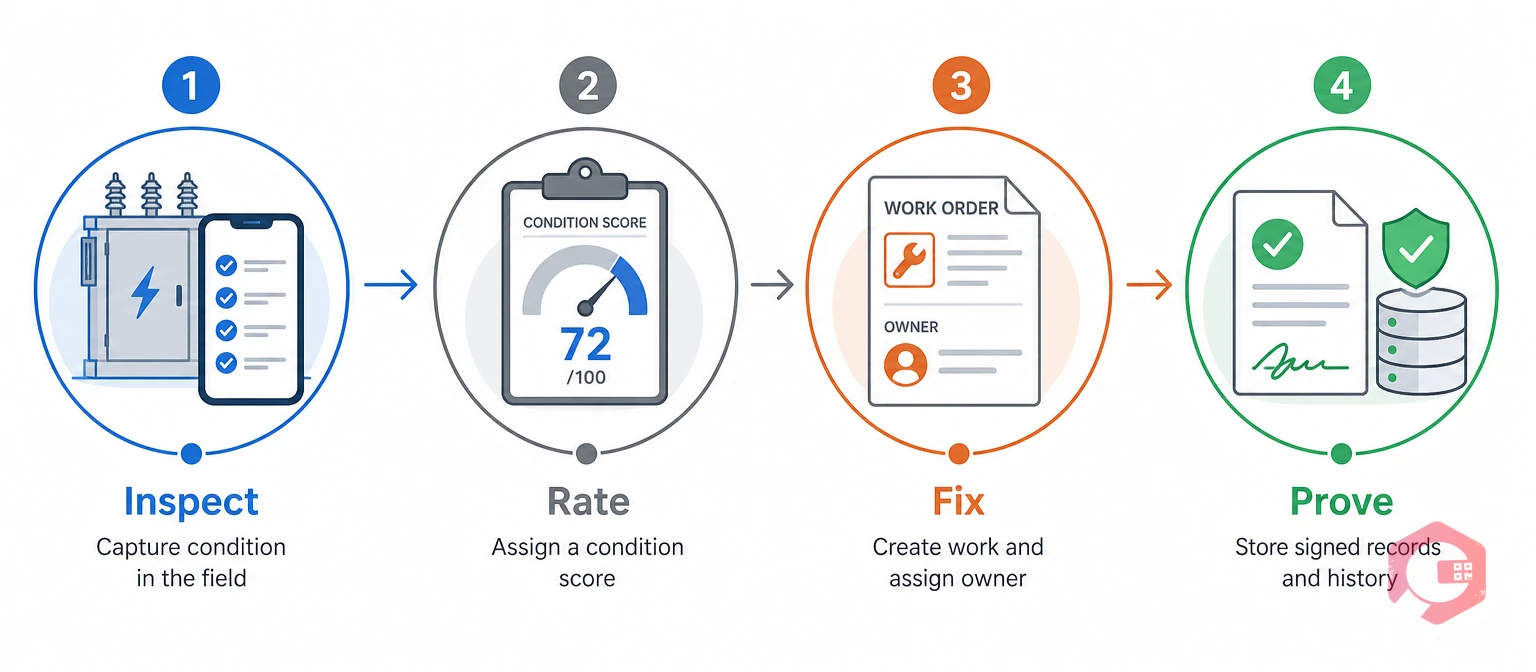
A Computerized Maintenance Management System solves this by keeping the inventory, schedule, findings, and records in one place.
The Inspect-Rate-Fix-Prove Framework:
Four Cryotos capabilities keep your electrical preventive maintenance checklist on track:
Maintenance teams using Cryotos have reported up to 30% reduction in unplanned downtime and 25% faster repair turnaround. Cryotos does not replace the engineering judgment behind condition ratings or the testing by qualified electricians. It makes sure the work is scheduled, completed, and recorded.
Most program gaps come from a few repeat habits, and each one is cheap to fix.
Fixing these five habits gives most teams a program they can defend.
It should list the equipment, task, interval, pass criteria, owner, and space for readings and sign-off. Core tasks are visual inspection, thermography, torque checks, cleaning, insulation resistance tests, breaker tests, and grounding checks.
NFPA 70B is not law by itself. The 2023 edition uses mandatory language, so it applies where a jurisdiction, insurer, or contract adopts it. OSHA's electrical work-practice rules apply separately.
It depends on the gear's condition, criticality, and surroundings. Many facilities start with monthly or quarterly visual checks and yearly thermography. They then adjust using the standard's interval tables.
Qualified persons trained under NFPA 70E should do work on or near exposed electrical parts. Thermography and specialized tests are often done by trained thermographers or test technicians.
A CMMS cannot make a site compliant, but it schedules tasks, tracks findings to closure, and stores the records. Cryotos does this on one asset history, which makes audits faster to answer.
Electrical maintenance protects people only when every inspection is scheduled, done, and recorded. Schedule a free demo to see how Cryotos turns your electrical preventive maintenance checklist into tracked work and audit-ready records.


Cryotos AI predicts failures, automates work orders, and simplifies maintenance—before problems slow you down.