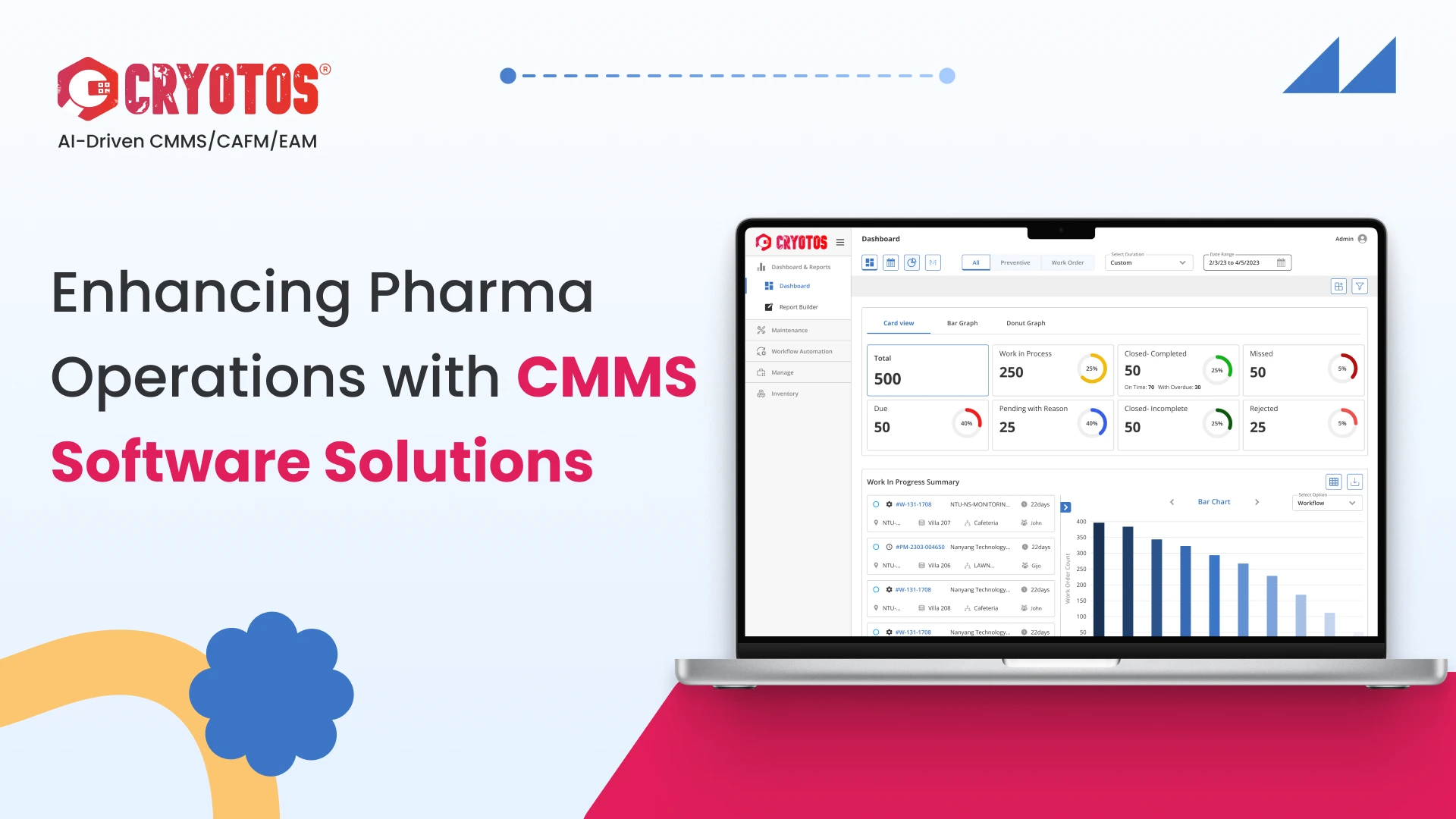
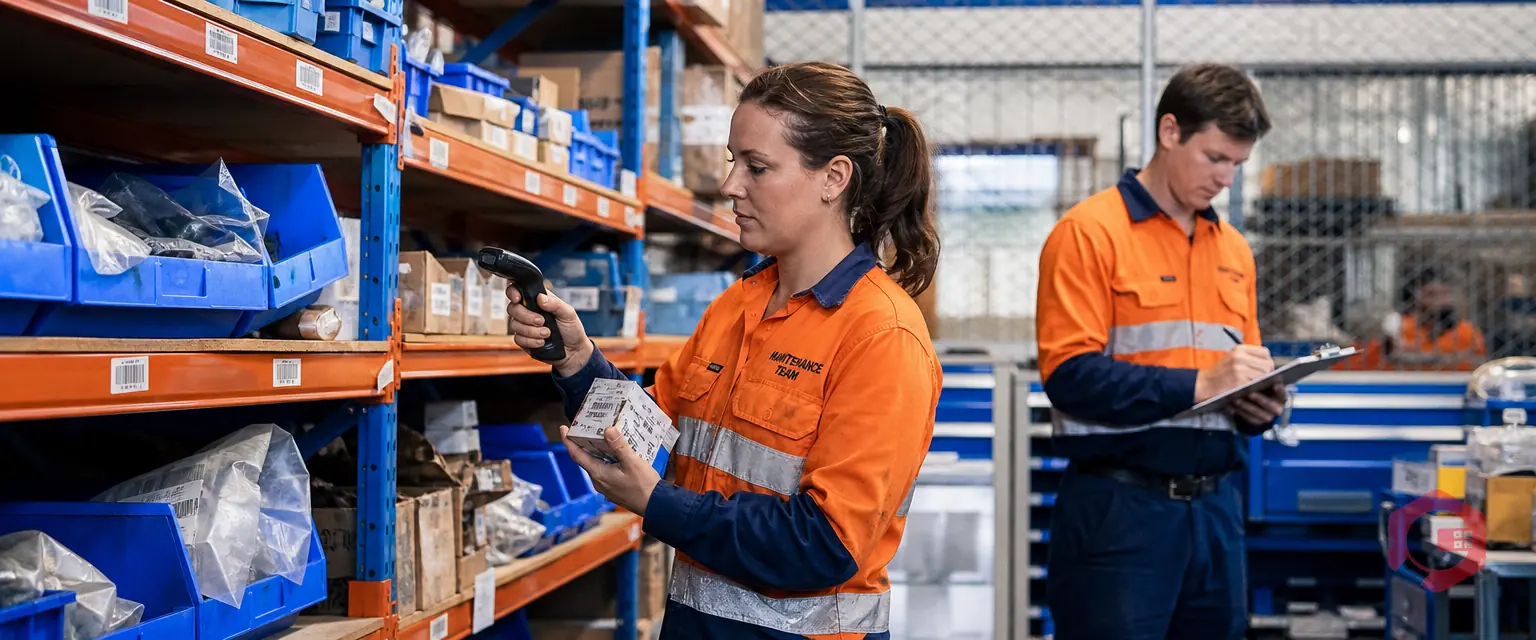
In the highly regulated pharmaceutical industry, equipment uptime, maintenance management, and compliance are paramount. With the complexities of running pharmaceutical manufacturing, facility management, and testing operations, an effective Computerized Maintenance Management System (CMMS) can be a gamechanger. By addressing pain areas such as unplanned downtime, compliance challenges, and manual maintenance tracking, CMMS enhances operational efficiency, reduces costs, and ensures that machinery functions optimally.
Key Pain Areas in Pharma Industry Maintenance
Unplanned Equipment Downtime
Unscheduled breakdowns and equipment malfunctions can lead to significant delays in production, resulting in costly operational disruptions and loss of revenue. In a regulated environment like pharma, this downtime can also lead to compliance violations.
How CMMS Helps: CMMS automates maintenance notifications, triggering alerts for unplanned maintenance requests immediately after a breakdown is reported. The system helps the maintenance team act swiftly, with real-time updates sent to all involved stakeholders, reducing the time to resolve the issue and mitigating production delays.
Manual and Error-Prone Maintenance Tracking
Without automation, maintenance tasks often rely on manual tracking, which is time-consuming and prone to human error. This can lead to missed maintenance tasks, overlooked equipment failures, or poor asset utilization.
How CMMS Helps: By automating the tracking and scheduling of maintenance tasks, CMMS reduces the risk of human error. The system automatically generates preventive maintenance (PM) schedules, sends reminders, and logs all actions taken, ensuring the maintenance history is always up-to-date and easily accessible.
Regulatory Compliance
Pharma manufacturers must adhere to strict regulations, including USFDA guidelines and EU GMP (Good Manufacturing Practices) standards. Failure to comply with these regulations can result in severe penalties and a loss of product certification.
How CMMS Helps: CMMS ensures that all maintenance activities are logged, tracked, and fully traceable. This compliance is crucial for passing regulatory audits and ensures that pharmaceutical operations maintain the highest standards of quality and safety. The system also supports validation protocols such as IQ (Installation Qualification), OQ (Operational Qualification), and PQ (Performance Qualification).
Lack of Real-Time Data for Decision Making
Without real-time access to data, it becomes difficult to track asset performance, identify recurring issues, or measure key metrics like Mean Time Between Failures (MTBF) and Mean Time to Repair (MTTR).
How CMMS Helps: CMMS provides real-time performance tracking of equipment, with detailed reports on maintenance activities, breakdowns, and repairs. The system also helps track key performance indicators (KPIs), allowing for better-informed decisions to optimize equipment and resource management.
Machine-Specific Solutions with CMMS
Now let's look at some common pharmaceutical machines and how CMMS addresses their unique maintenance challenges.
1. Mixing Machines (Blenders, Homogenizers)
Purpose: Mixing machines play a critical role in formulating pharmaceutical products by ensuring the correct composition of raw materials.
- Breakdown: When mixing machines fail, CMMS generates immediate breakdown notifications, outlining the issue and any parts required for repairs. It tracks the malfunction status and notifies the relevant team members.
- Preventive Maintenance (PM): CMMS schedules regular maintenance based on operational hours or time intervals to prevent breakdowns. This can include cleaning, lubrication, and part inspections, ensuring the machines are ready for continuous production.
- Asset Transfer: If the equipment needs to be moved across facilities, CMMS records the asset's location change, ensuring all data associated with that asset (e.g., maintenance history, part replacements) remains intact.
- History Management: CMMS provides a detailed history of all maintenance and repairs conducted on mixing machines, ensuring all actions are recorded for future reference or regulatory audits.
2. Filling Machines
Purpose: These machines are essential for accurately dispensing pharmaceutical liquids into containers like vials, bottles, and syringes.
- Breakdown: CMMS quickly logs any breakdown incidents, creating work orders and automatically triggering notifications to maintenance teams, helping them resolve the issue as soon as possible.
- Preventive Maintenance (PM): The system schedules tasks such as cleaning, calibration, and part replacements based on the manufacturer's recommendations. CMMS also provides alerts when deviations from the maintenance schedule occur.
- Asset Transfer: If the filling machine is relocated, CMMS ensures its new location is updated in the system and tracks its historical data, including repairs and replacements.
- History Management: CMMS stores detailed maintenance logs for the filling machines, making it easy to trace any performance issues back to past interventions and parts replaced.
3. Packaging Machines (Labelling, Cartoning, Sealing)
Purpose: Packaging machines handle critical processes like labeling, sealing, and cartoning, ensuring that the pharmaceutical products are safely packaged and ready for distribution.
- Breakdown: CMMS records all breakdown incidents, creating detailed notifications that describe the malfunction and the required repair actions.
- Preventive Maintenance (PM): CMMS schedules regular maintenance tasks for these machines, such as part inspections, lubrication, and software updates, to ensure they are operating at full capacity.
- Asset Transfer: Any change in the machine's location is recorded in the CMMS system to maintain continuity in asset tracking and maintenance history.
- History Management: CMMS tracks all performance data, including downtime, maintenance logs, and repairs. This data is critical for understanding equipment efficiency and for future troubleshooting.
4. Tableting Machines
Purpose: These machines compress pharmaceutical powders into tablets, which are crucial to produce pharmaceutical pills.
- Breakdown: When the machine encounters a breakdown, CMMS immediately generates a notification and logs all relevant details for efficient repair scheduling.
- Preventive Maintenance (PM): Regular maintenance activities such as cleaning, lubrication, and calibration are scheduled by CMMS to ensure the tableting machines remain operational and compliant with regulatory standards.
- Asset Transfer: If the tableting machine is moved or reinstalled in a different area, CMMS updates its location and maintains a continuous log of all maintenance activities and performance metrics.
- History Management: CMMS keeps detailed records of every maintenance and repair event, ensuring that the data can be reviewed for performance optimization and audit purposes.
5. Sterilization Equipment (Autoclaves, Dry Heat Sterilizers)
Purpose: Sterilization equipment is essential for ensuring that pharmaceutical products are free of contaminants and meet safety standards.
- Breakdown: CMMS creates instant breakdown notifications, tracking the issue and ensuring that the appropriate team responds quickly to resolve it.
- Preventive Maintenance (PM): Sterilization equipment requires regular checks and calibrations to maintain its efficiency. CMMS automates scheduling these tasks and ensures that any deviations from the schedule are flagged for corrective action.
- Asset Transfer: If sterilization equipment is relocated, CMMS records the transfer and ensures that the machine's maintenance history is preserved.
- History Management: Detailed logs of calibration and maintenance activities are kept in CMMS, which is vital for compliance with regulatory standards such as USFDA and EU GMP.
6. Lab Testing Instruments (HPLC, Spectrophotometers)
Purpose: These instruments are used for quality control, testing raw materials, and verifying the quality of the finished product.
- Breakdown: CMMS logs breakdown incidents for lab equipment, creating repair orders and ensuring that technicians are notified immediately.
- Preventive Maintenance (PM): CMMS schedules regular calibration and maintenance tasks to ensure lab instruments provide accurate results, avoiding regulatory issues due to equipment malfunction.
- Asset Transfer: If lab equipment is moved, CMMS automatically updates the asset location and maintains a detailed history of all maintenance and calibration activities.
- History Management: CMMS stores all data related to the testing instruments, including calibration records, repairs, and operational downtime, providing traceability for compliance audits.
Conclusion
The pharmaceutical industry faces numerous challenges related to equipment management, including unplanned downtime, compliance with regulatory standards, and effective resource utilization. By implementing a CMMS, these challenges can be addressed through automated maintenance scheduling, real-time notifications, and centralized data storage for performance tracking.
From mixing machines to lab testing instruments, CMMS ensures that all equipment operates efficiently, compliant with regulations, and ready for uninterrupted production. Moreover, it enhances asset management, facilitates smooth asset transfers, and maintains a detailed history of maintenance activities, ultimately improving both operational efficiency and compliance with the highest industry standards.