An environmental audit checklist for maintenance areas lists the places in your plant where oil, waste, chemicals, refrigerants and emission equipment need regular review, plus the records an auditor will ask for. Many findings in these areas are about missing records and slow follow-up, not dramatic hazards. A short, repeatable review catches them early.
This guide gives an environmental audit checklist matrix by area, a four-step audit cycle, and the gaps auditors often find. It also shows what a maintenance system can do and what it cannot.
Key Takeaways

An environmental audit is a structured review of whether a site controls waste, spills, emissions and chemicals as required. A checklist turns that review into a list of areas to walk and records to check.
No single law lists every area to review. The rules that apply to you depend on your site, the amounts of waste and chemicals you hold, your permits and your region. The ISO 14001 standard expects organizations to evaluate compliance, run internal audits and fix problems. In the US, the EPA hazardous waste rules, spill prevention rules and permits cover many maintenance areas.
This list covers areas that commonly carry risk in US manufacturing plants. Check the rules where you work before you rely on it.

Use the matrix on each walk. The suggested checks are examples only, so set yours from your permits and local rules.
| Area | What to Check | Records to Have | Suggested Check |
|---|---|---|---|
| Waste storage | Containers closed, labeled and in good condition; stored in the right place; time limits met | Waste inventory, manifests, inspection log | Weekly walk |
| Oil and chemical storage | No leaks; containment intact; labels readable; incompatible items apart | Chemical inventory, safety data sheets, tank log | Weekly |
| Spill readiness | Kits stocked and easy to reach; drains protected; staff know the plan | Kit check log, spill plan, drill record | Monthly kit check; yearly drill |
| Drains and separators | Drains known and not misused; separators cleaned; wash water handled as permitted | Cleaning log, sample results, discharge permit | Monthly or per permit |
| Outdoor storage | Covered or contained; no stained ground or open containers | Yard inspection log | Weekly and after heavy rain |
| Refrigerants | Leak checks done; leaks fixed on time; certified technicians only | Refrigerant log, service reports, certificates | Per equipment rules |
| Emission sources | Controls working; permit limits known; monitoring done | PM records, monitoring logs, permit | Per permit; monthly PM review |
| Batteries and universal waste | Stored closed and labeled; charging area clean and ventilated | Collection log, shipment records | Weekly |
| Records and training | Permits current; actions closed; training current | Permit list, training log, action log | Monthly |
Labels and safety data sheets fall under OSHA hazard communication rules. Refrigerant rules, such as EPA Section 608, set leak repair and record duties for certain equipment.
Add your own permit conditions to each row. A generic environmental audit checklist misses what is specific to your site.
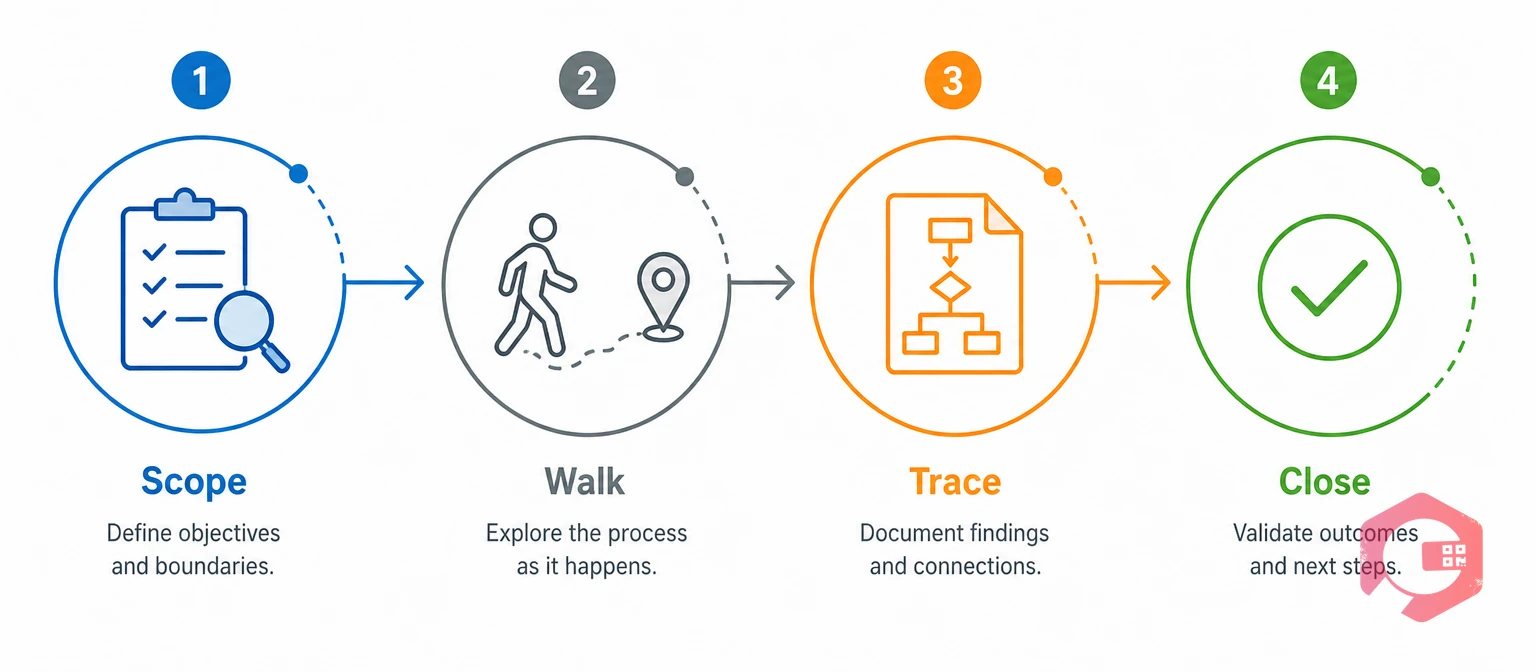
The SCOPE-WALK-TRACE-CLOSE audit cycle is a four-step routine for reviewing each area and fixing what you find. It turns the matrix into a habit.
The SCOPE-WALK-TRACE-CLOSE Framework:
A corrective action is a fix with an owner and a due date, tracked until it is closed. Here is an illustrative example. A walk finds an unlabeled solvent can by the washer. The label is fixed on the spot, but the log shows no weekly check for six weeks. The real finding is the missed check.
Start from the regulatory compliance checklist and adapt it to your own areas.
A fixed route keeps the walk short and stops areas from being skipped. This is one example order.
Bring the checklist, a phone for photos and a second person. A second pair of eyes spots what regular staff no longer see.
Many findings are about records and follow-through. Many maintenance teams recognize at least a few of these.

A Computerized Maintenance Management System supports an environmental audit checklist by scheduling the walks, holding the signed records and tracking fixes to closure. It does not replace legal advice. Cryotos is a maintenance platform, not an environmental reporting system.
Maintenance teams using Cryotos have reported up to 30% reduction in unplanned downtime and 25% faster repair turnaround. Fewer emergency repairs can also mean fewer rushed jobs where leaks and spills happen.
Waste manifests, emissions calculations and refrigerant leak-rate reports belong in your environmental tools. Ask any software vendor how they connect to your maintenance records.
It should cover the areas that commonly carry risk: waste storage, oil and chemical storage, spill readiness, drains, outdoor storage, refrigerants, emission sources, batteries and records. For each area, list what to check and which records to have. Add your own permit conditions.
It depends on your permits and risk. Many sites do short weekly walks of waste and storage areas, monthly checks of spill kits and drains, and a full review each year. Check your permits for any required frequencies.
Have your waste inventory and manifests, inspection logs, chemical inventory and safety data sheets, spill kit and drill logs, refrigerant service records, permits, training records and corrective action log. Auditors will usually ask to see records as well as the area itself.
Use someone who knows the rules and, where possible, does not audit their own area. An EHS lead with input from a maintenance supervisor works well. Train the people who walk the areas.
Give contractors your rules before work starts. Tell them where to store materials and waste, check what they leave behind, and include their work areas in your walks.
Yes, for the maintenance side. A CMMS can schedule checks, hold signed checklists, send renewal reminders and track corrective actions. It does not replace legal advice or environmental reporting tools.
An environmental audit checklist only works when the walks happen and the fixes get closed. Schedule a free demo to see how Cryotos schedules area checks, keeps signed records and tracks corrective actions in one place.


Cryotos AI predicts failures, automates work orders, and simplifies maintenance—before problems slow you down.