

Fixed asset management software is a digital tool that helps businesses track, maintain, and manage their physical assets - machinery, equipment, vehicles, buildings, and tools - throughout their entire lifecycle. From the moment an asset is purchased to the day it is retired, fixed asset management software gives you a single, accurate record of what you own, where it is, what it costs to run, and when it needs maintenance. For businesses running physical equipment, this is not a nice-to-have - it is the foundation of sound operations and financial control.
Without the right software, businesses rely on spreadsheets, paper logs, and manual audits that are slow, error-prone, and invisible to decision-makers. According to a Gartner report, organisations that lack proper fixed asset tracking overstate their asset values by an average of 30% - leading to inflated insurance costs, inaccurate depreciation, and compliance risk. Cryotos CMMS solves this with a purpose-built platform that gives your team complete visibility and control over every fixed asset you own.
Fixed Asset management software is a system that tracks and manages a company's long-term physical assets - also called fixed assets or capital assets. These include manufacturing machinery, factory equipment, company vehicles, IT hardware, HVAC systems, and any other asset that has a lifespan of more than one year and holds significant financial value on the balance sheet.
The software maintains a centralised register of every asset: its location, condition, purchase cost, depreciation value, maintenance history, and current status. It removes the guesswork from asset management by replacing spreadsheets and paper records with a live, accurate database your finance team, maintenance managers, and operations leaders can all access in real time.
Fixed assets are long-term resources a company owns and uses to generate revenue - they are not sold in the normal course of business. Current assets, by contrast, are short-term resources like cash, stock, and receivables that cycle through the business quickly. Fixed asset management software focuses exclusively on long-term physical assets and their operational and financial lifecycle.
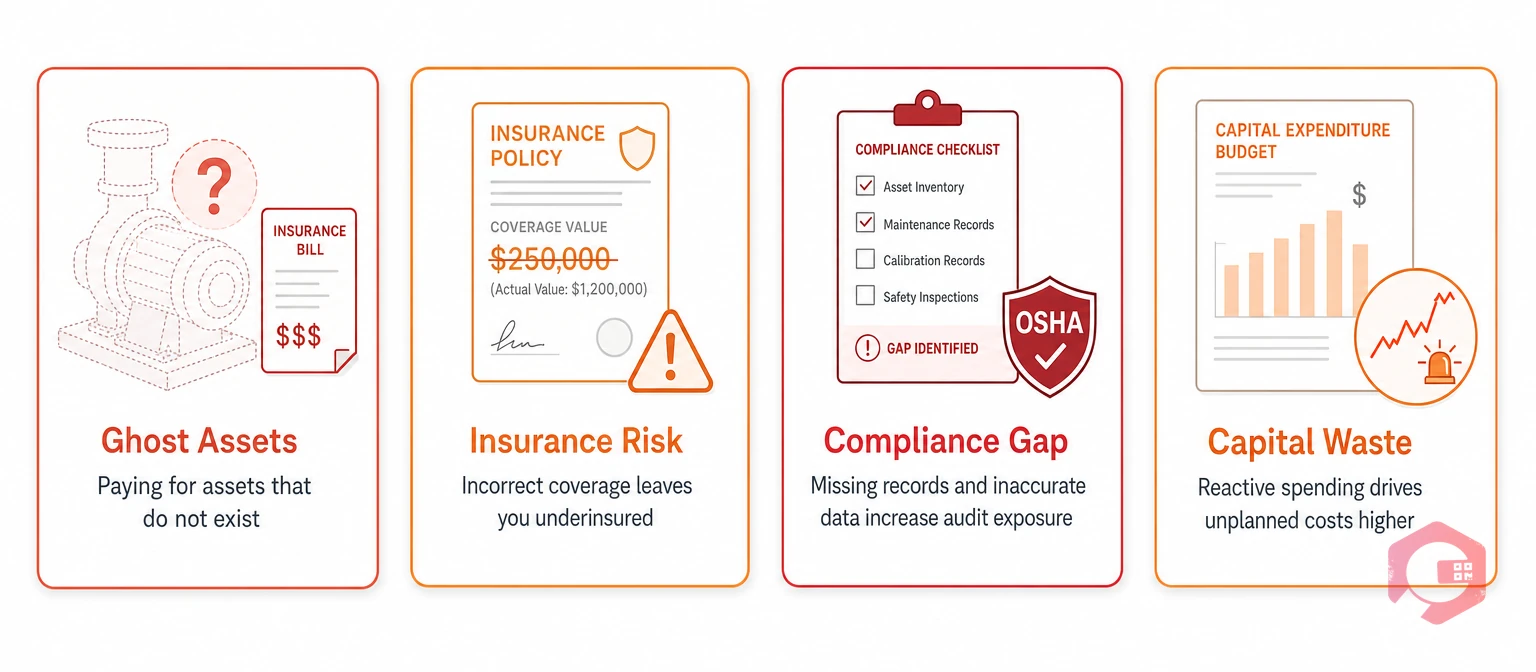
Poor fixed asset management is more costly than most businesses realise. When you do not know exactly what assets you own, where they are, or what condition they are in, the consequences compound quickly - across finance, operations, compliance, and maintenance.
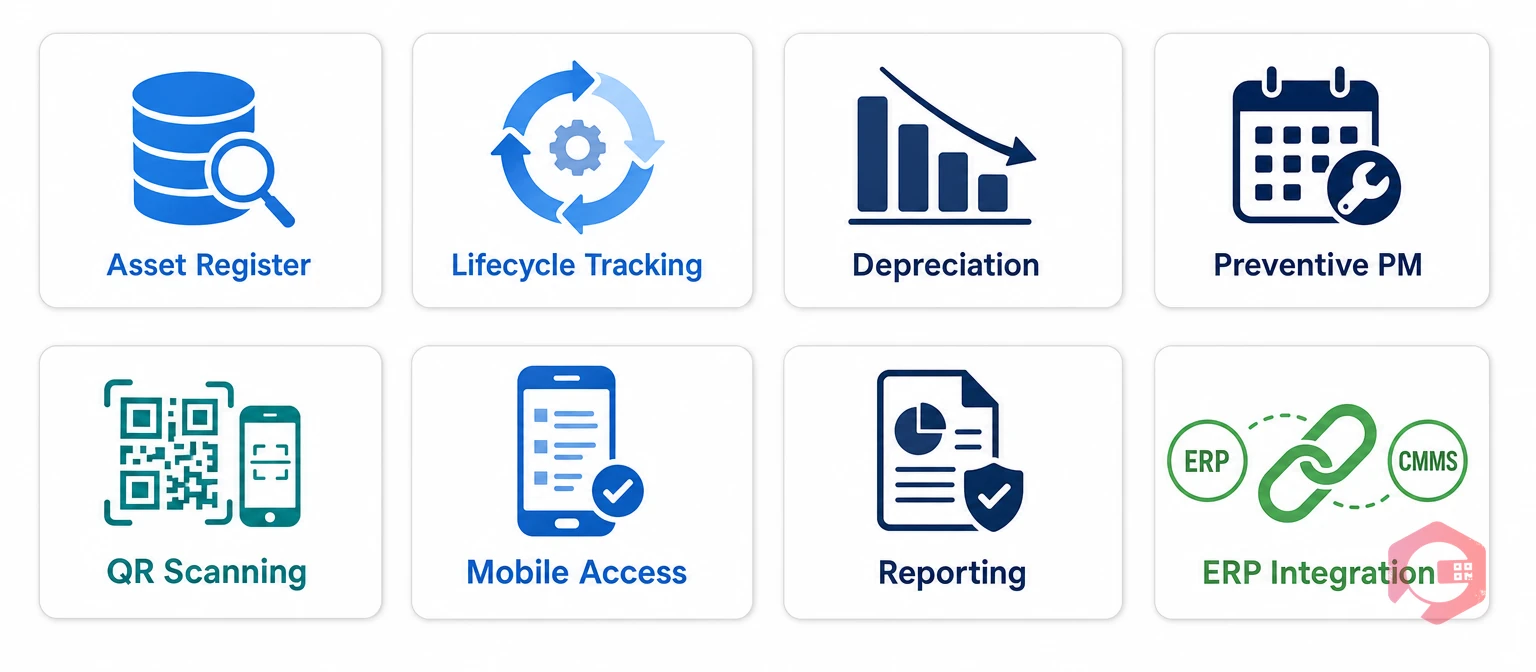
Not all fixed asset management software is built the same. When evaluating platforms, these eight features separate solutions that genuinely improve operations from tools that simply digitise your existing spreadsheet problems.
The core of any fixed asset management system is a single, searchable database of every asset the business owns. Each asset record should capture: asset name and category, serial number and model, purchase date and cost, current location, assigned department or user, condition status, and warranty information. A centralised register means everyone - from the maintenance tech on the floor to the CFO reviewing the balance sheet - is working from the same accurate data.
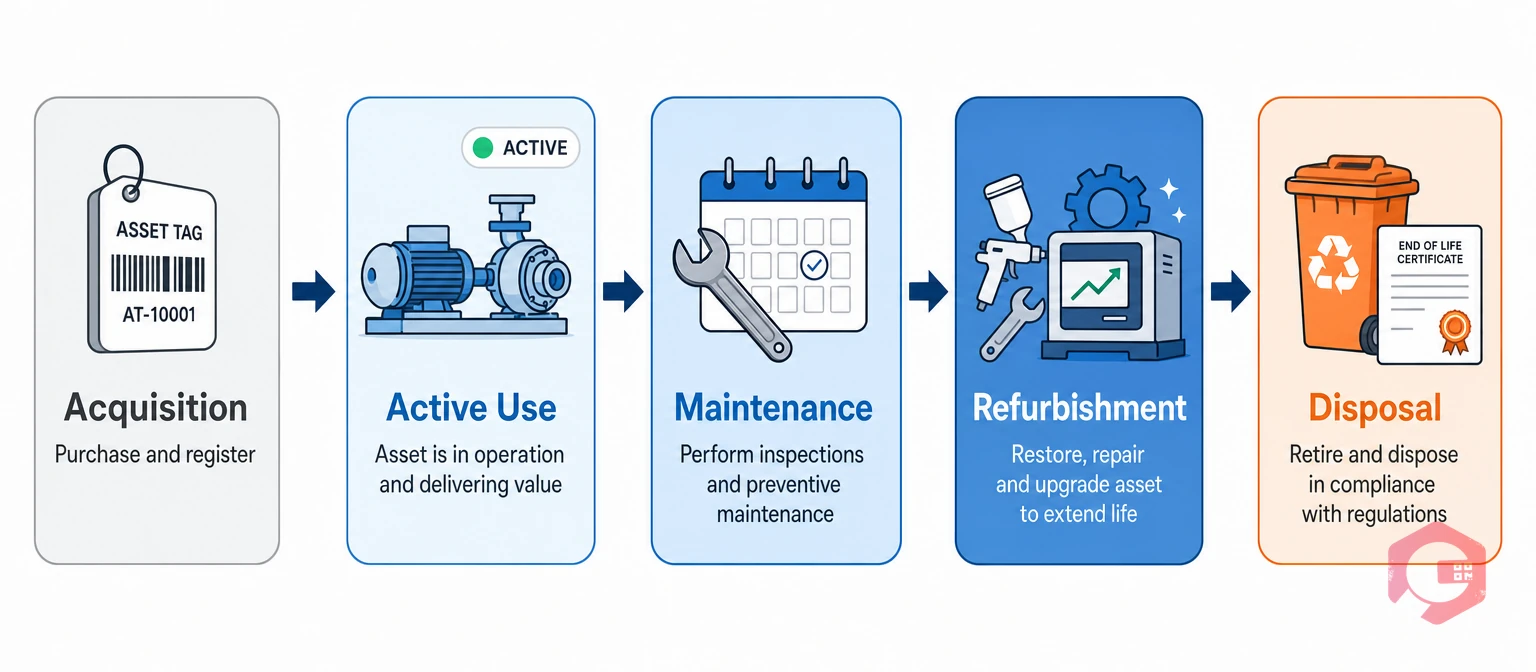
Good software tracks every asset from acquisition through active use, maintenance, refurbishment, and eventual disposal. This lifecycle view is critical for financial planning - it tells you when an asset is approaching end of life so you can budget for a replacement rather than scrambling when it fails unexpectedly. It also supports depreciation calculations by maintaining accurate records of purchase cost, useful life, and residual value.
Fixed assets lose value over time, and accounting for that depreciation accurately is a legal and financial requirement. Look for software that supports multiple depreciation methods - straight-line, declining balance, and units of production - and automatically calculates depreciation schedules for every asset. This saves your finance team hours of manual calculation and ensures your financial statements stay accurate and audit-ready.
Fixed asset management and maintenance management are deeply connected. A platform that links your asset register to a preventive maintenance schedule is significantly more valuable than one that only tracks financial data. When maintenance is tied to asset records, you can see the full cost of ownership - purchase price plus all maintenance costs over time - and make smarter decisions about repair vs. replace.
Manual asset audits are slow and error-prone. The best fixed asset tracking software supports barcode and QR code scanning so your team can physically verify assets, update their location, and log condition reports from a mobile device - in minutes rather than days. This makes annual and periodic asset audits fast, accurate, and painless.
Your maintenance technicians and site managers are not sitting at desks. They need access to asset records, maintenance history, and work orders from wherever they are working - on the production floor, in the field, or across multiple sites. Mobile-first software that works offline ensures your team always has the information they need, even in low-connectivity environments.
Fixed asset management software should generate reports that serve both operational and financial needs: asset value reports for accounting, maintenance cost reports by asset or category, asset utilisation reports, and depreciation schedules for tax purposes. Audit trail functionality - logging every change made to an asset record, by whom, and when - is essential for compliance and internal controls.
Fixed asset data does not live in isolation. It connects to your maintenance management system, your accounting software, and your procurement process. Look for platforms that integrate natively with your existing tools - or that combine fixed asset management and CMMS functionality in a single platform so you do not need separate systems talking to each other.

Fixed asset tracking software is the operational layer of fixed asset management - it handles the real-time monitoring of where assets are, what condition they are in, and who is responsible for them. While fixed asset management covers the full financial lifecycle, tracking focuses on day-to-day visibility and accountability.
Here is what best-in-class fixed asset tracking software does for your operation:
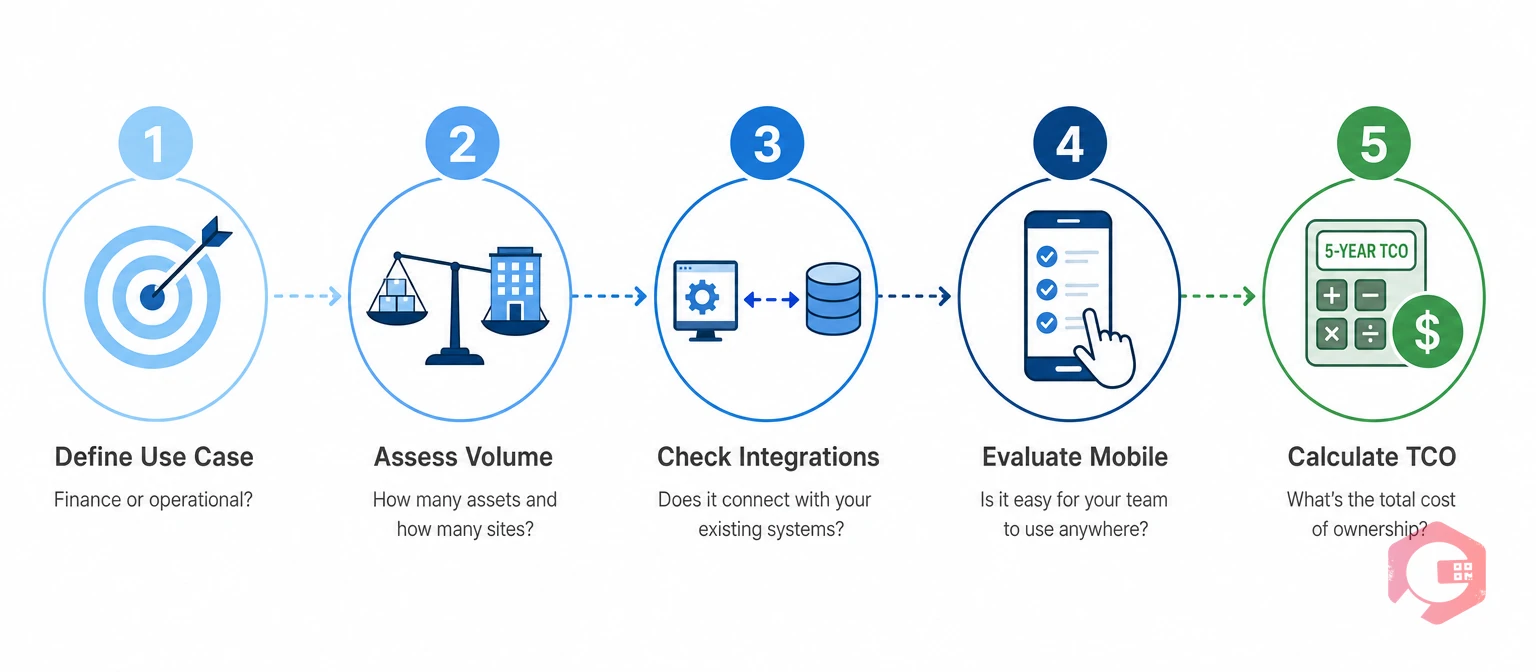
Choosing the right fixed asset management software comes down to matching the platform's capabilities to your organisation's specific needs - your industry, asset volume, team structure, and existing software ecosystem. Here is a practical framework for making the right decision.
Are you primarily solving a financial problem (depreciation tracking, audit readiness, balance sheet accuracy) or an operational problem (maintenance scheduling, asset location, equipment uptime)? The answer shapes which platform is right for you. Pure accounting-focused tools serve finance teams well but offer little for maintenance managers. CMMS platforms with fixed asset management built in - like Cryotos - serve both audiences from a single system.
A business with 50 assets in a single facility has very different needs from one managing 5,000 assets across 10 sites. Evaluate whether the software scales to your asset volume, supports multi-site management, and handles asset hierarchies - grouping assets by site, building, department, or system for organised reporting and decision-making.
Your fixed asset management software needs to communicate with your other systems. Does it integrate with your accounting or ERP platform? Does it connect to your maintenance management system? Native integrations are always preferable to manual exports or custom API builds that require ongoing developer support.
The people who physically interact with assets - maintenance technicians, site managers, warehouse staff - need a tool they can actually use in the field. Test the mobile experience before committing. If the app is clunky or slow, adoption will be low and your asset data will quickly become inaccurate.
Look beyond the subscription price. Factor in implementation costs, training time, data migration, and any ongoing support fees. According to McKinsey, businesses that choose software based on upfront cost alone spend significantly more in the first three years than those who evaluate total cost of ownership from the start.
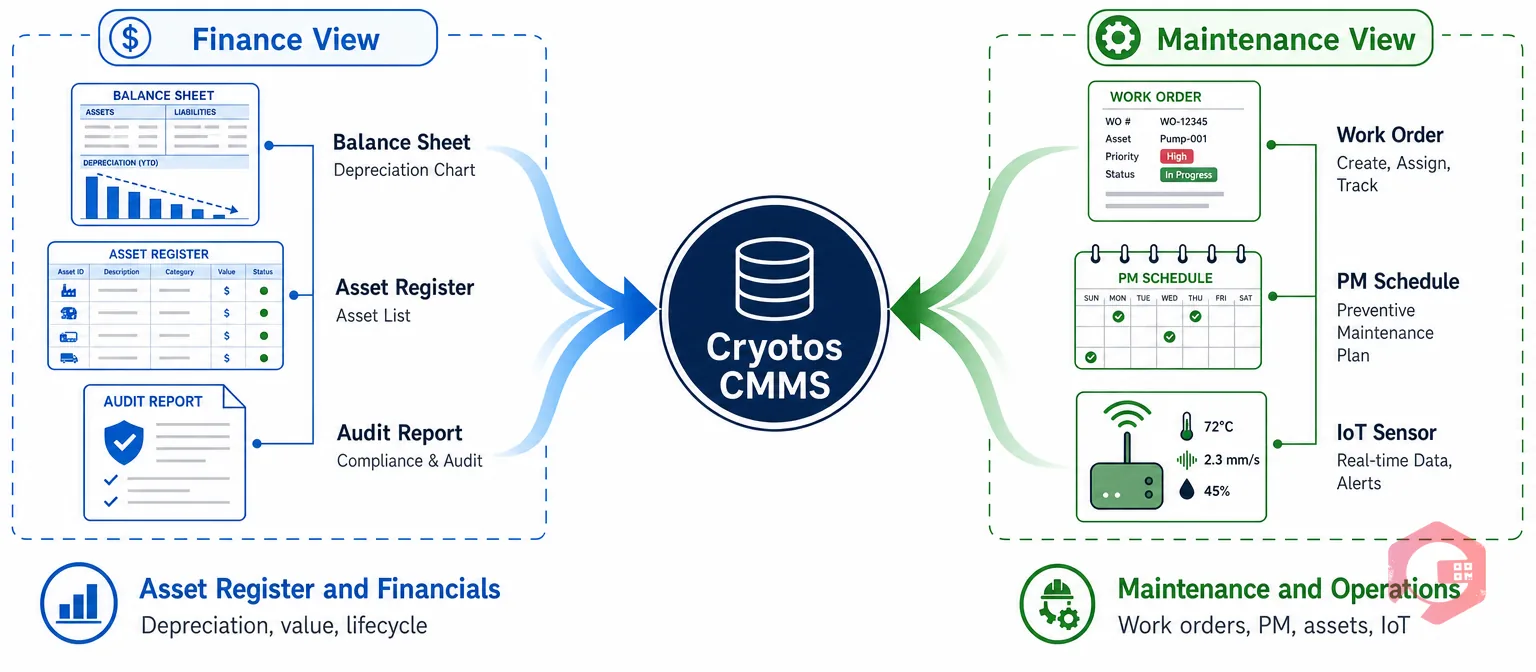
Most fixed asset management tools force you to choose between financial tracking and operational maintenance. Cryotos CMMS eliminates that tradeoff by combining both in a single platform - giving your finance team the asset register and audit trails they need, while giving your maintenance team the work order management, PM scheduling, and IoT integration they depend on every day.
Fixed asset management software is a digital platform that tracks and manages a company's long-term physical assets - machinery, vehicles, equipment, and buildings - throughout their lifecycle. It maintains accurate records of asset location, condition, purchase cost, depreciation value, and maintenance history in a centralised database accessible to finance, operations, and maintenance teams.
Fixed asset management focuses on the full financial and operational lifecycle of assets - from purchase and depreciation through disposal. A CMMS focuses specifically on maintenance operations - work orders, PM scheduling, and repair history. The best platforms, like Cryotos, combine both in a single system so asset financial records and maintenance records are always in sync.
The best fixed asset management software depends on your primary need. For businesses that need both operational maintenance management and asset tracking in one affordable platform, Cryotos CMMS is the stronger choice - combining asset registers, PM scheduling, IoT integration, and live reporting without enterprise-level complexity or cost.
Start with a structured asset register capturing each asset's name, serial number, purchase date, cost, location, and condition. Then link that register to a maintenance schedule so assets are serviced on time. Purpose-built software like Cryotos makes this simple - most small and mid-size teams are fully set up within days, with no technical expertise required.
The most important features are: a centralised asset register, barcode or QR code scanning for audits, depreciation calculation tools, preventive maintenance scheduling, mobile access for field teams, IoT sensor integration, and reporting dashboards that serve both finance and operations stakeholders.
Fixed asset management software is not just an accounting tool - it is the operational backbone of any business that runs physical equipment. When your asset register is accurate, your maintenance is proactive, and your team has real-time visibility into every asset's location and condition, you stop making decisions based on outdated spreadsheets and start making them based on data that reflects reality.
The right fixed asset management software eliminates ghost assets draining your insurance and tax budget, prevents costly breakdowns through proactive maintenance, and gives your finance team the accurate depreciation and lifecycle data they need for sound capital planning. Cryotos CMMS delivers all of this in one platform - mobile-first, fast to deploy, and built for real maintenance and operations teams. Book a free demo today and see how Cryotos can bring full visibility and control to every fixed asset your business depends on.




Cryotos AI predicts failures, automates work orders, and simplifies maintenance—before problems slow you down.



