
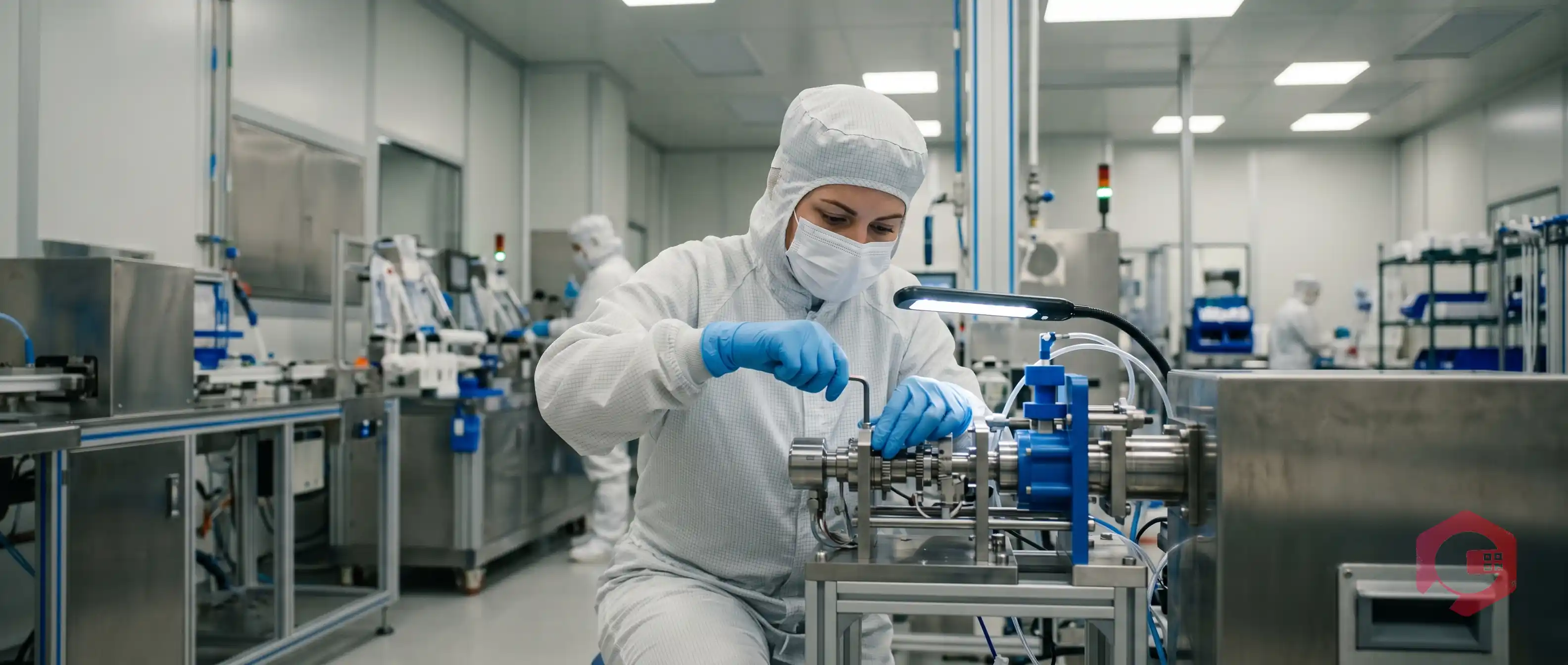
GMP preventive maintenance is the scheduled inspection, servicing, and documentation of pharmaceutical equipment and facility areas under approved SOPs — so every check is done on time, by a qualified person, and leaves a record an auditor can trust. In pharma, the record matters as much as the work. A PM done but not documented against the correct SOP version is a deviation waiting to happen.
Key Takeaways
In most industries, a PM program is judged on uptime and cost. In pharma, it's also judged on evidence. 21 CFR 211.67 requires written procedures for equipment maintenance — and records that prove they were followed. 21 CFR Part 11 adds the rules for electronic records: attributable, time-stamped, unalterable, and reviewable.
That changes three things about how you run PM:
Paper logbooks and generic maintenance tools struggle with all three. Most plants that move to a GMP-compliant pharmaceutical CMMS have been running PM on paper and spreadsheets.
The first job in any pharma CMMS rollout is translating the SOP binder into executable checklists. Every PM workflow should be named against the site's own SOP numbering — Preventive Maintenance / SOP code / equipment type / frequency. The result is a library of hundreds of preventive workflows built from engineering SOPs, each tied to a checklist template versioned automatically.
The lesson: don't redesign your SOPs to fit the software. Pick a preventive maintenance platform that lets you import the checklist as-is (Excel or OCR from paper), name it the way your QA department already names it, and version it automatically.
A PM is generated by the scheduler with a 48-hour SLA and moves through a strict chain:
Across tens of thousands of checklist rows, technicians leave a written comment on more than eight out of ten. That comment density is what an auditor notices — every one carries a user ID and a timestamp.
Breakdowns are where a pharma maintenance process is most exposed. A repair on product-contact equipment can trigger cleaning, an impact assessment, or re-qualification. The breakdown workflow builds those decisions into the work order itself, in six stages:
A production or QC user raises the work order with a priority and description. QA acknowledges the breakdown before engineering touches the equipment — typically well under an hour. The engineer records the nature of breakdown, work performed, persons involved, and spare parts with material codes.
The owning department confirms the fix works. Then QA records three structured decisions: is an impact assessment required? What type of cleaning (A/B/C/none)? Is re-qualification required? Every stage stores who acknowledged, who submitted, when, and the full form content.
Because QA decisions are fields rather than free text, the plant can answer questions impossible on paper. Only a small minority of breakdowns need an impact assessment, roughly one in nine triggers post-repair cleaning, and a few percent require re-qualification.
Within a few weeks of go-live, a typical pharma site settles into a steady rhythm. The headline results any GMP site can benchmark against:
One of the most pharma-specific uses has nothing to do with machines. The same PM engine runs scheduled checks on areas: process areas, warehouse, QC labs, and service floors.
The monthly "Process areas" checklist asks the technician to check walls, ceilings, covings, and doors for cracks; check epoxy floors for damage; confirm no leaks from RO, purified water, or drain lines; and clean light fixtures. A separate half-yearly lux workflow checks illumination levels.
These are the facility-integrity checks ISPE guidance and GMP inspectors ask about — running them as work orders puts them on the same compliance dashboard as equipment PMs.
A checklist tells a technician what to check. It rarely tells them what to do when the answer is "Not OK" at 2 a.m. That's where an AI-powered knowledge base earns its place.
The plant uploads its SOPs, OEM manuals, and safety guidelines. The system indexes them using retrieval-augmented generation (RAG). A technician asks a question by text or voice on the mobile app and gets an answer drawn only from the plant's approved documents — nothing from the open internet.
For a pharma site this does three things:
Use this in your user requirement specification:
Scheduled inspection and servicing of pharmaceutical equipment and facility areas under approved SOPs, with records that meet GMP requirements. The work must be done on time by qualified people, and the record must show who did what, when, and against which procedure version.
Yes, if maintenance records are kept electronically. Part 11 requires attributable, time-stamped, tamper-evident records and controlled electronic signatures. The CMMS also needs computer system validation (IQ/OQ/PQ) at the site.
A well-prepared site can go from first work order to full volume in about six weeks. The pacing item is translating SOPs into checklists — not the software.
Most GMP sites treat 95% on-time PM completion as the floor. Every late or short-closed PM should carry a documented reason — which is what an inspector looks for when the rate is below 100%.
The verification that equipment and area are free of materials, tools, and documents from the previous product before starting. A CMMS makes it a work-order step with live photo evidence, dual sign-off, and structured records.
If your plant is still running GMP preventive maintenance on paper, the experience above shows what changes when it moves to a purpose-built system: SOPs become versioned maintenance checklists, QA becomes part of the workflow, facility checks sit next to equipment checks, and the audit trail writes itself. Schedule a free demo and bring your SOP binder — we'll show you how it becomes your PM library.



Cryotos AI predicts failures, automates work orders, and simplifies maintenance—before problems slow you down.



