

Asset tracking methods — GPS, Barcode, RFID, and QR Code — each give maintenance teams a different level of visibility, automation, and cost. Choosing the wrong one means either overspending on technology you don't need or under-tracking assets that cost you thousands in lost equipment and reactive repairs. According to a Gartner report on asset management, companies that implement structured asset tracking reduce equipment loss by up to 20% and improve maintenance scheduling accuracy by 30%.
In this guide, we break down all four major asset tracking technologies — how each works, where it fits, and what it costs — so you can match the right method to your facility's needs.
Asset tracking is the process of recording the location, condition, and maintenance history of physical assets — in real time or at regular intervals. It covers everything from heavy machinery and HVAC units to tools, vehicles, and IT hardware.
Without a structured tracking system, facilities face ghost assets (equipment that appears on the books but is missing or scrapped), unexpected breakdowns, and compliance gaps. The ISO 55000 asset management standard makes clear that knowing where your assets are and what condition they are in is the foundation of any effective maintenance program.
The four most widely used tracking technologies today are:
Each has a different cost profile, infrastructure requirement, and best-fit use case. Understanding those differences is the first step to making the right investment for your operation.
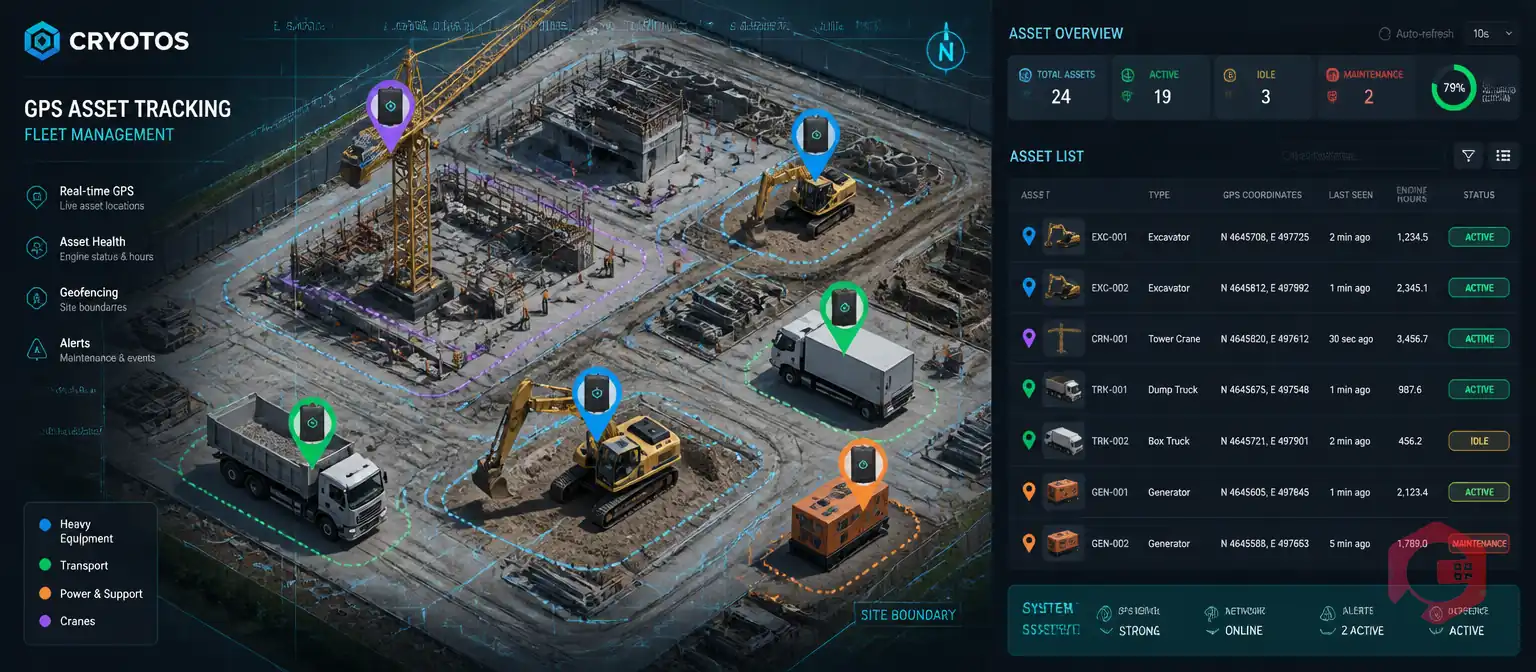
GPS asset tracking uses signals from satellites to pinpoint the location of assets in real time, typically within 2–10 meters. It's the method of choice when assets move across large areas — fleet vehicles, construction equipment, shipping containers, and field service machinery.
GPS trackers are small hardware units that attach to an asset and transmit location data through cellular or satellite networks to a central dashboard. Many units also capture engine run time, speed, idle time, and harsh driving events, making them useful for fleet maintenance and usage-based servicing schedules.
GPS is most effective for:
GPS does not work indoors or in dense facilities where satellite signals are blocked by walls and roofs. It also adds hardware cost per asset (typically $20–$100 per unit) plus ongoing cellular data fees. For stationary or indoor assets, GPS is the wrong tool — and the costs won't justify it.
Barcode tracking uses printed labels with a unique machine-readable code. A technician or inventory manager scans the label with a dedicated barcode scanner or a mobile device to log asset activity — check-in/out, inspection, maintenance completion, or location update.
Barcodes are the lowest-cost asset tracking option available. Labels cost fractions of a cent, and scanners range from $50 to a few hundred dollars. For small to mid-sized operations with clearly defined asset locations and regular manual check-ins, barcodes are reliable and easy to deploy.
Barcodes are the right choice for:
Barcodes require direct line-of-sight — a technician must physically align the scanner with the label. Dirty, wet, or damaged labels won't scan. And because every scan is manual, high-volume environments with hundreds of daily asset movements can create workflow bottlenecks. Barcode data is only as current as the last scan event.

RFID uses radio frequency signals to read tags automatically — no manual scanning, no line-of-sight required. An RFID reader emits a radio field, and any tag within range responds with its unique ID. Depending on the frequency used (low, high, or ultra-high), read ranges vary from a few centimetres to 10 meters or more for passive tags, and up to 100 meters for active tags.
According to ABI Research, the global RFID market is projected to reach $27 billion by 2027, driven largely by industrial and healthcare asset tracking deployments. The ability to read hundreds of tags per second without human intervention is what separates RFID from barcode in high-throughput environments.
There are two main types of RFID tags:
RFID delivers the most value in:
RFID infrastructure is expensive to install. Fixed readers cost $500–$3,000 each, and dense coverage of a large facility can reach tens of thousands of dollars in hardware alone. Certain metals and liquids also interfere with signals, requiring careful tag placement. For smaller operations, the capital cost rarely justifies the investment when QR codes or barcodes can do the job.
QR (Quick Response) codes are two-dimensional barcodes that store far more data than a standard 1D barcode — typically a URL or encoded asset ID. Any smartphone camera can read a QR code, which eliminates the need for dedicated scanning hardware entirely.
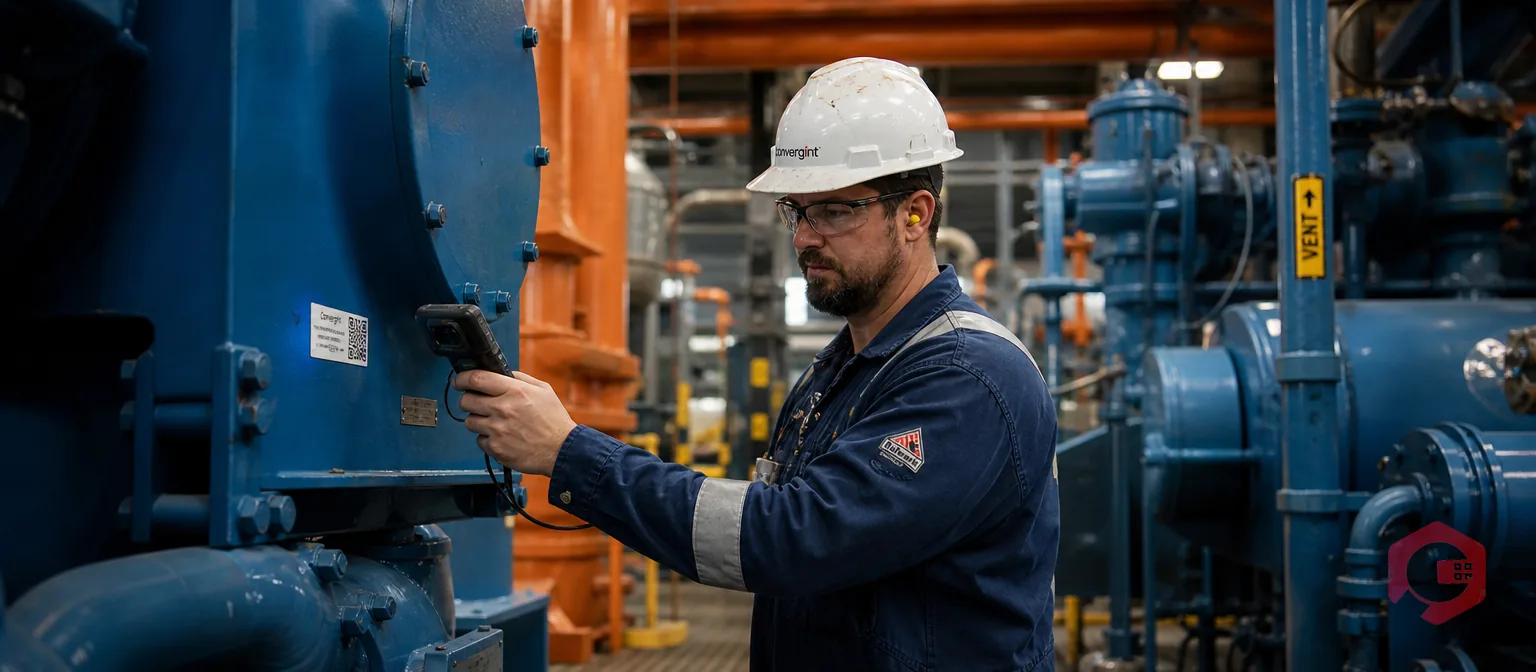
In a CMMS context, QR codes are attached to assets. When a technician scans the code, they instantly access the asset's full maintenance record — last service date, open work orders, warranty details, and attached manuals. Cryotos's asset QR code scanning feature takes this further: technicians can scan a code to open, update, or close a work order directly from the field without logging into a desktop portal.
QR codes are well suited for:
Like standard barcodes, QR codes require a scan — they don't track movement passively. A QR code only records where an asset is when someone physically scans it there. For assets that move frequently without manual check-ins, QR codes leave visibility gaps between scan events. Labels placed in harsh environments also need lamination or durable substrates to survive over time.
Here is how all four technologies compare across the dimensions that matter most to maintenance and operations teams:
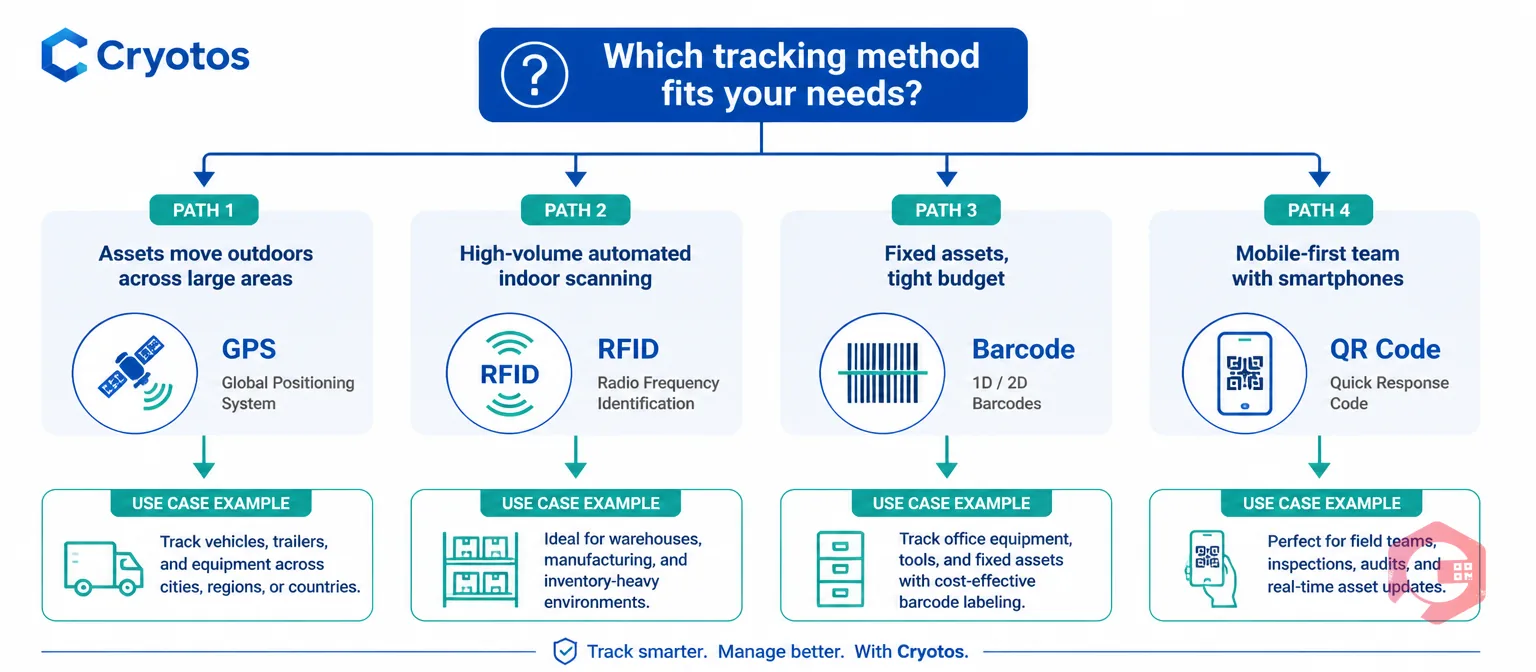
There is no single best technology — the right choice depends on four factors: asset mobility, tracking volume, budget, and your team's day-to-day workflow. Here is a practical decision framework to narrow it down.
If your assets move across large outdoor areas — vehicle fleets, construction machinery, field service units — GPS is the only method that gives you continuous location data. For assets that stay inside a building, eliminate GPS from consideration. Satellite signals can't penetrate concrete and steel.
If you need to track hundreds of assets moving through your facility daily without staff stopping to scan each one individually, RFID is the only scalable option. Manual scanning with barcodes or QR codes does not work at high throughput — you'll either create bottlenecks or miss scans entirely. According to Plant Engineering's research, facilities that automate asset tracking report 25–40% fewer scan-related data entry errors than those relying on manual processes.
For facilities with limited capital but a genuine need for structured asset maintenance management, QR codes or barcodes deliver the best return on investment. Deployment costs are minimal, and a CMMS handles all the record-keeping and history behind every scan.
If your technicians already carry smartphones and do regular inspection rounds, QR codes slot naturally into how they work. Every scan becomes a work order update, an inspection record, or a maintenance log entry — no extra hardware to carry or charge. Paired with preventive maintenance software, technicians can complete rounds and close PMs in a single scan from the field.
Cryotos CMMS is built to work with all four tracking technologies — not just one. Whether your facility uses QR codes for stationary equipment, GPS for fleet assets, or RFID for automated warehouse scanning, Cryotos ties every scan or location ping to a complete asset record: maintenance history, open work orders, spare parts consumption, warranty data, and compliance documents.
Key capabilities that connect tracking to maintenance action:
Teams that standardise on a single CMMS regardless of which tracking technology they use gain a major operational advantage: all asset data lives in one searchable place, maintenance histories build over time, and compliance reporting takes minutes instead of days. Use our free asset management checklist to review whether your current tracking setup covers every critical touchpoint in your facility.
RFID uses radio waves to read tags automatically and simultaneously — no line of sight required, and hundreds of items can be scanned per second. QR codes require a camera scan of each item individually and need direct line of sight. RFID is faster and fully automated but costs significantly more to deploy. QR codes work well where staff already carry smartphones and manual scan cycles are acceptable.
QR codes are the most cost-effective starting point for small to mid-sized facilities. Labels cost under $0.50 each, no dedicated hardware is required beyond smartphones your team already carries, and a CMMS like Cryotos handles all the data management behind each scan. Barcodes are a close alternative if you already have dedicated scanners in place.
Yes. A well-built CMMS like Cryotos supports GPS, QR codes, barcodes, and RFID simultaneously. Different asset types can use different tracking methods depending on their mobility, value, and team workflow — all feeding data into a single asset register. You don't have to choose just one technology for your entire facility.
No. GPS signals are blocked by walls and roofs, making GPS unreliable for indoor use. For indoor assets, QR codes, barcodes, or RFID are the practical alternatives. Some facilities use Bluetooth Low Energy (BLE) beacons as an indoor positioning substitute — Cryotos supports BEACON-based tracking for exactly this use case.
Asset tracking gives maintenance teams accurate data on location, usage hours, and current condition — the three inputs that drive effective PM scheduling. When every scan or location update feeds the CMMS automatically, technicians spend less time logging data and more time performing maintenance. Over time, consistent tracking reduces unexpected failures, extends asset service life, and builds the historical record needed to justify capital replacement decisions.
Choosing the right asset tracking method is only half the job — the other half is making sure every scan connects to a maintenance record, a work order, and a full audit trail. Cryotos CMMS gives your team that connection across GPS, RFID, QR code, and barcode technologies in a single platform. Book a free demo to see how it works for your facility.



Cryotos AI predicts failures, automates work orders, and simplifies maintenance—before problems slow you down.



